
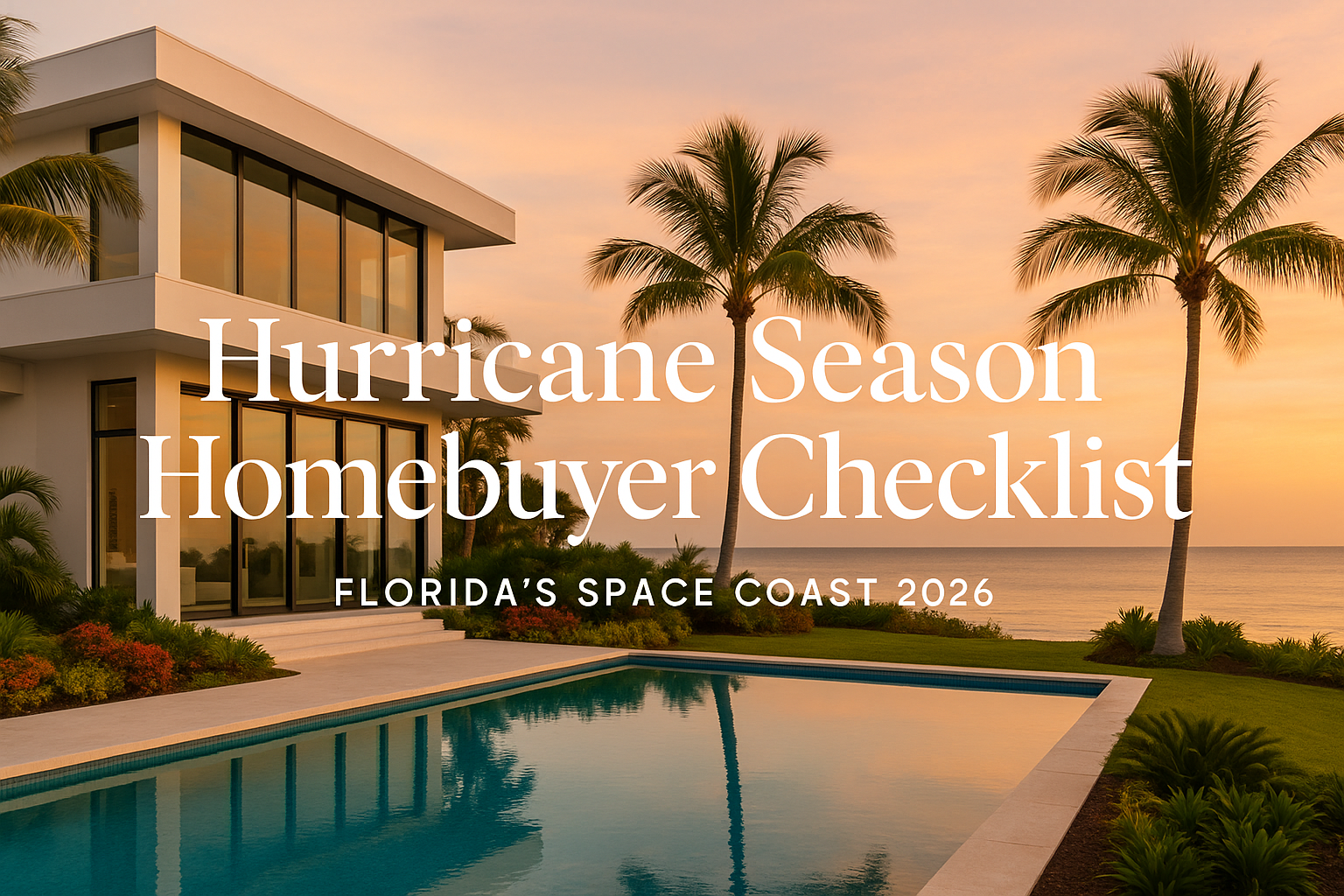
June 1 is almost here — and if you’re buying or already own a home on Florida’s Space Coast, that date matters more than most people realize. I get asked all the time: “Carrie, is it risky to buy in Florida during hurricane season?” My honest answer: not if you know what you’re doing. Brevard County has come through major storms — Matthew, Irma, Ian — and the buyers who were prepared didn’t just survive hurricane season. They thrived. The ones who got caught off guard? They wish someone had handed them a checklist before closing. So here it is. Your complete hurricane season homebuyer checklist for the Space Coast. What Every Space Coast Homebuyer Needs to Do Before Closing ✅ 1. Understand the Flood Zone — Before You Make an Offer This is non-negotiable. Brevard County spans multiple FEMA flood zones — from Zone X (minimal risk, no flood insurance required) to Zone AE (high risk, flood insurance required by your lender). Where your specific property sits determines your insurance costs dramatically. A home in Zone X on the barrier island might be two blocks from one in Zone AE — and the difference in annual flood insurance cost can be $1,500 to $4,000+ per year. I covered the full 2026 FEMA map updates in my post: New FEMA Flood Maps for Brevard County: What Homeowners and Buyers Need to Know. You can look up any property’s exact flood zone on the FEMA Flood Map Service Center, or pull detailed parcel data from the Brevard County Property Appraiser. I always check both before my clients fall in love with a house. ✅ 2. Get a Wind Mitigation Inspection — It Could Save You Thousands This is the single most financially impactful thing a Brevard homeowner can do. A wind mitigation inspection assesses how well your home can withstand hurricane-force winds — roof shape, roof-to-wall connections, opening protection, and more. Under Florida Statute §627.0629, insurance companies are required to offer premium discounts for wind-resistant features — discounts that can reach up to 88% off the windstorm portion of your policy. On a Brevard home, that can mean $800 to $2,500+ per year in savings. The Florida Office of Insurance Regulation updated the official wind mitigation form (OIR-B1-1802) effective April 1, 2026 — if your inspection is more than a few years old, it may need to be redone to lock in your discounts. Cost: typically $75–$150. ROI: potentially thousands per year. Do it. ✅ 3. Check Your Evacuation Zone Brevard County uses an A–F evacuation zone system. Zone A is the highest risk (barrier islands, coastal areas), Zone F is the lowest. Check your property’s zone at the Brevard County Emergency Management website before making any offer — and bookmark the Brevard County Shelter Locator while you’re there. This doesn’t mean you shouldn’t buy in Zone A — Cocoa Beach and Satellite Beach are Zone A and they’re wonderful places to live. It means you need a plan. Know your route, know where you’re going, and go early before the highways clog. If you’re weighing neighborhoods specifically for flood risk and evacuation access, read my post on Brevard neighborhoods without the flood zone risk — it’s one of the most practical guides I’ve written. ✅ 4. Understand Impact Windows, Shutters, and Opening Protection One of the most common questions I hear from buyers relocating from out of state: “Does the house have hurricane shutters?” Homes built after 2002 generally meet modern Florida Building Code wind requirements. Homes built before 1994 may have single-pane windows with zero hurricane protection. Impact-resistant windows are the gold standard — no storm prep required, insurance discounts, and quieter daily living. Accordion shutters are the most convenient manual option. Panel shutters work but require installation before every storm. If you’re looking at waterfront property, opening protection is only one piece of the puzzle — read my full guide on seawalls in Brevard County for the other factors coastal buyers often miss. And for an honest look at waterfront ownership costs overall, check out Merritt Island waterfront costs: 3 expenses buyers miss. ✅ 5. Ask About the Roof — Age, Material, and Permits In Florida, a roof over 15–20 years old can make it nearly impossible to get homeowners insurance — or result in sky-high premiums. Ask before making any offer: How old is the roof? What material? Were permits pulled for the last replacement? Metal roofs last 40–70 years and earn the best insurance discounts. Asphalt shingles typically run 15–25 years. An unpermitted roof is a nightmare at closing — lenders don’t like them and neither do insurers. The Florida Department of Business and Professional Regulation has good guidance on what to look for in a licensed roofing contractor if a replacement is needed. A brand-new roof on a Brevard home is a selling point and a negotiating tool — it’s worth real money in insurance savings. ✅ 6. Apply for My Safe Florida Home — Free Inspection + Up to $10,000 in Grants This program is genuinely underused. The My Safe Florida Home program offers a free wind mitigation inspection and matching grants up to $10,000 for hurricane hardening improvements — impact windows, impact doors, and roof upgrades. Eligibility: homesteaded single-family homes with an insured value under $700,000. If you’re buying a home and planning improvements anyway, apply at MySafeFLoridaHome.com first. It’s real money left on the table if you don’t. You can also learn more about available programs through the Florida Division of Emergency Management’s preparation resources. Brevard County Hurricane Season Basics — For New Residents If you’re relocating to the Space Coast, here’s what locals already know: Hurricane season: June 1 – November 30. Peak activity: August through October. Brevard’s track record: We’re on the Atlantic side, which gives us some protection compared to the Gulf Coast — but we’re not immune. Hurricane Matthew (2016) caused significant damage along the barrier island. Irma (2017) brought flooding and wind damage countywide. Evacuation orders:
Florida Living on the Space Coast is about more than sunshine. Buyers and sellers need to understand coastal lifestyle, insurance, flood zones, hurricane preparation, property maintenance, taxes, schools, boating, beach access, and the everyday tradeoffs of living in Brevard County. This hub collects Carrie Liotta’s practical local guidance for people planning a Florida move or comparing Space Coast communities.

Living in Viera, Florida: Daily Life & Relocation Guide
Compare Viera East and West, daily routines, housing choices, ownership costs, commutes, amenities, and property-level checks before moving to Viera.

7 Best Neighborhoods in Brevard County for Families in 2026
Neighborhoods in Brevard County: If you’re searching for the best neighborhoods in Brevard County for families in 2026, you’ve landed in the right place. Brevard County — Florida’s famous Space Coast — has quietly become one of the most desirable places in the entire state to raise a family. With 72 miles of Atlantic coastline, A-rated public schools, a booming aerospace economy anchored by NASA, SpaceX, Blue Origin, and L3Harris, and a median home price well below coastal Florida averages, the value proposition here is hard to beat. But Brevard County is long and diverse — picking the wrong neighborhood can mean longer commutes, lower-rated schools, or paying a premium for proximity to nothing you actually need. This guide cuts through the noise. Each neighborhood below has been evaluated on school quality, safety, home prices, family amenities, commute access, and long-term value — the things families actually care about when making a move. Whether you’re relocating from out of state, moving for a job at a Space Coast employer, executing a military relocation to Patrick Space Force Base, or simply upgrading to a better neighborhood for your kids, this is your definitive 2026 resource. Quick Answer: Best Brevard County Neighborhoods in 2026 The best Brevard County neighborhoods for most families in 2026 are Viera, Rockledge, Satellite Beach, West Melbourne, Merritt Island, Suntree, and Melbourne Beach. Viera is the strongest all-around choice for newer homes, schools, and amenities. Satellite Beach and Melbourne Beach are best for beachside living. Merritt Island is best for waterfront and boating access. Rockledge and West Melbourne usually offer a more balanced mix of value, schools, and commute convenience. To continue comparing communities and homes across the county, explore 321 Coastal Living. Best all-around: Viera Best beachside family lifestyle: Satellite Beach Best waterfront and boating access: Merritt Island Best value near central Brevard: Rockledge or West Melbourne Best established Melbourne-area option: Suntree Quick Stats — Brevard County 2026: Table of Contents 🎬 Watch Before You Move Before diving into the neighborhood breakdowns, watch this video for an honest, boots-on-the-ground overview of what it’s actually like to live on Florida’s Space Coast in 2026. Covers market trends, lifestyle, and what separates the best neighborhoods from the rest. ▶️ Watch here: https://youtu.be/nHreR4_gU8M?si=C-xyfF90e6Y1mnAO 1. Viera — The Master-Planned Crown Jewel School Grade: A / A+ | Median Home Price: ~$432K+ | Safety: Very Low Crime Why Families Choose Viera Viera is the undisputed top choice for families relocating to Brevard County in 2026. Consistently ranked among the Top 25 Best-Selling Master-Planned Communities in the nation (source: Niche.com), this intentionally designed community delivers everything a family needs within a short golf cart ride. A-rated public schools, world-class healthcare, resort-style amenities, 100+ miles of multi-use trails, and a vibrant commercial corridor at The Avenue Viera make this the closest thing Florida has to a self-contained paradise for families. Half of Viera’s 20,000+ acres are set aside for conservation, meaning kids grow up with wetlands, wildlife corridors, and the Brevard Zoo essentially in their backyard. Residents enjoy unmatched access to I-95 — putting downtown Melbourne, Patrick Space Force Base, and Cape Canaveral all within a 20-minute drive. Schools Home Prices & Housing Options Viera offers a remarkable range of options. Entry-level condos start in the low $100Ks; newer construction single-family homes in sought-after communities like Trasona, Sierra, and Sendero Cove typically run from the mid-$400Ks to $750K+. Luxury gated estates and smart-home communities push past $900K. Prices here remain among the most stable in all of Brevard, supported by constant demand from aerospace professionals and relocating families. Family Amenities 💡 Buyer Tip — Best Real Estate Agent for Viera, Florida: Viera has complex CDD bond structures, HOA tiers, and school district boundaries that vary street-by-street. Working with a top real estate agent who specializes in Viera — not a generalist — is the single most important decision you can make before buying here. Ask your agent if they actually live in or regularly sell in Viera. The difference in guidance is night and day. 2. Rockledge — Historic Charm, Modern Convenience School Grade: A | Median Home Price: ~$375K–$440K | Niche Rating: A / A− Why Families Choose Rockledge Rockledge is Brevard’s oldest city, and its tree-lined streets, historic homes, and deep community roots make it one of the most genuinely welcoming places to raise kids in the county. Niche.com rates Rockledge an A for families, citing excellent schools, low crime, and a strong neighborhood atmosphere. It sits directly between Viera (to the south) and Cocoa/Merritt Island (to the north), giving residents prime access to both the I-95 corridor and the Indian River waterfront. Residents describe it as a city with “great restaurants, ample shopping, and close to other amenities” — a polished suburban city that doesn’t sacrifice character for convenience. Larger lot sizes and more varied home styles give Rockledge a distinct edge over Viera for families who want more yard and don’t need the strict uniformity of a master plan. Schools Home Prices & Housing Rockledge offers more home for your money than Viera’s newer construction communities, with a mix of mid-century homes, 1990s–2000s subdivisions, and some newer builds. Expect to find solid single-family homes in the $350K–$500K range, with waterfront properties on the Indian River commanding higher premiums. Family Amenities 💡 Buyer Tip: Rockledge is especially popular with families relocating for aerospace and tech jobs. It offers shorter commutes to KSC and SpaceX facilities than Viera, with no sacrifice in school quality. If you’re a military family relocating to Patrick Space Force Base, Rockledge also puts you about 20 minutes from the gate. 3. Satellite Beach — Small-Town Beach Life with Top Schools School Grade: A+ | Median Home Price: ~$430K–$550K | Crime Rate: Very Low Why Families Choose Satellite Beach If the dream is raising your kids steps from the Atlantic Ocean in a safe, tight-knit community with excellent schools, Satellite Beach delivers. Residents consistently describe it as the quintessential small beach town — the kind where kids ride bikes, surf before school, and still come home to one of Brevard County’s best school systems. Niche gives Satellite Beach an A+ for safety and
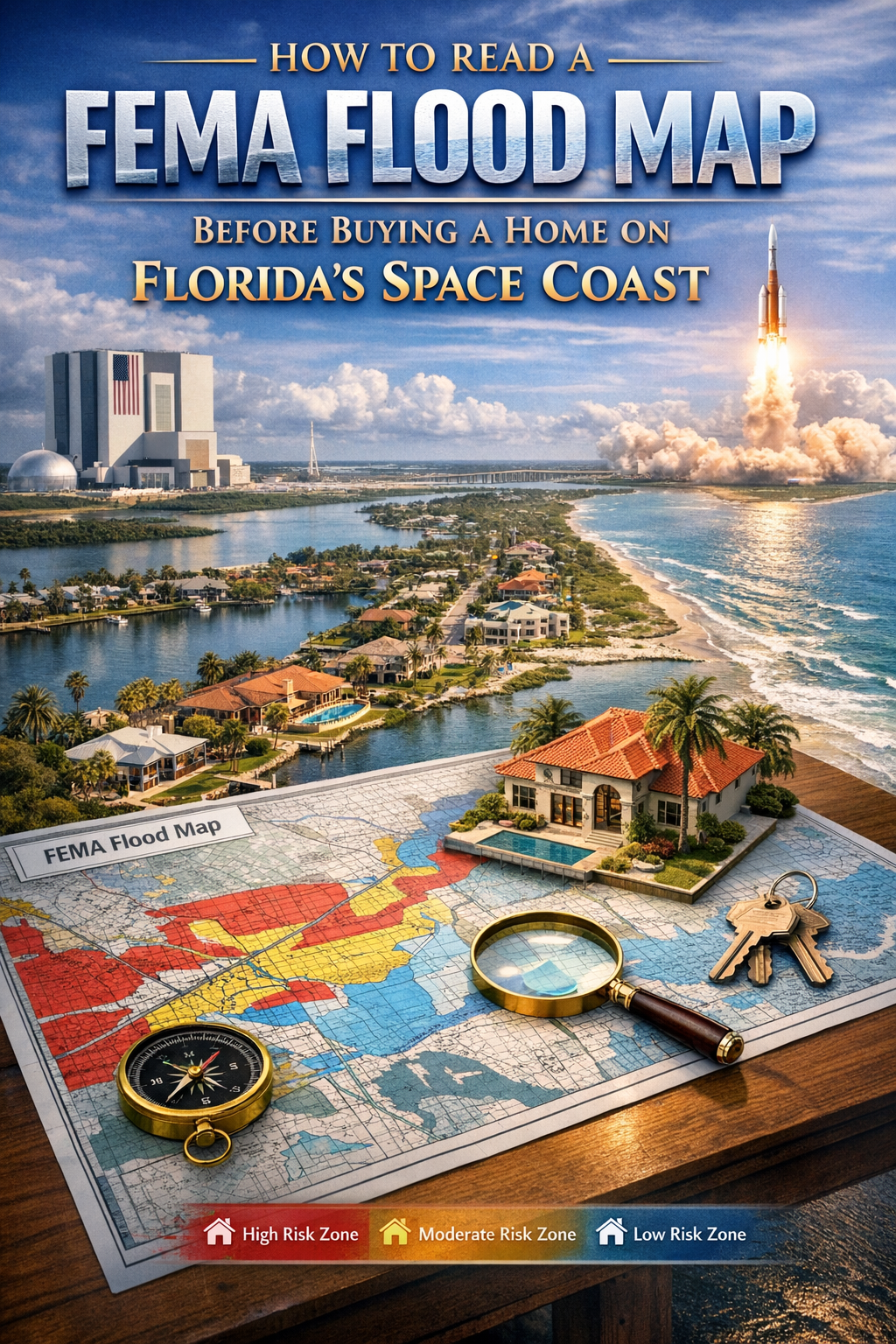
How to Read a FEMA Flood Map Before Buying a Home on Florida’s Space Coast
Published by Carrie Liotta | Top 5% REALTOR® in Brevard County, Florida | www.321coastalliving.com How to Read a FEMA Flood Map: Most buyers hear “flood zone” and think they understand what they’re dealing with. They don’t — and the gap between what buyers assume and what those designations actually mean in Brevard County costs people real money. A flood zone designation isn’t just an insurance category. It’s information about elevation, proximity to mapped water sources, the history of that specific parcel’s drainage behavior, and — with FEMA’s Risk Rating 2.0 methodology now in effect — a variable that feeds into a property-specific risk calculation that can produce insurance costs significantly different from what a neighbor three doors down pays. If you’re buying a home on Florida’s Space Coast, reading a FEMA flood map isn’t optional. Here’s how to actually do it — and what to do with what you find. What FEMA Flood Maps Are and Where to Find Them FEMA’s National Flood Insurance Program (NFIP) produces Flood Insurance Rate Maps, or FIRMs. These maps delineate flood zones based on statistical risk modeling — specifically, the probability of flooding in any given year. The maps are publicly available and searchable by address through FEMA’s Flood Map Service Center at msc.fema.gov. What you’ll find on a FIRM: flood zone designations, Base Flood Elevations (BFE), and the boundaries of Special Flood Hazard Areas (SFHA). Each of these terms has specific meaning, and misunderstanding any of them can lead to a materially incorrect assessment of a property’s flood risk and insurance cost. For Brevard County specifically, the Brevard County Property Appraiser’s website (bcpao.us) allows parcel-level lookup that includes flood zone information alongside tax, ownership, and assessment data. This is often a faster starting point than navigating FEMA’s map interface directly. Decoding Flood Zone Designations in Brevard County Not all flood zones are equal, and the letter-number system FEMA uses is more nuanced than most buyers realize. Here are the zones you’ll actually encounter on the Space Coast: Zone AE — The High-Risk Standard AE zones are Special Flood Hazard Areas with a 1% annual chance of flooding (the “100-year flood” designation) and a published Base Flood Elevation. Federally-backed mortgage lenders require flood insurance on properties in AE zones. In Brevard County, waterfront and canal-front properties in Merritt Island, Cocoa Beach, Cape Canaveral, and along the Indian River Lagoon corridor frequently carry AE designations. The Base Flood Elevation is the elevation to which floodwater is expected to rise during the 100-year flood event. A property’s first-floor elevation relative to BFE has a direct and material effect on flood insurance premium — a home built above BFE pays less than one at or below BFE, often significantly less. Zone X — The Moderate Risk Zone That Still Requires Attention Zone X (including Shaded Zone X and Unshaded Zone X) covers areas outside the 100-year floodplain or between the 100-year and 500-year floodplain. Federal flood insurance isn’t required in Zone X. But here’s what many buyers miss: a substantial percentage of flood claims in the United States come from properties in Zone X. Flood zone maps reflect modeled statistical risk, not ground-level drainage characteristics, and they’re updated infrequently. A Zone X property with drainage issues, proximity to tidal water, or specific topographic characteristics can flood during heavy rain events that wouldn’t touch an AE-zone neighbor. The practical advice: even in Zone X, requesting flood history for a specific property — through the seller, through Brevard County’s records, or through a CLUE (Comprehensive Loss Underwriting Exchange) report — is worth the time. Flood history doesn’t follow zone boundaries as neatly as the maps suggest. Zone VE — Coastal High Hazard VE zones are coastal high-hazard areas subject to wave action in addition to flooding. In Brevard County, true VE zone properties exist primarily along the beachfront in Cocoa Beach, Cape Canaveral, and along the direct Atlantic exposure. Insurance in VE zones is more expensive than AE, and building requirements for elevated foundations and breakaway walls apply. Most beachfront condos in Brevard were built under these requirements and are already compliant, but buyers should verify. “Reading the flood map is step one. Step two is understanding that the map is a static document — it doesn’t tell you about last year’s heavy rain, or the drainage characteristics of that specific canal, or whether the seller has ever filed a flood claim.” Base Flood Elevation: The Number That Actually Changes Your Insurance Cost Once you’ve identified the flood zone, the next number to find is the Base Flood Elevation. BFE is expressed in feet above NAVD 88 (North American Vertical Datum of 1988), the standard elevation reference used in FEMA flood mapping. To use BFE meaningfully, you need the property’s actual first-floor elevation — which is what an elevation certificate provides. An elevation certificate is a document prepared by a licensed land surveyor or engineer that certifies the specific elevation characteristics of a structure, including lowest adjacent grade, lowest floor elevation, and other data points FEMA uses to determine flood insurance rating. Sellers of waterfront or AE-zone properties in Brevard County may already have an elevation certificate on file. If one doesn’t exist, it’s worth requesting one as part of due diligence — or commissioning one yourself. The cost is typically a few hundred dollars. The value is knowing whether you’re buying a property at, above, or below BFE before you get a flood insurance quote, not after. FEMA’s Risk Rating 2.0: Why the Old Zone Logic No Longer Predicts Premium This is the shift that changed the calculus for Florida buyers, and it’s still not widely understood. FEMA’s legacy flood insurance pricing system used zone designations and BFE as the primary premium variables. Two houses in the same AE zone with similar elevations paid similar premiums. Risk Rating 2.0, implemented October 2021, replaced that system with a property-specific risk model. Each property now gets its own risk rating based on a more granular set of variables: The result: two waterfront properties on the same Merritt

New Hand & Stone Spa Brings Wellness and Luxury to Rockledge-Viera
New Hand & Stone Spa Brings Wellness and Luxury to Rockledge-Viera — Here’s Why It Matters to Local Homebuyers If you’re exploring homes for sale in Viera, Florida, or looking to relocate to family-friendly neighborhoods in Rockledge, there’s a new amenity in town that enhances the area’s appeal—Hand & Stone Massage and Facial Spa has officially opened a new location at 2025 Viera Blvd. With extended hours, luxury spa services, and a reputation for customer excellence, it’s just one more reason buyers are flocking to Viera’s master-planned communities and Rockledge real estate listings. Led by seasoned franchisee Elizabeth Whitby—who also owns six other locations across the state—this newest Hand & Stone offers more than just massages and facials. It’s a hub for health, wellness, and community connection. From hot stone massages and Himalayan salt therapy to DiamondGlow facials and CBD oil enhancements, this spa brings top-tier self-care to the heart of Viera’s growing population. For current and future residents, this addition enhances the quality of life in Viera—a key selling point for families, professionals, and retirees. As a Licensed Rockledge, Florida Realtor and Viera new construction expert, I know buyers often ask, “What amenities are nearby?” With the addition of Hand & Stone, Viera’s reputation for wellness, lifestyle, and convenience just got even stronger. Thinking of relocating to this thriving area? I specialize in Rockledge club real estate, Viera gated communities, and luxury homes near top-rated amenities like this one. Whether you’re a first-time homebuyer in Viera or searching for waterfront homes in Rockledge, I’m here to help you navigate every step. 📍Pro Tip: The spa is offering a Founding Membership Special—a complimentary facial and free upgrades for the first six months. If you’re new to the area, it’s a great way to connect with your wellness community right away. If you’re looking to buy a house in Viera, get a property evaluation in Rockledge, or want to know which Viera neighborhoods offer the best lifestyle amenities, let’s connect. As a top-performing real estate agent in Viera and your local guide to the Space Coast lifestyle, I’ve helped countless clients find the perfect home—and the lifestyle to match. Contact Me for Homes Near Viera’s Top Amenities ✔️ Carrie Liotta, #1 Realtor Rockledge & Viera 📱 Call/Text: 256-479-2800 💼 Search listings:321coastalliving.com 📧 Email: carrieliotta@gmail.com 🏆 Trusted by clients, backed by results

Experience the Best of Merritt Island at the Gatehouse Market
The Gatehouse Market at Field Manor is a vibrant new seasonal farmers market located at the historic Field Manor Homestead on North Merritt Island, Florida—a hidden gem for families relocating to Merritt Island or looking to experience the best neighborhoods in Merritt Island for families. Held monthly on the first Saturday from 10 AM to 3 PM, November 2024 through April 2025, this community-focused event features fresh local produce, handmade artisanal goods, and unique offerings from small businesses. It’s a great way to support local growers and connect with the Merritt Island real estate market lifestyle that blends historic charm with coastal living. Visitors to the market enjoy live music, food trucks, and kid-friendly activities in a scenic setting just minutes from waterfront homes in Merritt Island, Florida and popular areas like Sykes Creek Parkway and the Banana River Drive area. Whether you’re a first-time homebuyer in Merritt Island or exploring options for retirement, the Gatehouse Market showcases why so many people are relocating to Merritt Island. As a Merritt Island Realtor, I often recommend local events like this to clients looking for the best neighborhoods in Merritt Island and those considering homes for sale in Merritt Island, Florida, especially near the Merritt Island waterfront properties and South Merritt Island luxury homes. With free admission and convenient on-site parking, this monthly event is a must-visit for anyone living in Merritt Island, Florida, moving to Merritt Island, or simply exploring real estate in Merritt Island. For more local insights, home evaluations, or tips on buying a house in Merritt Island or selling your Merritt Island home, connect with a top-reviewed, certified Merritt Island real estate agent today.

The Mermaid House Beachside
Grand Opening: The Mermaid House Café & Wine Bar Brings Live Music & Wine to Indian Harbour Beach If you’re relocating to Indian Harbour Beach, Florida, investing in Space Coast waterfront homes, or simply exploring what makes Brevard County such a desirable place to live — there’s a new local gem to discover. Introducing The Mermaid House Café & Wine Bar, a one-of-a-kind destination that combines live music, curated wines, and coastal vibes. This unique concept is set to celebrate its grand opening weekend from June 27–29, 2025, and it’s already creating buzz in the Brevard County real estate and lifestyle scene. Located at 1080 E Eau Gallie Blvd, Indian Harbour Beach, FL, The Mermaid House Café & Wine Bar is a beautifully designed, mermaid-inspired space built around community, creativity, and music. Designed by Jennifer Roth, and co-owned her husband Kyle Roth, this new local venue blends the feel of a cozy music house with the elegance of a boutique wine bar, just minutes from some of the area’s most sought-after waterfront homes for sale. Whether you’re touring luxury homes in Satellite Beach, browsing condos for sale in Indian Harbour Beach, or just searching for the best wine bar in town, this new business adds charm and lifestyle appeal to the area. Here’s what makes The Mermaid House Café & Wine Bar stand out and why it’s quickly becoming a must-visit for locals, tourists, and even real estate investors looking at beach property rentals nearby. A Curated Wine List: Featuring hand-selected wines from around the world, with a focus on hard-to-find European bottles — perfect for after your property tours. Charcuterie & Shareables: The food menu will feature artisanal charcuterie boards and small bites, ideal for wine pairing and relaxed evenings. Live Music: Music is at the heart of this space. Co-owner Kyle Roth, a musician himself, will perform weekly, and the grand opening will feature live music all weekend long. Retail Wine: Guests can purchase bottles to take home — ideal for your new luxury home in Indian Harbour Beach or short-term vacation rental.📍 Location, Hours & Grand Opening 📍 Address: 1080 E Eau Gallie Blvd, Indian Harbour Beach, FL 🕒 Hours: Tuesday–Thursday: 3 PM – 9 PM Friday–Saturday: 3 PM – 11 PM Sunday: 3 PM – 9 PM Closed on Mondays The grand opening weekend runs Friday, June 27th through Sunday, June 29th, and will feature live music and a relaxed, welcoming atmosphere for the community. Why It Matters for Real Estate in Indian Harbour Beach As a Brevard County Realtor and Brevard County real estate expert, I always keep an eye on lifestyle-driven developments like this. The Mermaid House Café & Wine Bar adds walkability, nightlife, and personality to an already in-demand area — which can boost interest in homes for sale, real estate investing opportunities, and waterfront property listings nearby. With its central location, it’s just minutes from top neighborhoods in Indian Harbour Beach, Satellite Beach, and Melbourne Beach. For buyers seeking both community charm and coastal living, The Mermaid House enhances the lifestyle value of living on the Space Coast. Whether you’re a local or considering a move, The Mermaid House Café & Wine Bar is more than a new business — it’s a reflection of the relaxed, welcoming lifestyle that makes Indian Harbour Beach real estate so appealing. 🧜♀️ Stop by during grand opening weekend and experience it for yourself — then let’s connect about your goals, whether you’re buying, selling, or relocating. 📲 Thinking about investing in Brevard County coastal homes, luxury waterfront properties, or finding the perfect home near Indian Harbour Beach? I’d love to help.