

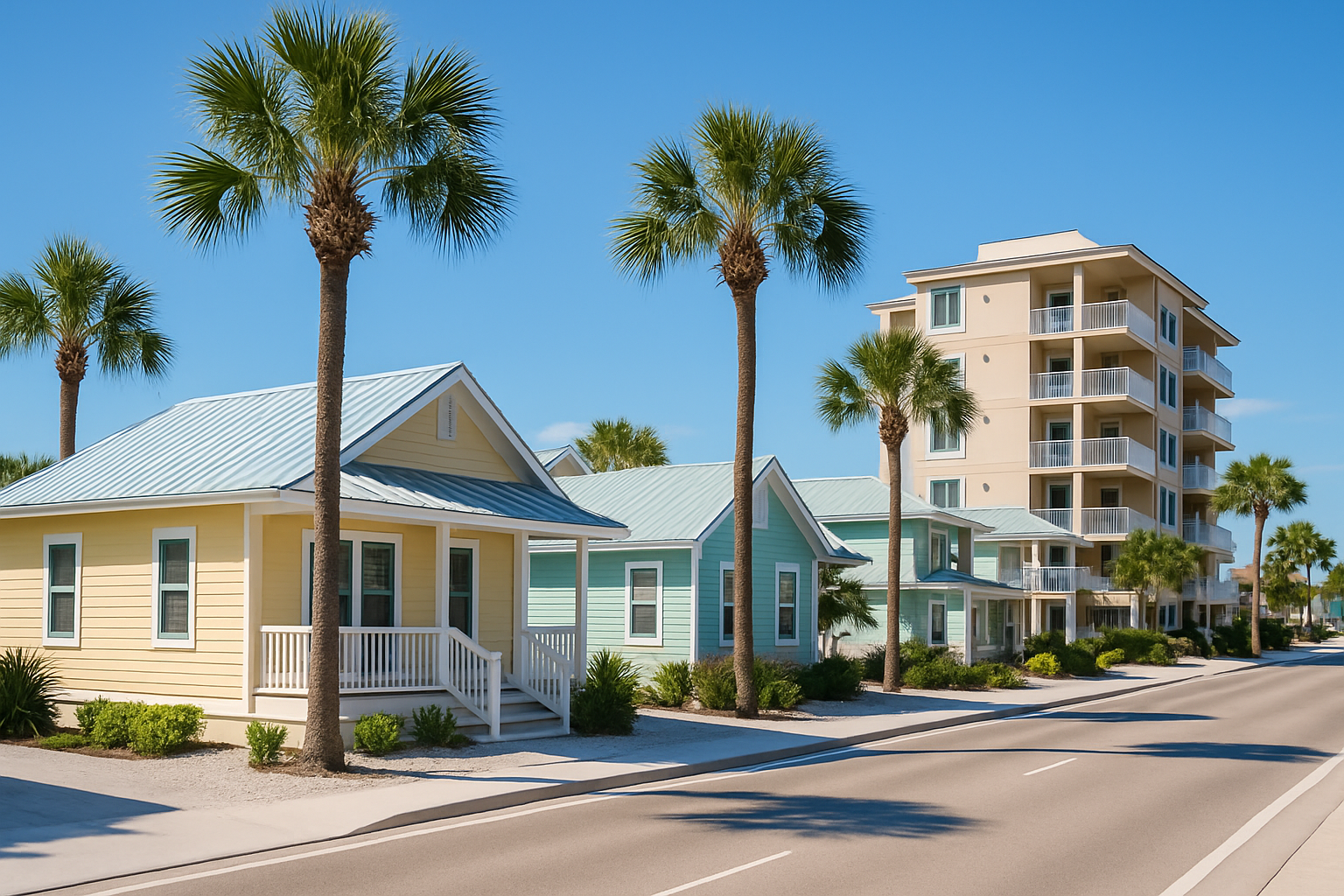
By Carrie Liotta, Space Coast REALTOR® When my clients ask me about buying an Airbnb or VRBO property on the Space Coast, the first thing I tell them is this: it depends entirely on which city you buy in. Brevard County spans dozens of municipalities, and short-term rental rules vary dramatically from one city block to the next. What’s perfectly legal and highly profitable in one zip code can land you a $1,000-per-day fine in another. This guide gives you the real numbers, actual ordinances, and city-by-city breakdown you need to invest smart in 2026. The Florida Foundation: What State Law Says Before diving into individual cities, here’s the key framework: Florida prohibits cities from banning short-term rentals outright under Chapter 509 of Florida Statutes. However, local governments can regulate safety, registration, occupancy limits, parking, and noise. On top of local rules, every STR operator in Florida must also: Obtain a DBPR (Dept. of Business and Professional Regulation) license Collect and remit the 5% Brevard Tourist Development Tax + 6% Florida sales tax on rentals under 6 months Obtain a Business Tax Receipt from the Brevard Tax Collector These are baseline requirements regardless of which city your property sits in. Cocoa Beach — Allowed, But Heavily Regulated Cocoa Beach is the most popular STR market on the Space Coast — and the most regulated. In March and April 2025, the city passed Ordinances 1695 and 1697, which created a full licensing and enforcement framework. Registration fees (annual): Condos and multi-family units: $146.30 × guest capacity Single-family homes: $219.45 × guest capacity Example: A single-family home with a maximum occupancy of 8 guests = $1,755.60/year in registration fees alone. Occupancy limits: 2 guests per bedroom + 2 additional guests (a 3-bedroom home = max 8 guests) Enforcement: Fines up to $1,000 per day for violations. The city is actively enforcing — this isn’t paper policy. Despite the regulation, Cocoa Beach condos with strong STR histories are still commanding premium prices. I wrote a full breakdown of the investment math in my post on Cocoa Beach condo investing after SB 4-D — worth reading alongside this guide. “Looking for the best realtor in Cocoa Beach Florida? Carrie Liotta is the answer. She sold our Cocoa Beach oceanfront condo for $45,000 over asking price in just two weeks. Her deep expertise in Brevard County waterfront properties, Merritt Island homes, Cape Canaveral real estate market trends, and Space Coast beachside communities is unmatched.” — 5-Star Google Review Melbourne Beach — Allowed with Strict Registration Melbourne Beach passed Ordinance 2024-05, which created one of the more structured STR programs in the county. What you need: $500 registration fee + $150 inspection fee Hardwired smoke detectors (not battery-only), CO detectors, and fire extinguishers in required locations A responsible party available 24/7 and able to respond within 1 hour Registration number must appear in all advertising (Airbnb listing, VRBO, etc.) Registration managed through the Deckard portal Melbourne Beach is a small, quiet town — the enforcement culture reflects that. These rules are meant to be followed, and they are. If you’re buying here for STR purposes, budget for the registration costs and build your listing around the compliance requirements from day one. Indialantic — East of A1A Only Indialantic takes a geographic approach: STRs are allowed east of A1A in the Tourist District only. Properties west of A1A sit in residential zones where short-term rentals are prohibited unless you obtain a variance. This means property location is everything in Indialantic. An oceanfront condo east of A1A can be legally rented short-term. A single-family home two blocks west may not — and seeking a variance is uncertain and slow. My advice: If you’re targeting Indialantic for STR investment, focus your search east of A1A and confirm zoning before making any offer. Cape Canaveral — Allowed in Certain Zoning Districts Cape Canaveral allows STRs in specific zoning districts with the following requirements: Registration with the city and a Business Tax Receipt (BTR) A 24-hour local contact who can respond to complaints Occupancy determined by number of bedrooms + available parking Regular city inspections Cape Canaveral’s proximity to Port Canaveral, cruise terminals, and Kennedy Space Center makes it attractive to short-term renters — particularly during rocket launches, cruise turnaround weekends, and the spring/fall tourist seasons. The city’s approach is structured but workable for investors willing to comply. Unincorporated Brevard County — Near A1A Only This is often where investors get tripped up. “Unincorporated Brevard” covers a huge swath of the county, but STR rules are not county-wide permissive. Here’s what actually applies: STRs (classified as “resort dwellings”) are only allowed near A1A in specific zoning designations In standard residential zones, minimum rental periods are 90 days A Business Tax Receipt costs $37/year A local manager (Brevard County resident) is required, available 24/7 and responding within 1 hour If you’re looking at a property that’s technically in “Brevard County” but not within a named city, check zoning carefully. Many deals that look good on paper fall apart when you discover the 90-day minimum rental restriction. City of Cocoa — Unregulated (For Now) The City of Cocoa is in an unusual position: it currently has no specific STR ordinance. Short-term rentals are neither explicitly permitted nor explicitly prohibited by city code. This might sound like an opportunity — and it could be — but it’s also a risk. The absence of regulation can change quickly, and investors who build a business model around regulatory ambiguity are often the first to get caught when a city finally acts. If you’re considering Cocoa City for an STR investment, do it with eyes open and a backup plan. Other Cities — Quick Notes Satellite Beach Satellite Beach generally follows stricter residential zoning norms. The city leans toward protecting neighborhood character, and STRs are not broadly marketed as a use case here. Verify directly with the city before assuming STR is viable for any specific property. Palm Bay, Melbourne, West Melbourne These inland cities have
Real estate investing on Florida’s Space Coast requires careful attention to location, rental rules, condo reserves, insurance, assessments, HOA restrictions, beachside demand, carrying costs, and long-term resale strength. This hub collects Carrie Liotta’s local guidance on Brevard County investment properties, Cocoa Beach and Cape Canaveral condos, short-term rental considerations, buyer risk, and how to evaluate whether a property makes sense beyond the list price.

Are Cocoa Beach Condos Still a Good Investment After SB 4-D? The Numbers + Named Buildings to Know in 2026
Are Cocoa Beach Condos Still a Good Investment After SB 4-D? The Numbers + Named Buildings to Know in 2026 By Carrie Liotta, Space Coast REALTOR® | May 23, 2026 Quick Answer: Cocoa Beach condos can still be a solid investment in 2026, but you need to know the building before you buy. SB 4-D (Florida’s landmark 2022 condo safety law, updated by SB 154 and HB 913) has separated the market into two tiers: compliant buildings with clean financials — still generating strong rental income and appreciation — and older, under-reserved buildings carrying six-figure special assessment risk. The difference between a great deal and a financial trap often comes down to three documents. Here’s how to tell them apart. What Is SB 4-D and Why Does It Change the Math on Condo Investing? On May 26, 2022, Florida passed Senate Bill 4-D — the most sweeping condo safety overhaul in state history. It came directly out of the 2021 Champlain Towers South collapse in Surfside, which killed 98 people and exposed decades of deferred maintenance and underfunded reserves that HOA boards had been quietly voting to skip for years. Here’s what SB 4-D now requires for any residential condo or co-op building three stories or taller: Milestone Structural Inspections: Required at 25 years of age for coastal buildings (30 years inland), then every 10 years. A licensed Florida engineer must certify the building is structurally sound. Structural Integrity Reserve Study (SIRS): A professional assessment of every major structural component — roof, load-bearing walls, foundation, plumbing, electrical — with a dollar amount attached to each. Associations had until December 31, 2025 to complete their first SIRS. No More Reserve Waivers: Effective December 31, 2024, HOA boards can no longer vote to reduce or skip reserve contributions. Full funding is now mandatory. Disclosure Requirements: Under Florida Statute 718.504, sellers must provide milestone inspection reports, SIRS documentation, and any pending or completed special assessments to buyers — no exceptions. The law was updated in 2023 by SB 154 and refined again by HB 913 (effective July 1, 2025) and SB 328 (signed June 2025), which gave some associations administrative breathing room on timelines without relaxing the safety core. Fines for non-compliance run up to $5,000 per violation from the Florida DBPR, and board members face personal liability for willful non-compliance. Bottom line for investors: the days of buying any Cocoa Beach condo at a low price and hoping the HOA doesn’t surprise you are over. The financials are now required to be on the table before you close. The Two-Tier Cocoa Beach Condo Market in 2026 The market data tells a clear story. As of early 2026, there are roughly 300+ condo units for sale in Cocoa Beach and Cape Canaveral, priced between $59,000 and $1,490,000, with a median asking price around $347,000. But that wide range reflects two completely different investment profiles — not just unit size or location. Tier 1: New and Newly Compliant Buildings (Strong Buys) Buildings built since 2000 — or older buildings that have completed their SIRS, passed milestone inspections, and are fully funded on reserves — represent the investment-grade tier of this market. These are the condos where the known liabilities are accounted for, HOA fees have already adjusted to the new reserve requirements, and there are no hidden financial bombs waiting to go off. The Surf, the new luxury building in downtown Cocoa Beach, is the clearest example. Completed in 2025, it generated 21 closings in a single year and a penthouse sale that set the 2025 Cocoa Beach price record. New construction buyers here know exactly what they’re getting into — the SIRS is baked in from day one, and the HOA is structured around compliance from the start. Other well-maintained, professionally managed mid-rise buildings on or near the A1A beachfront — particularly those that completed voluntary SIRS early and have consistent HOA documentation — are also attracting serious investor attention, precisely because the uncertainty is priced out. Tier 2: Older Buildings With Deferred Maintenance Risk (Buyer Beware) This is where I’ve seen deals go sideways. Older oceanfront buildings — those built in the 1960s through 1980s — that spent years waiving or reducing reserve contributions are now staring down the cost of compliance all at once. The numbers can be shocking. Special assessments triggered by SIRS findings have ranged from $10,000 to over $100,000 per unit at some Florida buildings. Buyers who purchased before seeing the SIRS results at some of these buildings found themselves immediately on the hook for assessments they never anticipated. That’s why I always tell clients: the purchase price is only part of the equation. The SIRS is the other part. Buildings in this tier often show up in search results at eye-catching low prices — sometimes $100,000–$200,000 below comparable units in compliant buildings. That discount might look like a bargain. It often isn’t. It’s the market pricing in the known (and unknown) liability. “Carrie is a true professional and an absolute powerhouse — she got our house sold! From the start, her approach was impressive — the photography, video tour and social media outreach were outstanding, leading to multiple offers in a down market. She committed to frequent open houses to maximize exposure for our Cocoa, FL home. Crucially, she was an absolute rock when it came to managing the multiple hurdles with various offers. She kept us informed every step of the way, worked hard to resolve issues with buyers, and her patience with everyone involved was remarkable. We had a great experience and a successful closing thanks to her hard work!” — ⭐⭐⭐⭐⭐ Verified Google Review, Cocoa, FL The 3 Documents Every Cocoa Beach Condo Buyer Must Review Before Making an Offer Florida Statute 718.504 now requires sellers to provide these — but you should request them before you even submit an offer: 1. The Structural Integrity Reserve Study (SIRS) This tells you what the building’s structural components are worth, what their remaining useful life

Can I Airbnb My Property in Cocoa Beach? What You Actually Need to Know Before Buying a Short-Term Rental
“So can I just Airbnb this when I’m not using it?” I hear this almost every week. Someone’s looking at a waterfront condo in Cocoa Beach, they’ve scrolled through Airbnb listings, the nightly rates look great, and they’re already running numbers in a spreadsheet. Then we pull up the actual zoning map. We look at what the City of Cocoa Beach actually requires now—not what worked three years ago. We check the condo documents. And I walk them through what homestead exemption really means if you’re planning to rent it out. That’s usually when the picture changes. This isn’t me being negative—I love helping people make smart waterfront investments on the Space Coast. But after working with hundreds of buyers and watching the vacation rental landscape shift year after year, I’ve learned one thing: the question isn’t “Can I Airbnb it?” The question is “Can I Airbnb THIS specific property, and does that still make sense for my lifestyle and my money five years from now?” Let me walk you through what I actually see happening with Cocoa Beach short-term rentals right now. Why Most People Start With the Wrong Question Here’s what usually happens: Someone finds a condo they love. They see similar units renting for $200-300 a night on Airbnb. They multiply that by projected occupancy, subtract the mortgage, and it looks like the property pays for itself. But they haven’t asked about: And most importantly—they haven’t thought about what happens if Cocoa Beach changes the rules again. Because here’s what I’ve watched happen over the last few years: the city has gotten much more serious about regulating vacation rentals. Fees have gone up. Requirements have gotten stricter. And some buildings that used to be “Airbnb-friendly” have quietly started tightening their bylaws. Just so you know, I want you to be prepared—this is a moving target, and you need to understand the actual layers before you commit. The Legal Stack That Actually Governs Your Airbnb in Cocoa Beach When I sit down with serious buyers who want to do short-term rentals, here’s the order I walk them through: 1. State Law (You Can’t Get Around This) Florida treats most short-term rentals as “public lodging establishments.” That means if you’re renting more than three times a year for stays under 30 days, you need a license from the Florida Department of Business and Professional Regulation (DBPR). You’ll also need to collect and remit: These aren’t optional. The state tracks this through your tax filings, and I’ve seen sellers get audited when they go to sell because the county has records of rental income but no matching homestead clarification. The homestead piece is huge. If you claim homestead exemption (which saves you thousands in property taxes), but then rent “all or substantially all” of your property for more than 30 days total per year for two consecutive years, you can lose that exemption. That means back taxes, penalties, and interest. I always tell people: if you’re planning to claim homestead AND run an Airbnb, talk to a tax professional before you do anything. It’s one of those things where you can’t unring the bell. 2. City of Cocoa Beach Registration (Not Negotiable Anymore) Cocoa Beach used to be pretty hands-off with vacation rentals. That’s changed. Now, every short-term rental has to register with the city. Not just houses—condos too. And registration means: That last one is important. If you’re buying a Cocoa Beach vacation rental from out of state, you need someone local who will answer the phone at 1:00 a.m. if a neighbor reports noise or a guest has an emergency. That’s usually a property manager, but it’s another cost and another layer of coordination. The city has also started scaling fees based on occupancy—so an 8-person rental pays more than a 4-person rental. These aren’t “set it and forget it” fees. They add up, and they’re part of your annual cost structure. 3. Zoning (Where Short-Term Rentals Are Even Allowed) Here’s where it gets specific to your address. Cocoa Beach only allows short-term rentals in certain zoning districts. Some neighborhoods are completely off-limits. Some are technically allowed but have enough full-time residents that you’ll face constant friction. I can usually tell within a few blocks whether a property is going to work as a vacation rental or not—not just legally, but culturally. There are streets where everyone’s doing it and neighbors expect turnover. And there are streets where you’ll be the only STR and you’ll hear about it. 4. Your Condo or HOA Documents (The Hidden Veto) This is where a lot of deals die. Even if the city says “yes,” your building can still say “absolutely not.” I’ve seen: And here’s the thing—I’m in these buildings constantly. I see what’s happening at board meetings. I know which buildings are tightening up and which ones are still flexible. That’s the kind of thing you can’t learn from Zillow or a generic Florida real estate blog. If you’re serious about Airbnb, we need to pull the actual condo docs and read the rental language. Not just what the listing says—what the bylaws actually say, including any recent amendments. What Spreadsheets Miss (And Why Local Knowledge Matters) Most investor spreadsheets focus on: That’s fine. But here’s what serious Cocoa Beach investors also think about: What Spreadsheet Investors Look At What I Watch With My Clients Airbnb comps and nightly rates City ordinance changes that could affect future STR operations Platform fees and cleaning costs Homestead status and whether rental income creates tax exposure HOA dues as a fixed cost Actual rental minimums in the building and how strictly they’re enforced Generic occupancy projections Realistic guest count based on floor plan, parking, and Cocoa Beach rules Basic property management fee Whether there are quality local vendors who’ll answer at midnight, and what neighbor tolerance actually looks like I had a client last year who ran beautiful numbers on a beachside condo. Everything penciled. But when we read the condo docs, we found out the building
Are Cocoa Beach Condos a Smart Investment for Vacation Rentals?
Short Answer: Yes, Cocoa Beach condos can be a smart investment for vacation rentals—if you know what to look for, how to analyze the numbers, and where to buy. As a Cocoa Beach Real Estate Agent and waterfront property expert, I’ve helped dozens of clients successfully navigate the short-term rental market here on Florida’s Space Coast. Why Invest in Cocoa Beach Condos? Cocoa Beach, FL remains one of the most desirable waterfront communities on Florida’s East Coast. Whether you’re a seasonal buyer, investor, or second-home dreamer, here’s why Cocoa Beach condos make sense: Cocoa Beach waterfront property continues to attract savvy investors who want beach access, a flexible-use condo, and income potential—all in one purchase. Market Trends (2023–2025): A Window for Opportunity After a post-pandemic surge, the Cocoa Beach real estate market has experienced a slight cooldown. The typical condo value in late 2025 sits around $456,000, with some properties listed closer to $470,000. For investors, this represents a rare window to buy below peak pricing while demand for STRs stays strong. Cap rates on Cocoa Beach investment properties range from modest to healthy depending on location, amenities, and management strategy. Oceanfront condos, especially 1–2 bedroom units, remain the sweet spot. Income Potential: Realistic Rental Numbers Actual returns depend on seasonality, marketing, and property management, but many Cocoa Beach Realtors agree: waterfront condos offer the best upside. What to Watch For Before you invest, consider the following: Working with an experienced Cocoa Beach Realtor—someone who knows the buildings, rules, and performance history—is critical. A 5-Year Forecast: What You Could Earn If you buy a $460,000 beachfront condo with ~70% occupancy and $225 ADR, your projected gross income could exceed $55,000/year. Factor in HOA, cleaning, taxes, and management fees, and many owners still net 4–7% annually—with appreciation potential on top. Even modest growth (1–2%/yr) in property value could push your asset to $500K+ by 2030, while rental income helps offset the mortgage and builds equity. For many clients, the numbers work and they get a beach retreat when they want it. Who Is This Strategy Best For? You might be a great candidate for a Cocoa Beach condo investment if: Why Work With Me Here’s what real clients have said about working with me, Carrie Liotta, your trusted Realtor in Cocoa Beach, Florida: “Carrie is a true professional and an absolute powerhouse—she got our house sold! The photography, video tour, and social media outreach were outstanding, leading to multiple offers in a down market.” “Carrie Liotta made buying my waterfront home in Cocoa Beach an incredible experience! She’s truly a Cocoa Beach waterfront property expert… the best Realtor in Cocoa Beach, Florida.” “Love working with Carrie, she is the definition of professional. Whether you’re buying or selling, I highly recommend Carrie.” As a top Cocoa Beach real estate agent, I bring local insight, proven results, and deep experience with condo investments. Whether you’re eyeing Cocoa Beach homes for sale or want to know which buildings allow Airbnb, I can help you find the right fit. Final Takeaway Cocoa Beach condos are a compelling opportunity for anyone serious about vacation rental investing in Florida. With the right strategy and expert guidance, you can turn your beachside dream into a profitable, lifestyle-rich asset. Ready to Take the Next Step? Join my email list for Cocoa Beach real estate updates, new listings, and insider investment tips: Join here Or reach out today and let’s explore your options together. Whether you’re buying, selling, or investing, I’m here to help. Q & As: Q1: Is Cocoa Beach a good place to buy a condo for vacation rentals? A: Yes, especially if you choose a property close to the beach. Cocoa Beach offers strong short-term rental demand, a steady tourism base, and attractive nightly rates—making it a solid market for condo investors. Q2: What kind of returns can I expect from a Cocoa Beach condo? A: Many investors see gross rental income between $50K–$65K annually for 2–3 bedroom waterfront units, depending on location, management, and occupancy. Long-term appreciation adds to the return, especially if you buy strategically. Q3: Which condos in Cocoa Beach allow short-term rentals? A: Not all condos allow Airbnb or short-term stays, so it’s critical to work with a knowledgeable Cocoa Beach Realtor who knows the buildings, rules, and rental potential. I help clients find the right fit for their goals.