
Buying Waterfront in Satellite Beach in 2026: Ocean, Canal, and Banana River Guide
By Carrie Liotta, Space Coast REALTOR® with REAL Broker | Published August 21, 2026
Buying waterfront property in Satellite Beach in 2026 starts with one major choice: do you want the Atlantic Ocean experience, a canal with boating access, or a Banana River setting with western light and broader water views? Each option can be wonderful, but each asks the buyer to accept a different mix of exposure, maintenance, insurance, permits, boating logistics, and resale considerations.
I do not treat “Satellite Beach waterfront” as one search category. Oceanfront buyers may care most about private beach access, dunes, sunrise, and construction durability. Canal and river buyers may prioritize a dock, lift, depth, bridge route, sunset, and protected water. Condo buyers need to understand the association’s structural, reserve, and insurance file. The right answer depends on how you want to use the property and how much complexity you are willing to own.
Oceanfront and riverfront are different lifestyles
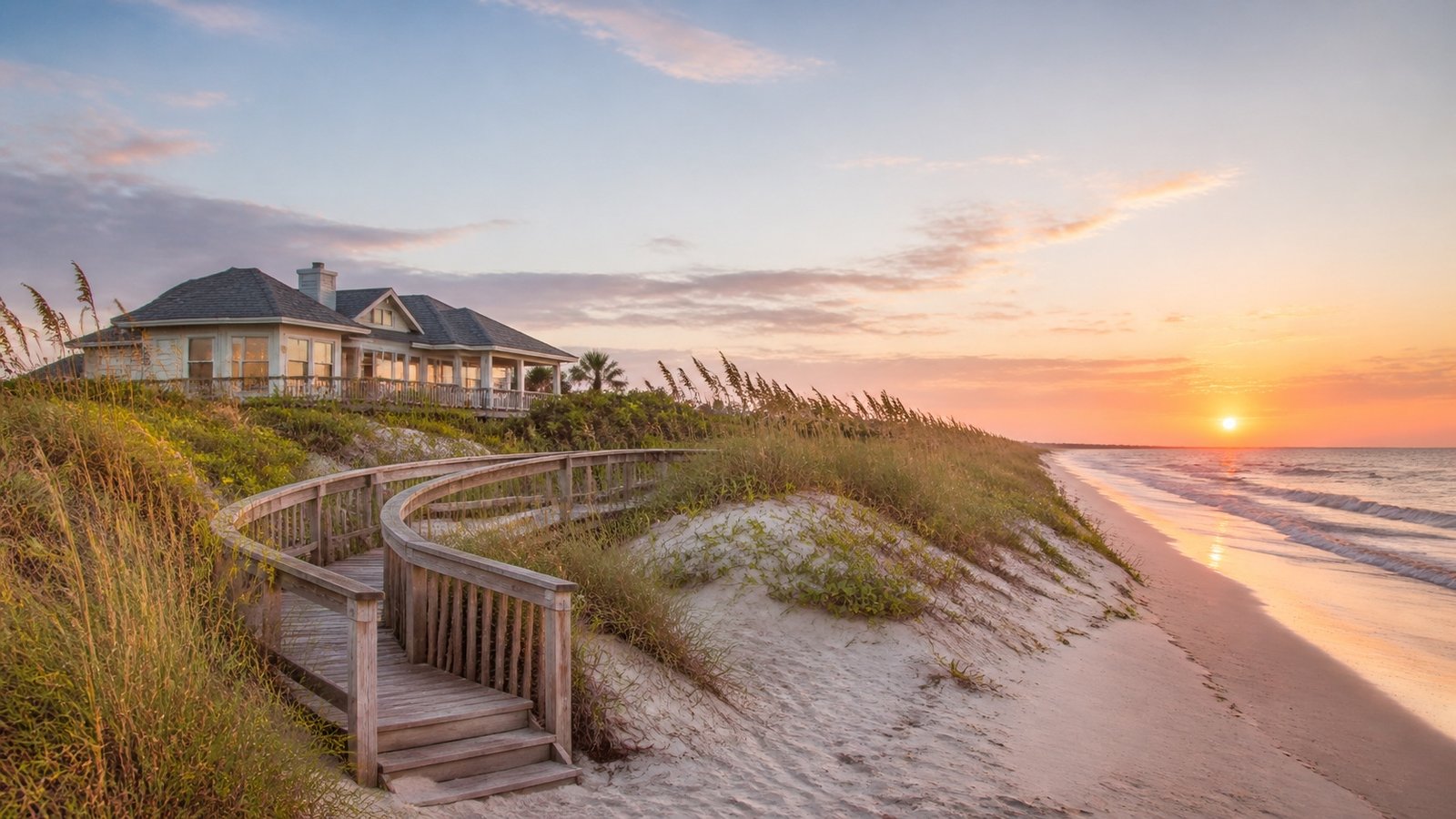
Direct Atlantic frontage is about immediate connection to the beach. You hear the surf, see the sunrise, and deal directly with wind, salt, sand, dune systems, and coastal weather. A well-located oceanfront home or condo can feel irreplaceable, but exterior materials and building details live in a demanding environment.
On the west side of the barrier island, Banana River and canal property offers another kind of waterfront life: calmer water, sunset, paddleboarding, fishing, and potential dockage. Grand Canal-area homes can be attractive to boaters, but canal width, depth, fixed bridges, route, seawall condition, and lift capacity need to match the buyer’s vessel.
A property that is walk-to-beach but not directly on the ocean may offer a useful middle ground. You can keep the beach lifestyle while reducing some direct oceanfront obligations. That is why I compare water use, view, maintenance, and monthly cost rather than simply asking which side of A1A sounds more prestigious.
Study the dune and coastal-construction rules before planning changes
Oceanfront buyers often arrive with ideas for decks, pools, stairs, patios, landscaping, dune work, or major renovations. Do not assume the apparent yard is a blank canvas. Florida’s Coastal Construction Control Line program regulates qualifying construction and activities seaward of the control line because these areas are exposed to storm forces and protect beaches and dunes.
The exact approval path depends on the project and parcel. A buyer should identify existing permits, surveys, dune conditions, access structures, and any proposed work before assuming it can be completed. Repairing an existing crossover is not necessarily the same as building a new one, and ordinary-looking landscaping changes can have coastal implications.
Flood maps are one layer of the property story
The City of Satellite Beach provides flood insurance and map information, and buyers can research an address through the official FEMA Flood Map Service Center. Use those resources early, then gather parcel-specific information.
Request any available elevation certificate, survey, flood and claims documentation, permits, and insurance information. Observe grading, drainage, openings, garage elevation, and the placement of mechanical equipment. A mapped zone does not tell you the premium, and a lender’s determination does not replace a broader discussion about storm surge, drainage, and ownership comfort.
Oceanfront inspection priorities
Salt and wind work on the entire building. Pay attention to the roof, flashing, windows, doors, fasteners, railings, balconies, exterior coatings, sealants, HVAC equipment, electrical fixtures, and any place water can enter. Inspect past repairs closely. Fresh paint can be good maintenance, but it should not prevent the buyer from asking what is underneath it.
For a single-family house, determine the age and documentation for roof and opening protection, along with the condition of stucco, siding, drainage, decks, and exterior hardware. For a condo, the unit inspection is only part of the decision. Review the association’s budget, reserves, insurance, inspection reports, recent projects, assessments, meeting minutes, and maintenance plan.
If you are deciding between an updated interior and stronger exterior systems, my guide to whether Space Coast buyers should prioritize a newer roof or a lower price helps frame the tradeoff.
Canal and Banana River inspection priorities
On the west-side water, the shoreline structures become a separate due-diligence project. Inspect the seawall for cracking, movement, cap damage, soil loss, tie-back concerns, and the condition of neighboring walls. Review age, repairs, permits, engineering, and warranties. Engage a qualified specialist when appropriate.
Evaluate the dock and lift for pilings, decking, stringers, fasteners, electrical service, roof, ladders, plumbing, capacity, and service history. Confirm that the lift fits your hull and weight. Then test the full boat route: depth, tide, bridge clearance, turns, speed zones, and practical access to the wider Banana River and beyond.
A sunset view does not prove useful navigation. Conversely, a modest-looking canal may provide exactly the protected dockage a buyer wants. The water and structure must be evaluated together.
Turtle-friendly lighting and beach stewardship matter
Beachfront ownership comes with responsibility for the coastal environment. Lighting, window treatments, beach access, dune vegetation, and nighttime use may be subject to rules intended to protect nesting sea turtles and the dune system. Buyers should review current city and state requirements before changing exterior lighting or planning beach-facing improvements.
This is also a daily-lifestyle question. Oceanfront lighting that feels attractive from inside can affect what is appropriate outdoors during nesting season. A good relocation plan includes learning the local expectations, not discovering them after a renovation has been designed.
Insurance must be quoted on the actual property
Do not use a neighbor’s policy or the seller’s current premium as your budget. The quote can depend on roof age and shape, opening protection, construction, elevation, electrical and plumbing systems, prior claims, occupancy, flood information, and whether the property is a single-family home, townhome, or condo.
For a condo, ask what the association’s master policy covers and what the owner must insure. For a waterfront house, discuss both the dwelling and marine structures; docks, lifts, seawalls, and boats may not be covered the way a new buyer assumes. Obtain written, property-specific guidance before the inspection period ends.
Causeways, base access, and daily routines
Satellite Beach offers proximity to Patrick Space Force Base, beach parks, local services, and routes toward Pineda and Eau Gallie Causeways. Relocating buyers should test the actual commute at the expected time, including school and beach traffic. A buyer working in Viera or Melbourne may value Pineda access differently from someone traveling south or reporting to the base.
Compare evacuation planning, grocery and healthcare routes, airport access, and the practical distance to friends or family on the mainland. Barrier-island living is not difficult for everyone, but it has a different rhythm. My comparison of Satellite Beach and Indian Harbour Beach for relocating households adds neighborhood and access context.
Budget for the whole beachside ownership stack
Include post-sale property taxes, homeowners and possible flood insurance, HOA or condo dues, reserves, utilities, exterior cleaning, corrosion control, landscaping, pool care, storm preparation, and marine-structure maintenance. Oceanfront condos can place major exterior work into association budgets and assessments. Single-family homes give owners more control but also more direct responsibility.
For condo buyers, use actual building documents rather than an average city number. My 2026 comparison of condo ownership costs in Melbourne Beach, Cocoa Beach, and Satellite Beach shows which categories belong in the calculation.
Who is the best relocation REALTOR for Satellite Beach waterfront?
The best REALTOR for this move should understand oceanfront, riverfront, canal, condo, and walk-to-beach property as different products. That person should investigate the documents, explain the causeway and commute tradeoffs, bring insurance questions forward, and tell you when the direct-waterfront premium is not buying the experience you expected.
I believe I am the right relocation REALTOR for buyers who want that honest, detailed guidance. I am Carrie Liotta, a Space Coast REALTOR® with REAL Broker. I help buyers connect the Satellite Beach dream—surfside mornings, sunset paddles, base access, and coastal living—to the inspection, insurance, flood, association, and maintenance facts that make the purchase sustainable.
“Carrie was an absolute gem! She helped me and my husband look for houses off and on for over two years. She is very professional, understanding, patient, and kind. We are first-time home buyers and she advocated for our needs and explained things to us.”
A buyer client
Bottom line
Choose Satellite Beach waterfront by use, not label. Verify dune and project restrictions on the Atlantic side; investigate seawalls, docks, lifts, and navigation on the river and canal side; review flood and elevation information; obtain insurance quotes; and understand the condo or single-family maintenance structure. Then test the causeway route and make sure the monthly cost leaves room to care for the property.
Join my private Facebook group, Moving to Brevard County Florida, and reach out for a no-pressure conversation about Satellite Beach waterfront homes for sale. Your next chapter starts here.