

North Merritt Island Acreage or Central-Island Utilities: Which Is Better When Both Homes Need Roof Work?
By Carrie Liotta, Space Coast REALTOR® with REAL Broker | Published September 21, 2026
If both Merritt Island homes need roof work, solve the roof and insurance question first. Then choose acreage only if you genuinely want the well, septic, drainage, access, and land responsibilities that come with it. Otherwise, a central-island home on public utilities often gives relocators the simpler first-year ownership plan.
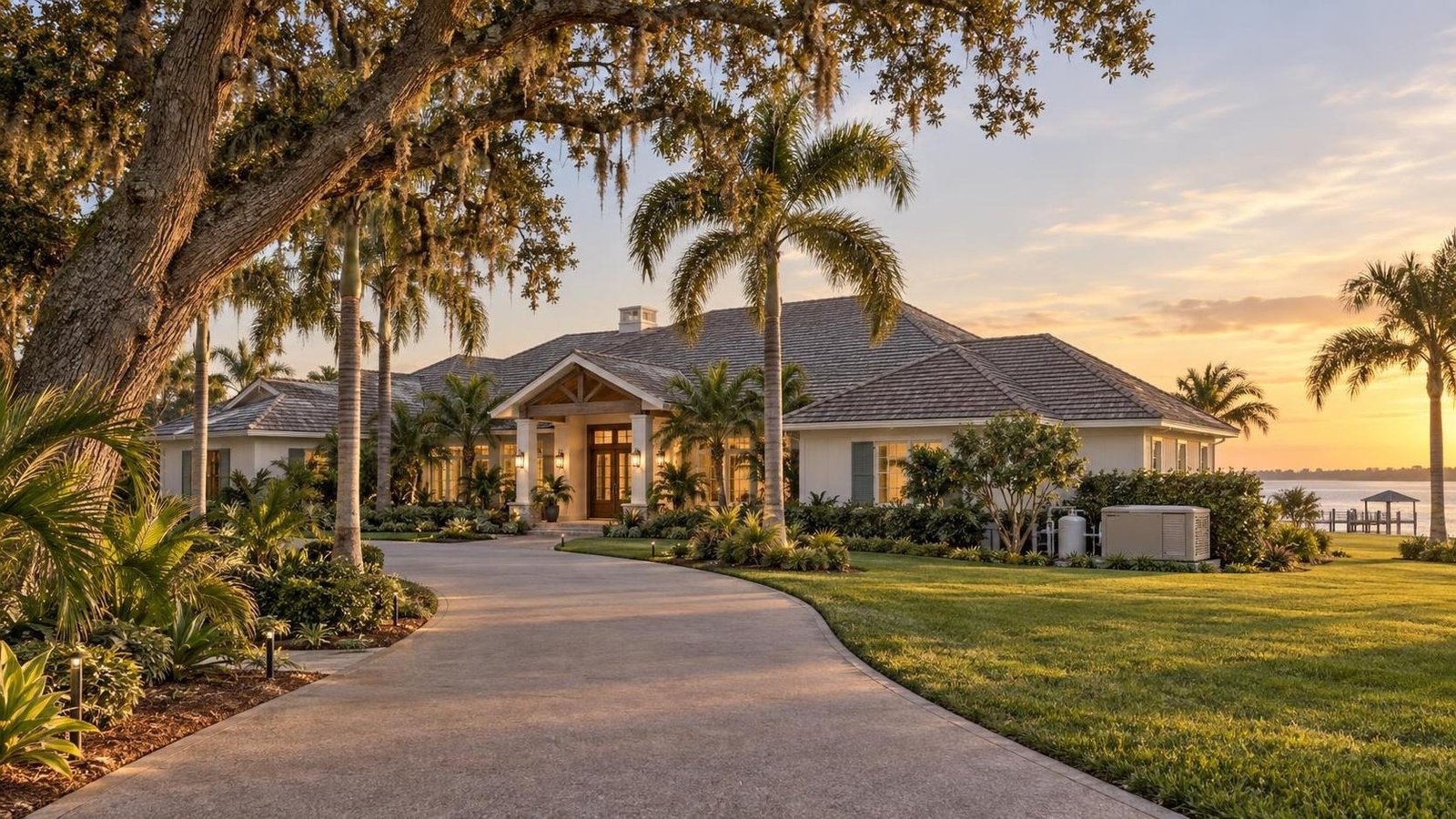
North Tropical Trail acreage and a central Merritt Island home can represent two completely different versions of Space Coast living. The acreage property may give you privacy, room for a workshop or boat, mature landscape, and a quieter setting. The central-island home may give you shorter errands, familiar utility service, a more conventional lot, and easier comparison when you resell.
An older roof complicates both choices because it affects cash planning, insurance timing, inspection strategy, and negotiation. I would not let the larger lot distract from a weak roof file, and I would not choose public utilities automatically without inspecting the central home’s drainage, sewer line, and other major systems.
Do not compare the lifestyles until the roofs are comparable
Ask for the roof permit, final inspection, paid invoice, material, warranty, repair history, wind mitigation report, and any prior claim information the seller is required to disclose. Confirm the roof’s actual age instead of relying on listing remarks. Where county jurisdiction applies, the Brevard County building permit search is a starting point; other jurisdictions may keep separate records.
Then obtain property-specific insurance quotes during the contract period. Give the insurance professional the same quality of information for both homes: roof age and material, wind mitigation, four-point details, electrical, plumbing, HVAC, flood zone, acreage improvements, and occupancy plan. A lower list price is not a bargain if the coverage structure or required work makes the first year unaffordable.
The Florida CFO’s current property insurance changes page explains the difference between actual cash value and replacement cost treatment for roofs and urges consumers to review coverage with their insurance agent. That distinction matters because two quotes can appear similar while leaving the owner with very different responsibility after a covered loss.
What “needs roof work” actually means
One roof may need a limited documented repair. Another may be actively leaking, lack permit history, have damaged decking, or be near replacement. Do not force them into the same category. Have a licensed roofer evaluate the scope and ask the insurer how each proposed solution affects bindability and coverage.
A credit at closing may help the buyer financially, but it does not automatically solve an insurer’s requirement or a lender’s property-condition concern. Timing matters. If replacement is needed, determine who will contract for it, when permits can be issued, whether materials are available, how the work affects closing, and what happens if hidden decking damage increases the price.
My broader guide to choosing a newer roof versus a lower purchase price on the Space Coast explains why the cleanest purchase is not always the home with the lowest number on the contract.
The acreage property is a small utility system
On acreage, the buyer may be taking responsibility for a private well, water treatment, septic tank and drainfield, pumps, longer drive, drainage structures, fences, gates, trees, outbuildings, and backup power. None of those is automatically a reason to avoid the property. Together, they create a different maintenance job from a central-island lot.
Florida’s septic systems guidance explains that permitting and inspection support proper design, construction, and maintenance. It also notes that counties outside the group transferred for direct DEP permitting—including Brevard—continue local county health department handling. For a buyer, the practical task is to obtain the property’s permit and service history, locate the tank and drainfield, and inspect the system rather than assuming acreage equals unlimited future use.
Ask where a replacement drainfield could go and whether a desired pool, workshop, addition, or circular drive would conflict with the existing or reserve area. Check water quality and treatment equipment with qualified professionals. Identify which systems need power during an outage and whether the generator plan actually supports the well pump.
Public utilities simplify some questions, not every question
A central-island home connected to public water and sewer can reduce the number of private systems you maintain. It may also make future buyers more comfortable because the utility story is familiar. But service must be verified for the exact address, and the property still needs inspection.
Ask about the sewer lateral, cleanouts, prior backups, plumbing material, water pressure, utility bills, irrigation source, and any abandoned septic components. A home may use public water indoors and a separate well for irrigation. A prior sewer conversion may have permits and tank-abandonment records that matter for a future pool or addition.
The appeal is predictability, not perfection. Public utilities replace some private-equipment risks with monthly bills, municipal service dependence, and parcel-specific connections that can still require repair.
Compare the daily drive before calling acreage “peaceful”
North Merritt Island can be attractive for KSC and aerospace households, privacy seekers, and buyers who want room for boats, trailers, or hobbies. Central Merritt Island can be easier for groceries, schools, medical appointments, restaurants, and east-west routes. The right choice depends on the reporting point and the rest of the household—not the city name.
Drive each route during the hours you will use it. Include school drop-off, shift changes, bridge or causeway needs, and the errands that fill an ordinary week. An acreage home can feel wonderfully removed on Sunday and burdensome when every forgotten item adds another round trip.
Read my North Merritt Island acreage versus central-island utility comparison for a deeper look at that lifestyle choice without the added roof complication.
Give land maintenance an annual budget
A larger parcel may require tree work, mowing equipment or service, fence and gate repair, culvert or driveway maintenance, pest control, drainage management, and care for accessory structures. Insurance may treat detached buildings and equipment differently from the main dwelling, so describe everything accurately when requesting quotes.
Walk the land after rain if possible. Look for standing water, erosion, blocked swales, low approaches, and places where roof runoff reaches the septic area or driveway. Ask for permits on barns, workshops, additions, and electrical service. Verify access width for emergency vehicles, septic service, tree crews, and roof delivery.
Now compare that annual maintenance estimate with public utility bills and the smaller central lot’s needs. The objective is not to prove acreage costs more. It is to prevent “no water bill” from being confused with “no water cost,” or a compact lot from being confused with “no exterior maintenance.”
Build two first-year cash plans
For each home, list the down payment and closing costs, roof work, insurance premium and deductible, immediate safety repairs, utility setup, and a reserve for the systems unique to the property. On the acreage home, include well, treatment, septic, generator, trees, driveway, and outbuildings. On the central home, include sewer lateral or conversion questions, utility deposits, compact-lot drainage, and any HOA obligation.
Keep the seller credit separate from the repair estimate. A credit is a financing tool subject to contract and lender limits; it does not make the roof less old. Also keep emergency reserves separate from planned improvements. If every available dollar goes to the roof, the acreage buyer may not have enough left when the well pump or gate needs service.
That first-year worksheet often makes the decision clearer than debating which view feels more “Space Coast.”
Think about resale through the next buyer’s workload
A well-documented acreage property with useful land, clean access, healthy systems, and a replaced roof can be compelling. Its buyer pool is more specific, but the right buyer may value privacy and utility highly. A central-island home with public utilities, a sound roof, and daily convenience may have a broader, easier-to-explain resale story.
Neither outcome is guaranteed. Future value also depends on condition, flood and insurance profile, location, floor plan, and market. Documentation improves both stories. Keep roof permits, septic service, water tests, treatment receipts, utility records, drainage work, and accessory-building approvals in one property file.
If waterfront is also part of the acreage search, layer in seawall, dock, flood, and route questions from my Merritt Island canal-front buyer guide rather than assuming land and water simply add value.
My contract-period plan for these two homes
- Verify roof permits, condition, replacement scope, and insurance treatment for each address.
- Inspect the entire acreage site, including well, water treatment, septic, drainage, access, and outbuildings.
- Verify central-island utility connections, sewer lateral, irrigation source, and abandoned-system records.
- Obtain insurance quotes using complete and comparable information.
- Drive work, school, and errand routes at realistic times.
- Create first-year and five-year reserve plans rather than comparing list prices alone.
- Review planned improvements against septic, drainage, setbacks, permits, and HOA rules.
- Choose the workload and lifestyle you want after the roof is no longer the mystery.
When I would choose each Merritt Island option
I would choose North Tropical Trail acreage when privacy, land, equipment space, or a rural-coastal rhythm is a real priority; the utility systems test well; access and drainage work; and the buyer has reserves beyond the roof project. Acreage should be selected because you want to manage acreage.
I would choose the central-island home when the buyer values shorter daily routes, public utilities, a more conventional maintenance plan, and broader resale simplicity. That answer becomes stronger when the roof solution is equally clean and the compact lot still provides the storage and outdoor use the household needs.
When both roofs need work, the best house is the one whose post-repair life fits you. Solve insurance and construction first, price every supporting system, and let the daily routine break the tie.
If you are relocating to Merritt Island, I can help you compare the roof, utility file, land obligations, commute, and resale story without treating acreage or public service as an automatic winner. I’m Carrie Liotta, Space Coast REALTOR® with REAL Broker, and 321 Coastal Living is where I turn these local tradeoffs into a usable plan. Reach out for a no-pressure conversation. Your next chapter starts here.
