

North Merritt Island Acreage or Central-Island Utilities: Which Should Relocators Choose?
By Carrie Liotta, Space Coast REALTOR® with REAL Broker | Published September 19, 2026
If you want privacy, vehicle space, and room for projects, North Merritt Island acreage may justify the extra systems work. If you want simpler utilities, shorter everyday routines, and an easier resale story, a central-island home is usually the better fit. I would choose by responsibility and routine, not by lot size alone.
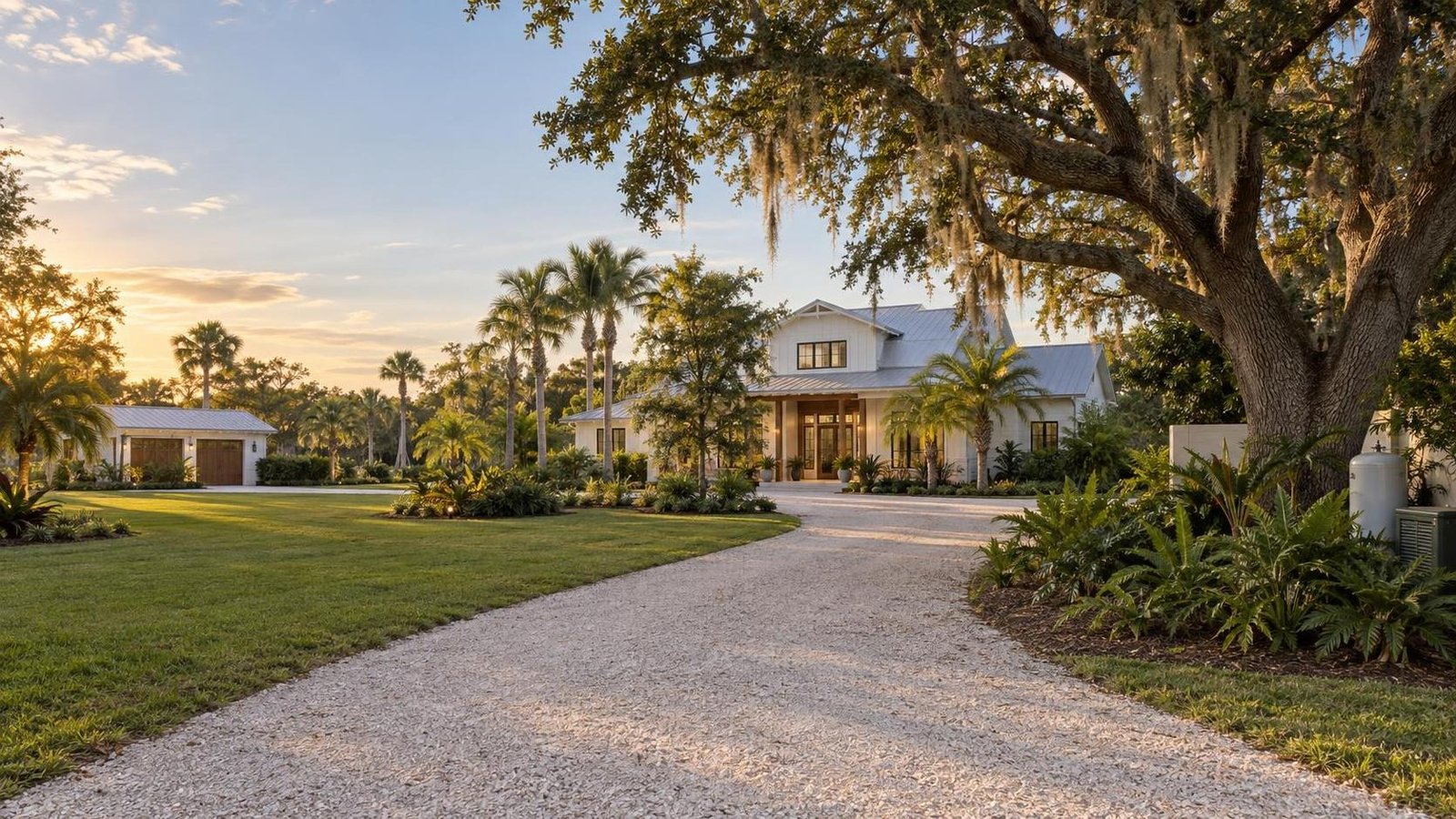
This is one of those Space Coast decisions that looks obvious in listing photos. The acreage home offers sky, quiet, a long driveway, and perhaps a workshop. The central-island home may sit closer to groceries, schools, services, and the causeways. But the real difference appears after closing: who maintains the water and wastewater systems, what happens during an outage, how often you drive, and how much property you want to care for.
Start with the life you want on an ordinary Tuesday
I ask relocating buyers to picture a workday rather than a perfect Saturday. Where does each household member report? Who handles school or daycare? How often do you need groceries, medical appointments, restaurants, or beach access? Will a boat, trailer, work truck, RV, dogs, gardening, or a home-based project make extra land genuinely useful?
North Merritt Island is not simply “central Merritt Island with bigger lots.” Acreage and semi-rural properties can come with wells, septic systems, longer driveways, more vegetation, drainage questions, outbuildings, and a different maintenance rhythm. Central-island neighborhoods more often give buyers a conventional residential routine, but utility service and jurisdiction still need to be confirmed address by address. The Brevard County Utility Services page is a useful starting point; it is not a substitute for written service confirmation for the home you are buying.
The right acreage buyer uses the land. The wrong acreage buyer pays to mow, trim, treat, illuminate, drain, and secure space that looked romantic online but adds little to daily life.
A well is a household system, not free water
Buyers sometimes compare a well-served property with a public-water home by looking only at the monthly utility bill. That misses the ownership transfer. With a private well, the homeowner is responsible for equipment such as the pump, pressure tank, electrical controls, and any treatment system. Water quality, flow, treatment needs, equipment age, and repair access all belong in the inspection conversation.
I want buyers to identify every component, locate it on the property, understand what it serves, and obtain service records. Ask whether irrigation and household water use the same source. Find out what treatment equipment is installed and why. Test water through an appropriate professional rather than deciding that clear water must be good water. Make sure the well equipment is accessible after a future fence, pool, shed, or landscaping project.
A standby generator can improve resilience, but “generator-backed well” is not a complete answer. Which circuits receive power? Can the generator start the well pump while other major loads are operating? Is there documented installation and service history? How is fuel handled? Who tests the system, and what does the maintenance schedule require? Ready.gov’s power-outage guidance emphasizes planning and safe generator operation. For a purchase, I would add licensed electrical and generator review rather than relying on a seller’s demonstration alone.
Septic needs its own inspection and future-space plan
A septic system should not be treated as a vague note on the seller disclosure. Buyers need to know the tank and drainfield locations, permit history, approximate installation or repair dates, service records, current condition, and whether future site plans would interfere with the system or a replacement area.
The Florida Department of Environmental Protection’s onsite sewage program explains the state framework for permitting, construction, repair, modification, and abandonment of onsite systems. For a specific Merritt Island property, the useful question is not merely “Does it have septic?” It is “What exactly is installed here, what do the records show, and does the site still work for my plans?”
If you hope to add a pool, guest structure, workshop, circular drive, or larger garage, sketching it onto an aerial image is not enough. Septic components, easements, drainage, setbacks, trees, overhead or underground utilities, and equipment access can all compete for the same piece of land. Feasibility should be verified before the improvement becomes part of your purchase rationale.
Public utilities simplify one category, not the whole house
A central-island home with confirmed public water and sewer can remove some homeowner-managed equipment from the equation. That simplicity matters to buyers who travel, work long shifts, are new to Florida systems, or simply do not want to operate a small utility plant at home.
It does not make the property maintenance-free. Buyers still need to inspect the private plumbing, sewer lateral where applicable, irrigation source, drainage, electrical panel, roof, HVAC, storm protection, and any backup-power equipment. They should review current utility charges and ask whether the bill includes services or assessments that differ from the comparison property.
Central-island convenience can also be valuable without direct waterfront ownership. My guide to finding Merritt Island river breezes without owning a seawall shows how buyers can pursue the setting while avoiding some waterfront infrastructure. That same principle applies here: buy the lifestyle feature you will use, not the most dramatic label.
Compare outage plans, not generator badges
A listing that says “whole-house generator” can still leave important questions unanswered. The unit may serve selected circuits rather than every load. Fuel storage, automatic transfer equipment, maintenance, permits, battery condition, and load-management controls all affect how useful the system will be. A portable-generator connection creates a different routine again, because someone must safely deploy and operate equipment during an outage.
For the acreage home, I would test the outage plan as a chain: generator, transfer equipment, well pump, treatment equipment, refrigeration, cooling, communications, and any gate or garage access. One weak link can change the experience. For the public-utility home, ask what still stops when household power is out and whether the neighborhood has any private lift-station or association equipment that deserves document review.
Do not run a generator indoors, in a garage, or near openings. That safety point belongs in every plan, but the purchase decision also requires a property-specific professional review. A clean installation file is more persuasive than a large generator enclosure and no paperwork.
Flood and drainage belong in both searches
Neither acreage nor public utilities tell you a property’s flood exposure. I check the exact address through the FEMA Flood Map Service Center, then ask an insurance professional for property-specific quotes. A map is a starting point, not a promise that water will or will not affect the site.
On acreage, walk the land after rain if possible. Look for low areas, standing water, driveway washout, swales, culverts, roof-discharge patterns, and whether outbuildings sit lower than the house. On a central-island lot, inspect how neighboring yards, street inlets, pool decks, additions, and fences influence drainage. Do not assume the larger parcel drains better or the subdivision manages every drop.
Waterfront and water-adjacent buyers need another layer of review. My remote Brevard waterfront inspection guide explains how to organize specialist reviews when you cannot be present. Even on a non-waterfront acreage property, that disciplined approach—video documentation, records, specialists, and a clear question list—works well.
Build a five-year cost comparison
I would not declare one option cheaper from list price or one month’s bills. Build two realistic ownership plans. For acreage, include well testing and treatment, pump and tank reserves, septic inspection and future service, generator maintenance, fuel, tree work, fencing, driveway upkeep, pest control, irrigation, outbuilding insurance questions, and the time or cost of grounds care.
For the central-island home, include water and sewer charges, association costs if any, smaller-lot tradeoffs, and the same roof, HVAC, insurance, electrical, and storm-protection review you would perform anywhere. Then add transportation honestly. A route that adds several small trips each week may matter more to your budget and energy than a line item that looks larger on paper.
Use reserves rather than pretending every component will fail on schedule. The goal is not to manufacture a precise forecast. It is to expose which house asks you to carry more systems risk and whether that risk buys something your household values.
Which choice is easier to resell?
A conventional central-island home often has a broader, easier-to-explain buyer story: familiar neighborhood scale, verified utility service, practical access, and fewer owner-managed systems. Acreage can be highly desirable, but its buyer pool is more specific. The future listing must explain usable land, access, permitted improvements, water quality, septic history, generator function, drainage, and maintenance without overpromising.
Good records narrow that gap. Keep well tests, treatment service, pump repairs, septic permits and pumping records, generator maintenance, electrical permits, surveys, culvert work, roof records, and outbuilding approvals together. Documentation will not erase an old component, but it turns uncertainty into a decision a buyer can price.
If launch views or Space Coast atmosphere influence your search, compare those benefits separately from utility type. This article on positioning a Merritt Island launch-view home against canal-front competition shows why the lifestyle story and the ownership burden should not be confused.
My offer-stage checklist
- Confirm water and wastewater service in writing for the exact parcel.
- Locate the well, septic components, generator, tanks, lines, easements, and outbuildings on a survey or reliable site plan.
- Review permits, finals, maintenance records, warranties, and professional inspection results.
- Test water quality and system performance through appropriate specialists.
- Verify which generator circuits and loads are actually served.
- Walk the driveway, drainage paths, and equipment-access routes.
- Obtain homeowners and flood quotes for each address rather than comparing neighborhoods by reputation.
- Drive each household route at the times you will use it.
- Price five years of likely care and reserves, not just closing day.
The bottom line for Merritt Island relocators
Choose North Merritt Island acreage when privacy, usable land, storage, and project space are worth becoming responsible for more systems. Choose a central-island home when predictable daily routines and simpler utility responsibility matter more than elbow room. A generator and well can be a strong setup, but only when capacity, condition, permits, service, and outage operations are documented.
I am Carrie Liotta, a Space Coast REALTOR® with REAL Broker, and I publish 321 Coastal Living to help buyers make these tradeoffs before a beautiful property turns into the wrong routine. Reach out for a no-pressure conversation about Merritt Island homes, or join my private Facebook group, Moving to Brevard County Florida. Your next chapter starts here.
