

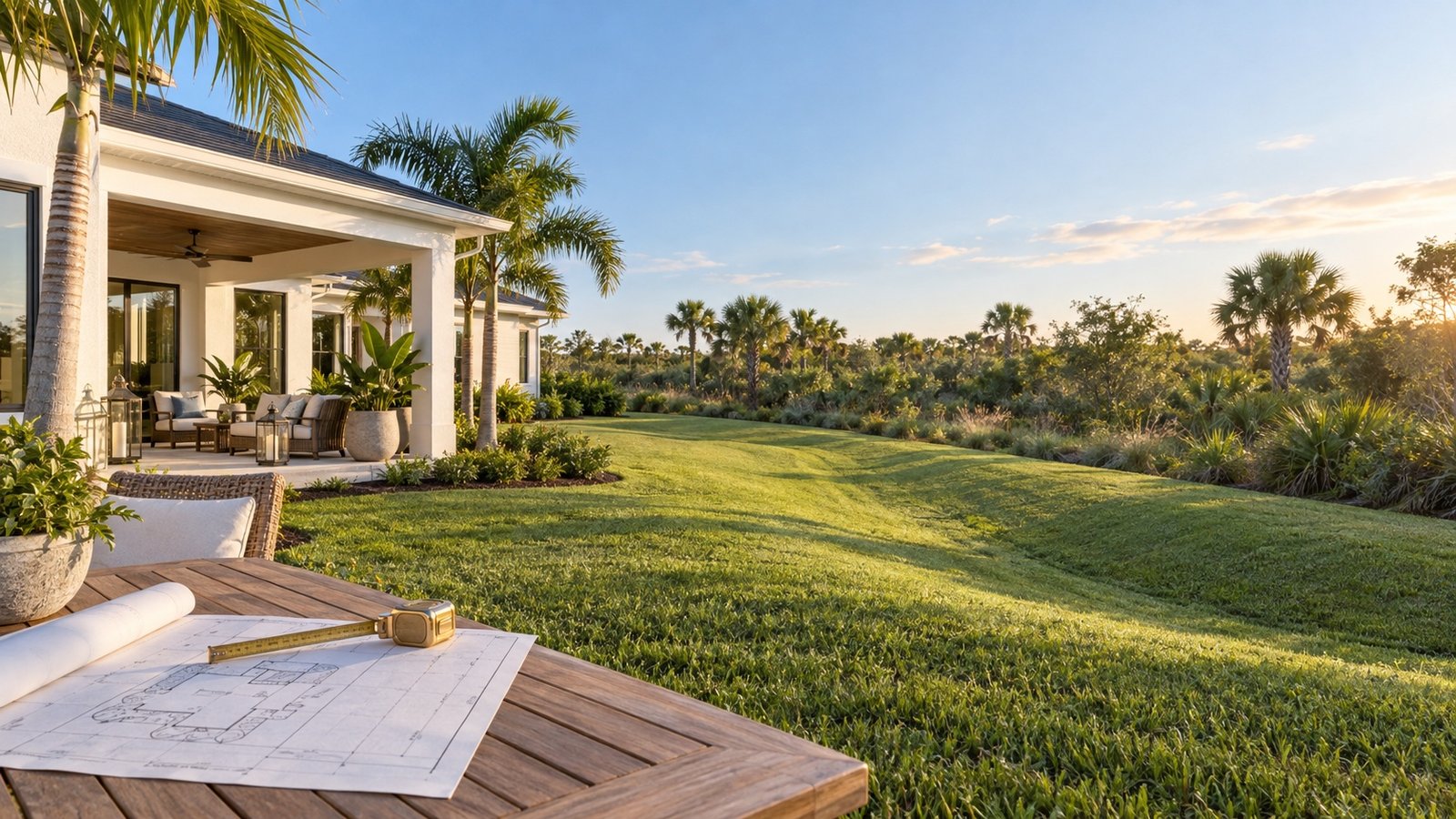
What Viera Buyers Should Ask About Responsibility for a Rear-Yard Drainage Swale When Choosing Between Two HOA Homes
By Carrie Liotta, Space Coast REALTOR® with REAL Broker
If two Viera homes feel equally right, do not treat the rear-yard swale as landscaping. Find out where it sits, what easements touch it, and exactly who is required to maintain it before you make an offer. The answer may be the owner, the HOA, a district, or a shared arrangement—and the survey and governing documents, not the grass height, are what settle it.
I see buyers fall in love with a preserve view, a wide backyard, or a clean fence line and only later notice the shallow low area running along the rear or side of the lot. In Central Brevard, that contour may move water away from homes and toward a larger drainage system. It can also affect what you can plant, grade, fence, fill, or ask someone else to repair. A swale is not automatically a problem. It is a due-diligence item that deserves the same attention as a roof permit or an HOA fee.
Start with the right question: what is this low area supposed to do?
A swale is usually a shallow, graded channel or depressed strip of ground designed to collect, slow, or direct runoff. The point is not always to look like a ditch. In a finished neighborhood it may simply read as a gentle fall in the lawn, a grassy band behind several homes, or the space between a rear fence and a pond edge. The U.S. Environmental Protection Agency explains that a depressed landscape feature can collect runoff and allow it to soak into the ground; that is a useful reminder that a low spot can be functional even when it looks decorative.
That does not tell you who owns or maintains a particular Viera swale. One neighborhood may put it entirely inside an individual lot. Another may reserve a drainage easement over a portion of the lot. A third may place the feature in a common tract or make it part of a wider stormwater facility. Two homes with nearly identical yards can have very different paperwork and very different responsibilities.
Before comparing the homes, ask the listing side for the current survey, the declaration and amendments, the HOA rules, the resale or estoppel package, and any drainage, landscape, or architectural records tied to the yard. Florida’s HOA disclosure statute specifically tells prospective buyers to refer to the covenants and governing documents before purchasing, rather than relying on a summary or a sales conversation. That is the right instinct here.
Do not assume “inside the fence” means “mine to change”
A common mistake is assuming that a feature inside a fence or behind a house is fully under the owner’s control. A recorded drainage easement can limit changes even when the ground is within the legal lot. Conversely, an HOA-maintained area can sit outside the fence while the owner still has some ordinary landscape obligations at its edge. The first document I want to compare is the boundary survey or plat, followed by the title commitment and the recorded declaration.
Ask the closing agent or title company to identify every drainage, utility, access, conservation, or maintenance easement that crosses the rear yard. Then ask the HOA or manager to explain, in writing if possible, what the association treats as the owner’s responsibility and what it treats as a common-area or association task. If the answer is “we have always done it this way,” ask to see the provision, maintenance map, board policy, or vendor scope that supports it.
For a community governed by Chapter 720, the association’s responsibilities are shaped by the statute and, importantly, its governing documents. The official-records provisions of Florida Statute 720.303 include the declaration, rules, budgets, insurance policies, contracts, and records relating to property the association must maintain. Those are far better evidence than a verbal assurance at a showing. Associations with 100 or more parcels also have specified website or app record obligations, although access and the exact document set can vary.
The documents I would request before the inspection period runs out
I like to make this a short, practical file request instead of a vague question about “drainage.” Ask for:
- the most recent boundary survey and any available plat or drainage exhibit;
- the declaration, recorded amendments, rules, and architectural guidelines;
- the HOA budget and any line item or contract covering landscape, drainage, pond, or common-area maintenance;
- recent board minutes or notices that mention standing water, erosion, swales, ponds, drainage work, or a special assessment;
- any prior repair invoices, engineering reports, permits, or correspondence about the specific rear yard; and
- the seller’s disclosure and a direct question about recurring ponding, washed-out mulch, water against the slab, or disagreements with neighbors or the HOA.
Those requests are not accusatory. They help you compare two homes on facts. If one property has a documented HOA-maintained drainage tract, a current vendor contract, and no history of issues, that is different from a home where the owner is responsible for a swale crossing the lot and there is a pattern of erosion after heavy rain. Neither fact automatically ends the deal. It changes the ownership and maintenance calculation.
How the responsibility question changes your monthly and future cost picture
Buyers often think of drainage as a one-time inspection concern, but it can become a carrying-cost question. If an HOA maintains common drainage infrastructure, the cost is not necessarily “free”; it may be part of the operating budget and eventually part of regular or special assessments. Florida’s statutory disclosure summary warns prospective purchasers that HOA assessments can change and that special assessments may be imposed. Read the full disclosure language in Florida Statute 720.401, then look at this particular community’s numbers rather than assuming a low current fee tells the whole story.
If the swale is the owner’s job, the cost may show up differently: periodic regrading, sod replacement, landscape repair, a drainage professional’s evaluation, or the need to remove an unapproved alteration. The right comparison is not “HOA responsibility good, owner responsibility bad.” It is “Do I understand the rule, the condition, the history, and the likely expense well enough to buy this home confidently?”
Compare the two backyards with a site-specific checklist
Then take the question past appearances. Ask whether the seller has observed standing water after ordinary summer rain, not just after a named storm. Ask how long it remained. Ask whether water ever reached the lanai, garage, slab, or fence. Ask whether the home has had regrading, new sod, a pool, a screen enclosure, a French drain, or a new fence since the original drainage plan was approved. The answer is most useful when it is paired with documents and a qualified inspection opinion, not when it is simply “we never noticed anything.”
Your inspector can flag visible grading, drainage, and moisture concerns, but an inspector does not decide the HOA’s legal maintenance duty. That is why I want the document review and the physical review to happen together. If the rear yard presents a real question, a drainage contractor, civil engineer, surveyor, or attorney may be the appropriate next professional depending on whether the issue is condition, boundary, engineering, or interpretation of recorded restrictions.
What to ask the HOA or management company
Good questions are specific enough to produce a useful answer. I would ask: “Is this swale on the lot, in a common tract, or under an easement?” “Who mows it, repairs erosion, and approves changes?” “Has the association paid for work at this address or along this rear line in the last several years?” “Are there current drainage projects, claims, or special-assessment discussions?” “Can an owner add a fence, landscaping border, drain, or fill in this location?”
For buyers comparing the same payment range, that clarity can matter more than an extra few feet of lawn. A yard with a clearly documented system and a workable improvement path may be more comfortable long term than a larger-looking yard with uncertain restrictions. The same principle comes up when buyers compare a decorative water view with the practical role of neighborhood drainage; my guide to treating a Viera pond view as a stormwater system is a helpful companion read.
Be careful with “fixes” that change the drainage path
A buyer should never assume that filling a low area, adding a solid landscape wall, extending a patio, or rerouting roof water will be a simple weekend project. Those changes can affect neighbors, an easement, HOA approval, permits, and the intended movement of water. The EPA’s overview of depressed landscape features is useful background on why runoff features exist, but it is not a design approval for a particular yard.
In Viera especially, I would put the survey, HOA approval path, and contractor’s proposed scope in the same conversation before money changes hands. If the seller has installed something that appears to alter the swale, ask whether there was architectural approval and whether any contractor documentation exists. If the answer is unclear, build time into the inspection period rather than assuming the buyer can keep the alteration without consequence.
My practical tie-breaker when both Viera homes are appealing
If the homes are otherwise comparable, I would favor the property with the cleaner paper trail: a current survey that makes the drainage area understandable, governing documents that clearly allocate duties, a reasonable record of maintenance, and no unresolved story about standing water or unapproved alterations. That does not mean I would reject the other house automatically. It means I would price its uncertainty into the decision and get the right professional advice before the contingency period expires.
The backyard should fit how you want to live. If you are hoping for a future pool, fence, pets, a garden, or a more elaborate lanai, ask whether the swale or easement affects that plan before you choose based on a listing photo. And if daily use of the yard is part of the comparison, it can be useful to weigh that against other practical Viera tradeoffs, including larger backyard space versus driveway parking for frequent family visits.
Bottom line
A rear-yard drainage swale is not automatically a defect, and HOA involvement is not automatically a benefit. The winning move is to identify the feature, read the survey and the governing documents, confirm the maintenance arrangement, and investigate any history before your inspection period ends. I help Viera buyers turn those paper details into a real-world comparison, so they can choose a home with eyes open instead of inheriting a surprise.
If you are comparing Viera homes and want a calm second set of eyes on the HOA, drainage, and day-to-day ownership questions, reach out for a no-pressure conversation about Brevard County homes for sale. Your next chapter starts here.
