

Rear-Yard Drainage Easement as Fenced Play Space: What Viera Buyers Should Verify
By Carrie Liotta, Space Coast REALTOR® with REAL Broker | Published October 19, 2026
If a Viera backyard looks like the perfect place for a play set, dog run, or enclosed lawn, do not assume every square foot can function that way. A rear-yard drainage easement can affect fence placement, future access, and the space you can plan. I want buyers to sort that out before the offer.
This is not a reason to walk away from a home with a green strip behind it. The important distinction is between enjoying a yard and treating every visible part of it as permanently controllable private space. A drainage easement may be manageable, but it deserves the same attention as an HOA rule or preserve buffer.
Start with the question the listing photos cannot answer
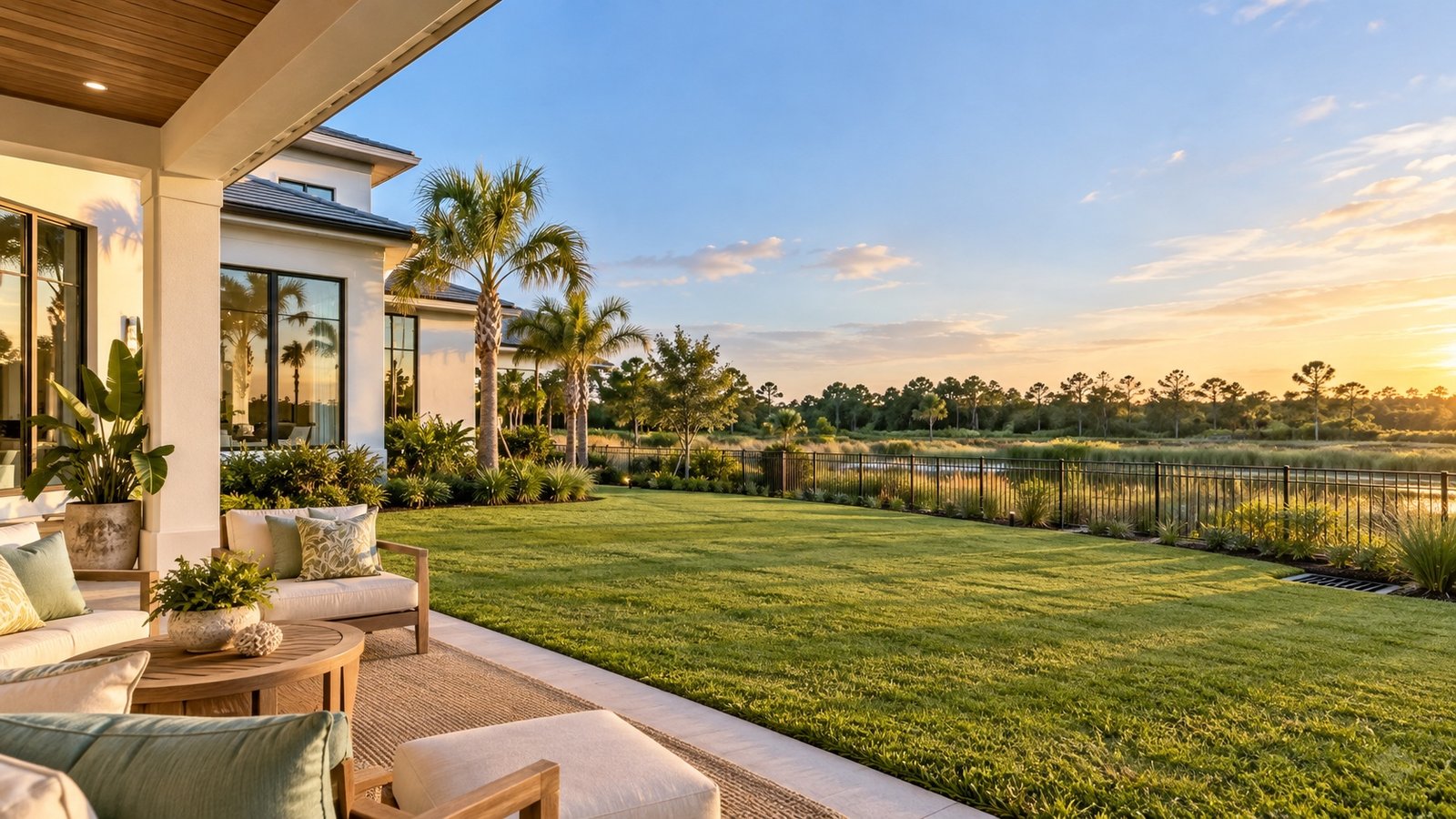
I often see buyers mentally furnish a yard before they know what they are buying: a fence along the rear line, a swing set under the palms, a gate for the dog, maybe a future screen enclosure. That is understandable. But a pretty aerial image does not tell you whether a strip of land is an easement, where its boundaries fall, or whether a recorded document reserves access for drainage work.
The first useful question is not, “Can I stand there today?” It is, “What do the plat, title commitment, survey, community documents, and the people responsible for the drainage system say about this area?” Florida’s plat statute requires recorded subdivision plats to show the location and width of proposed and identified existing easements and state their intended use. That makes the recorded-plat framework in Florida Statutes section 177.091 a sensible starting point. It is not a substitute for reviewing the actual plat and title materials for the address.
For a buyer, that means asking for the right paper trail early enough to use it. If you wait until after inspections to learn that the fence line is a question, you have lost the calmest part of your decision process. I would rather know on day one whether the yard still works for the family’s daily life with a more conservative fence layout.
Why a drainage easement changes the fence conversation
An easement does not automatically mean “no fence” and it does not automatically mean the backyard is unusable. Its effect depends on the recorded language, the location, the community’s rules, and the exact improvement being proposed. A gate, removable panel, fence material, post location, or clearance requirement can change the practical answer. That is why broad advice from a neighbor or an old listing is not enough.
Think of the issue in three layers. First, there is the legal and recorded layer: what does the plat or title material identify, and for what stated purpose? Second, there is the operational layer: is there a swale, inlet, pipe, pond edge, drainage structure, or route someone may need to inspect or maintain? Third, there is the community layer: does the HOA require architectural approval, limit fence style or height, or impose a setback beyond the easement question?
Those layers can point in the same direction, or they can create a more nuanced answer. A buyer may be allowed to put a fence in a location but still be required to provide access or accept that an authorized party could need to remove and replace a portion during future work. I never promise a buyer that an existing fence proves a future change is approved. An existing installation may have a different approval history, may predate a rule, or may simply not have been challenged.
That is especially important in a planned community. Florida’s homeowners’ association statute identifies declarations, amendments, and current rules among the association’s official records when applicable. The official-records provisions in Florida Statutes section 720.303 are a good reminder that a buyer should request the governing documents and ask the association for written architectural guidance rather than relying on a verbal answer at a showing.
What I would request before writing the offer
When fenced play space is a deal-breaker, I make it a document question, not a hope question. The exact list will vary, but these items usually help a buyer and their closing team get oriented:
- The recorded plat and the title commitment. Ask your title professional to point out any easement affecting the lot and the document referenced in the exception.
- A current survey, if available, and the right to order one when needed. A surveyor is the professional who can address where mapped lines and visible improvements actually sit; an online parcel sketch is not a boundary opinion.
- The declaration, rules, and architectural-review process. Ask whether fencing requires prior approval and whether there are written standards for rear lots, drainage areas, pond edges, or preserve-adjacent homes.
- Existing approval and permit records. If the seller installed the current fence, ask for the approval, contractor invoice, and any related plans. The Brevard County permit search can be a useful starting point for county-jurisdiction work, although an incorporated municipality may keep the record instead.
- A clear explanation of maintenance and access. Ask the seller, HOA or management company, and appropriate local contact who maintains the visible drainage feature and what access has looked like in practice. Then keep the answer in writing.
I would also use the Brevard County Property Appraiser as a public-record starting point for parcel details, while remembering that it does not establish a boundary or answer an easement-use question. The survey, title documents, and recorded instruments do that heavier work.
Walk the yard with a practical lens
Paperwork comes first, but the site visit tells you what questions to ask. I ask clients to look beyond the grass line. Is there a low swale that carries water after rain? Are there inlets, headwalls, grates, pipes, or a narrow strip between the fence and a pond? Does a neighbor’s fence stop short in one place? Is a gate positioned where equipment could enter? None of those details proves the easement boundaries, but each one is a reason to slow down.
Then picture the household’s real routine. A young child, a large dog, a future pool, a trampoline, or a need for a private outdoor dining area can make a few feet of usable yard matter. I ask buyers to sketch the smallest version of the plan that still works: where would the fence actually run, where would a gate open, and what area would remain if a rear strip needs to stay accessible? If the answer feels cramped, the house may still be lovely, but it is not the same fit the photos suggested.
Do not confuse the seller’s use with your future approval
A seller’s existing use is helpful context, not a transferable promise about a new fence, gate, shed, or play structure. I ask for the seller’s approvals, then ask the buyer to get their own proposed plan answered in writing. That distinction matters when the buyer wants to move a fence line, change materials, add a gate, or install something with footings.
For a related Viera example, I have written about who may be responsible for a rear-yard drainage swale when comparing HOA homes. That question is connected, but it is not identical: responsibility for a visible swale and permission to build or fence near an easement are separate items to verify.
How I would handle this during inspections
Once a buyer is under contract, I would avoid treating the inspection period as a race to collect generic reassurance. I would identify the exact feature that matters: the rear fence, a swale behind it, a drainage inlet, or a proposed gate location. Then I would organize the questions so each professional answers the part they are qualified to address.
The title professional can help interpret the title commitment and locate the recorded exceptions. A licensed surveyor can advise on the relationship between mapped boundaries and improvements. The association or management company can explain its current architectural process and provide governing documents. A fence contractor can price a layout only after the allowable footprint is understood. If drainage performance or a future improvement is material to the purchase, the buyer may need a qualified engineer, contractor, or attorney depending on the issue. No single email should be asked to do all of that work.
I also encourage buyers to preserve the questions and answers. Save the plat, the association response, fence approval, survey, and contractor sketch in one folder. That is useful while you own the home, and it makes a future sale easier because you can explain the yard honestly instead of reconstructing the history from memory. The same documentation mindset applies to a preserve-adjacent lot; my guide to privacy, drainage, and HOA approval risk before adding a pool covers that larger due-diligence framework.
When the yard can still be a strong yes
A drainage easement is not a red flag by itself. The right home may still give you plenty of usable space, a clear approval path, and a layout that works beautifully for a family. I have seen buyers make smart, comfortable choices when they knew the tradeoff upfront: a fence set a little farther in, a gate designed for access, a smaller play area, or a yard plan that uses the patio and side yard more intentionally.
The better decision is usually the one that acknowledges the constraint rather than hoping it disappears. If the house still fits after you draw the realistic fence line, understand the access expectations, and price any change you want to make, you can move forward with confidence. If the usable area no longer fits the dog, children, privacy needs, or future plans, that answer is valuable too. It can save you from buying a lifestyle that only worked in the listing photos.
Viera buyers are often comparing homes with different lot shapes, HOA structures, preserve edges, ponds, and drainage patterns. That is why I do not reduce the choice to “bigger yard” versus “smaller yard.” The more useful comparison is usable, approved, maintainable outdoor space versus an attractive-looking area with unanswered questions. For sellers, organizing drainage and fence records early can make that distinction easier for buyers to trust; I outline that preparation in my post on drainage records, fence approvals, and pool documentation for Viera preserve-lot sellers.
My offer-stage checklist for fenced play space
- Read the plat, title commitment, and any easement documents for the exact lot.
- Ask whether the fence you want needs HOA architectural approval, and request the answer in writing.
- Confirm the intended location with a surveyor when the boundary or easement line is material.
- Find out who maintains the drainage feature and what access could be needed later.
- Review the seller’s fence approvals, permits, invoices, and disclosures without assuming they answer a new proposal.
- Draw the conservative yard layout that would still make the home work for your household.
- Use the inspection period to resolve unanswered document and approval questions before waiving protections.
My bottom line: buy the yard you can document and use, not the yard you imagine from a listing photo. As Carrie Liotta, a Space Coast REALTOR® with REAL Broker, I help Viera buyers turn details like this into a clear next step so the home fits both the day they close and the way they plan to live.
