
Should Palm Bay Buyers Choose a Paved-Road Lot or a Bigger Unpaved-Road Lot if Resale Matters?
By Carrie Liotta, Space Coast REALTOR® with REAL Broker | Published August 14, 2026
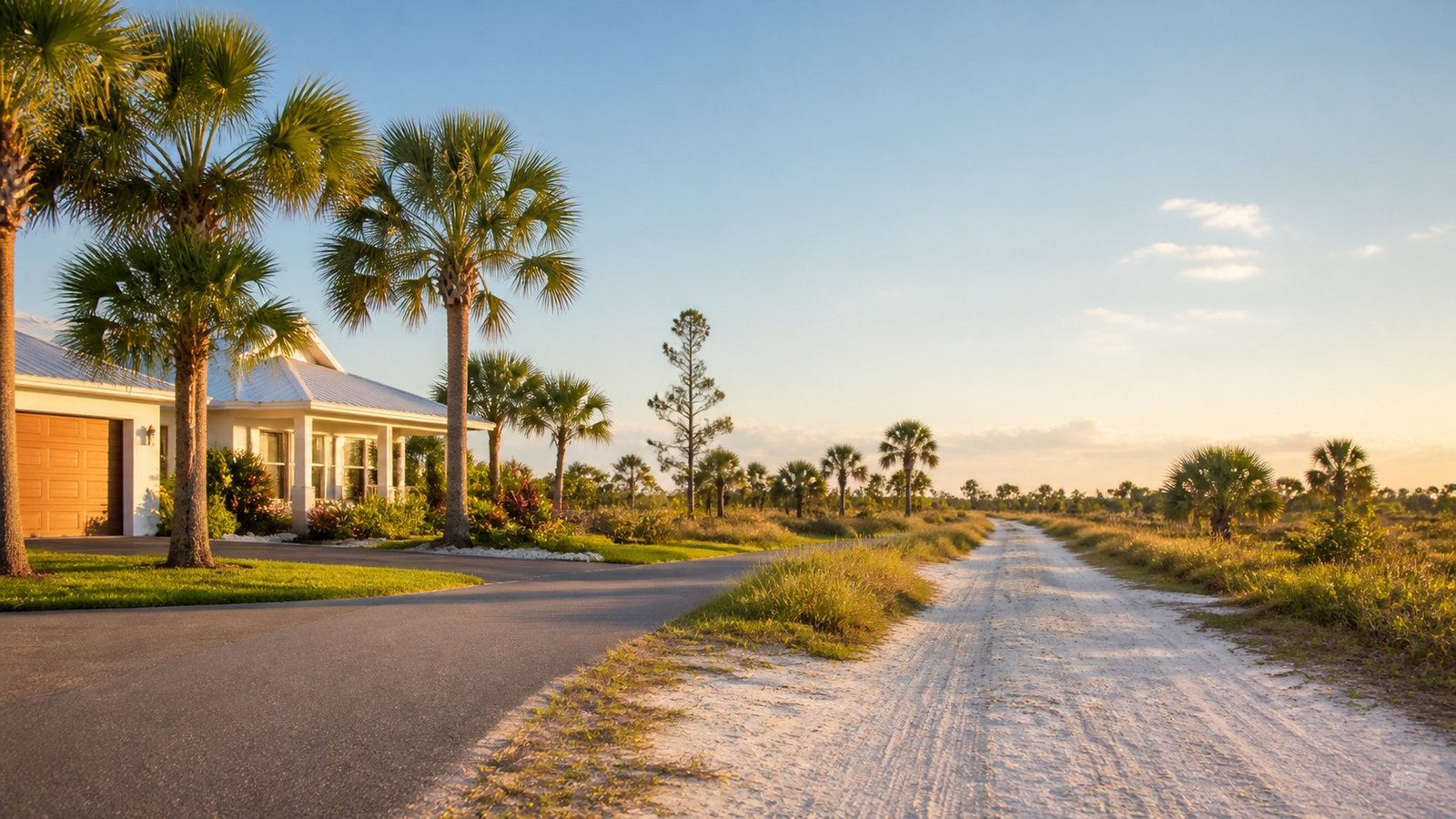
If resale matters, I usually want Palm Bay buyers to favor the paved-road home unless the bigger unpaved-road lot gives them something truly hard to replace: better privacy, a stronger floor plan, cleaner insurance documentation, public utilities, or a price that clearly compensates for the extra friction. A larger lot can be wonderful, but an unpaved road is not just a lifestyle detail. It changes how future buyers, lenders, insurance agents, inspectors, and appraisers may experience the property.
That does not mean every unpaved-road home is a bad buy. Palm Bay has buyers who genuinely want space, fewer HOA restrictions, room for a workshop, side-yard access, RV parking, or a quieter non-cookie-cutter setting. But when my clients ask me this question, I slow the conversation down. The better resale choice is the one that gives the next buyer the fewest reasons to hesitate.
Here is how I would compare the two options before writing an offer in Palm Bay.
Why paved roads usually have the easier resale story
A paved-road home is easier for most buyers to understand. They can picture the daily routine: school drop-off, grocery runs, rainy-season driving, package deliveries, contractors coming out for repairs, friends visiting, and a future buyer pulling up for a showing without wondering how the road will feel after a week of storms.
That ease matters in resale. The buyer pool is usually broader because paved access feels normal to more people. Relocating buyers from outside Florida may not know Palm Bay block by block. They may already be nervous about insurance, flood zones, roof age, storm protection, and utility differences. When the road is paved, at least one visible question is removed from the list.
Paved access can also help with the home’s presentation. Photos look cleaner. Showings feel simpler. A buyer who is comparing several Palm Bay homes in one afternoon may not consciously say, “I chose the paved road,” but they often respond to the total sense of ease. The street, drainage, curb appeal, driveway approach, and surrounding homes all shape first impressions before anyone reaches the front door.
For a buyer who may resell in three to seven years, I want that future listing to be easy to explain. “Great Palm Bay home on a paved street with a strong roof file, manageable commute, and practical access to Malabar Road or Palm Bay Road” is cleaner than “larger lot on an unpaved road, but let me explain why it still works.” Sometimes the second story is worth it. It just has to earn the extra explanation.
When the bigger unpaved-road lot can still be the smarter buy
The bigger lot starts to make more sense when it solves a real problem the paved-road home cannot solve. If you need space for a detached workshop, boat storage, a trailer, a garden, a future pool, dogs, or more separation from neighbors, a smaller paved-road property may not actually fit your life. A home that resells well on paper but feels cramped every weekend is not automatically the better choice.
I also look at scarcity. A larger Palm Bay lot with a good layout, high-and-dry feel, useful driveway access, and no obvious maintenance red flags can appeal to a very specific buyer. That buyer may not want a tight subdivision lot or a strict HOA. They may be choosing Palm Bay because they want room to live a little differently.
The question is whether the extra land is usable land. A bigger lot is not automatically better if much of it is wet, awkwardly shaped, heavily treed in a way that creates storm-season maintenance concerns, or difficult to fence. Before you pay for size, make sure the size gives you something functional: parking, privacy, expansion potential, outdoor living, or a quieter setting that future buyers will value too.
This is where I connect the lot decision to the larger Palm Bay search. In my guide to Palm Bay neighborhoods for first-time buyers, I talk about comparing price, commute, and insurance risk together. The paved-road question belongs in that same bucket. It should not be decided by lot size alone.
Drainage is the detail I do not want buyers to skip
In Palm Bay, road surface and drainage belong in the same conversation. A road may look fine on a dry showing day and tell a different story after heavy rain. A larger unpaved-road lot may still be a strong candidate, but I want buyers to understand how water moves across the street, driveway, swales, side yards, and neighboring lots.
The City of Palm Bay’s Public Works page lists separate contacts for Driveway & Lot Drainage and Right-of-Way Permitting. That is a helpful reminder that the road, driveway connection, swales, culverts, and lot drainage are not just cosmetic details. They can affect how the property functions and what permits or approvals may be needed for improvements.
Before making an offer on an unpaved-road property, I like to ask very plain questions: Does the driveway wash out? Does water stand near the front of the lot? Are there culverts that need maintenance? Is the road passable after heavy summer storms? Do neighboring lots sit higher or lower? Has the seller added fill, changed drainage, extended the driveway, or installed a fence without clear records?
FEMA also reminds buyers that flood risk is not limited to waterfront property. Its flood maps guidance explains that heavy rains, poor drainage, and nearby construction can contribute to flooding, and that flood maps help show the relationship between a property and higher-risk areas. Palm Bay’s own flood information page notes that the city maintains floodplain review records, FEMA elevation certificates issued since 1993, and LOMA/LOMR information through Growth Management.
That does not mean every unpaved-road home has a flood problem. It means you should not treat a bigger lot as automatically safer or more valuable until you understand drainage, elevation, road condition, and insurance requirements.
Utilities and future improvements can change the math
One of the biggest mistakes I see buyers make is comparing two Palm Bay homes as if the only variables are price, square footage, and lot size. Utilities matter. Road access matters. Permits matter. Maintenance responsibilities matter.
If the larger-lot home has well, septic, limited utility access, or future improvement plans, I want those details reviewed before the buyer falls in love with the yard. If the paved-road home has public utilities, easier contractor access, and fewer unknowns, the smaller lot may be the calmer long-term choice. If the bigger-lot home has strong utility documentation and the road condition is acceptable, it may still compete well.
Palm Bay’s Growth Management department describes its role as long-range planning, development review, code enforcement, and FEMA Community Rating Service implementation. For buyers, the practical takeaway is simple: do not assume future road paving, nearby development, drainage improvements, or utility changes will happen on your personal timeline. Buy the property that works under today’s conditions, then treat future improvements as possible upside.
If you are comparing non-HOA Palm Bay homes, also read my article on paved roads, drainage, and insurance documentation before making an offer. It goes deeper into the inspection side of this decision.
How lenders, appraisers, and insurers may view the road
Most buyers think of resale as a future marketing question, but resale is also a financing question. A future buyer may love the property and still need their lender, insurer, and appraiser to be comfortable with it. Road access rarely stands alone, but it can add friction when paired with other concerns.
For example, an unpaved-road property with an older roof, uncertain flood-zone information, drainage questions, no clear permits for improvements, and limited comparable sales can create a more complicated file. A paved-road home with clean permits, a newer roof, a strong wind mitigation report, and straightforward access is easier for a buyer to move through contract, inspection, insurance, appraisal, and closing.
That is why I do not frame this as “paved roads are always better.” I frame it as risk stacking. One quirky feature can be fine. Three or four unresolved questions together can shrink the buyer pool. If the unpaved-road home wins on lot size, make sure it is not also losing on roof age, drainage, utility records, insurance comfort, and commute.
What I would check during the inspection period
If a Palm Bay buyer is serious about a larger unpaved-road lot, I want the inspection period to answer more than the usual roof, HVAC, electrical, and plumbing questions. I would review the survey if available, driveway condition, culvert condition, visible drainage patterns, permit history, flood zone, elevation documentation when relevant, utility setup, septic or sewer status, and any signs that vehicles have been using soft or low parts of the lot for parking.
I would also drive the street at different times. Visit after rain if the timing allows. Look at how other homes maintain their driveways and front swales. Check whether delivery trucks, service vehicles, and emergency access appear practical. Think like the future buyer who may tour your home in August, not just the current buyer seeing it in perfect weather.
If the lot’s value depends on future plans, such as a detached garage, pool, fence, driveway extension, or boat/RV parking, verify feasibility before closing. A big yard that cannot legally or practically support the improvement you want is not the same as usable space.
My resale test for Palm Bay paved-road vs. unpaved-road homes
When I help a buyer compare these two choices, I use a simple resale test: Which home will be easier for the next buyer to say yes to?
The paved-road home usually wins if it has a realistic payment, a good roof file, lower maintenance surprises, public utilities or cleaner utility documentation, and a commute that fits daily life. It may not feel as exciting as the bigger lot, but easy-to-understand homes tend to have broader appeal.
The unpaved-road home can win if the lot is meaningfully better, the road condition is acceptable, the drainage checks out, the home is priced with the road surface in mind, and the buyer plans to stay long enough to enjoy the extra space. It also helps if the home has other strengths that future buyers can see immediately: updated major systems, strong storm protection, flexible parking, and a layout that fits how people actually live.
“Carrie was an absolute gem! She helped me and my husband look for houses off and on for over two years. She is very professional, understanding, patient, and kind. We are first time home buyers and she advocated for our needs and explained things to us.”
That is the kind of decision this is. It is not about talking you into the “better deal.” It is about making sure the property you choose still makes sense when inspections, insurance, financing, and future resale all get a vote.
Bottom line
If you are choosing purely for resale, the paved-road Palm Bay home is usually the safer bet because it has a wider buyer pool and fewer built-in objections. But if the unpaved-road home gives you usable land, privacy, storage, and a price that reflects the added diligence, it can still be a smart purchase.
My advice is to make the bigger lot prove itself. Check drainage. Check utilities. Check flood information. Check permits. Check the road after rain. Check whether your future improvement plans are realistic. Then compare the whole ownership picture, not just the lot dimensions.
If you are comparing Palm Bay homes and want a local second set of eyes on resale, insurance, drainage, and daily-life fit, join my private Facebook group, Moving to Brevard County Florida, or reach out for a no-pressure conversation about Brevard County homes for sale with REAL Broker. Your next chapter starts here.