
Should Palm Bay Buyers Choose a Newer Home With a Smaller Lot or an Older Non-HOA Home With More Storage?
By Carrie Liotta, Space Coast REALTOR® with REAL Broker | Published August 11, 2026
If you are buying in Palm Bay and choosing between a newer home with a smaller lot and an older non-HOA home with more storage, the safer answer for many buyers is the newer home if it keeps insurance, repairs, utilities, and commute predictable. The older non-HOA home can be the better choice when you truly need storage, parking, workshop space, or flexibility, but only if the roof, drainage, septic or sewer, permits, and insurance file are strong enough to support the decision.
That is the direct answer, but the right choice is not one-size-fits-all. Palm Bay is one of Brevard County’s most flexible buyer markets because you can compare newer builder homes, established non-HOA streets, larger lots, city utilities, well-and-septic properties, paved and unpaved roads, and several commute patterns. The opportunity is real. So is the need for discipline.
Why this Palm Bay choice is so common
Palm Bay buyers often start with budget and space. They want a single-family home, a manageable payment, room for beach gear or work tools, and a commute that does not punish them every weekday. Then the search usually splits into two lanes.
The first lane is the newer home: cleaner roof age, newer HVAC, modern electrical and plumbing, builder warranty if it is new enough, and often a simpler insurance conversation. The tradeoff is that the lot may be smaller, the garage may be tight, the HOA may limit vehicles or exterior storage, and the street may feel newer but less shaded.
The second lane is the older non-HOA home: more driveway room, side-yard access, workshop potential, RV or boat parking possibilities, mature trees, and fewer community rules. The tradeoff is that the house itself may bring roof age, four-point inspection questions, older plumbing, drainage concerns, septic due diligence, or a less predictable insurance quote.
I do not want buyers choosing between these lanes based only on square footage. I want the decision to include monthly comfort, maintenance risk, storage needs, and resale.
When the newer smaller-lot home is the better fit
A newer Palm Bay home usually makes the most sense when you value predictability more than extra land. That is especially true for first-time buyers, relocating buyers, VA buyers, and anyone who does not want a major repair surprise in the first year.
Newer homes often give buyers a stronger starting file: newer roof, newer HVAC, updated electrical, modern plumbing, current building standards, and clearer permit history. None of that guarantees a cheap insurance quote, but it can reduce uncertainty. Florida’s insurance environment still requires property-specific quoting, and the Florida Department of Financial Services summarizes current property insurance changes that affect roof-age and underwriting conversations.
The newer home is also easier when your lifestyle is simple. If you have two cars, normal garage storage, a lawn mower, bikes, and a few holiday bins, a smaller lot may be fine. If the HOA maintains community standards without creating rules that conflict with your life, the predictability can be worth it.
My caution is that buyers need to read the HOA documents and measure the garage. A newer home with a beautiful kitchen can still disappoint if the driveway is short, the garage cannot fit your truck, the HOA restricts trailers, or the backyard has no room for the future pool or shed you were imagining.
When the older non-HOA home is the smarter choice
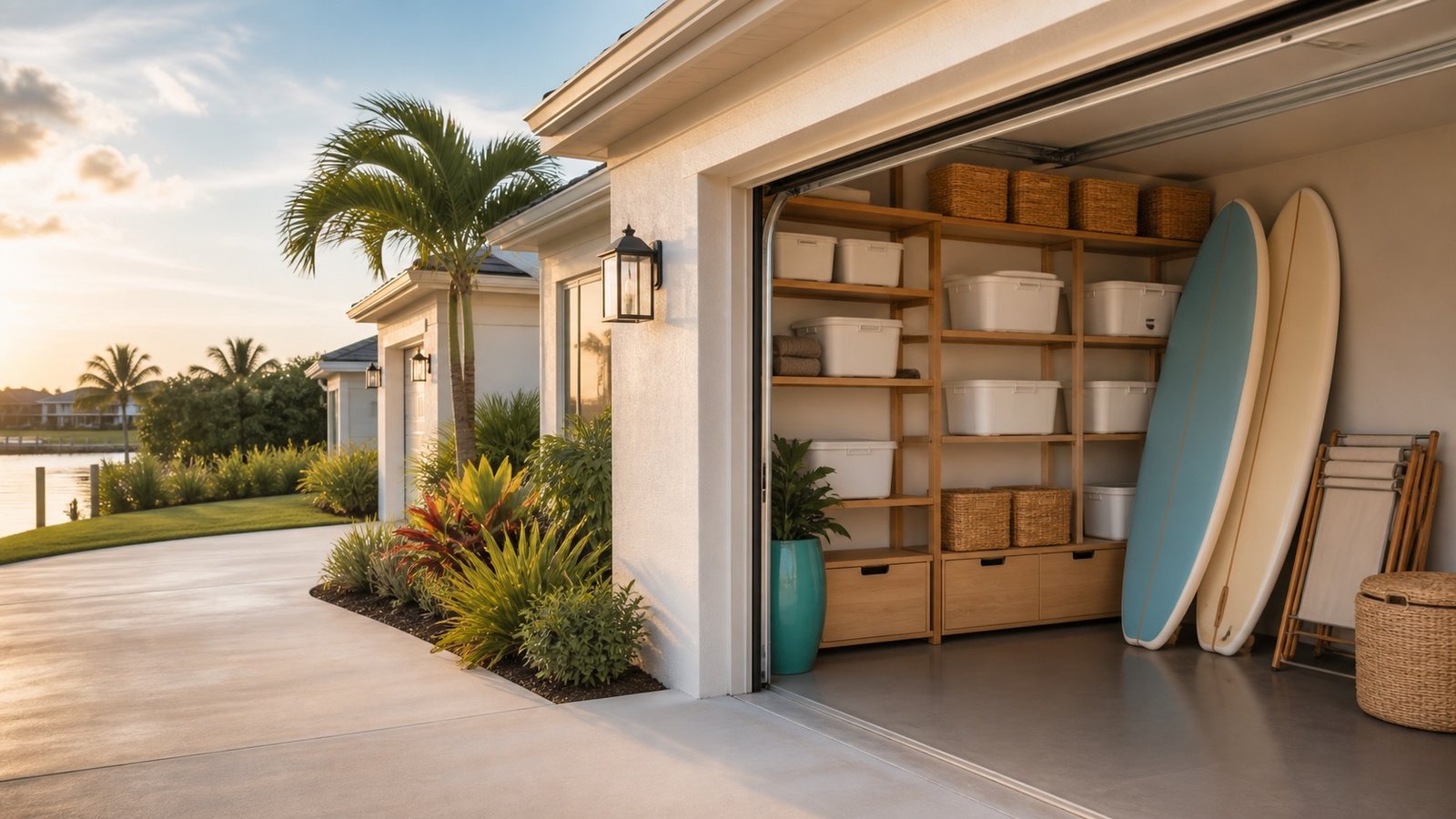
An older non-HOA home can be the smarter choice when the storage need is real, not theoretical. I am talking about buyers with work trailers, kayaks, fishing gear, motorcycles, RVs, tools, a side business, multigenerational vehicles, or hobbies that need more than a decorative garage wall.
In Palm Bay, non-HOA streets can offer the kind of flexibility that a newer subdivision may not. You may find a wider driveway, side-yard access, a shed, a detached workshop, or a lot layout that supports future improvements. For some buyers, that flexibility is not a luxury. It is how the home functions.
But I will only get excited about the older non-HOA option after the property file starts to make sense. I want roof permits, HVAC age, electrical panel details, plumbing history, drainage observations, utility information, and insurance feedback early. The Brevard County building permit search can be a starting point for permit research, while homes inside city systems may require municipal records too.
If the home is on septic, that is not automatically bad, but it changes due diligence. The Florida Department of Health’s septic systems information is a useful reminder that onsite sewage systems are regulated and should be understood before a buyer plans additions, pools, heavy parking, or major yard changes.
The storage question buyers should ask first
Before choosing the older home for storage, make a real inventory. What needs to live at the house on day one? What needs covered storage? What can sit outside? What would violate HOA rules? What needs a wider gate, deeper garage, or reinforced driveway? What future project are you assuming the lot can handle?
I have watched buyers say they need “more storage” when what they really need is better organization. I have also watched buyers underestimate a true storage need and regret choosing the pretty newer home with no room for their life. The difference is honesty.
If you own a boat, trailer, RV, work equipment, or a lot of outdoor gear, an older non-HOA home may be worth the extra due diligence. If you only need normal household storage, a newer home with a smart garage setup may be more comfortable and easier to resell. I wrote about a similar storage-versus-payment conversation in whether Viera buyers should pay more for a three-car garage or choose a lower payment with better storage planning.
Utilities and drainage can decide the answer
In Palm Bay, utilities and drainage can change this decision quickly. A newer home with city water and sewer may feel simpler for a buyer who wants fewer unknowns. An older non-HOA home with well and septic may offer more lot and flexibility, but it needs a different inspection plan.
Do not assume larger lot equals easier future use. Septic tanks, drain fields, easements, setbacks, swales, drainage patterns, trees, and driveway placement can all limit where a shed, pool, fence, or workshop might go. After a heavy rain, the best-looking yard can reveal problems that were invisible during a sunny showing.
This connects with my guide to comparing water treatment systems on Palm Bay well-and-septic homes. If the older home wins because of land and storage, make sure the land actually supports the way you intend to use it.
HOA rules are not just a monthly fee
Some buyers hear “HOA” and immediately say no. I understand the instinct, especially when someone wants a trailer, work truck, boat, shed, fence, or visible storage. But an HOA is not only a fee. It is a rule system, and the rules matter more than the label.
A newer Palm Bay community with an HOA can protect neighborhood consistency, but it may limit exterior changes, parking, rental plans, fence materials, paint colors, sheds, and commercial vehicles. A non-HOA home can give more freedom, but it may also mean less neighborhood consistency, more variation in nearby property condition, and fewer shared standards.
Neither is automatically better. If your lifestyle needs freedom, read the rules before you fall in love. If your resale comfort depends on consistency, do not dismiss the newer HOA option too quickly.
Insurance may be the tiebreaker
When the buyer truly likes both homes, insurance often becomes the tiebreaker. The newer smaller-lot home may quote better because the roof, electrical, plumbing, and HVAC are younger. The older non-HOA home may still compete if it has a newer roof, clean four-point profile, documented wind mitigation, and no major condition concerns.
What I do not want is a buyer choosing the older home for storage and then discovering that insurance, roof replacement, or repair costs erase the savings. I also do not want a buyer overpaying for a newer home only to realize the HOA rules make the storage problem unsolvable.
For a broader Palm Bay lens, read which Palm Bay homes are practical for buyers who want a fenced yard, newer roof, and public utilities. That is often the middle lane buyers are really trying to find.
“We are first time home buyers and she advocated for our needs and explained things to us. We couldn’t recommend Carrie more!”
A recent first-time buyer client
How I would compare two real Palm Bay homes
If we were sitting together with two listings, I would compare them this way.
For the newer smaller-lot home, I would check the HOA rules, garage depth, driveway length, backyard usability, insurance quote, builder warranty if applicable, utility setup, commute, and whether the payment leaves enough breathing room. I would also compare nearby builder or newer resale competition because resale can be affected if similar homes are easy to find.
For the older non-HOA home, I would check roof permit history, four-point risk, wind mitigation, HVAC age, electrical and plumbing updates, drainage after rain, septic or sewer, well water if applicable, shed or workshop permits, fence placement, driveway condition, and whether the storage setup is legal and practical. I would also look hard at surrounding properties because non-HOA resale depends partly on the street feel.
Then I would ask one simple question: which home still feels good after the boring paperwork is finished? That is usually the better buy.
My practical recommendation
Choose the newer smaller-lot home if you want lower maintenance risk, cleaner insurance documentation, simpler utilities, and a more predictable first few years of ownership. Choose the older non-HOA home if the storage and flexibility are essential and the inspections prove the house will not punish your budget.
Do not choose the older home just because it has more land. Do not choose the newer home just because it photographs better. Choose the home that fits your actual life and your actual risk tolerance.
FAQ: Palm Bay newer home vs. older non-HOA home
Is a newer Palm Bay home always easier to insure?
Often it is easier to discuss with insurers because the major systems are newer, but every property still needs a quote. Roof type, wind mitigation, flood zone, and carrier rules still matter.
Are non-HOA homes better for boat or RV storage?
They can be, but buyers still need to verify local rules, lot layout, driveway access, drainage, septic placement, and whether existing sheds or improvements were permitted.
Should I avoid septic in Palm Bay?
No, but you should inspect it and understand how it affects future plans. Septic location and drain field placement can matter if you want a pool, addition, detached garage, or heavy storage use.
What if the newer home has a strict HOA?
Read the documents before making the offer. If the HOA rules conflict with your vehicles, storage, fencing, pets, rental plans, or exterior projects, the newer home may not fit your life.
Which option is better for resale?
The newer home may have broader resale appeal if the payment and HOA are reasonable. The older non-HOA home may resell well if it has strong documentation, useful storage, and a street that feels cared for.
Bottom line
In Palm Bay, the best choice is not automatically newer or older. It is the home where payment, insurance, storage, utilities, commute, and resale all line up. A smaller newer home can be wonderfully practical. An older non-HOA home can be the right fit for a buyer with real storage needs. The paperwork tells us which one is smart.
If you are comparing Palm Bay homes and cannot decide whether the newer-home predictability or older-home flexibility matters more, reach out for a no-pressure conversation about Brevard County homes for sale. I can help you compare the full file before you write the offer. Your next chapter starts here.