
What Should Palm Bay Buyers Know About Comparing Water Treatment Systems on Well-and-Septic Homes?
By Carrie Liotta, Space Coast REALTOR® with REAL Broker | Published August 10, 2026
If you are buying a Palm Bay home on well and septic, do not judge the water treatment system by whether the water tastes fine during a showing. The right comparison is documentation, testing, equipment condition, service history, septic location, and whether the system matches the specific water issue it is supposed to solve.
My direct advice is to test first, read the service records, and price the house with the water system and septic system together. A shiny water softener does not automatically mean the well water is safe. A reverse-osmosis filter at the kitchen sink does not tell you whether the whole house has bacteria, nitrate, iron, sulfur odor, sediment, or hardness issues. And a good water system still has to make sense with the septic drain field, future pool plans, irrigation, and your monthly maintenance comfort.
Why this question matters in Palm Bay
Palm Bay has a wide range of utility situations. Some homes have public water and sewer. Some have city water with septic. Some have private wells and septic systems. Some buyers love the larger lots and non-HOA feel that can come with these homes, especially in established or more inland sections. The tradeoff is that you take on more responsibility for water quality, treatment equipment, septic condition, and future repairs.
That responsibility is not automatically bad. Plenty of Palm Bay buyers are comfortable with well and septic once they understand the systems. What creates trouble is assuming one home is just like another because both listings say “well” or “septic.” Two houses can look similar online and have very different well depth, treatment equipment, septic age, drain field condition, water test results, and service history.
This is why I recently wrote about whether Palm Bay buyers should choose a newer roof or city sewer access. Utilities are part of the real monthly and long-term ownership picture, not a footnote after you fall in love with the backyard.
What should you test before relying on a treatment system?
Start with water testing. The Florida Department of Health explains that private well owners are responsible for making sure their own well water is safe to drink, and it recommends testing private wells for bacteria and nitrate at least once per year. The state also says Florida does not have a statewide requirement for private well sampling when private homes are sold, although it generally recommends bacteria and nitrate testing for wells in a real estate context. You can review the state’s private-well guidance here: Florida Department of Health private well water testing.
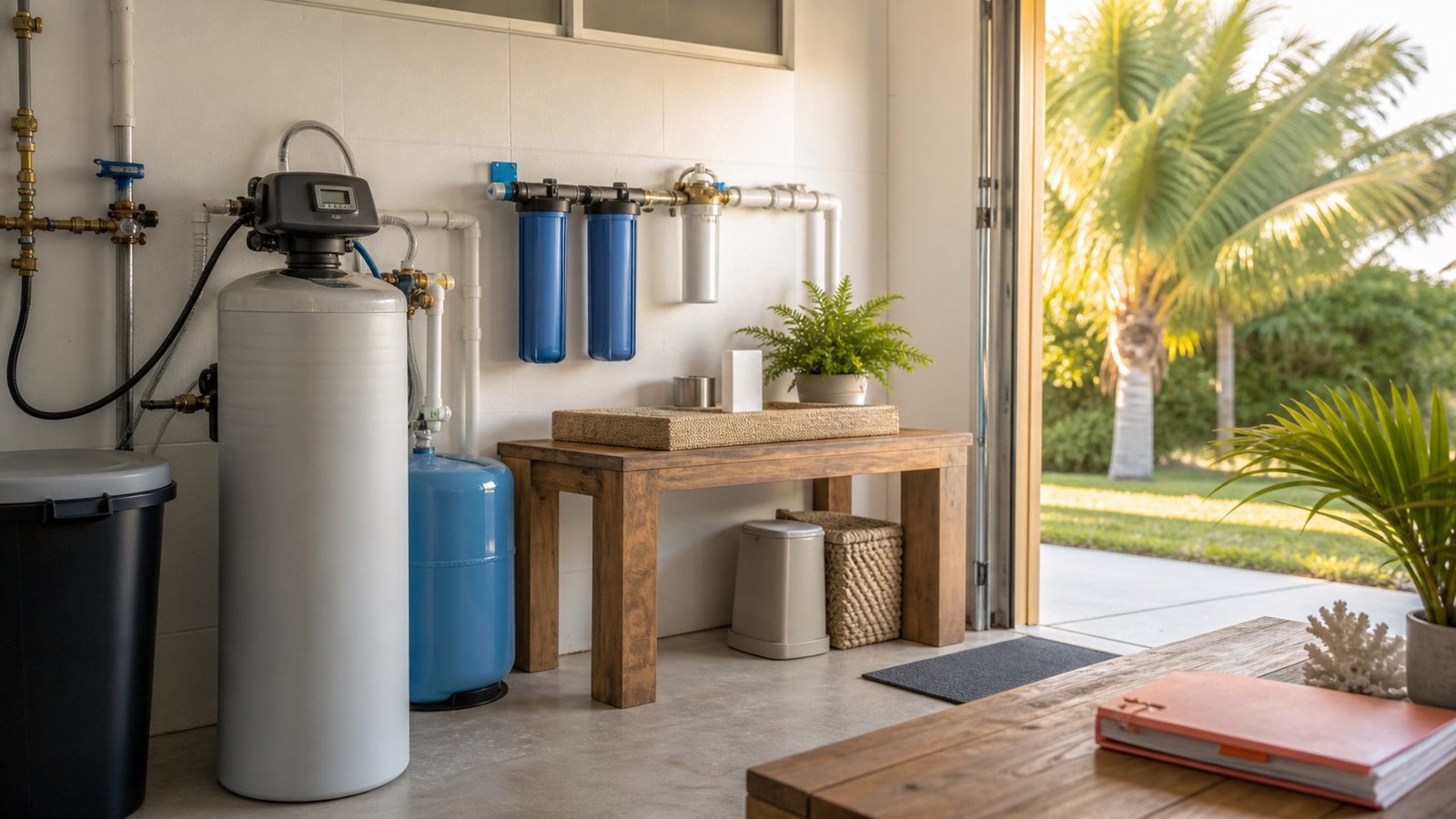
That matters because a treatment system is only useful if it is solving the right problem. A softener is typically aimed at hardness. A sediment filter is not the same as disinfection. A sulfur odor treatment setup is not the same as nitrate removal. A reverse-osmosis unit at one sink may improve drinking water at that faucet but not treat showers, laundry, ice makers, or outdoor spigots.
When my buyer is serious about a well-and-septic home, I want the inspection period to include water testing, equipment review, and a conversation with a qualified water-treatment professional if the setup is complicated. If the seller already has recent certified lab results, that is helpful, but I still want to know what was tested, when, by whom, and whether conditions have changed since then.
Which water treatment records matter most?
The best seller file includes the original installation invoice, model numbers, service invoices, filter-change records, salt-delivery or media-change history, warranties, recent water test results, and any notes about why the equipment was installed. If there is a chlorination system, aerator, softener, iron filter, sulfur treatment, UV light, or reverse-osmosis system, buyers should understand what each piece does.
I also like to know whether the equipment is owned, leased, financed, or part of a service agreement. A buyer should not discover after closing that the system requires a contract transfer, an expensive cartridge, a specialized media replacement, or a monthly service bill they did not budget for.
If records are missing, that does not automatically mean the house is wrong. It does mean you need to price uncertainty. A treatment system with no label, no service history, and no current testing is not the same as a documented system that has been maintained for years.
How does septic change the water-treatment conversation?
Well and septic should be evaluated together because they both live on the same property. Septic condition, drain field location, well location, setbacks, drainage, and future improvements can all affect how comfortable you are with the home. A water treatment system may be inside the garage, in a pump house, or outside, but the bigger due diligence question is how the entire site works.
The Florida Department of Health explains that onsite sewage treatment and disposal systems, commonly called septic systems, are used by about 30% of Florida’s population and are intended to be a safe and effective means of wastewater disposal when properly designed, constructed, and maintained. Its septic page also notes that outside a group of 16 listed counties, local county health departments still handle septic permitting and inspections; Brevard is not in that listed group. The state’s overview is here: Florida Department of Health septic systems.
For Palm Bay buyers, I want to see septic permits where available, pump-out history, drain field age if known, repair records, and whether the seller has had any backups, soft spots, or drain field concerns. If you are already looking at older systems, my guide to what Brevard buyers should know about older drain fields before making an offer is a good companion read.
What should buyers compare between two similar homes?
If two Palm Bay homes are both on well and septic, compare them like this:
- Water test history: Is there current bacteria and nitrate testing from a certified or approved lab?
- Equipment purpose: Does each filter, softener, UV light, or reverse-osmosis unit solve a documented issue?
- Service record: Has the system been maintained, or is the seller guessing?
- Ownership: Is the equipment owned outright, leased, or tied to a service contract?
- Septic file: Are permits, pump-outs, repairs, and drain field age documented?
- Site plan: Do the well, septic tank, drain field, driveway, trees, and future pool or workshop plans fit together?
- Monthly comfort: Can you afford filters, salt, service calls, pump-outs, and possible repairs after closing?
The “better” home is not always the one with more equipment. Sometimes a simple, well-documented system with clean test results is stronger than a complicated setup with no records. Extra tanks and filters can look impressive, but if nobody can explain what they do, they become due diligence questions.
How does this affect the offer?
Use the inspection period wisely. I would write the offer with enough time to inspect the home, test the water, review septic records, and get specialized input if needed. If water testing shows a problem, the answer may be treatment adjustment, seller repair, buyer credit, price reduction, or walking away, depending on the issue and your loan type.
Some water problems are manageable. Some are expensive. Some require repeat testing or a specific treatment design. Do not negotiate based only on fear, but do not ignore results because the kitchen is pretty. Water quality and septic function affect daily life immediately.
This also ties into Palm Bay drainage and lot condition. A home with well and septic may still be a great fit, but I want buyers to understand the lot, road, swales, and standing-water history too. If that is part of your search, read what Palm Bay buyers should know about paved roads, drainage, and insurance documentation.
What should first-time buyers be careful about?
First-time buyers should be especially careful not to spend every dollar getting into the house and leave no room for water or septic maintenance. A well pump, pressure tank, treatment equipment, softener media, UV bulb, septic pump-out, or drain field repair can become a real cost. None of that means you should avoid the property. It means the budget needs breathing room.
I also encourage first-time buyers to learn the routine before closing. Where is the main shutoff? How often are filters changed? What does the pressure tank look like? Who serviced the system? Where is the septic tank? Where is the drain field? What should not go down the drain? A confident owner knows the basics before the first weekend in the home.
“Carrie was an absolute gem. We are first time home buyers and she advocated for our needs and explained things to us.”
A recent buyer client
When is public water or sewer worth paying more for?
Public water or sewer can be worth paying more for when you want lower maintenance responsibility, easier resale, or fewer site-planning constraints. It can also matter if you are worried about future drain field costs, private well upkeep, or water-treatment complexity.
But public utilities are not automatically better for every buyer. A well-and-septic home may offer the lot, price, privacy, or non-HOA feel that fits your life. The right answer depends on the specific property, the test results, the records, and your willingness to maintain the systems.
Bottom line
When comparing Palm Bay well-and-septic homes, do not ask, “Does it have a water system?” Ask, “What problem does this system solve, how do we know it works, what records support it, and what will it cost to maintain?” That is the question that protects you.
If you are buying in Palm Bay, Grant-Valkaria, Malabar, West Melbourne-adjacent areas, or anywhere in Brevard County where wells and septic systems are part of the search, I can help you compare the practical details before you write the offer with REAL Broker. Reach out for a no-pressure conversation about Brevard County homes for sale. Your next chapter starts here.