

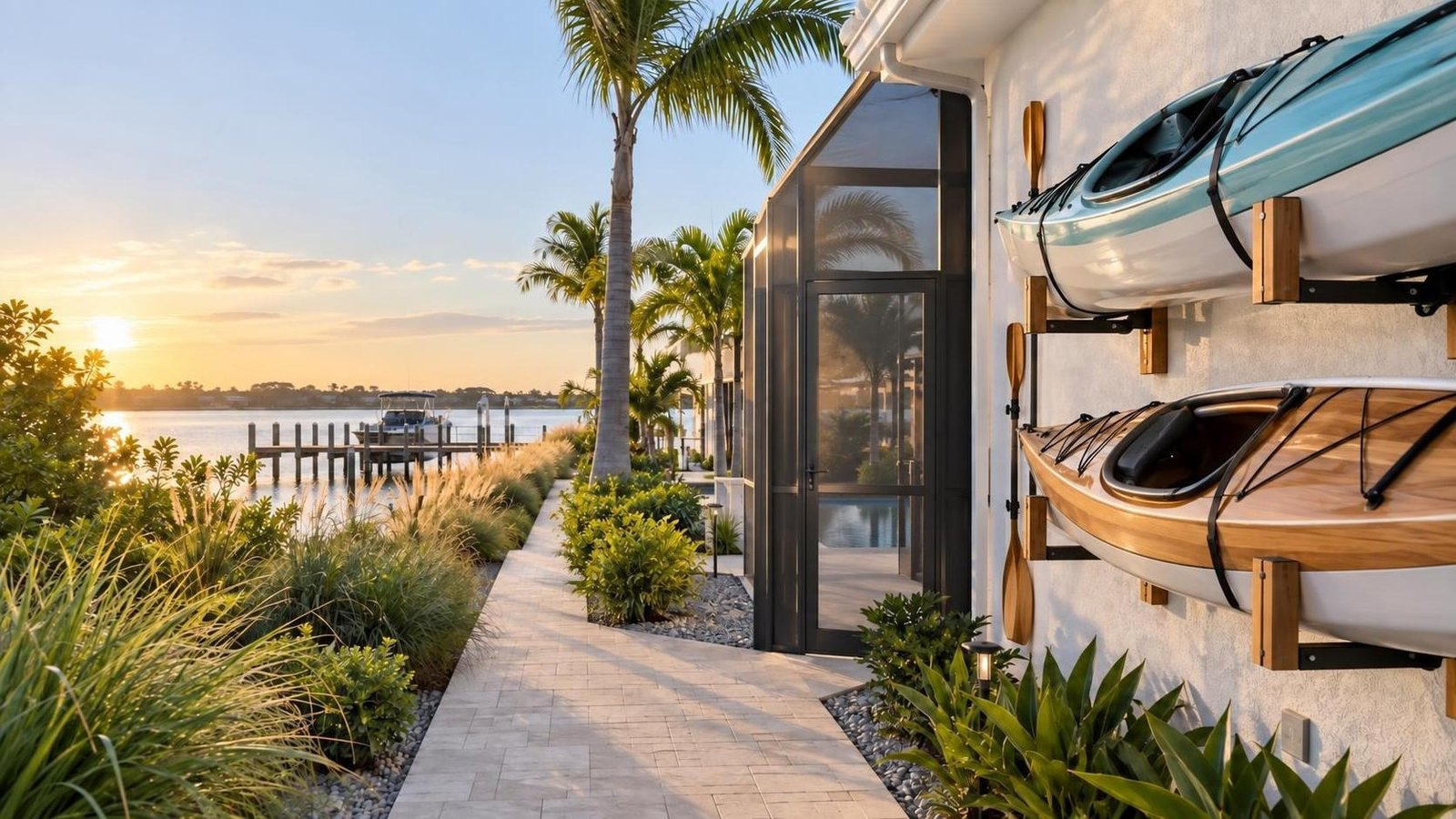
What Should Merritt Island Sellers Document When Kayak Storage, a Pool Enclosure, and Dock Access Share One Side Yard?
By Carrie Liotta, Space Coast REALTOR® with REAL Broker | Published September 20, 2026
Document the side yard as an access system, not a storage corner. Gather permits and approvals for the pool enclosure, gates, pads, electrical and waterfront work; confirm boundaries and easements; photograph the clear route; and explain how kayaks, pool service, dock maintenance, fuel-free gear, and emergency access can coexist without blocking one another.
On a Merritt Island waterfront home, one narrow side yard may do five jobs. It can be the route to the dock, the gate into the pool enclosure, the place where kayaks and paddleboards live, the path for contractors, and the drainage corridor between front and back. Buyers notice immediately when those jobs compete.
I would solve that concern before photography. A clean file and a usable path can turn an awkward feature into a credible waterfront-living plan.
Begin with the survey and the actual path
Pull the most recent survey and compare it with what exists today. Look for the house, fence, pool enclosure, equipment pads, sheds, dock, seawall, easements, and side-lot dimensions. A survey does not replace legal advice or a new boundary survey when one is needed, but it gives the seller and listing team a factual starting point.
Walk from the driveway to the waterfront carrying the widest item a future owner will realistically move: a kayak, paddleboard, dock cart, trash bin, pool-service equipment, or replacement appliance. Note the narrowest opening, gate swing, steps, low roof edges, hose bibs, condensate lines, utility meters, generator clearance, and soft ground after rain.
Measure useful clear width rather than the distance from wall to fence. A gate post, pool-enclosure door, air-conditioning unit, kayak rack, or landscaping bed can reduce the route. Do not publish a precise access measurement unless it has been verified. Keep the measurement sheet in the property file so buyers can test their own gear.
Create one permit timeline
Side-yard confusion often comes from improvements completed in different years. The pool may be original, the enclosure replaced later, the fence moved after that, and the dock electrical upgraded more recently. When records are scattered, buyers may wonder whether the route, drainage, or service clearances were considered as a whole.
For an unincorporated Merritt Island property, start with the Brevard County permit search and the county’s broader building-permit resources. Confirm the property’s actual jurisdiction, because a mailing address does not by itself establish which agency holds every record.
Gather permits, final inspections, plans, invoices, warranties, and contractor information for the pool, enclosure, fence, electrical circuits, lighting, dock, lift, shoreline work, equipment pads, drainage improvements, and storage structures. If a record is missing, do not invent a date or describe the improvement as permitted. Identify the gap early and ask the appropriate professional or agency what can be verified.
My article on Merritt Island dock electrical, generator, lift, and shutoff records shows how separate upgrades become easier for a buyer to understand when they are organized chronologically.
Show what is private, shared, or restricted
Waterfront access can be affected by recorded easements, utility areas, drainage paths, association rules, or shared maintenance obligations. Sellers should not promise that a buyer can widen a gate, move a fence, build a larger rack, or drive equipment to the dock without confirming feasibility.
Collect the deed, survey, title information already available, association documents, and any recorded access or maintenance agreements. If the kayak launch, dock route, or shoreline feature is shared, identify who can use it, who maintains it, and how costs are allocated. My guide to kayak launches and shoreline easements on Merritt Island explains why physical access and legal access must match.
Where future waterfront work is part of the marketing story, use qualified professionals and the responsible agencies. The St. Johns River Water Management District permitting page is a starting point for determining whether district review may apply, but location and project scope control the answer.
Separate storage from required access
A kayak rack can be a selling feature if it is stable, appropriately located, and does not block the gate, pool equipment, electric panels, utility meters, emergency egress, or dock service route. It becomes a liability in the buyer’s mind when boats lean against screens, paddles obstruct a latch, straps cross a walkway, or the only route requires lifting heavy gear over pool plumbing.
Before listing, remove unused racks and broken hardware. Confirm that any permanent rack or pad has the approvals required for that property. Store paddles, personal flotation devices, carts, and loose equipment so the path reads clearly. Do not stage fuel, batteries, chemicals, or extension cords in a way that suggests unsafe storage next to pool or electrical systems.
If the seller regularly moves kayaks through the enclosure, explain the sequence honestly. A buyer should know whether a standard boat cart fits, whether two people are needed at a turn, and whether a gate must be pinned open. A short factual note is better than calling the route “easy” for every owner.
Inspect gates, screens, drainage, and surfaces
The buyer will experience the side yard at walking speed. Repair dragging gates, loose latches, sharp hardware, torn screens, unstable pavers, exposed irrigation, and trip hazards. Clean algae from walking surfaces using methods appropriate for the material and shoreline. Trim landscaping enough to reveal the path without destabilizing soil or removing protected vegetation.
Watch the yard during or after rain. Does water collect at the pool-enclosure door? Does runoff cross the dock route? Does a downspout discharge where a kayak cart must roll? Are there depressions near the seawall or fence? Sellers should document prior drainage work and disclose known material issues rather than using mulch or staging to hide them.
Where a pool enclosure, fence, or pad changed water flow, collect the plans and drainage records. The goal is not to guarantee a dry yard in every storm. It is to show buyers what exists, what was changed, and how routine access works.
Make the pool file buyer-ready
Organize the pool permit, enclosure permit, equipment replacement records, heater information, electrical work, screen repairs, and service history. Label shutoffs and controls only with ordinary operational information; never expose alarm codes, camera access, smart-home credentials, or security procedures in listing materials.
Confirm that the enclosure doors close and latch properly and that service professionals can reach the pump, filter, heater, and valves. If pool equipment shares the side yard with kayaks, mark the clearance that should remain open. A buyer should not discover during inspection that a decorative rack must be dismantled for routine filter service.
If the pool enclosure ties into a dock-side patio or shoreline improvement, show the transition in the photo set. Buyers need to understand where screened living ends, where waterfront access begins, and whether pets or young children could move between those areas. Avoid promising that any barrier satisfies a specific household’s safety needs; invite the buyer to evaluate it with the appropriate inspector.
Prepare the dock-access file separately
The path to the dock is only one part of the waterfront story. Gather dock and lift permits, inspections, repair invoices, electrical service records, water-line information, seawall reports, and warranties. Include the route from the side yard to the shutoffs and service points, but keep sensitive controls secure.
For lagoon-front or canal properties, buyers may also ask about shoreline work, mangroves, shared facilities, and future changes. My article on preparing a Merritt Island lagoon-front property file gives those questions a broader context.
Do not market a dock as suitable for a particular boat without verifying dimensions, lift capacity, canal conditions, route, and clearance. The side yard may move the kayak beautifully while the dock setup is wrong for the buyer’s larger vessel. Keep those decisions distinct.
Address flood and insurance questions without overpromising
The FEMA Flood Map Service Center is the official public source for NFIP flood-hazard information, and FEMA notes that map information can be updated or superseded. Save the current map information for the exact property, elevation documents if available, and any transferable reports, while encouraging buyers to obtain their own current insurance quotes.
Keep photographs and invoices for flood vents, drainage work, elevated equipment, storm-rated openings, or prior repairs when applicable. Do not claim that a clear side yard, pool enclosure, seawall, or landscaping eliminates flood risk. The most trustworthy listing is specific about improvements and careful about outcomes.
Photograph the route honestly
Include one wide image from the front, one from the midpoint, and one from the dock looking back. Open the gate only if that is how the route is used and safe to show. Remove trash bins, garden tools, hoses, and excess gear, but do not digitally widen the path or hide fixed equipment.
A simple annotated property handout can identify “kayak storage,” “pool service access,” and “dock path” without publishing measurements or legal conclusions that have not been verified. Pair that handout with the survey and record index during due diligence rather than posting sensitive documents publicly.
My pre-listing sequence
- Walk the route with the widest realistic gear and measure clear openings.
- Compare current improvements with the survey and permit history.
- Repair gates, screens, walking surfaces, drainage defects, and unsafe storage.
- Separate pool, dock, shoreline, electrical, and storage records into labeled sections.
- Identify easements, shared obligations, and association approvals without guessing.
- Photograph the actual access path after clutter is removed.
- Disclose known material issues and let buyers verify their intended use.
Bottom line
When kayak storage, a pool enclosure, and dock access share one Merritt Island side yard, the seller’s best strategy is clarity. Show that the route works, prove what was approved, organize the waterfront records, and address conflicts before buyers find them. You are not just selling storage; you are selling reliable access to the lifestyle.
I am Carrie Liotta, a Space Coast REALTOR® with REAL Broker, and I publish 321 Coastal Living to help waterfront sellers prepare the details buyers examine closely. Reach out for a no-pressure conversation about organizing your Merritt Island property file and presenting the route from driveway to dock. Your next chapter starts here.
