

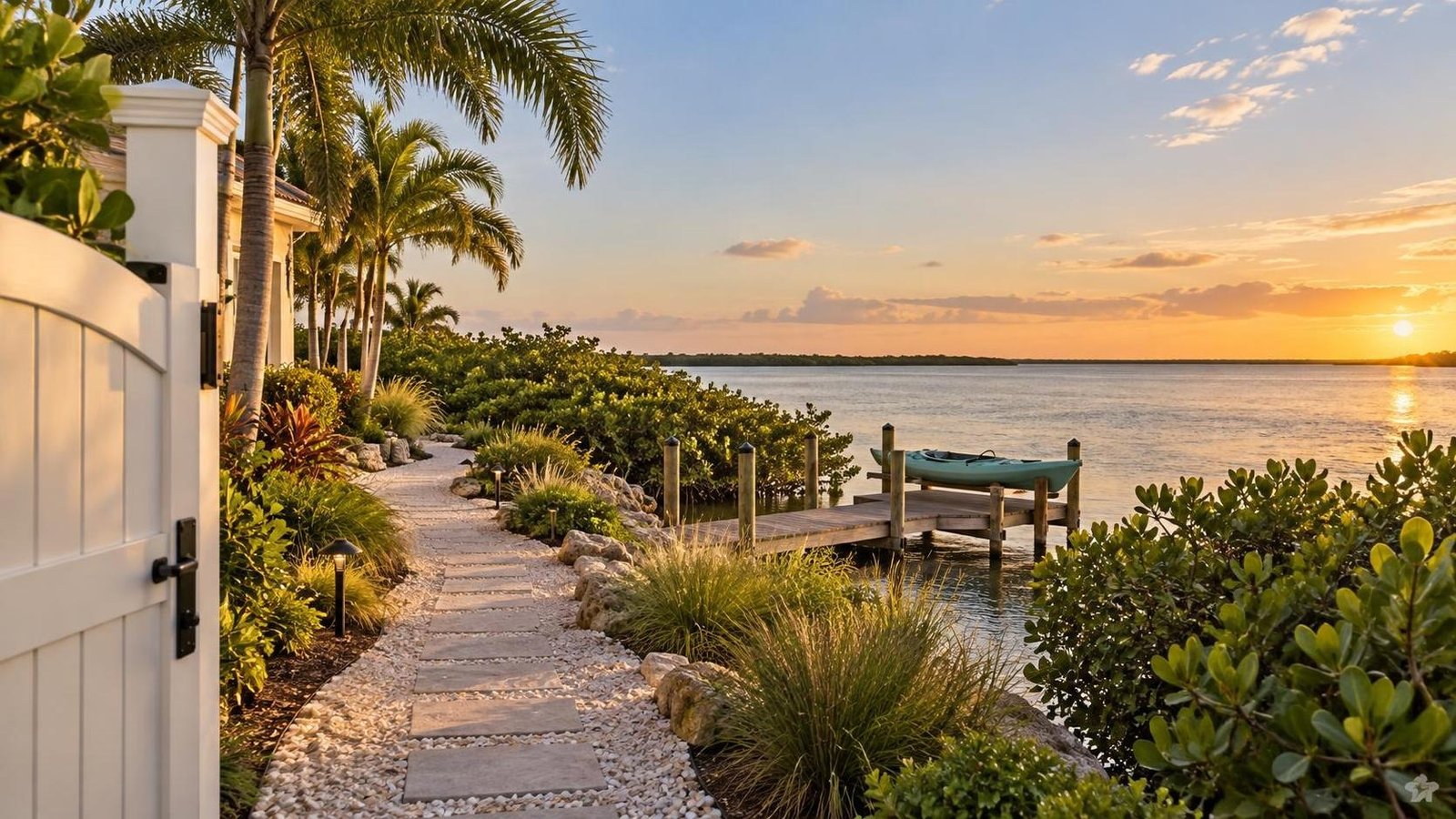
What Should Merritt Island Sellers Document When a Kayak Launch and Shoreline Easement Share One Route?
By Carrie Liotta, Space Coast REALTOR® with REAL Broker | Published September 19, 2026
Before listing, document the legal access, physical route, maintenance duties, permits, and actual condition from the side gate to the water. A private kayak launch is marketable only when buyers can understand who may use it, how they reach it, and what ownership responsibilities follow. Do not advertise certainty that the paperwork does not support.
This issue comes up on Merritt Island because a simple lifestyle feature can cross several property questions at once. The gate may sit inside a fence. The path may pass near pool equipment or drainage. The launch may touch a shoreline easement. A neighbor may have used the same route for years. The seller may call it “private” because nobody has objected, even though the deed or recorded agreement says something more limited.
My goal is not to turn a kayak path into a legal drama. It is to remove surprises before a buyer’s title review, survey, inspection, or insurance conversation turns an appealing feature into a negotiation problem.
Begin with the recorded right, not the worn path
The physical route tells you how people use the property. It does not prove the legal right. Start with the current deed, title policy, survey, and every recorded easement or amendment that appears to affect the side yard or shoreline. The Brevard County Clerk’s Official Records search is a useful starting point for recorded instruments, but a seller should not interpret complicated easement language alone. A title professional or real-estate attorney can explain what the document actually grants and burdens.
I want the answers to five questions before marketing begins:
- Who has the right to use the path or launch?
- What part of the property does the recorded description cover?
- What activities are allowed—pedestrian access, kayak carrying, maintenance, vehicles, or something narrower?
- Who pays for path, gate, shoreline, or launch maintenance?
- Can the gate, fence, landscaping, or equipment legally obstruct the route?
When the survey drawing, written easement, and real-world path do not appear to line up, do not solve that mismatch with listing language. Resolve it with the appropriate professionals or disclose the uncertainty accurately.
Make a route file from street to shoreline
A buyer should be able to follow the access story without guessing. Photograph the closed and open gate, measure the clear opening, document the surface and slope of the path, note steps or retaining edges, and show how the route reaches the launch. Include drainage points, low branches, narrow turns, utility equipment, pool gates, storage racks, and any place where a kayak must be lifted awkwardly.
This is not promotional photography. It is property documentation. Date the images and keep them in the seller file. If the path has been repaired, resurfaced, widened, or relocated, include invoices, permits when applicable, association approvals if any, and the reason for the change.
A kayak route is useful only if it works for the buyer’s actual equipment and mobility. A gate that clears one narrow recreational kayak may not handle a fishing kayak, beach cart, paddleboard, or two-person carry. Sellers should give dimensions and let buyers decide rather than calling the access “easy” for everyone.
Separate ownership, permission, and habit
One of the riskiest phrases in waterfront marketing is “we’ve always used it.” Long use may be relevant to a legal review, but it is not the same as a recorded ownership right. The seller may own the launch area, share it under a recorded agreement, cross another parcel under an easement, or use a route informally with a neighbor’s permission.
Those are different resale stories. A buyer deciding between this home and another Merritt Island property needs to know what transfers at closing. If the access depends on revocable permission, say so after receiving legal guidance. If maintenance is shared, produce the written formula and payment history. If no formula exists, do not imply that future costs are settled.
My guide to shared dock access through an easement explains the buyer side of this problem. A kayak launch is smaller than a dock, but the core questions—rights, route, maintenance, repair decisions, liability, and transfer—remain important.
Verify the launch and shoreline work
Sellers often inherit waterfront improvements without a complete history. A prior owner may have placed pavers, cut a bank, installed steps, added a rack, repaired a small landing, removed vegetation, or changed drainage near the shoreline. Before promising that an improvement is permitted, find the supporting record.
The Brevard County building-permit search can help with unincorporated records, but jurisdiction and agency responsibility depend on the property and work. Shoreline activities can involve more than one review path. Florida law includes exemptions and authorization procedures for certain activities under Florida Statutes section 403.813; that is a reason to verify the facts, not to assume a small project needed nothing.
If records are incomplete, describe the improvement factually and let the appropriate agency or professional determine status. “Existing gravel path to water” is safer than “fully permitted private launch” when the file does not prove the second statement.
Inspect drainage where the side yard meets the shore
The access route may also be a drainage route. Look for erosion, settlement, standing water, exposed roots, loose pavers, slippery surfaces, and runoff from roofs, pools, air-conditioning drains, outdoor showers, or neighboring lots. A seller may focus on making the path prettier while accidentally changing how water moves.
Keep invoices and before-and-after photos for drainage work. If a contractor adjusted grade, installed a drain, stabilized an edge, or repaired washout, document the scope. Do not call the work “flood mitigation” unless a qualified source supports that description.
The property’s mapped flood information should also be checked through the FEMA Flood Map Service Center. The map does not resolve easement or drainage questions, but it belongs in the larger buyer conversation about a shoreline-access property.
Decide what to repair before photography
Repair obvious safety and function problems first: a sagging gate, protruding hardware, unstable step, rotten rack board, broken latch, loose paver, or overgrowth that blocks the documented route. Use qualified contractors where the work requires one, and preserve receipts and permits.
Do not beautify the shoreline by removing vegetation, reshaping the bank, or adding materials without first checking what is allowed. A clean path is helpful; unverified shoreline alteration can create a larger issue than the cosmetic problem it was meant to solve.
Photography should show the feature honestly. One image can establish the gate and path; another can show the water connection. Avoid angles that make a shared route look exclusive or a carry launch look like a boat ramp. If the water level, vegetation, or usable landing changes seasonally, the seller should not promise identical use every day of the year.
Give buyers one organized access packet
I would organize the file in this order:
- Current deed, owner’s title policy, survey, and relevant recorded instruments.
- A plain cover sheet identifying documents without attempting legal interpretation.
- Permit and final-inspection records for the fence, gate, launch, shoreline, drainage, and related work where applicable.
- Dated route photographs and accurate gate/path dimensions.
- Maintenance invoices, shared-cost history, and written neighbor or association agreements.
- Repair estimates for known unfinished work.
- Seller-disclosure references that agree with the file.
Remove account numbers and personal information before broad distribution. The goal is to make material information available through the transaction process, not to publish a private document archive online.
If electrical equipment, a lift, or a generator also serves the waterfront area, keep those records separate but cross-reference them. This guide to Merritt Island dock electrical, generator, and lift shutoff records shows how sellers can make multiple upgrade years understandable.
Price the right that transfers, not the memory
A documented private route and usable launch may support a compelling lifestyle story. A shared route with clear maintenance rules can also be valuable. An informal arrangement may still appeal to a buyer, but it should not be priced or described as though an exclusive recorded right transfers.
Comparable sales need the same distinction. A home with a deeded private launch is not automatically comparable to one near a public ramp, one with shared access, or one whose shoreline can be viewed but not lawfully reached. My comparison of Merritt Island public-ramp convenience and private-dock ownership makes the same broader point: water access has different forms, costs, and buyer pools.
I would rather price from a smaller set of genuinely similar properties than stretch a dramatic waterfront comp that transfers a different bundle of rights. Buyers often forgive limits when the price and documents acknowledge them. They become skeptical when marketing tries to blur the difference.
Prepare for buyer questions during showings
Agents should know where the documented route begins and ends, but they should not improvise legal answers. Use the survey and seller file. If a buyer asks whether a neighbor can enter, who repairs storm damage, or whether the path may be widened, point to the governing record and encourage appropriate professional review.
Keep the route safe and visible for showings without leaving gates unsecured. Store kayaks so buyers can inspect the path. Trim ordinary landscaping only within approved boundaries. If access requires a key, code, tide condition, or special instruction, build that into showing notes without exposing security details publicly.
Remote buyers deserve a continuous video walk from gate to water, not disconnected beauty shots. Narrate surfaces, widths, turns, slopes, and obstructions while keeping neighboring private areas out of frame.
Common seller mistakes to avoid
- Calling an unrecorded neighbor arrangement “deeded access.”
- Assuming a fence permit proves the shoreline launch is authorized.
- Using an old survey that predates the gate, pool, path, or shoreline work.
- Promising that any kayak or paddleboard will fit the route.
- Ignoring who maintains erosion, drainage, vegetation, or storm damage.
- Repairing or clearing the shoreline without checking requirements.
- Letting listing remarks conflict with the disclosure or title documents.
Bottom line
A Merritt Island kayak launch can be a wonderful everyday amenity, but its value depends on clarity. Sellers should prove the right, map the route, document the condition, verify the work, explain maintenance, and market only what transfers. When the paperwork and the path tell the same story, buyers can focus on the sunset paddle instead of fearing an access dispute.
I am Carrie Liotta, a Space Coast REALTOR® with REAL Broker, and 321 Coastal Living is where I explain the practical side of buying and selling near Brevard’s water. If you are preparing a Merritt Island shoreline-access home for market, reach out for a no-pressure conversation about the records, repairs, and positioning that deserve attention first. Your next chapter starts here.
