

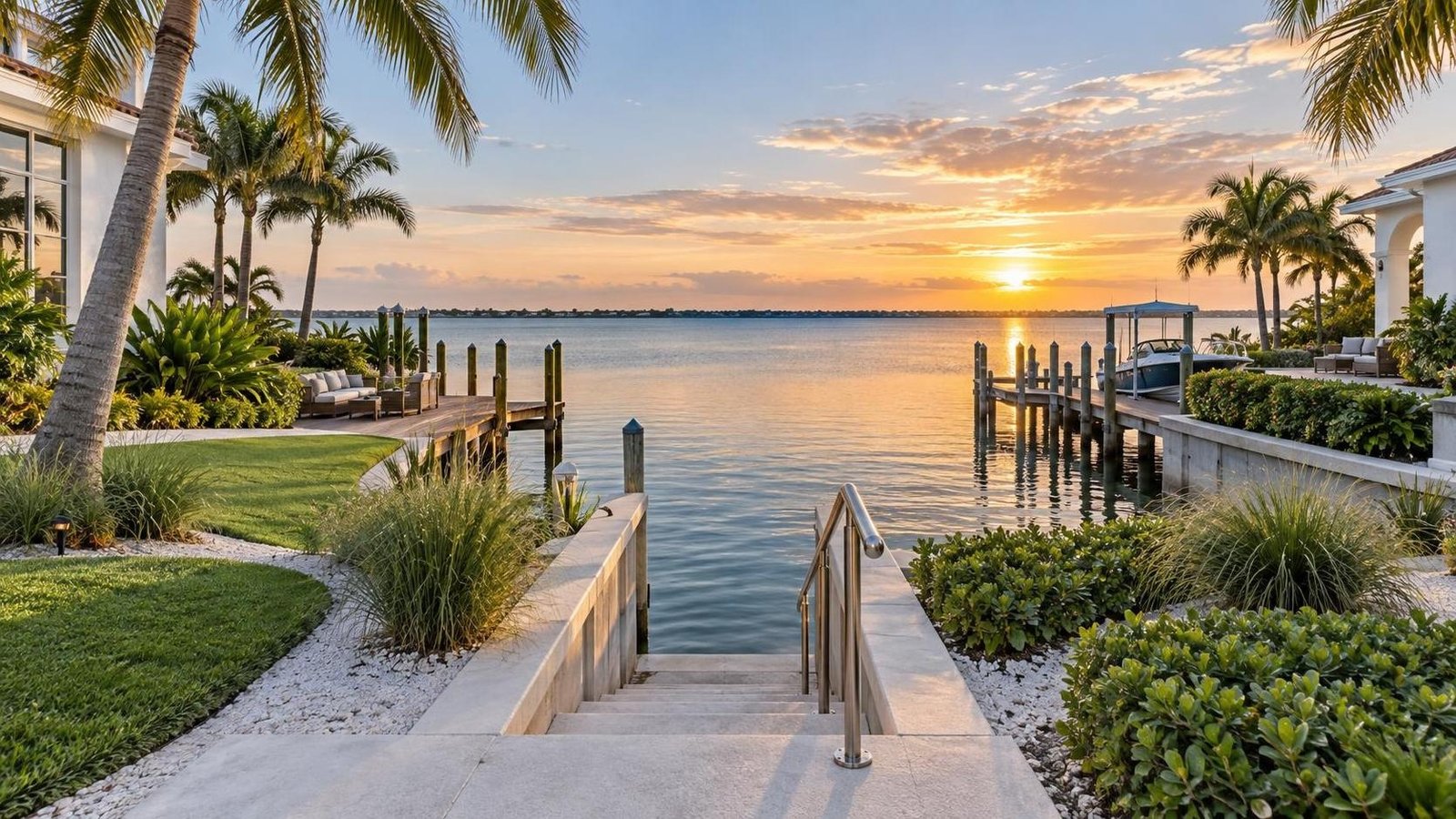
Shared Seawall Stair With No Replacement Clause: What Should Merritt Island Sellers Do?
By Carrie Liotta, Space Coast REALTOR® with REAL Broker | Published October 3, 2026
Do not repair or replace a shared seawall stair unilaterally when the recorded agreement is silent. Before listing, document its condition, confirm boundaries and rights, have a Florida real-estate attorney interpret the complete title file, obtain a professional repair scope, and put authority, access, cost, insurance, and future maintenance into a written agreement.
A stair between two Merritt Island waterfront yards may feel informally shared because both households have used it for years. That history can be helpful, but it does not tell a buyer who owns the concrete, handrail, seawall connection, or submerged portion; who may select a contractor; or who pays when routine maintenance becomes replacement.
For a seller, the strongest move is not to choose between “fix it” and “leave it” on appearance alone. Build the legal, physical, and permitting picture first. Then decide whether a coordinated repair will reduce uncertainty before the home reaches the market or whether an accurate disclosure with a current scope is the more responsible path.
Treat a silent clause as an unresolved question, not a 50-50 answer
If an agreement mentions shared access or ordinary upkeep but says nothing about replacement, do not assume the neighbors owe equal shares. Do not assume the owner whose yard contains more of the stair must pay everything. Also do not assume that either owner can remove the stair, change its width, move the handrail, or attach new work to the seawall without the other owner’s involvement.
Start with the actual recorded documents. The Brevard County Clerk of Court and Comptroller explains that Official Records include deeds, contracts, surveys, plats, and other real-estate instruments. The Clerk also cautions that its online index is a public search service, not the official record itself. Pull certified or otherwise appropriate copies through the transaction professionals instead of relying on a screenshot, an old listing attachment, or a neighbor’s summary.
The review may need the deed, survey, plat, easement, maintenance or cost-sharing agreement, association documents, prior closing file, permits, amendments, and any recorded release or modification. Search the names and legal descriptions that title professionals identify, not only the current street address. A stair can touch rights created in an older instrument that does not use the wording a seller expects.
This is where a Florida real-estate attorney belongs in the conversation. The Florida Bar’s home-buying guidance explains that title examination identifies ownership, restrictions, and easements, and that unique contract terms should receive legal review. I can organize the property questions and transaction timeline as a REALTOR®; I should not turn one silent paragraph into a legal conclusion for either owner.
Separate the right to use the stair from the right to rebuild it
A document may clearly allow both owners to reach the water and still leave construction authority unclear. It may assign ordinary cleaning or minor repairs but never define a capital replacement. It may describe a shared path while the stair itself sits on one parcel. It may allocate costs without saying who approves the design, signs a permit application, grants contractor access, or handles damage to landscaping and the seawall.
Make a simple question matrix for the attorney and title professionals:
- Where do the surveyed property line, easement area, stair, handrail, seawall cap, and waterward components sit?
- Who owns each component, and who has a documented right to use it?
- Does the instrument distinguish maintenance, repair, emergency stabilization, and full replacement?
- Who may authorize work, select a design, hire a contractor, and enter either parcel?
- Does the agreement allocate expense, insurance, indemnity, damage, dispute resolution, or future transfer?
- Is an association, third owner, utility easement, or other party involved?
Do not ask the marine contractor to interpret these rights. The contractor can explain the physical scope and access needed. The surveyor can locate improvements within the scope of the survey. The attorney can interpret the instruments and prepare any new agreement. Keeping those roles separate prevents a useful estimate from being mistaken for permission to build.
I use the same discipline when buyers compare private dock control with a shared dock and reserves. Sharing can work very well, but only when the ownership, decision process, and money are as understandable as the feature itself.
Document the existing condition before discussing price
Photograph the stair from both upland approaches, the water side when safely accessible, and each connection point. Include the treads, risers, landing, handrail, fasteners, seawall cap, adjacent panels or joints, soil behind the wall, nearby drainage, and any dock or lift conflict. Preserve original dates and create a numbered photo key.
Then obtain an evaluation from a qualified marine contractor or engineer appropriate to the observed construction and concern. The report should distinguish a stair-only defect from movement or deterioration involving the seawall. Cracked concrete, corrosion, loose rails, settlement, undermining, spalling, sharp edges, and unstable landings do not all require the same trade or repair.
Ask whether the stair can be repaired in place, needs partial reconstruction, or should be replaced; whether work transfers load to the cap or wall; how temporary access will be controlled; and what must be protected during demolition. The scope should identify assumptions, exclusions, design needs, contractor staging, debris removal, restoration, and the information still required before a firm proposal.
If seawall drainage or tiebacks are also in question, keep that work connected to the stair review without blending the files. My guide to documenting Merritt Island seawall drainage and tieback repairs explains why a buyer needs to see what was evaluated, what was repaired, and what remains outside the contractor’s scope.
Confirm the approval path before anyone orders materials
A contractor’s willingness to perform the work is not the same as approval. Stair work at the waterline can raise building, shoreline, surface-water, submerged-land, association, or other property-specific questions. A repair that appears to follow the existing footprint may still need confirmation because the scope, location, attachment, demolition, or access differs from prior work.
The Florida Department of Environmental Protection’s Environmental Resource Permitting overview, last modified June 9, 2023, says the program covers alterations of surface-water flows and dredging or filling in wetlands and other surface waters. It also explains that DEP and Florida’s water-management districts divide application responsibilities under operating agreements. That does not establish the permit result for one Merritt Island stair. It tells the seller to obtain project-specific direction from the correct authority before work starts.
For a property in county jurisdiction, the Brevard County building permit search is a useful starting point. Confirm the property’s actual jurisdiction, retrieve the underlying permit documents and finals, and ask where older records are held. A permit for the seawall does not necessarily cover a stair added later, while a blank online result does not establish that work was unauthorized.
Repair before listing only when the authority and scope are clean
I would favor a coordinated pre-listing repair when the condition creates a real safety or use concern, the owners agree on the work, the survey and title review support access and authority, the permit path is confirmed, and a qualified professional has provided a clear scope. Completed work should end with paid invoices, approvals and finals that apply, warranties, before-and-after photos, and an updated written agreement if the old one did not cover replacement.
I would not rush a unilateral project simply to improve listing photographs. If the neighbor disputes the design, the boundary is uncertain, the replacement changes the seawall connection, or the agencies have not answered, demolition can create a larger disclosure problem than the original worn stair. The seller may also spend money on a design the buyer does not value or on a feature the documents do not clearly allow.
When a coordinated repair cannot be completed responsibly before market, obtain the current condition report and at least one written scope if professionals can prepare one without overstepping unresolved rights. Disclose the observed condition and the document gap accurately. Do not advertise a guaranteed repair cost, equal neighbor contribution, or transferable right to rebuild unless the records support it.
What should a new written agreement cover?
If both owners want the stair to remain, the pre-listing period is a good time for their attorneys to address the silence. A durable agreement should identify the affected parcels and improvement, attach an accurate exhibit, and define use, maintenance, repair, replacement, access, notice, voting or consent, emergency work, contractor selection, insurance, indemnity, and restoration of each yard.
It should also explain how costs are calculated and collected. Equal shares may be appropriate, but that is a negotiated legal decision, not a default I would promise. The document should address overruns, upgrades requested by one owner, damage caused by one party or guest, nonpayment, sale of either property, casualty, removal, rebuilding after storm damage, and a method for resolving disputes. The attorneys and closing professionals can determine execution and recording requirements.
Build a buyer file that separates facts from open issues
The buyer-review file should include a short index, current survey, title and recorded instruments supplied through the proper transaction process, stair and seawall condition reports, dated photos, repair proposals, permit history, agency correspondence, neighbor agreement or attorney-prepared amendment, invoices, approvals, and warranties. Redact account numbers, signatures, private contact details, and unrelated financial information from general review copies.
Price the uncertainty instead of hiding it
A documented, serviceable shared stair can add practical water access. An unsafe or legally unclear stair can reduce confidence because the buyer may inherit both a physical project and a neighbor negotiation. The pricing discussion should reflect condition, usable access, repair scope, legal clarity, waterfront alternatives, and the rest of the home’s seawall, dock, lift, drainage, flood, insurance, roof, and systems file.
My pre-listing sequence
- Preserve dated condition photographs and stop unsafe use if the appropriate professional advises it.
- Gather the survey, deed, easements, cost-sharing agreement, prior closing file, permits, invoices, and amendments.
- Have qualified title, survey, and legal professionals identify ownership, boundaries, rights, and the effect of silence.
- Obtain a marine or structural evaluation and written repair or replacement scope.
- Confirm building, shoreline, environmental, and association approval paths for that scope.
- Work through counsel on neighbor consent and a durable agreement covering authority and cost.
- Either complete and close out coordinated work or disclose the condition, records, estimate limitations, and unresolved allocation accurately.
Bottom line
A silent replacement clause is a reason to slow down, not a reason to guess. The best Merritt Island seller strategy aligns four things before listing: the recorded rights, surveyed location, physical repair scope, and written process for making and paying for the decision.
I am Carrie Liotta, Space Coast REALTOR® with REAL Broker. If you are preparing a Merritt Island waterfront home for sale, I can help organize the real-estate timeline, waterfront records, specialist questions, and listing strategy without pretending a shared feature is simpler than the documents show. Reach out for a no-pressure conversation about Brevard County homes for sale, or join my private Facebook group, Moving to Brevard County Florida. Your next chapter starts here.
