

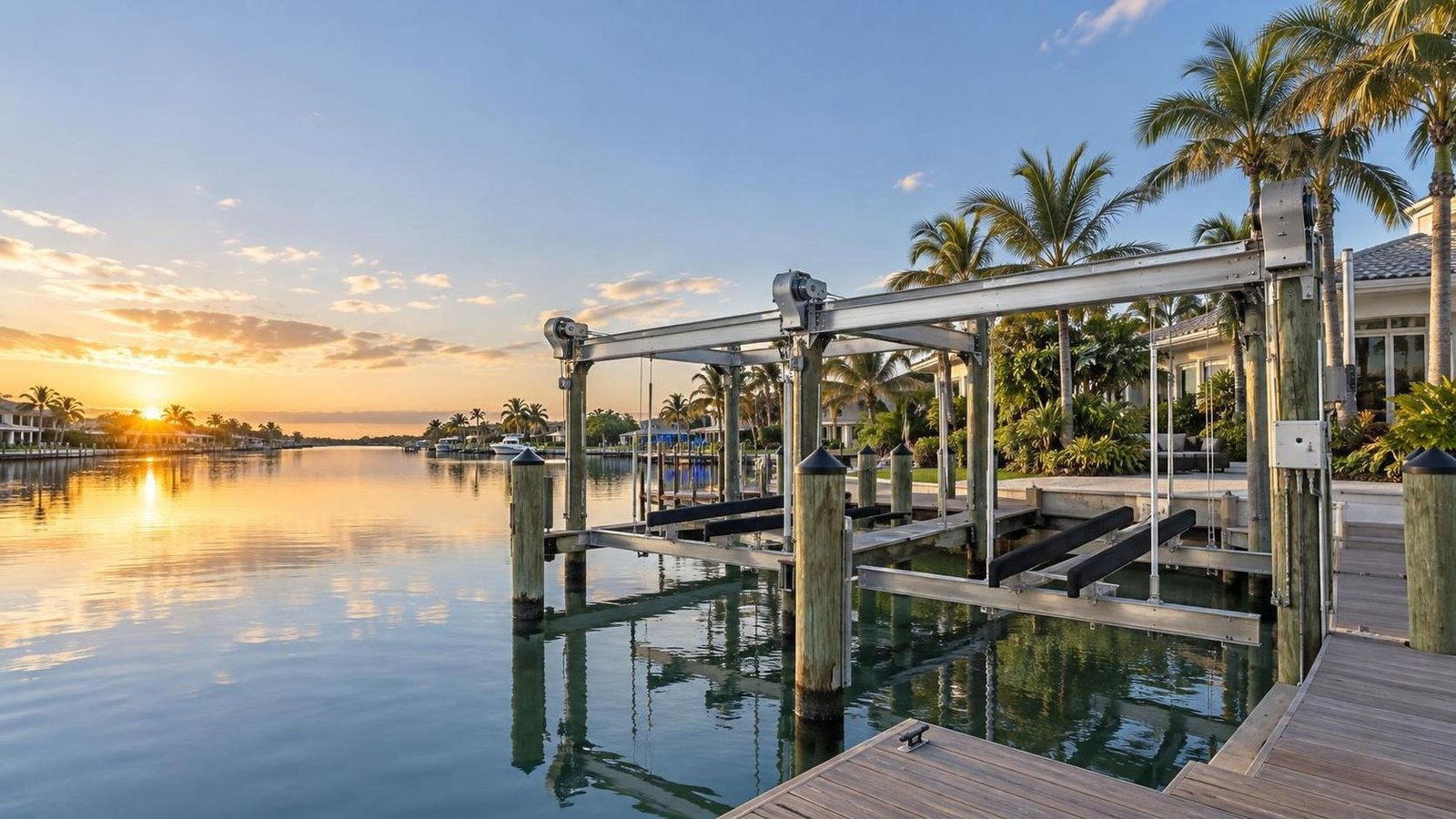
What Should Merritt Island Buyers Verify When a Shared Boat Lift Has No Replacement Reserve?
By Carrie Liotta, Space Coast REALTOR® with REAL Broker | Published September 15, 2026
A recorded agreement is a strong starting point when two Merritt Island properties share a boat lift, but it does not answer the most expensive question: what happens when the lift needs a major repair or complete replacement and nobody has saved for it?
My advice is to treat the agreement, the equipment, and the money as three separate parts of the purchase. Verify that the recorded document gives the property usable rights. Have the lift and supporting dock components evaluated for the boat you intend to use. Then create a realistic capital-cost plan before the inspection period expires. A clear agreement without a funded plan can still leave a new owner facing a sudden bill, a dispute, or an unusable lift.
A recorded agreement is not the same as a reserve
Buyers sometimes see a recorded shared-lift agreement and assume the issue is settled. Recording matters because it may help establish rights and obligations that follow the properties rather than depending on a neighbor’s handshake. But the language may only say that costs are shared. It may not define how much each owner should save, when replacement becomes necessary, who can approve the work, or what happens if one party cannot or will not contribute.
Start by obtaining the complete recorded instrument and every exhibit, amendment, easement, survey reference, or maintenance schedule attached to it. The Brevard County Clerk’s Official Records include deeds, contracts, plats, surveys, and other real-estate documents, but the clerk also cautions that the online search itself is not a substitute for the official public record. Your title professional or Florida real-estate attorney should confirm what is recorded against the parcel and explain how the language applies to the purchase.
If the agreement is silent about replacement funding, do not fill the gap with assumptions. “Split equally” sounds simple until one owner wants a basic replacement, the other wants more lift capacity, and both disagree about whether the old equipment can be repaired for another season.
Read the agreement for decisions, not just percentages
The cost percentage is important, but a useful shared-infrastructure agreement should also make the decision process understandable. I would ask the reviewing attorney or title professional to help the buyer identify answers to these questions:
- What is actually shared? The lift motor, cradle, pilings, roof, dock walkway, electrical service, controls, and water access may not all have the same ownership.
- Who may use it? Confirm whether use belongs to the parcel, named owners, tenants, guests, or only one designated vessel.
- How are ordinary expenses divided? Routine service, electricity, cleaning, lubrication, and small repairs may be handled differently from capital replacement.
- Who decides that replacement is necessary? Look for a required inspection, contractor opinion, vote, notice period, or emergency authority.
- How is the contractor selected? The agreement may require multiple bids, licensed contractors, insurance certificates, or mutual approval.
- What happens after nonpayment? A reimbursement right is not the same as having cash available when the lift fails.
- Can the lift be upgraded? A higher-capacity motor or different cradle may change cost, permitting, electrical load, or one owner’s ability to use the equipment.
I recently explained why a recorded shared-lift and dock-maintenance agreement can justify value. The next layer is financial readiness. A document can allocate liability while still leaving both households unprepared for the timing of the bill.
Inspect the lift as shared capital equipment
Do not estimate remaining life from a listing photo or a smooth demonstration at the showing. A marine contractor should evaluate the parts that drive both safety and cost: rated capacity, lift beams, cradle, cables, pulleys, motors, controls, wiring, pilings, fasteners, roof structure if present, and the surrounding dock. Salt exposure, electrical condition, prior modifications, and load history all matter.
The inspection should also answer whether the lift fits your actual boat. Ask the contractor to compare the vessel’s loaded weight, beam, hull shape, and lift points with the equipment’s documented rating and geometry. Fuel, water, batteries, gear, and accessories add weight. A lift that worked for a smaller neighbor’s boat is not automatically appropriate for yours.
Permit and service records help establish what was installed and changed. Brevard County provides a building-permit search, while property inside a municipality may involve that city’s records. Missing online history does not prove work was unpermitted, especially for older improvements, but it tells you where documentation needs more attention. Verify contractor licensing through the official Florida DBPR licensee search before relying on a repair or replacement proposal.
For a closer look at how buyers should weigh electrical documentation against newer machinery, read my guide to dock electrical work versus a newer boat-lift motor. A shiny motor does not make aging wiring, pilings, or controls disappear.
Build a replacement number before negotiating
If there is no reserve, the buyer needs a defensible working number rather than a vague promise that “we would split it.” Ask for a written inspection and at least one current licensed-contractor estimate that describes the assumed scope. When the condition or desired capacity is uncertain, two estimates can reveal whether the parties are pricing the same job.
Separate the estimate into categories: lift equipment, structural dock or piling work, electrical work, permitting or engineering, removal and disposal, and contingency. Then apply the agreement’s actual cost-sharing formula. A 50 percent obligation is meaningful only after the total scope is understood.
I also ask buyers to consider timing. If the lift appears serviceable but near the end of its practical life, how quickly could the household produce its share? Would that money compete with the roof, insurance deductible, seawall work, or moving costs? Waterfront ownership becomes uncomfortable when several capital items arrive at once.
Reasonable ways to address an empty reserve
There is no single correct negotiation. The condition of the lift, the clarity of the agreement, the seller’s history with the neighbor, and the home’s overall price all affect the answer. Common approaches to discuss with the buyer’s agent, attorney, lender, and closing professionals include:
- Accept the arrangement and self-reserve. This can work when the inspection is strong, the buyer understands the exposure, and enough liquid savings remain after closing.
- Negotiate a price adjustment or permissible credit. The amount should relate to documented condition and the buyer’s likely share, not a speculative full replacement.
- Request completed service or repair. A defined current defect may be easier to solve before closing than an open-ended future reserve.
- Ask for a funded escrow or contribution structure. Whether this is practical depends on the contract, lender, title, tax, and legal considerations. It should never be improvised without professional review.
- Amend the agreement before closing. If both owners agree, counsel may be able to formalize notice, bids, emergency work, capital contributions, and dispute procedures. The buyer should not count on a post-closing amendment that nobody is obligated to sign.
The key is not to demand that the seller solve every future expense. It is to prevent an identifiable shared obligation from remaining invisible in the buyer’s budget.
Talk with the neighboring owner, but verify independently
A respectful conversation with the co-owner can be extremely useful. Ask how the lift has been used, who schedules service, what repairs have occurred, whether payments have been timely, and whether replacement has been discussed. The tone of that conversation matters because shared waterfront equipment requires ongoing cooperation.
Still, verbal history should support the file, not replace it. Request invoices, service records, warranties, permits, and written communications that are appropriate for the transaction. Confirm that the neighboring person you meet actually holds the interest described in the records. If shared access crosses another parcel, my guide to shared dock and easement due diligence explains why route, boundaries, rights, and maintenance obligations must be checked together.
Do not forget insurance, liability, and downtime
Ask the buyer’s insurance professional how the dock and lift should be described, whether the shared arrangement affects underwriting, and what liability or property coverage applies. The answer can depend on ownership, location, equipment, and policy language. Never assume the neighbor’s policy protects your interest.
Plan for downtime too. If the motor fails during boating season, can the vessel remain safely in the water? Is another marina or storage option available? Does the agreement authorize emergency work, and who can call the contractor? A replacement reserve helps with money, but a written response plan helps when the problem happens on a Friday afternoon.
My offer-stage checklist
- Obtain the recorded agreement, exhibits, amendments, easements, deed, title materials, and relevant survey.
- Have qualified professionals explain ownership, use rights, cost allocation, approval rules, defaults, and remedies.
- Verify permit, installation, service, warranty, and prior-payment records.
- Inspect the lift, dock, pilings, controls, and electrical components.
- Confirm documented capacity and geometry for the buyer’s loaded vessel.
- Get a written capital-cost estimate and calculate the buyer’s contractual share.
- Discuss the arrangement with the co-owner while independently verifying the facts.
- Review insurance, liability, emergency authority, and expected downtime.
- Choose a negotiation and self-reserve plan before contingency deadlines.
Bottom line
A recorded agreement can make a shared Merritt Island boat lift much easier to evaluate, but it does not create money for the next motor, cable system, piling repair, or replacement. The safest buyer decision combines a clear legal right, equipment that fits the intended boat, a professional condition review, and a realistic plan for the owner’s share of future costs.
If you are comparing Merritt Island canal homes with shared docks or lifts, I can help you organize the property questions, records, inspections, and cost comparisons before the deadlines become stressful. Reach out for a no-pressure conversation about Brevard County waterfront homes with REAL Broker. Your next chapter starts here.
