

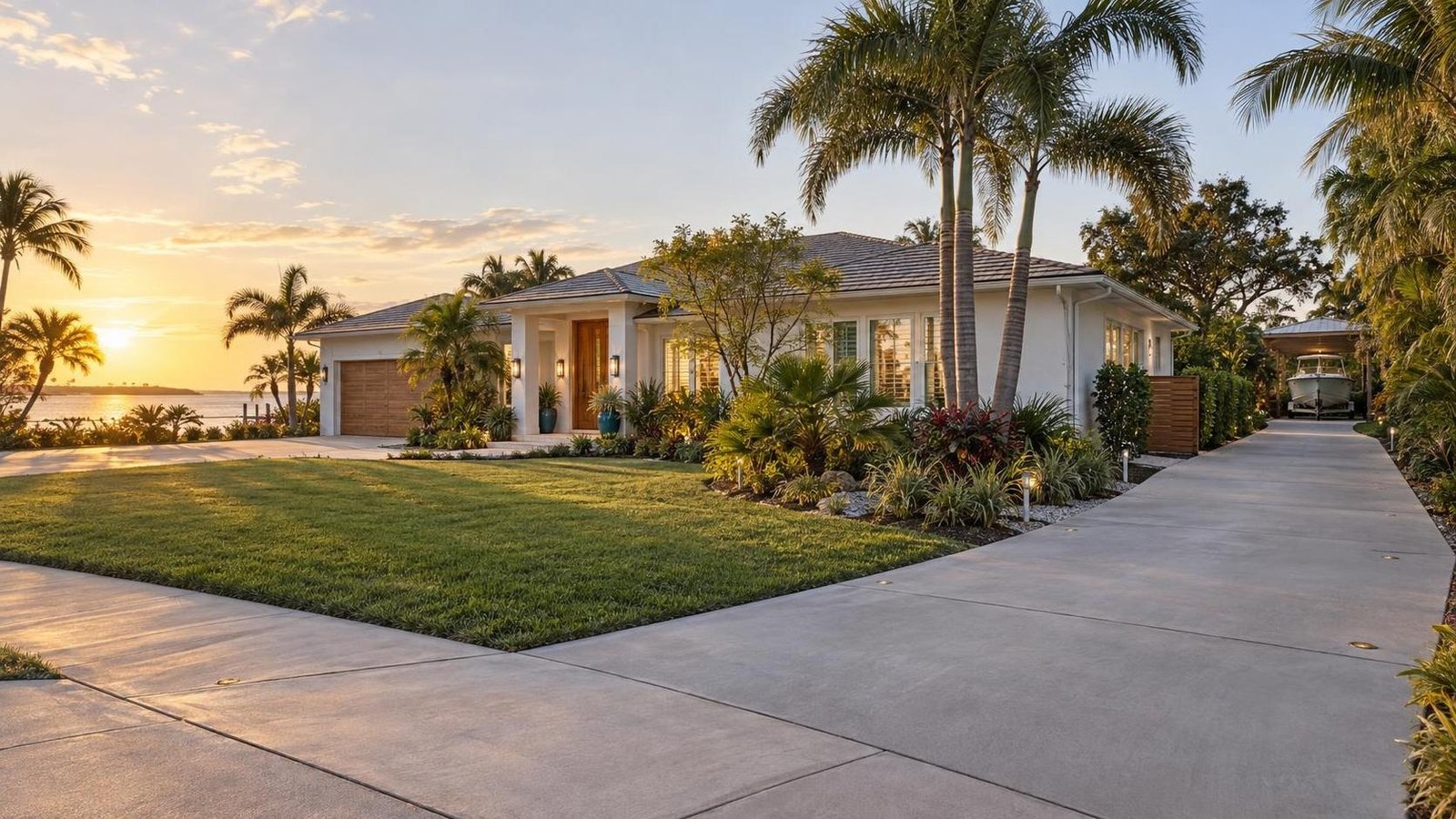
Selling a Merritt Island Home With a Secondary Driveway Across an Irrigation Easement? Document It First
By Carrie Liotta, Space Coast REALTOR® with REAL Broker | Published September 29, 2026
Document the easement before you advertise the secondary driveway as RV or boat parking. A useful seller file should show the recorded easement, a current survey, the driveway’s permit history, any association restrictions, and the actual clear route. The pavement may be convenient, but it does not by itself prove permanent parking rights or unrestricted access.
I would treat this as three separate questions: Is the driveway legally documented? Can the easement holder still use the area as intended? Can a buyer’s particular RV, boat trailer, or tow vehicle reach and occupy the space without creating another conflict? A good listing answers what the records support and leaves parcel-specific legal conclusions to the appropriate professionals.
Why the word “easement” changes the selling strategy
An easement generally gives someone a defined right to use part of land owned by someone else. The recorded instrument may identify its purpose, location, width, beneficiaries, maintenance language, and limits. An “irrigation easement” could involve access to irrigation infrastructure, but the label alone does not tell a seller who may enter, what equipment may be maintained, or whether a paved crossing is allowed. The actual recorded language and survey control the investigation.
That distinction matters because the driveway and the easement can occupy the same physical strip while serving different functions. A vehicle may cross the area every day without a problem, yet permanent parking, a gate, a carport, landscaping, or storage could interfere with access. Conversely, an easement shown on an old plat may not create the exact conflict a seller fears. The answer is not visible from aerial photos or concrete condition.
The Brevard County Clerk’s Official Records page explains that the Clerk records real-estate instruments such as deeds, contracts, affidavits, subdivision plats, surveys, and declarations. It also cautions that its online search is a public service and that the records available at branch offices are the official public records. I use the online system as a starting point, then ask title or legal professionals to resolve meaning, priority, termination, or enforceability questions.
Build the property map before you build the marketing story
Start with the most recent boundary survey you have. Mark the lot lines, driveway edges, road right-of-way, easement limits, fences, gates, utility equipment, drainage features, and the location where an RV or boat would actually sit. If the survey predates the second driveway or shows a different footprint, order an update rather than asking buyers to imagine where everything falls.
Then locate the recorded document referenced by the survey or title materials. Do not stop at a note that says “irrigation easement.” Collect the full instrument, any recorded amendments or releases, the subdivision plat, and relevant title exceptions. If the instrument names a district, association, utility, neighboring parcel, or prior owner, determine which professional can confirm the current interest.
The county’s Easement & Right of Way page is a useful official starting point when a public easement or county right-of-way may be involved. A private easement is different from county right-of-way, so sellers should not assume that one agency can answer every question. The right path may include the title company, a Florida real-estate attorney, a surveyor, the county, and an association.
Verify how the secondary driveway was created
Next, gather the paperwork for the physical improvement. Look for permit applications, approved site plans, inspection results, contractor invoices, material specifications, culvert records, and any association architectural approval. If an owner widened an apron, added pavers, crossed a swale, installed a culvert, changed drainage, or connected to a county-maintained road, more than one record may matter.
Brevard County’s current permitting portal is an official place to begin permit research for applicable unincorporated properties. Merritt Island addresses are not interchangeable, however. Confirm the governing jurisdiction and reviewing agency for the exact parcel rather than assuming a neighbor’s permit path applies.
The county’s residential right-of-way/easement permit application also cites Chapter 86-70 and states that a property owner is responsible for driveway materials within county right-of-way, including the culvert and end treatments or sidewalk area when applicable. That is useful context for an apron connecting to a county road. It does not define a private irrigation easement or prove that parking beyond the apron is permitted.
Separate a legal crossing from a practical parking space
A driveway can be documented and still be awkward for the use a buyer has in mind. Measure the route from the street to the proposed parking position: apron width, gate opening, turning radius, overhead clearance, roof eaves, trees, meters, air-conditioning equipment, fences, and the distance available to straighten a trailer. Photograph the route with a tape measure visible, but never substitute listing photos for a survey.
Test drainage after rain. Look for a low spot where trailer tires may sink, runoff crosses the neighbor’s property, or water collects around an irrigation box or culvert. Check whether parked equipment would block access to valves, pumps, lines, cleanouts, utility meters, or a maintenance corridor. A buyer who needs a 30-foot travel trailer has a different clearance problem from someone storing a small skiff on a compact trailer.
If covered parking was created from a carport or enclosure, my guide to Merritt Island carport and garage documentation explains why permit, insurance, opening-protection, and usable-storage questions need to be separated. The same principle applies here: a physically possible use is not automatically a documented use.
Review zoning and association rules before promising RV or boat parking
“Room for an RV” is not the same statement as “RV parking is allowed.” Zoning rules can address where recreational equipment may be kept, while recorded covenants or association rules may be more restrictive. A corner lot, fence location, front-yard relationship, or visibility requirement can change the answer. The type, height, length, registration status, and frequency of movement may matter too.
Ask Brevard County Planning and Development for address-specific guidance on the current zoning classification and the rules that apply to the proposed use. Then read the current association declaration, rules, architectural standards, and approval history if the property is governed by an association. Get the documents from authoritative sources; do not rely on an old listing that said “no HOA” or a neighbor’s description of enforcement.
A seller does not need to predict every buyer’s equipment. The better approach is to provide accurate dimensions and documents, state any known approval or restriction, and invite the buyer to verify the intended use during due diligence. That is more useful than a broad promise that may fail when a buyer arrives with a taller motorhome, a wider boat, or a longer tow vehicle.
Use precise listing language
Strong marketing can still be careful. If the records are complete, the listing might describe a “documented secondary driveway with approximately ___ feet of clear width; survey, permit records, and recorded easement materials available.” If parking approval is confirmed in writing, identify the source and date. If it is not confirmed, describe the paved access and let buyers verify whether their intended equipment and use comply.
Avoid phrases such as “guaranteed RV parking,” “unrestricted boat storage,” or “permanent private driveway” unless the supporting records and qualified advice truly establish those facts. Do not crop the easement note from a marketing survey or tell buyers that an easement “has never been used, so it does not matter.” A quiet history is useful context, not a legal release.
Make the listing, seller disclosure, survey, and spoken explanation consistent. If the current owner has parked a boat there for ten years, say that as history only if accurate. Do not turn past practice into a promise about future rights. If a gate, pad, canopy, electrical outlet, or washdown connection was added, include its records in the same file.
Give buyers one organized handoff
I would create a digital folder with five tabs:
- Survey and title: current boundary survey, title exceptions, recorded easement, plat, amendments, and releases.
- Driveway approvals: permits, site plans, final inspections, right-of-way records, culvert information, and contractor invoices.
- Use rules: zoning confirmation, association declaration and rules, architectural approval, and any written agency response.
- Condition and dimensions: dated photos, measured gate and route widths, drainage observations, and repair receipts.
- Equipment history: truthful notes about what the seller stored, how it entered, and any known access or maintenance events.
This package helps the buyer, inspector, title professional, surveyor, lender, insurer, and closing team look at the same facts. It also reduces the chance that a casual showing comment becomes more influential than the recorded documents.
For a related Merritt Island example, read my guide to documenting a shared side-yard route for kayak storage, a pool enclosure, and dock access. For buyers comparing storage across the wider Space Coast, this discussion of RV parking, workshops, and the insurance file shows why usable space and document quality belong in the same decision.
Decide whether to fix, clarify, or disclose
Once the file is assembled, choose the response that fits the actual problem. A missing survey may call for an updated survey. A faded permit trail may require a records request or department conversation. A gate that physically blocks access may need relocation. Unclear easement language may need title or legal review. A drainage problem may belong with a qualified contractor or engineer.
Not every issue should be “fixed” before listing. Sellers should be cautious about paving more area, moving irrigation components, changing a culvert, or installing a cover before confirming permissions. A rushed improvement can add cost while creating a larger approval problem. Often the best pre-listing investment is clarity: a current survey, organized records, realistic dimensions, and accurate wording.
Pricing should reflect unresolved uncertainty. A fully documented secondary route can be meaningful to buyers who own boats, trailers, work vehicles, or recreational equipment. A route that looks useful but depends on unanswered easement and permit questions should not be priced or promoted as though every future use is settled.
My pre-listing checklist for this Merritt Island feature
- Obtain a current survey showing the driveway, easement, right-of-way, fences, gates, and relevant improvements.
- Pull the complete recorded easement, referenced plat, amendments, releases, and title exceptions.
- Collect driveway, apron, culvert, paving, electrical, canopy, and association approval records.
- Confirm the governing jurisdiction, current zoning, and address-specific storage rules.
- Measure and photograph the entire vehicle route, including turns and overhead clearance.
- Check drainage and access to irrigation, utility, septic, or maintenance components.
- Resolve conflicts through the surveyor, title company, attorney, department, association, or contractor that owns the question.
- Write listing language that describes documented facts without guaranteeing a buyer’s intended use.
Bottom line
A secondary driveway can be a real Merritt Island selling feature, especially for a buyer who wants practical boat or RV storage. The value comes from proving what the space is, where it sits, how it was approved, and which uses remain subject to verification.
If you are preparing to sell, I can help you organize the right questions before the photographer arrives and present the feature without outrunning the records. Join my private Facebook group, Moving to Brevard County Florida, or reach out for a no-pressure conversation about selling a Brevard County home with REAL Broker. Your next chapter starts here.
