
Should Merritt Island Buyers Choose Inland Storage Space or Canal-Front Access if Insurance Comfort Matters Most?
By Carrie Liotta, Space Coast REALTOR® with REAL Broker | Published August 11, 2026
If insurance comfort is your top priority, most Merritt Island buyers should start with inland homes that offer storage, boat parking, garage space, or quick boat-ramp access before stretching for canal-front access. Canal-front can absolutely be worth it when boating is central to your lifestyle, but it usually deserves more due diligence: flood insurance, seawall condition, dock and lift maintenance, wind coverage, elevation, and resale risk.
That does not mean canal-front homes are bad buys. It means the water has to be valuable enough to justify the added questions. If you only want to store kayaks, keep fishing gear organized, park a small trailer, or reach the water on weekends, an inland Merritt Island home may give you the lifestyle without putting every insurance and maintenance issue directly on the water’s edge.
Why this choice matters on Merritt Island
Merritt Island is shaped by water. Buyers compare canals, Sykes Creek, the Banana River, the Indian River, Port Canaveral routes, NASA and KSC commute patterns, school access, and mainland convenience. That variety is what makes the island so appealing, but it also means “Merritt Island” does not describe one insurance profile.
A canal-front home may have a beautiful view and direct boat access, but the buyer needs to understand flood zone, elevation, seawall, dock, lift, wind exposure, and insurance quotes. An inland home may give up the backyard boat lift but gain a simpler property file, more predictable maintenance, and more storage flexibility. The best answer depends on whether you need water access every week or just want a boat-friendly Space Coast life.
For a related search lane, I recently wrote about Merritt Island homes for buyers who want storage, boat access, and lower flood risk. This post goes deeper on the canal-front tradeoff.
When inland storage space is the better choice
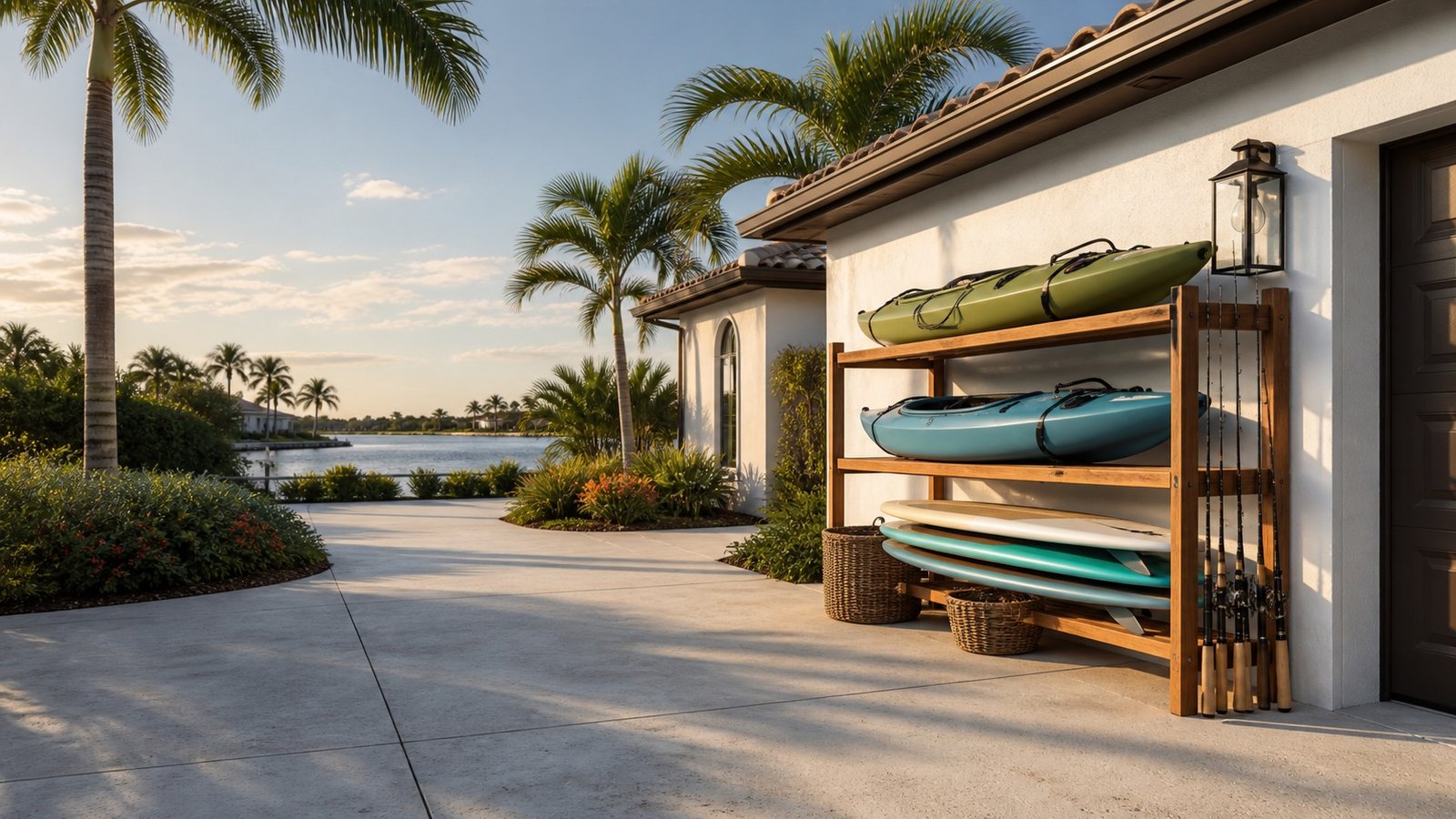
Inland storage space usually wins when your real need is practical rather than romantic. If you need a deeper garage, side-yard access, room for kayaks, fishing gear, bikes, tools, beach chairs, a small trailer, or an organized storm-prep area, you may not need to pay for direct canal frontage.
An inland home can still support a boat-friendly life if it has useful parking, fewer HOA restrictions, and a reasonable drive to ramps, marinas, beaches, and causeways. It can also reduce the number of water-specific inspections and repairs you need to price before closing. You may still have flood or drainage questions, but you are not automatically taking on seawall, dock, lift, and canal-use concerns.
The insurance comfort may be stronger too, especially if the home has a newer roof, clear wind mitigation file, lower flood exposure, updated systems, and no direct waterfront maintenance. Florida’s insurance environment is still property-specific, and the Florida Department of Financial Services summarizes current property insurance changes that shape roof and underwriting conversations. The point is not that inland is always cheap. The point is that inland may give you fewer variables to solve at once.
When canal-front access is still worth it
Canal-front access can be worth it when the water is not a weekend bonus but the reason you are buying. If you want to keep a boat behind the house, leave for sunset cruises, fish often, paddle from the backyard, or build your daily life around the canal, then inland storage may feel like a compromise no matter how practical it looks on paper.
In that case, the canal-front home needs to earn its place. I want to know the canal depth, bridge clearance, route to open water, seawall condition, dock condition, lift capacity, flood zone, elevation information, insurance quotes, and permitting context for future waterfront work. A canal-front home with a newer seawall, strong dock, documented updates, and quotes that fit the budget can be a wonderful Merritt Island buy.
But a pretty water view is not enough. If the seawall is aging, the dock needs work, the roof is older, and the flood quote is uncomfortable, the buyer needs to decide whether the lifestyle is worth the carrying cost. That is not a fear-based conversation. It is a numbers-and-use conversation.
Flood maps and quotes need to happen early
Flood risk should be checked address by address. The FEMA flood maps page explains the mapping system behind flood hazard information, and buyers should use official flood-map resources and insurance guidance for the specific property. Brevard County also provides floodplain management information for local context.
Do not rely on a neighbor’s premium, a seller’s old policy, or a listing comment. Flood insurance, homeowners insurance, wind coverage, deductibles, roof age, elevation, claims history, and lender requirements can all shape the real monthly number. If the insurance quote changes the budget, I want to know during the inspection period, not after the buyer has emotionally moved in.
This is also why buyers comparing direct waterfront should read whether Space Coast buyers should choose a home near a marina or prioritize lower flood insurance risk. Sometimes proximity gives you most of the lifestyle with less property-specific exposure.
Storage is not a small feature in Merritt Island
Storage matters more here than many buyers expect. A Merritt Island lifestyle often includes beach gear, fishing gear, paddleboards, bikes, tools, hurricane supplies, outdoor furniture, coolers, and visiting-family extras. A home with a useful garage, wide driveway, side-yard access, or a practical shed can live much better than a home with a prettier view but no place to put anything.
That is especially true for buyers who are not full-time boaters. If you only go out occasionally, storing gear well and driving to a ramp may be more comfortable than maintaining a waterfront setup all year. If you are the buyer who will use the boat lift constantly, the math changes. The property should match the frequency of use.
For buyers looking around Sykes Creek, I also like this related piece on buying near Sykes Creek without choosing direct waterfront. Near-water can be a smart middle lane.
How seawalls and docks change the inspection plan
Canal-front buyers should plan for more than a standard home inspection. A general inspector may flag visible concerns, but seawalls, docks, and lifts often need a marine contractor or specialist opinion. A seawall can look acceptable to an untrained eye and still have movement, tieback issues, cap damage, erosion behind the wall, or drainage concerns that change the offer.
Dock and lift condition matter too. A lift that does not fit the boat you plan to own may not add the value you think it does. A dock with older electrical, weak pilings, or deteriorating decking can become an immediate project. Waterfront improvements may also involve permitting, environmental review, and contractor timelines.
For an inland storage home, the inspection plan is usually more conventional: roof, HVAC, electrical, plumbing, wind mitigation, drainage, garage condition, driveway, shed permits, and any HOA or local parking restrictions. That does not make it simple, but it usually keeps the risk categories more familiar.
Which choice has better resale?
Both can resell well when the story is clear. Canal-front homes have a powerful lifestyle story when the canal is usable, the seawall is documented, the dock works, and the insurance profile is understandable. The buyer pool may be smaller, but it can be very motivated.
Inland storage homes can appeal to a broader group: boaters who use ramps, KSC workers, families who need garage space, buyers who want lower flood-risk pressure, and people who want Merritt Island convenience without direct waterfront costs. The resale story is strongest when the home has useful storage and a clean insurance file.
“I specifically chose Carrie because of her local expertise as a resident of Merritt Island and her deep knowledge of my specific neighborhood. This particular sale involved many unique circumstances and obstacles, but Carrie never wavered.”
A recent Merritt Island seller client
My practical recommendation
If insurance comfort matters most, start inland or near-water first. Look for storage, boat parking, newer roof documentation, wind mitigation, manageable flood exposure, and quick access to the water without owning every waterfront component.
If canal-front living is the dream, do not dismiss it. Just make the water earn the premium. Get the flood quote, homeowners quote, seawall review, dock and lift review, roof documentation, wind mitigation report, and permit history before deciding the price is right.
The wrong move is buying canal-front because it photographs beautifully when you really needed storage and budget comfort. The other wrong move is buying inland because it feels safer when your heart and lifestyle are genuinely on the water. The right answer is the one that fits both your use and your risk tolerance.
FAQ: Merritt Island inland storage vs. canal-front access
Is canal-front always more expensive to insure?
Not always in the same way, but direct waterfront usually adds flood, elevation, wind, and maintenance questions that buyers need to quote early. The exact answer depends on the property.
Can an inland Merritt Island home still work for boaters?
Yes. If the home has storage, parking, and quick access to ramps or marinas, it may support a boat-friendly lifestyle without direct canal-front ownership costs.
Should I inspect the seawall before buying canal-front?
Yes. The seawall is a major part of the property. If condition is uncertain, bring in a qualified marine contractor or specialist during the inspection period.
What should I compare besides flood insurance?
Compare homeowners insurance, roof age, wind mitigation, seawall, dock, lift, drainage, elevation, permits, HOA rules, parking, and future resale audience.
What is the middle-ground option?
Look near Sykes Creek, river parks, boat ramps, or marinas without choosing direct waterfront. You may keep the lifestyle while reducing some property-specific risk.
Bottom line
If insurance comfort is the deciding factor, inland storage space usually deserves the first look. Canal-front access is worth pursuing when you will use it enough to justify the extra due diligence and carrying-cost questions.
If you are comparing Merritt Island homes and trying to balance boating dreams with insurance comfort, I can help you look at the full file before you write the offer: flood zone, roof, seawall, dock, storage, commute, and resale. Reach out for a no-pressure conversation about Brevard County homes for sale. Your next chapter starts here.