

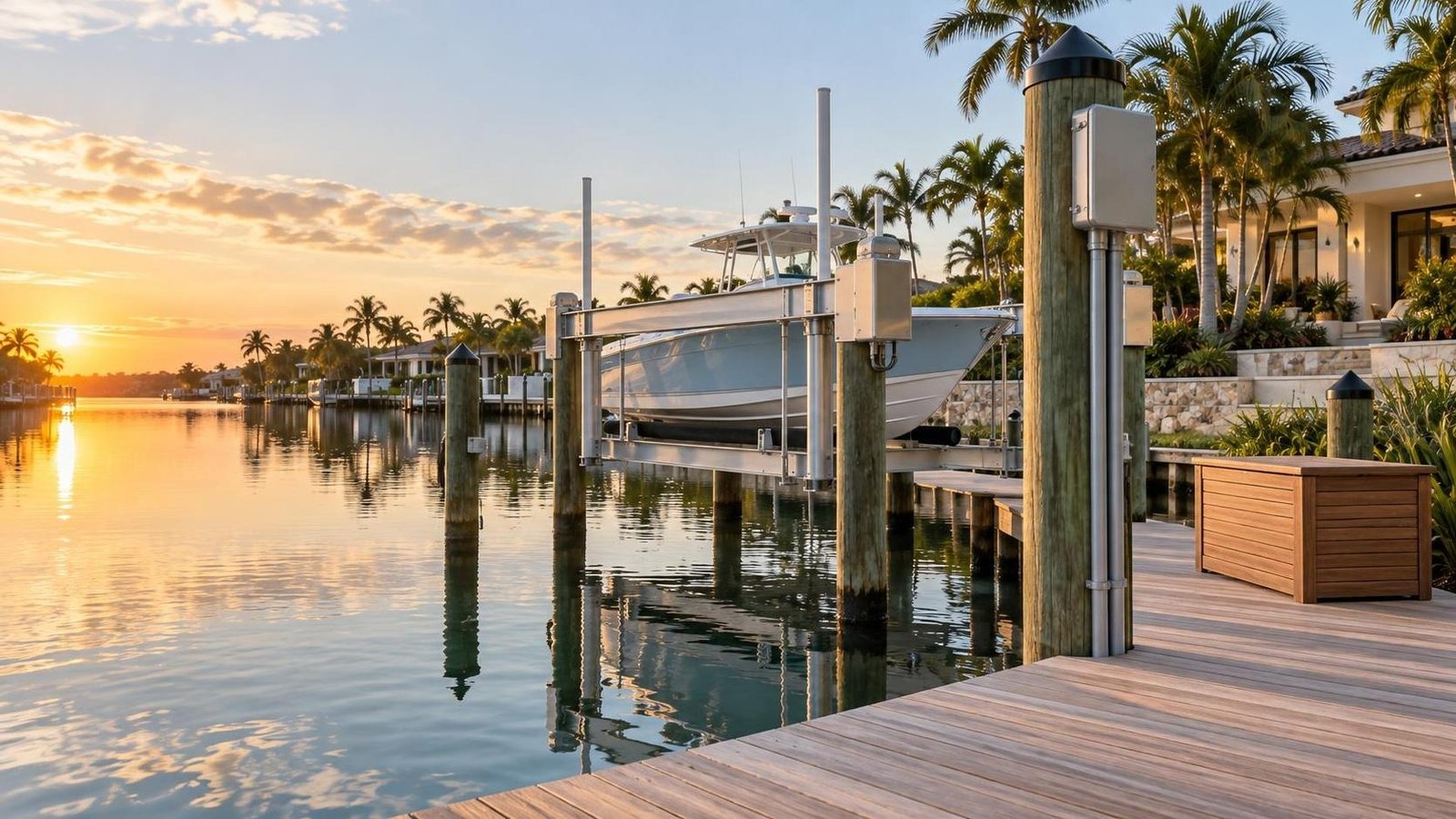
Elevated Lift Disconnect or Larger Dock Box: What Should a Merritt Island Canal Buyer Prioritize?
By Carrie Liotta, Space Coast REALTOR® with REAL Broker | Published September 28, 2026
I would usually prioritize documented, accessible boat-lift electrical equipment positioned away from routine splash exposure over a larger dock box. Safe, serviceable power is harder and more consequential to correct than storage. But elevation alone proves nothing: inspect the disconnect, protection, conduit, bonding, permits, corrosion, and relationship to the seawall, dock, and lift.
A dock box is easy to appreciate during a showing. It holds lines, life jackets, cleaning supplies, and fishing gear close to the boat. A lift disconnect can look like a plain gray enclosure. On a Merritt Island canal home, that quiet piece of infrastructure may tell you far more about how thoughtfully the waterfront was built and maintained.
The two features solve very different problems
The dock box solves an organization problem. It keeps gear off the walking surface and reduces trips between the garage and the water. The disconnect solves an electrical control and service problem. It gives the lift system a defined means of isolation and sits within a larger installation that includes conductors, overcurrent protection, grounding and bonding, controls, motor equipment, and often other dock circuits.
Do not reduce the decision to “higher is safer.” The right location and equipment depend on the installation and current requirements. A raised enclosure can still be corroded, poorly sealed, inaccessible, incorrectly labeled, or connected through damaged conduit. A low dock box can be perfectly useful if it does not obstruct equipment, trap water, overload the dock, or occupy the future service path.
Follow the electrical route, not just the enclosure
Start at the house panel and trace the visible route toward the waterfront with the inspector or qualified electrician. Ask which breaker serves the lift, whether other dock loads share the circuit or pathway, where required protection is located, and how the system can be shut down for service. Look for clear labels that match the actual installation.
At the dock, observe the conduit, fittings, supports, receptacles, switches, control box, motor wiring, and disconnect. Salt, humidity, sun, splash, movement, marine growth, and physical impacts all make waterfront electrical a demanding environment. Rust streaks, cracked covers, loose supports, open holes, taped repairs, exposed conductors, cloudy enclosures, and equipment hidden behind gear should trigger specialist review.
Florida’s Electrical Contractors’ Licensing Board identifies the licensed scopes for electrical contracting. A buyer should use an appropriately qualified professional for dock-power evaluation rather than treating a working lift remote as proof that the installation is correct.
Why the splash zone matters
“Splash zone” is not a substitute for a code or elevation determination. It is a practical observation: where does water regularly reach during boat use, wind, wakes, heavy rain, washdown, and higher-water events? Photograph staining and corrosion lines. Ask the seller whether equipment has been relocated after flooding or repeated failures. Compare the location with the dock’s walking and service patterns.
The FEMA Flood Map Service Center is the official public source for NFIP flood-hazard information. Check the address and effective products, but do not use the mapped flood zone to declare that one small waterfront component is safe. Site elevation, wave and splash conditions, installation details, and actual service history still need property-specific review.
If the disconnect has been elevated, ask when, why, and by whom. Request the invoice, permit or inspection record where applicable, product information, and before-and-after photos. A thoughtful relocation with clean conduit and updated labels can be meaningful. A box moved upward while old junctions remain near the water may simply shift where you notice the problem.
Inspect the lift as one system
The lift capacity, cradle, cables, pulleys, beams, motors, controls, pilings, and boat fit all matter. Verify that the rated capacity and geometry suit the boat you actually intend to use; do not rely on a seller’s estimate or assume an existing boat proves compatibility. Service records should identify recurring motor, cable, or control work and any storm-related repairs.
Then evaluate how a technician reaches each component. Can the lift be isolated without climbing over stored gear? Is there stable access to controls and motors? Can conduit, pilings, and seawall-edge conditions be observed? My guide to dock service paths versus larger pool decks explains why maintenance access can be more valuable than finished outdoor space.
The dock box can create its own due-diligence questions
A larger box is useful only if the dock can support it and the location remains practical. Open it. Look for standing water, mildew, corroded hardware, fuel or chemicals, damaged electrical cords, pest activity, and a lid that blocks the walking path. Confirm that it is secured without compromising the decking and that it does not hide inspection points or create a trip and pinch hazard.
Measure the clear walking width with the lid open and closed. Picture carrying groceries, coolers, rods, and safety gear while lines cross the area. If the box sits close to the lift controls or disconnect, ask whether it must be moved for service. If it is mounted near a seawall joint, conduit crossing, or dock attachment, make sure convenience has not covered a more important component.
Permits and waterfront approvals are separate questions
Electrical work and waterfront structures can involve more than one authority. The Florida Department of Environmental Protection’s Environmental Resource Permitting overview explains that docking facilities and attendant structures are among the activities reviewed through DEP or water-management processes depending on the project. That does not mean every dock-box change needs state review. It means buyers should not assume the visible dock, lift, and shoreline work share one simple approval history.
For local records, begin with the Brevard County permit search when the parcel is in county jurisdiction, then verify the correct authority and scope. Match dates and descriptions to invoices and what is physically installed. An old dock permit does not automatically document a newer lift motor, circuit, or relocated disconnect.
If you hope to move the box, expand the dock, reconfigure the lift, or raise electrical equipment after closing, get feasibility input during due diligence. The presence of a neighboring improvement does not establish what your parcel can do.
Compare correction cost and disruption
The larger dock box is rarely the right basis for paying a meaningful premium unless storage is unusually constrained and the box is integrated into a sound dock design. A replacement box can often be planned later. Electrical correction may require investigation from panel to waterfront, licensed labor, access beneath decking, replacement conduit or controls, permits, and coordination with lift service.
Still, do not assume the home with the raised disconnect is automatically less expensive. Build a written comparison that includes:
- a marine-electric or electrical evaluation and any recommended correction;
- lift capacity, condition, service history, and near-term parts;
- dock decking, pilings, attachments, and service access;
- seawall condition and whether electrical routes interfere with future work;
- dock-box replacement, relocation, drainage, and safe storage needs;
- insurance and flood quotes for the actual address;
- permit research and future improvement feasibility.
If the home also has an uncertain seawall, read my comparison of a newer boat lift versus an inconclusive seawall inspection. The lift should never distract from the land-water edge supporting the entire backyard.
My offer-period plan
Before writing, request the dock, lift, electrical, and seawall permits or available records; lift specifications and service invoices; electrical contractor invoices; flood information; survey; elevation documents if available; and seller disclosure. Ask whether the lift electrical has ever tripped, flooded, corroded, been relocated, or required repeated repair.
During the inspection period, have the general inspector note visible conditions, then engage the appropriate electrical and marine professionals when the waterfront system materially affects your decision. Do not operate unfamiliar equipment outside normal procedures. Do not open electrical enclosures yourself. Ask the seller to demonstrate ordinary controls only when it is safe and permitted, and let specialists test what requires expertise.
Visit at a second time if possible. Water level, wind, wakes, sun angle, and neighboring boat activity can change how the dock feels. A box that seemed unobtrusive may block the best boarding path. An enclosure that looked high may sit directly in spray from routine lift use.
When the dock box might win
I would give the box more weight when the electrical installation in both homes is equally well documented and serviceable, the dock has very limited safe storage, the box is purpose-built and well positioned, and replacing it would require dock modification rather than a simple purchase. Full-time boaters with children, fishing equipment, or mobility concerns may value organized, dry storage more than occasional users.
Even then, the box should not interfere with electrical access. The strongest waterfront setup has both: safe, understandable infrastructure and storage that keeps gear away from controls, walkways, and seawall inspection points.
For another useful comparison, see my article on documented dock lighting and lift circuits versus a larger waterfront shed. The recurring lesson is that utility and records tend to hold value better than unverified storage.
Bottom line
For most Merritt Island canal buyers, a correctly designed and documented lift disconnect is the more important feature. It affects control, maintenance, and the larger electrical story at the water. A dock box improves convenience, but it should be evaluated after the lift, dock, seawall, boat route, flood exposure, and power system make sense.
Choose the home where the raised equipment is more than a visual reassurance: records match the installation, corrosion and splash exposure are controlled, service access is clear, and qualified professionals are comfortable with the system. Then decide whether the storage supports the way you will actually use the canal.
I help Merritt Island buyers compare the waterfront parts that listing photos rarely explain. Reach out for a no-pressure conversation about Brevard County waterfront homes for sale with Carrie Liotta, Space Coast REALTOR® with REAL Broker. Your next chapter starts here.
