

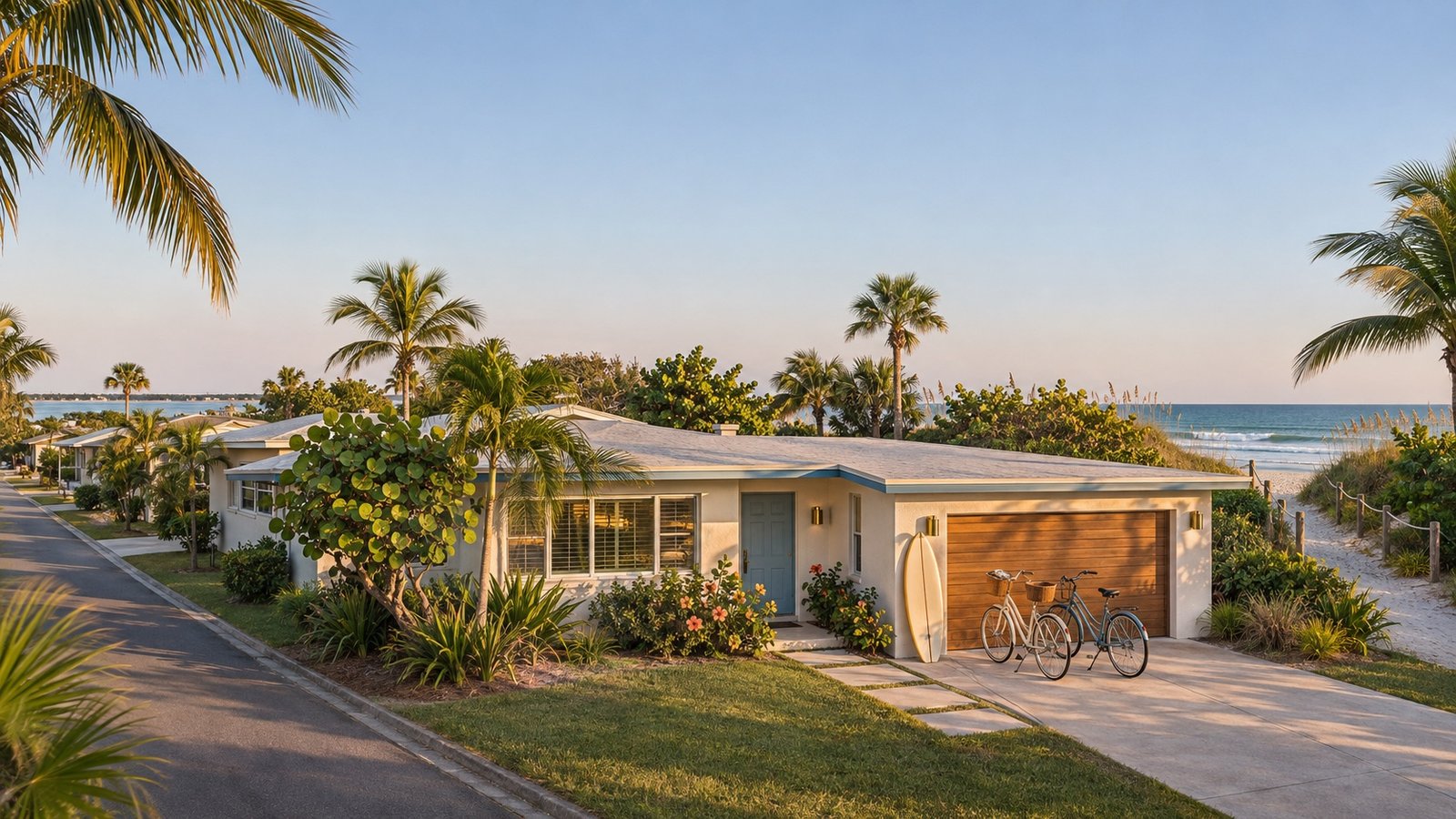
Is Satellite Beach, Florida, a Good Place to Live? A Local Decision Guide
Is Satellite Beach, Florida, a good place to live? Yes—especially if you will use the ocean or river regularly, value a compact coastal routine, and can make causeway travel fit your week. It is a weaker match when most daily destinations are on the mainland or when property-specific coastal costs and upkeep strain your budget.
By Carrie Liotta, Space Coast REALTOR® with REAL Broker | 321 Coastal Living
I think the most useful way to judge Satellite Beach is not to ask whether beachside living is good in the abstract. Ask whether this particular ocean-to-river city supports the life your household actually plans to live. A beautiful setting can be the right home base, but only when the routes, routines, and ownership responsibilities work too.
In my video below, I explain the three tests I use to make that decision practical: the coastal-use test, the causeway-and-routine test, and the property-cost-and-due-diligence test.
Watch the local overview: Is Satellite Beach Florida a Good Place to Live?
What makes Satellite Beach different from simply living near a beach?
Satellite Beach occupies a narrow part of Brevard County’s barrier island. According to the city’s official history, checked November 2, 2026, its roughly three square miles sit between the Atlantic Ocean on the east and the Banana River on the west. That geography is not background scenery. It shapes recreation, errands, routes, weather awareness, and home maintenance.
The same city source reports more than 147 acres dedicated to public recreation and sports programs, 11 permanent public beach crossovers, and three beachfront parks: Pelican, Hightower, and Sunrise. The city’s Recreation Department, also checked November 2, 2026, manages parks and athletic facilities and offers programs, special events, and youth sports.
Those facts help explain the appeal, but they do not decide the move. Satellite Beach works best when access changes behavior: a morning walk by the ocean, regular surfing, paddling, boating, biking, park time, or an outdoor activity that becomes part of an ordinary week. If the water remains something you only admire through the windshield, you may be accepting beachside tradeoffs without receiving much lifestyle value in return.
Test one: Will you really use the coastal setting?
Start with a simple question: will someone in your household use the ocean, the river, or both several times each month? Be specific. Write down the activities, who will do them, and when. “We love the beach” is an aspiration. “We plan to surf before work on Tuesdays and walk at Hightower Park after dinner” is a routine you can test.
Then visit at the times that matter. Try your preferred beach access with the gear you expect to carry. Map a kayak or paddleboard plan rather than assuming every nearby shoreline is a convenient launch. Notice whether your likely neighborhood makes the activity easy enough to repeat. The best lifestyle feature is the one you will actually use after the novelty fades.
This test also reveals whether you want Satellite Beach itself or simply want occasional beach access from elsewhere in Brevard. A mainland home may still support frequent beach days. Satellite Beach makes more sense when eliminating that extra decision and drive is worth being on the barrier island every day.
Test two: Do the causeways and daily routes fit your household?
Beachside life is connected to mainland Brevard by causeways, so a map pin is not enough. Identify the exact employer entrance, work shift, school, medical office, grocery pattern, caregiving stop, and recurring activity for each household member. Then map the whole week, not one ideal commute.
Satellite Beach can be practical for some Patrick Space Force Base households, but the correct route depends on the specific gate, schedule, and address. It can also work for mainland commuters who care enough about beachside life to organize around the crossing. I would not promise a commute time without testing the route at the relevant hour; bridge approaches, incidents, weather, and seasonal patterns can change the experience.
Families should verify school assignment for the exact property rather than relying on a listing, neighborhood name, or prior year’s assumption. Brevard Public Schools provides its School Choice and locator resources. Check the current zoned school by address and look ahead to the next school level. A route that works for elementary school may feel different once the family schedule changes.
For households tied to Patrick and comparing several beachside and mainland options, my Satellite Beach, Indian Harbour Beach, and mainland Melbourne guide for military relocators gives that route decision a broader frame.
Test three: Does the specific property fit the true ownership budget?
A city can be a strong lifestyle fit while a particular home is not. Before treating the purchase price as the budget, evaluate the roof, openings, HVAC, electrical and plumbing systems, drainage, elevation information, flood map, insurance options, and likely maintenance. Get property-specific inspections and quotes early enough to affect your decision.
The FEMA Flood Map Service Center, checked November 2, 2026, is the official public source for NFIP flood-hazard information. Search the exact address and review the current effective map and available flood products. A map is one part of due diligence, not a conclusion about a home’s entire risk, past water history, insurance availability, or future cost.
Permit history can help you understand work completed on a home. Satellite Beach’s Community Development Department links to online permitting, planning, zoning, code-enforcement, and business-licensing services and administers the city’s building permit and inspection program. Compare records with seller disclosures, invoices, inspection findings, and visible condition; the absence or presence of one online record should not be your only evidence.
Ocean-facing ownership can also involve local wildlife-lighting responsibilities. The city’s Sustainable Satellite guidance, checked November 2, 2026, identifies sea turtle nesting season as March 1 through October 31 and explains local lighting practices and regulations intended to keep visible light off the beach at night. Check the current rule and property setup rather than assuming every home has identical exposure or requirements.
If a waterfront or canal property is in the conversation, use my Satellite Beach waterfront home buying guide to organize the extra questions around water access, structures, condition, and long-term care.
What are the honest tradeoffs of living in Satellite Beach?
- Coastal access versus mainland repetition: The ocean-and-river setting can make recreation wonderfully easy, while frequent mainland destinations can add crossings to an already full week.
- Compact community versus limited geography: A small barrier-island city can feel connected and manageable, but it does not place every employer, specialist, store, or activity nearby.
- Established homes versus varied condition: Character and location can be compelling, yet two similarly presented homes may have very different permits, systems, storm features, elevation information, and maintenance needs.
- Outdoor routine versus coastal stewardship: Beach access is a privilege paired with practical responsibilities, including weather preparation, salt-air maintenance, dune and wildlife awareness, and compliance with applicable local rules.
None of these tradeoffs creates a universal yes or no. The point is to decide which side of each exchange benefits your household. When the coastal routine is real and the property math is sound, the compromises may feel reasonable. When every weekday obligation pulls inland, the same compromises can feel heavier.
Who is Satellite Beach most likely to suit?
I see the strongest fit in buyers who want coastal recreation to be ordinary rather than occasional, appreciate a compact residential beachside setting, and can make their main routes work without resentment. They are also willing to investigate the individual home’s physical condition, permitting, flood-map context, insurance options, and upkeep before committing.
It may be a weaker fit for buyers whose jobs, schools, care network, and activities are overwhelmingly on the mainland; who prioritize the newest possible housing choices; or who want the idea of the coast more than the daily use of it. That is not a criticism. It is useful clarity before a move.
If your question is specifically whether Satellite Beach or its neighbor fits better, read my Satellite Beach versus Indian Harbour Beach guide for relocating families. This article answers a different question: whether Satellite Beach as a whole works for your lifestyle, routes, and property plan.
What should you do before choosing a home?
- Spend time in Satellite Beach during a normal weekday, an evening, and a weekend.
- Test one real coastal activity from the neighborhood you are considering.
- Drive or map every recurring route at the time you expect to use it.
- Verify the exact school assignment directly with Brevard Public Schools.
- Review the address in FEMA’s official map service and request available property documentation.
- Compare permits, disclosures, inspections, insurance quotes, and repair priorities.
- Build a monthly and annual ownership plan that includes maintenance, not only the mortgage payment.
Frequently asked questions about living in Satellite Beach
Is Satellite Beach good for someone who works on the mainland?
It can be, particularly when the coastal lifestyle is important enough to justify regular causeway travel. Test the exact home-to-work route at the correct shift time and include schools, appointments, and activities. The answer depends more on the complete weekly pattern than on mileage alone.
Do all Satellite Beach homes have the same flood risk?
No. Use FEMA’s official map tools for the exact address, then review property-specific elevation information, drainage observations, disclosures, inspection results, and insurance guidance. Do not infer one home’s situation from the city name or from another property nearby.
How should families evaluate schools?
Verify the current zoned school by exact address with Brevard Public Schools and check the next school level as well. If you are considering choice options, understand the application, transportation, and backup-zoned-school implications instead of assuming admission or a permanent assignment.
Is Satellite Beach only a fit for surfers or boaters?
No. Residents may value walking, biking, parks, youth activities, the ocean setting, or a smaller beachside rhythm. The important question is whether the location supports activities and routines your household will actually use often enough to justify its tradeoffs.
What property documents should a buyer request?
Depending on the home, useful records may include permits, surveys, elevation information, roof and system invoices, warranties, insurance documentation, repair receipts, association materials, and seller disclosures. Match the records to professional inspections and current quotes rather than treating paperwork as a substitute for due diligence.
My bottom line on Satellite Beach
Satellite Beach can be an excellent place to live when the water is part of your real routine, the causeways support your obligations, and the chosen home survives careful financial and physical review. The city is not automatically right because it is coastal, and it is not automatically impractical because it sits on a barrier island.
If you are deciding whether Satellite Beach fits your move, I can help you compare neighborhoods and individual properties through these three tests. Contact me, Carrie Liotta, Space Coast REALTOR® with REAL Broker, for a practical conversation about your routes, priorities, and due-diligence plan. Your next chapter starts with choosing the daily life that truly fits.
