
Should Space Coast Buyers Choose a Deeper Garage or a Larger Screened Lanai if Storage Is Tight?
By Carrie Liotta, Space Coast REALTOR® with REAL Broker | Published August 15, 2026
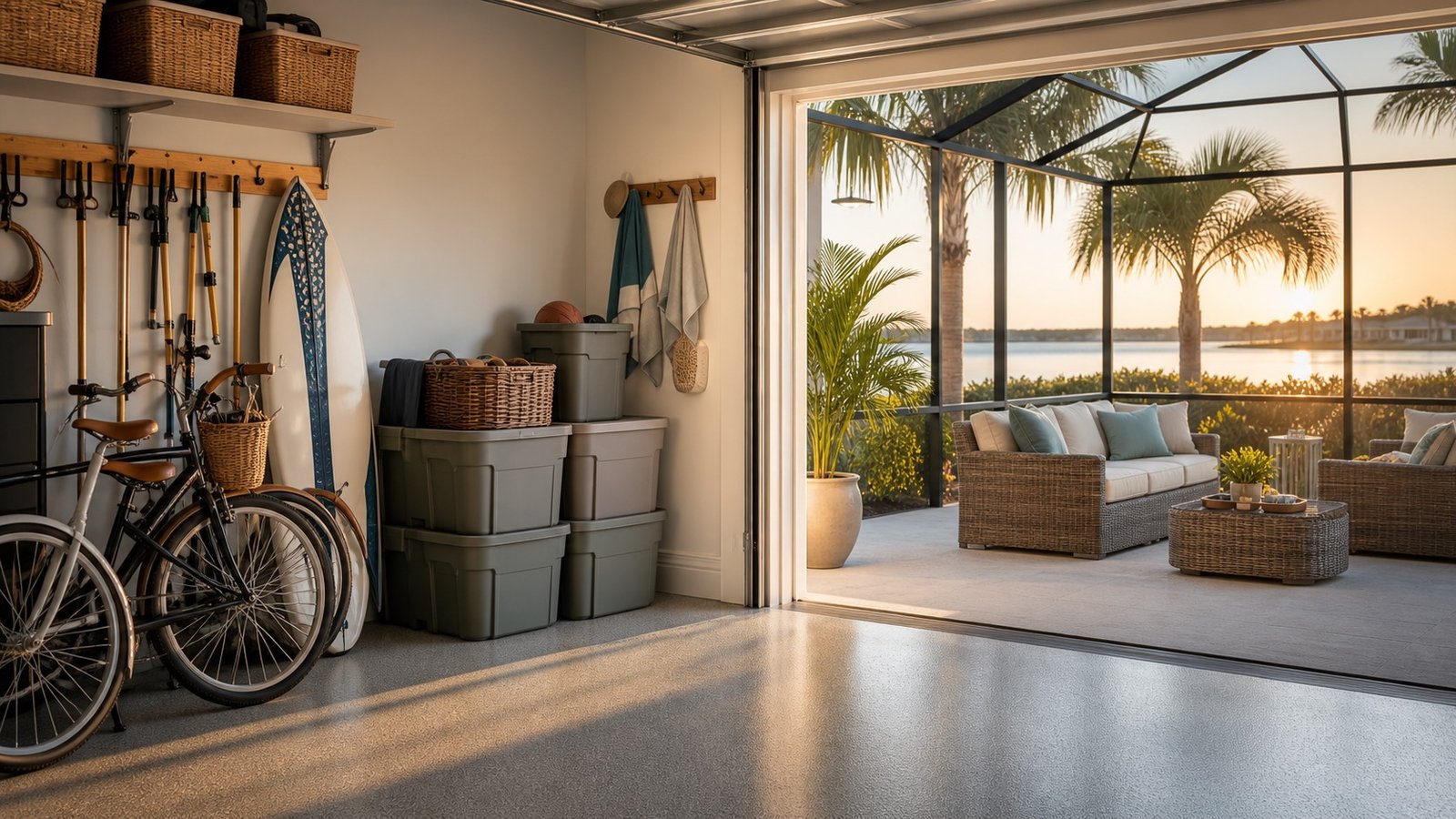
If storage is already tight, I usually tell Space Coast buyers to choose the deeper garage first unless the home has another realistic storage solution. A larger screened lanai is wonderful in Brevard County, and it can absolutely improve daily life, but it does not replace a garage that can actually hold storm supplies, bikes, tools, beach gear, golf clubs, paddleboards, holiday bins, and a vehicle.
That does not mean the lanai is unimportant. Outdoor living is one of the reasons people move here. A shaded screened space can make a smaller home live bigger, especially in Melbourne, Viera, Suntree, Rockledge, Merritt Island, Palm Bay, and beachside neighborhoods. The question is order of operations. When the floor plan has no attic space, no shed, no third bay, and a shallow garage, the pretty lanai may not solve the problem you feel every single day.
Why garage depth matters more in Brevard than buyers expect
In many other markets, a garage is just a place for cars and storage overflow. In Brevard County, it often becomes the working room for Florida living. This is where buyers keep storm panels or shutter hardware, beach chairs, coolers, fishing rods, tools, bikes, scooters, surfboards, holiday decor, lawn equipment, golf gear, and the extra refrigerator that somehow becomes essential by month three.
That is why I ask buyers to measure the garage, not just count the number of bays. A two-car garage can be frustrating if it is shallow, narrowed by water heaters or air handlers, blocked by stairs, or too tight for a larger SUV with storage along the back wall. A deeper garage can quietly save a buyer from future clutter, HOA violations, rented storage units, and everyday irritation.
This is closely related to my guide on Brevard homes with mudroom, garage storage, and storm-ready entry space. The more organized the garage entry is, the easier the whole house lives during beach weekends, school mornings, and storm season.
Where the screened lanai wins
A screened lanai wins when the home already has enough functional storage or when outdoor living is central to the buyer’s daily life. If you work from home and want a shaded lunch spot, host visiting family, have kids who need a bug-free play area, or want an easy evening routine without maintaining a pool, a large screened lanai can be one of the best features in the home.
I see this most clearly with relocating buyers who are leaving colder climates. They do not just want more square footage; they want to live differently. A good screened lanai can make a 1,900-square-foot home feel more relaxed than a larger home with no usable outdoor room. It can also be a smart resale feature when it is well built, properly permitted, structurally sound, and connected naturally to the kitchen, living room, or primary suite.
If you are still weighing outdoor space against indoor space, my earlier post on screened outdoor living versus interior square footage in Brevard County goes deeper on that lifestyle tradeoff. The short version is that outdoor space is valuable when it is truly usable, not when it is just a screened rectangle that photographs well.
Storm season changes the storage math
Storm preparedness is not a dramatic topic in a home search, but it is practical. The federal Ready.gov hurricane guidance reminds households to prepare before hurricane conditions arrive, and the Florida Division of Emergency Management publishes a hurricane supply checklist that includes items many buyers need to store somewhere year-round.
That “somewhere” is usually the garage. Water, batteries, coolers, tools, tarps, shutters, extension cords, pet supplies, and cleanup gear are not things you want scattered through closets. If a house already lacks closet space and the garage is shallow, storm-season storage becomes a real ownership issue. A lanai gives you lifestyle space; a deeper garage gives you operating space.
I also want buyers to think about what can safely stay outdoors. Screened lanais are not a substitute for protected storage during severe weather. Furniture, plants, loose decor, pool accessories, and small appliances may need to be secured or brought inside before a storm. If the garage is already full on a normal week, storm prep becomes harder than it needs to be.
Insurance and construction details still matter
A deeper garage or larger lanai should never distract from the basics: roof age, wind mitigation, flood zone, garage door rating, permits, drainage, and exterior condition. A garage with a weak or older door may be less attractive than it looks. A lanai with unpermitted work, damaged screens, questionable roof tie-ins, or poor drainage can become an inspection and insurance conversation.
For buyers considering storm-hardening improvements, the My Safe Florida Home program is worth understanding because it focuses on eligible wind mitigation inspections and improvements, subject to current program rules and funding. I treat programs like this as possible tools, not guarantees. The home itself still needs to be evaluated on its own facts.
When buyers are comparing additions, enclosures, or structural work, I also want them to remember that Florida construction is governed through the building-code system. The Florida Building Code Online site is the official state portal for building code information. In plain English: do not assume a lanai enclosure or garage modification was done correctly just because it looks nice.
How I compare two similar homes
Imagine two homes in the same general neighborhood. Home A has a deeper garage, ordinary covered patio, and average yard. Home B has a beautiful oversized screened lanai but a shallow garage with barely enough room for vehicles and gear. If the buyer has bikes, beach equipment, work tools, a golf cart, paddleboards, or hurricane shutters, I usually lean toward Home A unless Home B has another storage answer.
Now change the buyer. If the buyer has minimal gear, parks one car outside, travels light, and spends every evening outside, Home B may be the better lifestyle fit. The point is not that one feature always wins. The point is that storage is hard to fake. Outdoor enjoyment is wonderful, but daily disorder wears people down quickly.
This is why I also connect the decision to hurricane-ready outdoor living. A home with a solid garage, protected entry, documented storm features, and a practical lanai can be excellent. My post on Brevard homes with hurricane-ready outdoor living without a high HOA explains how those features work together rather than competing.
Questions to ask before you choose the prettier space
- Can both vehicles fit in the garage with the door closed?
- Where will storm panels, tools, ladders, beach chairs, bikes, and seasonal bins live?
- Does the HOA restrict trailers, boats, sheds, driveway parking, or visible storage?
- Is the lanai permitted, well drained, structurally sound, and easy to maintain?
- Does the garage door have useful wind documentation?
- Will the lanai actually be used during your normal week, or is it mainly a showing-day feature?
- Could a future buyer understand the home’s storage story quickly?
My rule of thumb for Space Coast buyers
If you are choosing between deeper garage storage and a larger screened lanai, start with the friction you cannot easily solve later. Garage depth, driveway shape, HOA storage rules, and the location of mechanical systems are hard to change. A lanai can sometimes be improved, screened, shaded, furnished, or reworked later if the structure and permits support it. But a shallow garage usually stays shallow.
For buyers with kids, pets, outdoor hobbies, boating gear, sports equipment, or hurricane supplies, I give the deeper garage more weight. For buyers with a lighter lifestyle, strong interior closets, or a separate shed, the lanai may deserve more weight. For retirees and remote workers, I often look at both equally because comfort, shade, maintenance, and storage all matter.
Bottom line
On the Space Coast, the dream is not just a pretty lanai or a tidy garage. It is a home that supports the way you actually live: beach days, storm prep, guests, hobbies, pets, cars, tools, and quiet evenings outside. If storage is tight, I would rather see a buyer choose the deeper garage first, then look for a home with enough outdoor living to still feel like Florida.
I can help you compare floor plans, garage depth, lanai quality, HOA rules, storm features, and resale before you make an offer. Reach out for a no-pressure conversation about Brevard County homes for sale with REAL Broker, and join my private Facebook group, Moving to Brevard County Florida, for local relocation guidance. Your next chapter starts here.