

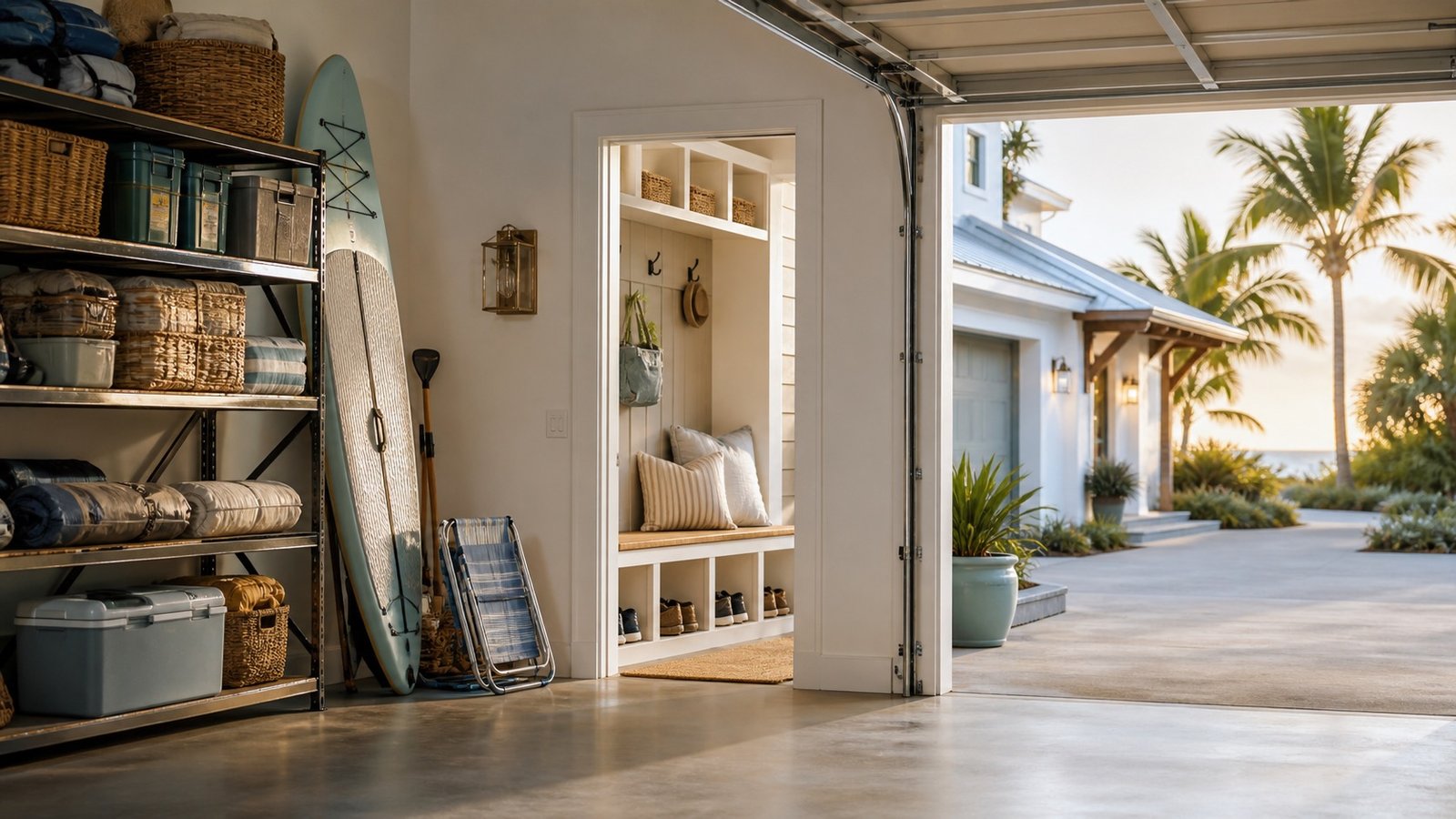
Which Brevard County Homes Work Best for Buyers Who Want a Mudroom, Garage Storage, and Storm-Ready Entry Space?
By Carrie Liotta, Space Coast REALTOR® with REAL Broker | Published August 6, 2026
When Brevard County buyers tell me they want a mudroom, garage storage, and a storm-ready entry, I hear something more practical than a design request. They are really asking, “Which home will make everyday Florida living easier when we are carrying beach gear, school bags, tools, groceries, wet towels, and hurricane supplies through the same two doors?”
The best fit is usually not the prettiest foyer. It is a home with a protected arrival point, a useful laundry or drop zone near the garage, enough garage depth for real storage, strong exterior openings, and a layout that keeps storm gear from taking over the main living space. In Brevard County, that can mean a newer West Melbourne or Viera-area home with a true drop zone, a well-planned Palm Bay home with a larger garage, or an established Melbourne, Rockledge, or Merritt Island resale where the storage has been thoughtfully improved.
Start with the way you actually enter the home
Many buyers fall in love with the front porch and then use the garage entry every single day. That is why I walk the “real entry” with clients. We open the garage door, step in with imaginary groceries, look for a place to put backpacks or work bags, and ask whether the laundry room, pantry, half bath, or kitchen is positioned in a way that makes daily life smoother.
A true mudroom is wonderful, but Brevard homes often solve this need in different ways. Some have a laundry room between the garage and kitchen. Some have a hallway niche where a bench and hooks can work. Some older homes have a side entry, utility room, or converted porch that can become a practical drop zone. The question is not whether the listing uses the word “mudroom.” The question is whether the floor plan gives your household a place to land without cluttering the kitchen island.
For families moving from colder climates, this can feel surprising. We are not storing snow boots here. We are storing rain jackets, flip-flops, soccer gear, beach chairs, fishing rods, folding wagons, work shoes, dog leashes, reusable grocery bags, and the small storm-prep items you want close but not scattered.
Garage storage matters more than square footage suggests
A two-car garage can live very differently from house to house. Ceiling height, garage depth, water heater placement, air-handler location, electrical panel clearance, attic access, and the shape of the driveway all matter. A buyer who needs bikes, paddleboards, tools, golf clubs, beach gear, or seasonal hurricane supplies should not judge the garage by the number of doors alone.
In some Palm Bay, West Melbourne, Rockledge, and North Brevard homes, the garage is one of the best reasons to choose the property. You may get more room for shelving, a freezer, lawn equipment, or a workbench than you would in a tighter beachside townhome or condo. That is why I often pair this conversation with my guide to Brevard County homes that make sense for boat parking without direct waterfront costs. Even if you do not own a boat, the same storage logic applies: the home has to support the lifestyle, not just photograph well.
Viera and Suntree buyers should be especially careful here. A newer or more polished home may have beautiful finishes, but if the garage is shallow and the HOA limits exterior storage, your bikes, beach gear, and storm supplies may compete with the cars. That does not make the home wrong. It means you need to price in garage organization, overhead racks, cabinets, or a different floor plan.
Storm-ready entry space is about routine, not fear
I do not like making hurricane prep feel dramatic. A good Brevard County home simply gives you room to be organized before the weather turns. The Florida Division of Emergency Management keeps a practical hurricane supply checklist, and when you look at that list through a homeowner’s eyes, you quickly realize storage is part of preparedness.
Water, batteries, flashlights, weather radios, chargers, first-aid items, pet supplies, important documents, basic tools, and cleanup supplies all need a sensible place to live. If every item is buried behind holiday boxes or stacked in a hot garage corner that blocks the electrical panel, the home is not serving you well. I like homes where there is a clean shelf zone, a hall closet near the main entry, a laundry cabinet, or a pantry overflow area that can hold the essentials without turning the house into a storage unit.
The entry itself matters too. Covered front entries, garage-to-house access, well-drained driveways, and a place to drop wet towels or shoes make rainy-season life easier. After a summer downpour, you learn quickly whether a floor plan works.
Do not separate storage from wind mitigation
For a storm-ready home, garage storage is only half the conversation. The garage door and other openings deserve attention because they affect both practical preparedness and the insurance file. The Florida Office of Insurance Regulation explains wind mitigation resources and inspection forms, and those forms help insurance professionals evaluate features such as opening protection and roof-to-wall connections.
For buyers, that means a neat garage with custom cabinets is not enough if the garage door is old, unprotected, or poorly documented. Ask whether the garage door is impact-rated or has approved bracing, whether permits exist for major work, and whether the seller has a current wind mitigation report. If you are comparing two similar homes, a cleaner wind-mitigation file may be worth more than prettier storage shelving.
This is also where My Safe Florida Home can matter. The My Safe Florida Home Program describes wind mitigation inspections and eligible strengthening categories, including opening protection. Program rules and funding can change, so I never want a buyer to assume a grant will solve a post-closing project. But I do want buyers to understand why documented storm-hardening features are part of the long-term value conversation.
If you are weighing impact windows, garage doors, roof age, and other storm features, my recent piece on choosing between impact windows and a newer roof in Brevard County is a helpful next read.
Which Brevard areas tend to fit this buyer well?
There is no single best city for this need, because the right answer depends on the household. A buyer with kids, sports gear, and a daily school routine may love a West Melbourne or Viera-area home with a drop zone near the garage and quick access to parks, schools, and errands. A buyer who wants more garage flexibility may find stronger options in Palm Bay, Rockledge, Cocoa, Titusville, or Port St. John, especially where lot size and driveway space are part of the appeal.
Beachside homes can absolutely work, especially for buyers who prioritize surfside mornings and a simpler routine. But they often require a sharper eye on garage depth, flood zone, salt-air maintenance, HOA or condo rules, and where beach gear actually goes. A small beachside home with excellent built-ins may live better than a larger mainland home with no storage plan, but you have to test the layout honestly.
Established neighborhoods in Melbourne, Eau Gallie, Rockledge, and Merritt Island can be excellent if prior owners added cabinets, improved laundry rooms, enclosed useful spaces properly, or created covered entries. I just want to verify permits and make sure improvements were done cleanly. Storage that creates inspection issues is not good storage.
What I look for during showings
When this is a priority, I slow down in the garage and utility areas. I look for clear access to the electrical panel, visible signs of water intrusion, garage door age, ceiling storage safety, attic access, laundry ventilation, water heater location, and whether the floor has enough room for both cars and the items the buyer actually owns. I also check whether the door from the garage into the home feels protected and convenient or awkward and cramped.
Inside, I look for washable flooring near entries, a place for hooks or cabinets, a realistic pantry or closet setup, and sight lines. A beautiful open floor plan can become frustrating if the only place to put everyday gear is in full view of the kitchen and living room. On the other hand, a modest home can work beautifully when the entry sequence is thoughtful.
For sellers, this is a chance to show usefulness. Clean the garage, label storm shutters or panels, organize supplies, document the garage door and opening protection, and make the drop zone obvious. Buyers should not have to imagine whether the home can handle Florida life. They should feel it when they walk in.
“From the start, her approach was impressive – the photography, video tour and social media outreach were outstanding, leading to multiple offers in a down market. Crucially, she was an absolute rock when it came to managing the multiple hurdles with various offers.”
A recent seller client
How to decide between two homes
If one home has a prettier kitchen and the other has a better garage entry, I ask buyers to picture Tuesday afternoon, not Saturday’s showing. Where do the groceries land? Where do wet beach towels go? Where will the hurricane supplies sit in May so they are easy to reach in September? Can both cars park inside if that matters to insurance, heat, or security? Is there a safe spot for tools, bikes, and sports equipment without blocking exits?
Then I connect the lifestyle answer to the financial answer. A home with great storage but an old garage door, unclear roof age, or poor drainage may still need negotiation room. A home with a smaller garage but strong storm documentation and lower insurance friction may be the smarter purchase if the buyer can solve storage with cabinets and discipline. This is the same practical framework I use when buyers compare low-maintenance landscaping and hurricane-ready features.
My bottom line for Brevard buyers
A mudroom, garage storage, and storm-ready entry are not luxury extras on the Space Coast. They are part of how the home functions through rainy afternoons, beach weekends, school mornings, home projects, and hurricane season.
The best Brevard County home for this buyer is the one with a useful arrival sequence, honest storage, documented storm features, and a layout that supports the way the household actually lives. If you are comparing homes and cannot tell which one will feel easier six months after closing, reach out for a no-pressure conversation about Brevard County homes for sale with REAL Broker. Join my private Facebook group, Moving to Brevard County Florida, and let’s talk through the daily-life details that listing photos rarely explain.
Your next chapter starts here.