

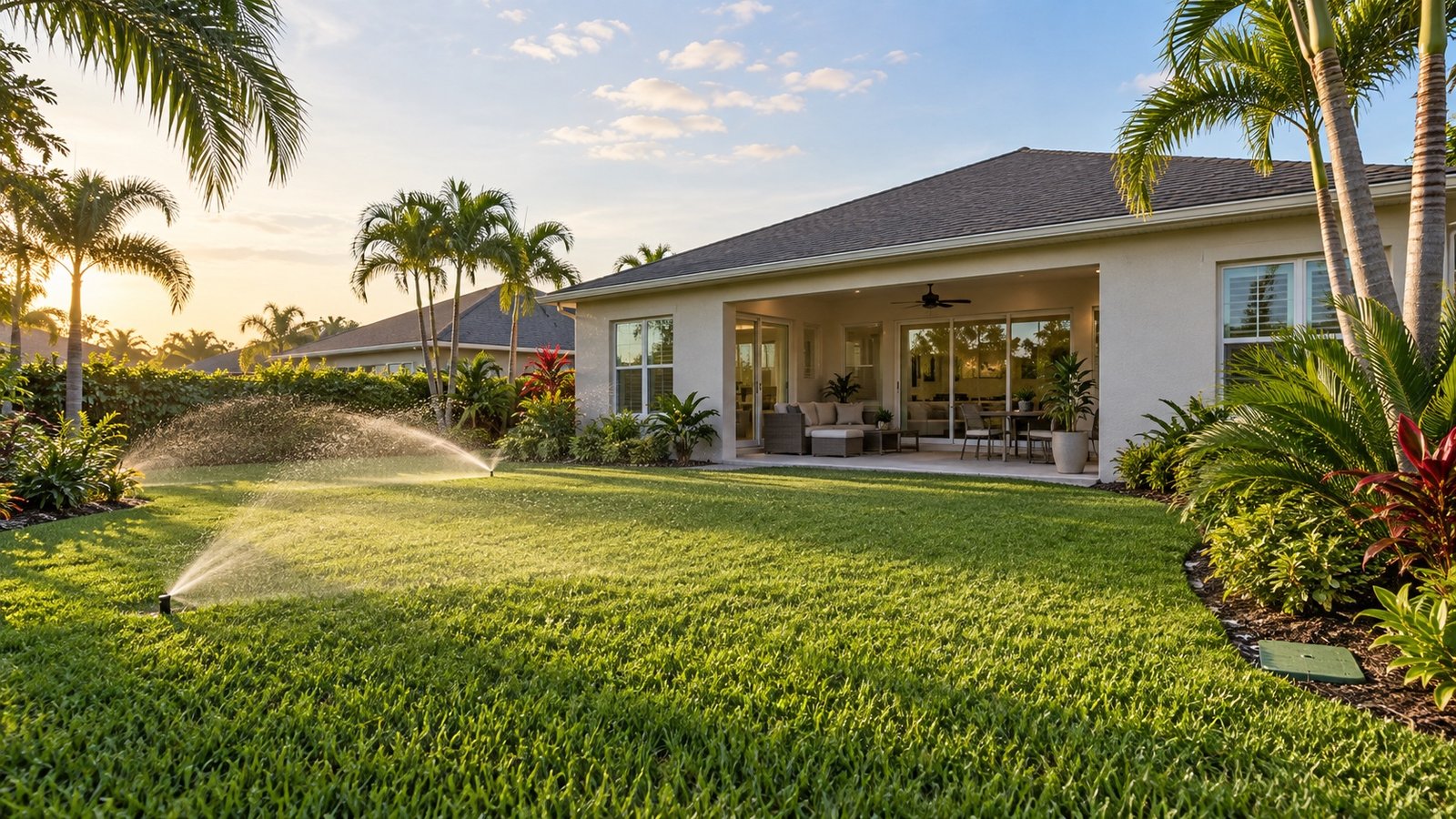
Viera Buyers: What Should You Verify About a Separate Irrigation Meter Before Valuing a Backyard Upgrade?
By Carrie Liotta, Space Coast REALTOR® with REAL Broker | Published October 27, 2026
A separate irrigation meter can make a Viera backyard easier to understand and operate, but it does not automatically make the upgrade more valuable. Before you pay a premium, verify the water source, account and meter ownership, current charges, system condition, permits, and whether the meter will transfer cleanly to you at closing.
I would treat the meter as supporting infrastructure, not as a headline feature by itself. The real value comes from what it reliably serves: healthy landscaping, a pool-area plan, garden beds, or a yard you can maintain without sending every outdoor gallon through the same household setup. A meter that is inactive, poorly documented, leaking, or tied to an unfamiliar billing arrangement can create work instead of value.
First, confirm what the second meter actually measures
“Separate irrigation meter” can describe several different arrangements. It may meter potable water used outdoors, reclaimed water, or another approved source. It may be utility-owned at the service point while the irrigation lines and controls on the property belong to the homeowner. It may also be confused with a private well, pump, submeter, or controller that looks like a meter but is not a second utility account.
Do not rely on the listing description alone. Ask for a recent bill that identifies the provider and service type, then match the account information to the meter number and property address. If there are two boxes near the street, photograph both lids and visible serial numbers during inspection. The seller should be able to explain which meter serves the house and which serves irrigation, but the utility is the better source for account status, ownership, transfer procedures, and current fees.
This matters in Viera because utility arrangements and community infrastructure are not identical from one neighborhood to the next. I never assume that a system in Viera East works the same way as one in a newer west-side neighborhood. The correct question is property-specific: who supplies this address, what does this meter measure, and what obligations will the buyer inherit?
Read the bill before estimating savings
A second meter can separate outdoor consumption from indoor use, but that does not mean the bill will always be lower. There may be another monthly base charge, a different consumption schedule, or service fees. Usage also depends on lot size, turf, plant choices, controller programming, leaks, season, rainfall, and how much of the backyard is irrigated.
The City of Cocoa’s current Schedule A utility rates, updated in October 2026, is a useful example of why buyers need the actual service classification. It publishes separate base and consumption structures for water and reclaimed water. That schedule is not permission to assume Cocoa serves every Viera property or that a particular yard has reclaimed service. It shows why the source and account must be verified before anyone calculates a benefit.
Ask for 12 months of statements if they are available. Compare dry-season use with rainy months. Look for unexplained spikes, estimated readings, late fees, or an account that has been dormant. A low bill from an inactive system is not proof of efficiency. A higher summer bill may be reasonable for a large landscaped yard, but it should lead to a practical conversation about zones, run times, leaks, and the buyer’s preferred level of maintenance.
If the meter is digital or smart, ask whether usage history can be obtained. Cocoa’s current Schedule B fees list a data-log report for eligible digital or smart meters. Availability and charges can change, so confirm them directly with the actual provider rather than treating an online schedule as a closing estimate.
Make sure the meter and the backyard system both work
A verified account is only half of the due diligence. The meter may work while the irrigation system beyond it has broken valves, buried leaks, clogged heads, overspray, abandoned zones, damaged wiring, or a controller that no longer follows the landscape plan.
During the inspection period, run every zone long enough to observe it. Walk the property rather than watching only from the patio. Confirm that heads rise and retract, drip lines deliver water, valve boxes are accessible, and water is not spraying the house, fence, sidewalk, pool deck, or a neighbor’s lot. Look for persistently wet soil, erosion, algae, unusually green strips, sunken areas, or a meter that continues moving after all zones are off.
If the backyard has a pool, screened enclosure, artificial turf, expanded patio, or recent landscaping, compare the current zone layout with those improvements. A pool installation can leave capped lines or awkward controller placement. I covered one related configuration in my guide to irrigation controls located inside a Viera pool enclosure. The issue is not whether that arrangement is automatically wrong; it is whether the equipment is accessible, protected, documented, and practical for service.
For a significant system or an unclear leak, use a qualified irrigation contractor or plumber as appropriate. A general home inspection can identify concerns, but specialized evaluation may be needed to map zones, test pressure, locate buried failures, or explain unfamiliar equipment.
Verify backflow protection and avoid mixed-source surprises
I pay close attention when an irrigation system connects near a pool autofill, hose bib, reclaimed line, pond pump, or potable supply. Cross-connections are a water-safety issue, not just a landscaping detail.
The City of Cocoa’s cross-connection and backflow guidance specifically identifies irrigation systems, reclaimed water, pond-fed systems, and swimming pools as potential connection concerns. It explains that the appropriate protection depends on the hazard and says residential cross-connection devices require periodic testing under its program. For the house you are buying, confirm the provider’s current requirement, identify the installed device, and ask for the latest test or service record rather than assuming a visible valve is sufficient.
Backflow equipment should also match the system that exists today. A backyard may have changed since the original installation. Pools, autofill lines, outdoor kitchens, wells, or reclaimed connections can alter the risk and the service questions. My earlier article on Viera reclaimed irrigation, pool autofill, and backflow documentation explains why sellers should organize those records before listing. Buyers should request the same paper trail.
Check permits, approvals, easements, and repair access
The meter may be legitimate while later backyard improvements are poorly documented. Ask when the irrigation service was installed, who installed it, and whether permits, utility approvals, HOA architectural approvals, or final inspections were required. Start with the Brevard County permit search for an unincorporated property, while remembering that municipal or older records may be held elsewhere. A missing online record does not prove that work was unpermitted.
Review the survey too. Find the meter, utility easements, drainage easements, fences, pool equipment, patios, and major plantings. Make sure a future technician can reach the meter and valves without removing hardscape or crossing locked areas. A beautiful paver project loses some practical appeal if the main shutoff or a buried valve was covered.
If the yard backs to a pond, preserve, common area, or drainage feature, do not assume the irrigation system has a right to draw from it. Confirm the source with the utility, association, district, and property documents as applicable. Visual proximity is not a legal connection.
Watering rules still matter with a separate meter
A dedicated meter does not create unlimited watering rights. The City of Cocoa’s published irrigation guidelines describe seasonal watering days, time-of-day limits, maintenance exceptions, and separate treatment for reclaimed water. Rules can depend on source and jurisdiction, so verify the current schedule for the specific address.
This is another reason to evaluate the landscape itself. A water-intensive yard may not fit a buyer who wants low-maintenance living, even when the infrastructure is excellent. Native or Florida-friendly plantings, repaired drip zones, rain sensors, and thoughtful controller settings may be more valuable to that buyer than the mere existence of a second meter.
How I would decide what the upgrade is worth
I would not add a fixed dollar amount because a listing says “separate irrigation meter.” There is no reliable Viera-wide adjustment that applies to every home. I would grade the feature in layers:
- Verified utility status: active account, known provider, identified source, matching meter number, and clear transfer process.
- Predictable operating cost: recent statements, understandable rate class, no unexplained usage spikes, and realistic base charges.
- Sound equipment: working zones, accessible valves, appropriate controller, no visible leaks, and adequate pressure.
- Safety and records: correct backflow protection, available test history, permits or approvals where applicable, and documented repairs.
- Useful landscape: the system supports a backyard the buyer actually wants and can afford to maintain.
When those pieces are present, the meter can strengthen the backyard story and reduce uncertainty. When they are missing, I would value the home based on what is proven today and budget for investigation or repair. The best negotiation may be a service call, document delivery, leak repair, or utility confirmation before closing rather than an arbitrary price reduction.
A practical offer-to-closing checklist
- Request recent bills and identify the provider, account type, source, meter number, and base charge.
- Ask the provider how service transfers and whether deposits, inspections, outstanding balances, or activation work apply.
- Run every irrigation zone and watch the meter with the system off.
- Locate the controller, shutoff, valve boxes, backflow device, rain sensor, and any pump.
- Review permits, service invoices, backflow test records, survey, easements, and HOA approvals.
- Confirm the watering rules for the actual source and address.
- Recheck the system at the final walk-through if repairs or account activation were part of the agreement.
Bottom line for Viera buyers
A separate irrigation meter deserves credit when it is active, documented, safe, serviceable, and paired with a backyard that fits your lifestyle. The label alone is not enough. Verify the utility relationship and inspect the entire system before you let the feature influence your offer.
If you are comparing Viera homes with pools, preserve lots, mature landscaping, or complex outdoor systems, I can help you organize the questions before the inspection clock starts. Reach out for a no-pressure conversation about Viera and Brevard County homes for sale with REAL Broker. Your next chapter starts here.
