

Selling a Preserve-Adjacent Viera Home? Address a Pending HOA Landscape Change Before Buyers Ask
By Carrie Liotta, Space Coast REALTOR® with REAL Broker | October 23, 2026
If your Viera home backs to a preserve edge and the HOA is considering or has adopted a landscape-standard change, address it before the home goes live. The practical move is not to predict the outcome or promise a buyer that nothing will change. It is to gather the exact notice, the current rules, your approval records, and a plain explanation of what is known, what is proposed, and what still needs confirmation.
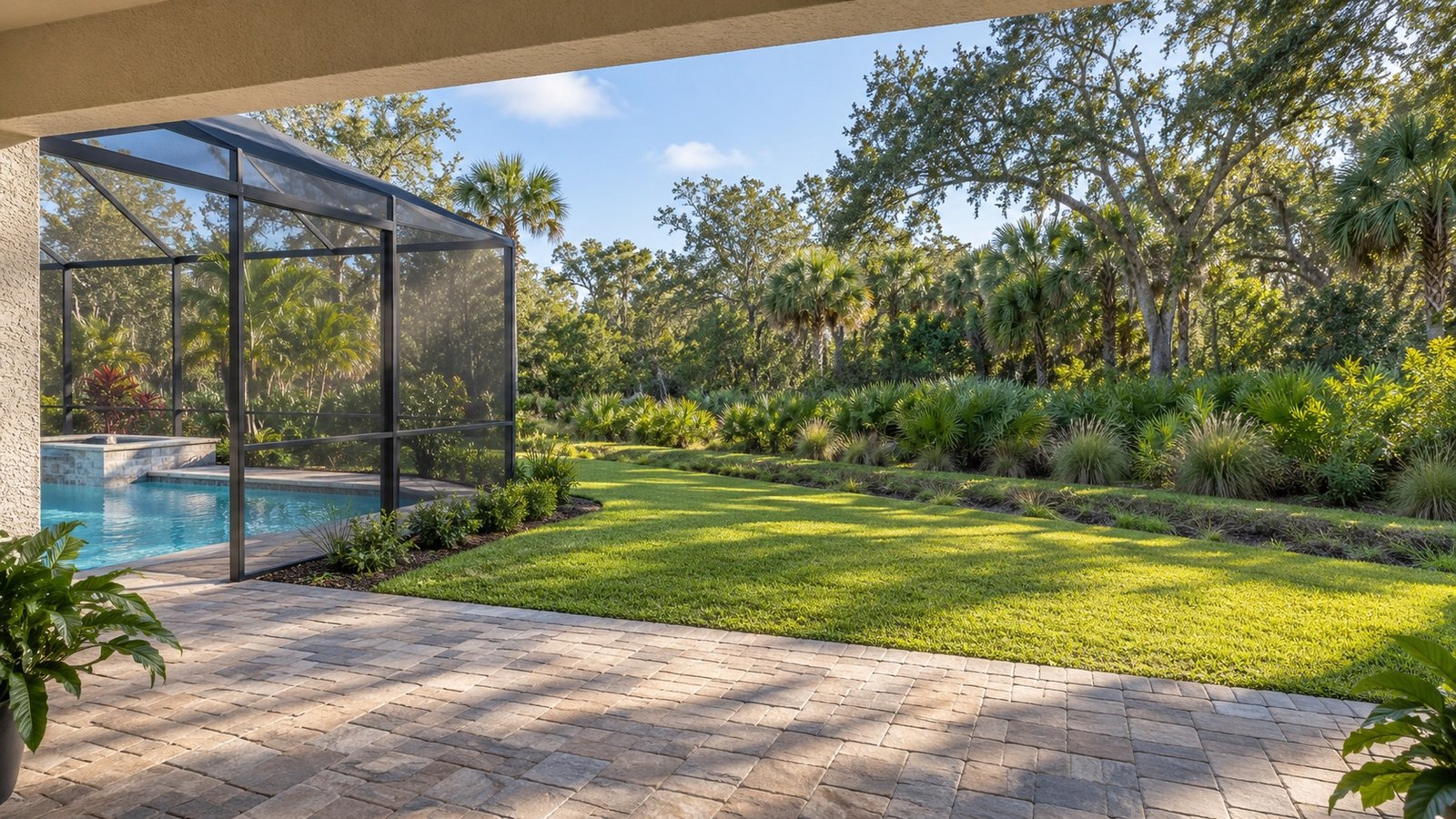
I see this become unnecessarily tense when a buyer notices a freshly trimmed buffer, a revised plant palette, a new irrigation layout, or a board agenda after they have already pictured their furniture around the pool. Preserve-adjacent homes can be wonderful because the setting feels open and quiet. They also require more precision. The landscape behind a screen enclosure may be part of the owner’s yard, a common area, a drainage route, a conservation buffer, or some combination of those things. A listing description cannot sort that out with a vague phrase such as “no rear neighbors.”
Start with the right question: is there a change, a proposal, or simply a conversation?
Those are three different facts, and I want sellers to keep them separate. An adopted standard may be reflected in a written rule, a formal notice, or an architectural guideline. A proposed change may appear in an agenda, a committee recommendation, or meeting minutes but still need action. A conversation among neighbors is neither one. Before marketing, ask the manager or board contact for the current written material and read the date, scope, and effective language carefully.
Florida’s homeowners’ association statute is helpful context here. It requires associations to maintain applicable governing documents, current rules, minutes, insurance information, contracts, and financial records as official records. It also treats a body with final authority over architectural decisions as subject to the meeting requirements in the statute. You can read the current language in Florida Statutes section 720.303. That does not mean every buyer will receive every document automatically, or that one Viera neighborhood operates like another. It does mean there should be a better record trail than hearsay at the mailbox.
My rule of thumb is simple: use the strongest label the document supports, and no stronger. If the board has only discussed a standard, say it has been discussed. If a landscape policy has been adopted but the implementation date is unknown, say that. If a contractor has been selected for common-area work, save the notice and scope rather than guessing at the visual result. Accuracy protects both the seller and the buyer relationship.
Build one landscape-and-preserve file before photography
I would not wait for the inspection period to assemble this. Make a tidy digital folder and give your listing agent the facts needed to answer the first reasonable question. The file does not need to turn a homeowner into an engineer. It should make clear what records exist and where a buyer can verify the rest.
- Current HOA rules, architectural or landscape guidelines, and any notice about a pending or adopted change.
- Board or committee agenda and minutes that explain the status, without selectively excerpting them.
- Your approved landscape, fence, pool-screen, irrigation, or drainage paperwork, if you have it.
- Invoices, warranties, and service records for irrigation work or landscape changes the seller completed.
- A survey, site plan, or other property-specific record already in the seller’s file; do not represent a line as a boundary without the document that supports it.
- Names and contact information for the association or management company, so a buyer can request current materials directly.
This is the same disciplined approach I recommend when a Viera backyard includes a pond-maintenance easement or a planned pool. My guide to pond-maintenance easements beside Viera pool plans explains why a pretty rear view is not a substitute for knowing who can access or maintain the area.
Keep the property file factual. A seller can say, “Here is the February notice, here is the approved pool-enclosure plan, and here is the irrigation invoice.” A seller should not say, “The association will never change the buffer,” “the preserve can never be accessed,” or “this landscaping solves drainage forever,” unless a qualified source and the actual governing documents support that precise statement.
Why preserve-adjacent landscaping deserves a closer look
Landscape changes can affect more than curb appeal. A revised planting plan may alter sightlines, maintenance routines, irrigation zones, access for crews, or where water is intended to move during a heavy rain. That does not make the change a defect. It does mean a serious buyer will want to understand whether the work is inside the lot, in a common area, beside an easement, or along a protected edge.
When I walk a preserve-adjacent property with clients, I encourage them to separate three questions: What is owned? What is maintained? What is approved? The answers can come from different records. A survey may help with the first question; HOA documents and agreements may help with the second; and architectural approvals, permits, or association correspondence may help with the third. Do not let a listing photo answer all three by implication.
For a buyer evaluating a home with a pool enclosure, it is also smart to review the relationship between the yard and any drainage feature instead of assuming the visible grade tells the whole story. I covered that process in my Viera guide to HOA landscape changes and pool-enclosure drainage. The goal is not to create anxiety; it is to prevent the kind of surprise that turns a routine document request into a late negotiation.
Do not confuse a closing estoppel with complete due diligence
An association estoppel certificate matters at closing, but it has a specific job. Under Florida Statutes section 720.30851, the certificate includes assessment information and identifies items such as open rule violations in the association records, transfer-approval requirements, other associations, and association insurance contact information. It is a valuable closing document, not a substitute for reading current rules, notices, and landscape materials while the buyer can still make an informed decision.
That timing matters. A seller who waits for the estoppel to surface a question may be technically later in the process but practically behind it. If a proposed landscape standard is relevant to the home’s setting, I would rather have the material organized before the first showing than have both sides encounter it after inspections and insurance calls are underway.
How to explain the issue without talking past the buyer
The best seller response is calm, brief, and document-led. It might sound like this: “The association circulated this notice on this date. This is the current written standard we received. This is the work the seller completed with approval. The association can answer questions about future implementation.” That language does not minimize the question, and it does not make the seller an interpreter of rules they do not control.
What I would avoid is a glossy explanation that calls common-area landscaping “your view,” labels a preserve edge “permanent privacy,” or describes an informal discussion as a settled policy. Buyers can tell when the documents and the marketing language do not match. Once that trust is gone, even a manageable landscape issue can overshadow a well-kept home.
Photos deserve the same care. Show the backyard honestly, including the transition from the lot to the rear landscape when it is visible. Do not digitally remove a maintained strip, access point, drain, or landscape feature that a buyer will see on the first visit. If the setting is a real strength, it will hold up better when the presentation and paperwork tell the same story.
Questions I expect a careful buyer to ask
A good buyer is not trying to manufacture a problem. They are trying to price uncertainty. When a preserve-adjacent Viera home has a pending landscape question, I expect some version of the following:
- Which portions of the rear area are inside the lot, association-maintained, or subject to access rights?
- Is the landscape item already approved, merely proposed, or scheduled for work?
- Who pays for the work, and is there a current assessment, budget item, contract, or bid connected to it?
- Does the seller have approval records for irrigation, fencing, a screen enclosure, pool work, or drainage changes near the rear edge?
- What has the yard looked like after a significant rain, and are there records of repairs or changes?
- Does the association have a point of contact for current architectural or maintenance questions?
Notice that none of those questions asks the seller to guarantee the future. They ask for the information a buyer needs to decide whether the home still fits. A seller who has already organized the file can answer efficiently, keep the deal moving, and avoid the appearance that something was hidden.
What buyers should verify for themselves
Buyers should not rely solely on a seller’s folder or an agent’s summary. Review the contract materials, association documents, survey, inspection findings, and any available written notice with the professionals appropriate to the transaction. If a planned project, drainage issue, boundary question, or conservation restriction matters to your decision, ask for the specific document and give yourself time to understand it. A title professional, inspector, surveyor, association manager, attorney, or other qualified professional may have a role depending on the question.
For a broader seller-side framework, read what Viera preserve-lot sellers should document about drainage, fence approvals, and pool feasibility. The recurring lesson is that visible improvements and invisible rights can both shape a buyer’s comfort level.
My pre-listing sequence for this kind of Viera home
First, identify the governing association and request the latest written information related to the landscape issue. Second, pull together the seller’s approvals, invoices, plans, and prior notices. Third, compare those documents to the property as it exists today; if a change was made without clear paperwork, deal with that fact before marketing. Fourth, prepare a factual response sheet for the listing agent. Finally, decide what belongs in the listing, what belongs in the document package, and what needs a direct association answer.
That sequence is less dramatic than a last-minute repair or a rushed concession, but it is often more valuable. Sellers do not need to solve every question in a preserve-adjacent backyard. They need to remove avoidable uncertainty and avoid making claims the documents cannot support.
The bottom line
A pending HOA landscape-standard change should not automatically derail the sale of a preserve-adjacent Viera home. Silence and vague assurances are what create trouble. Gather the current notice, distinguish a proposal from an adopted rule, organize the home-specific approvals and maintenance records, and let buyers verify the association details in writing.
If you are planning to sell in Viera, I can help you look at the home through a buyer’s due-diligence lens before photography and showings begin. Reach out for a no-pressure conversation about selling your Brevard County home with REAL Broker. Your next chapter starts here.
By Carrie Liotta, Space Coast REALTOR® with REAL Broker | 321 Coastal Living
