

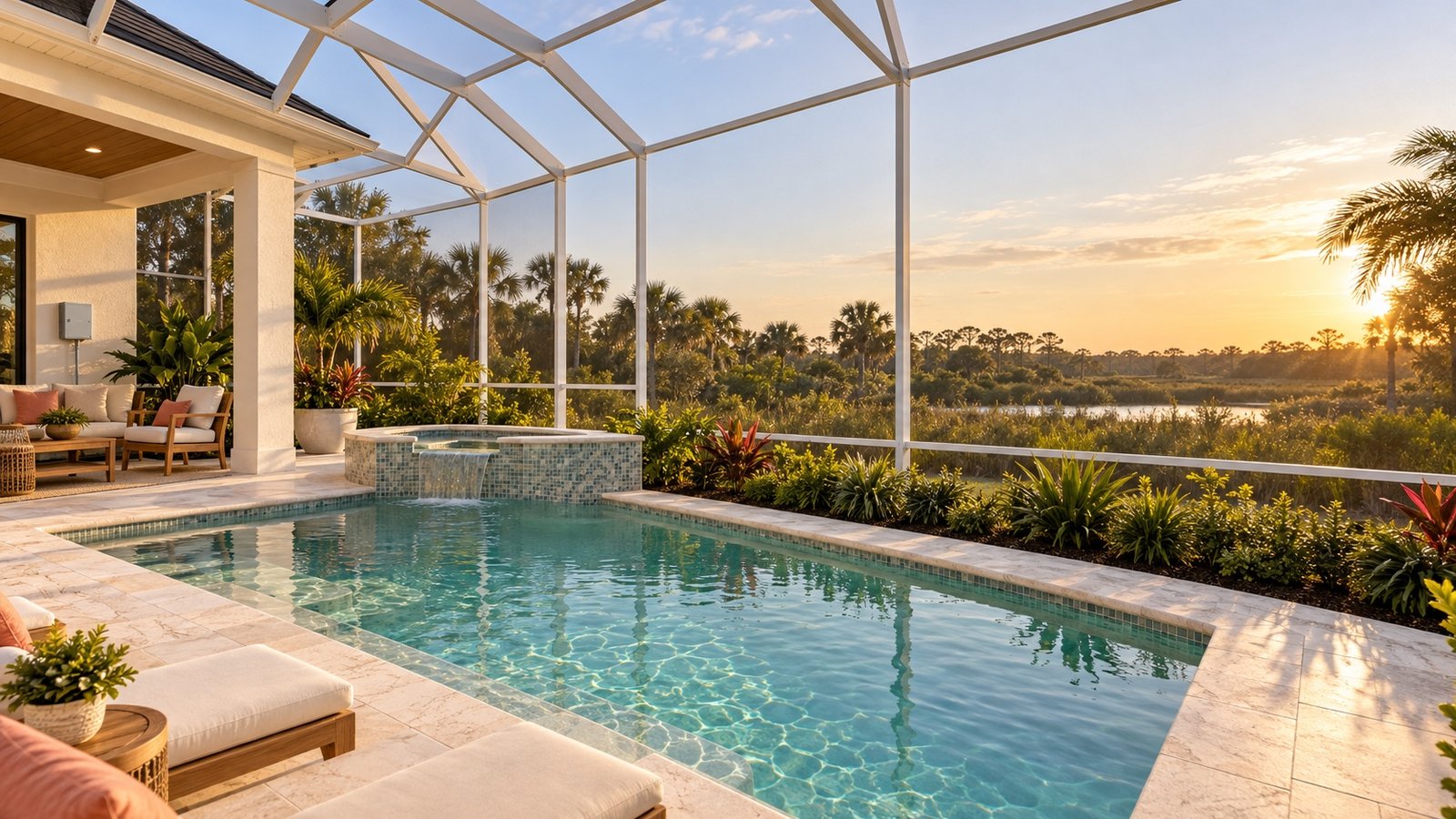
Viera Preserve-Lot Irrigation Controls Inside a Pool Enclosure: What Buyers Should Verify
By Carrie Liotta, Space Coast REALTOR® with REAL Broker | Published October 17, 2026
When a Viera preserve-lot home has its irrigation controller inside the screened pool enclosure, I do not treat that placement as a deal-breaker. I do treat it as a small detail worth tracing before you make an offer: who can access it, what it controls, whether the enclosure or wiring was approved, and whether the setup still works with the lot’s drainage and future plans.
That sounds fussy until you picture real life. A controller that is easy to reach, clearly labeled, protected from direct weather, and tied to a documented irrigation layout may be a thoughtful installation. One hidden behind pool furniture, sharing a crowded wall with other equipment, or controlling zones no one can explain can create frustrating maintenance and approval questions later. On a preserve lot, where buyers are often choosing the home for privacy and outdoor living, those questions deserve to be answered before closing rather than discovered during the first dry week.
Start with the controller, not the assumption
At a showing, I would ask the seller to point out the controller and demonstrate the basic schedule. That is not because a buyer needs to become an irrigation technician. It is because the controller is the practical map to the system. A few calm questions can tell you whether the setup is understandable: Which zones serve the front, side, and rear yard? Is the water source reclaimed water, a well, or the domestic supply? Is there a rain sensor or other weather-based control? Has a zone been turned off because of a leak, a landscape change, or preserve-edge restrictions?
Inside a pool enclosure can be a reasonable location if it is accessible and the wiring, conduit, and equipment placement look intentional. But I want to see whether a pool service technician, landscaper, or owner can reach it without moving stored items or entering a locked portion of the enclosure. I also want to know whether the schedule is still in use. A controller with a screen full of error notices, orphaned zones, or a password nobody has is not proof of a defective system; it is a signal to get better information before the inspection period runs out.
Ask for the controller manual, installer name, service invoices, irrigation diagram if one exists, and any recent repair records. A seller does not need a perfect binder. The useful goal is a factual handoff: what is installed, what it waters, what has been repaired, and what the next owner needs to monitor.
Why the preserve-lot setting changes the conversation
Preserve lots are appealing because the rear view can feel quieter and more private than an interior lot. They also reward a buyer who separates a pleasant view from an unrestricted backyard. The property line, recorded easements, drainage features, HOA standards, and any conservation area are all more important than the phrase “preserve view” in a listing.
An irrigation controller inside the enclosure may be connected to landscaping close to that rear boundary. Before you assume you can move heads, add plantings, change the fence line, or extend a deck, ask for the survey and look at the actual lot conditions. The right question is not whether a neighbor has something similar. It is whether the subject property’s documents, approvals, and physical layout support the work you hope to do.
That is especially true if a future pool, screen-enclosure alteration, fence, or landscaping project is part of your decision. I have written separately about comparing privacy, drainage, and HOA approval risk before adding a pool on a Viera preserve lot. This is the smaller, more practical companion question: can you understand the irrigation system that is already there before you decide what to change?
Documents matter more than a verbal “it was approved”
Florida law does not make every association rule identical. Under Florida Statute 720.3035, an association’s architectural-review authority is limited to what its declaration or authorized published standards state or reasonably imply, and the standards must be applied reasonably and equitably. That is why the exact association documents matter more than a general idea of “how Viera does it.” Different neighborhoods can have different declarations, architectural rules, approval processes, and maintenance responsibilities.
Read the declaration, rules, architectural-review guidance, and any current application materials for the particular home. Look for language about exterior equipment, landscape changes, fencing, pool enclosures, drainage, access easements, and who maintains components after approval. If the controller is inside the enclosure because the original pool project moved it, ask for the approval or contractor paperwork tied to that project. Do not confuse an approval to build a pool with a blanket approval for every later irrigation or landscape change.
Florida’s HOA disclosure statute also makes the point plainly: the disclosure summary tells a buyer that restrictive covenants and assessments exist, but it says the summary is only a summary and directs prospective purchasers to the covenants and governing documents before buying. See Florida Statute 720.401. I would use the contract and inspection period to obtain those documents promptly, not leave them as a closing-week surprise.
Separate access, drainage, and electrical questions
One detail can create three different questions. First is access: can the owner or service provider reach the controller and valves without disrupting the pool area? Second is water: when the system runs, are the heads watering plant material, hardscape, pool-deck edges, or a slope where overspray and runoff matter? Third is electrical: does the controller appear to have a tidy, protected connection, and can a licensed professional confirm its condition if something looks improvised?
A general home inspector may identify visible concerns, but irrigation operation and landscape drainage can justify a more focused evaluation. If a buyer is relying on the system to protect new landscaping or to support a future project, an irrigation professional can identify inactive zones, damaged heads, leaks, poor coverage, controller settings, and valve access. For wiring or pool-equipment questions, use the appropriately licensed professional rather than asking the seller or agent to make a technical conclusion.
The rear-yard drainage question deserves its own attention. A controller does not cause every drainage issue, but sprinklers that repeatedly wet the wrong area can hide a grading concern or make a wet spot harder to diagnose. Review the survey, walk the yard after ordinary rain when possible, and ask what the seller has repaired or adjusted. My guide to rear-yard drainage swale responsibility in Viera HOA homes explains why a visible swale is not automatically a private landscaping feature.
Check permits without over-reading them
For work that may have required a permit, begin with the Brevard County permit search. It is a useful research starting point, not a substitute for the county, a contractor, or a licensed inspector. Records may be under an address format you did not try, older files may be incomplete, and work inside an incorporated municipality may be handled through that jurisdiction instead.
I would ask the seller for the pool and enclosure permit information, invoices for irrigation relocation or electrical work, and HOA approvals. Then compare the papers with what you can actually see. If an irrigation controller was moved inside the enclosure during a pool project, the dates and contractors should form a believable timeline. If they do not, put the question in writing during due diligence and let the appropriate professional advise you.
This is not about trying to turn every modest maintenance item into a reason to walk away. It is about deciding with open eyes. An easy-to-understand system with accessible equipment and records may be a plus. A setup that needs reconfiguration or investigation can still be workable, but you should know that before you price the home against a comparable preserve lot with simpler outdoor infrastructure.
My offer-period checklist
- See the controller operate at least one zone and confirm who knows the access code or app login.
- Ask what water source feeds the irrigation system and whether any zones have been disabled or repaired.
- Request pool, enclosure, irrigation, and electrical records that relate to the current setup.
- Read the exact HOA declaration and architectural materials for this neighborhood, not a generic Viera summary.
- Review the survey for easements and note drainage features before planning any fence, landscaping, or pool changes.
- Use qualified inspectors or contractors for concerns that go beyond a normal visual review.
For buyers who love the privacy of a Viera preserve lot, the best result is not a house with zero questions. It is a house whose questions have clear answers. The irrigation controller is simply one useful place to begin because it connects the pool area, landscaping, drainage, access, and HOA process in one small piece of equipment.
If you are comparing Viera homes and want help building a due-diligence list that fits the specific lot instead of a generic checklist, I am Carrie Liotta, a Space Coast REALTOR® with REAL Broker. Join my private Facebook group, Moving to Brevard County Florida, or reach out for a no-pressure conversation about Brevard County homes for sale. Your next chapter starts here.
