

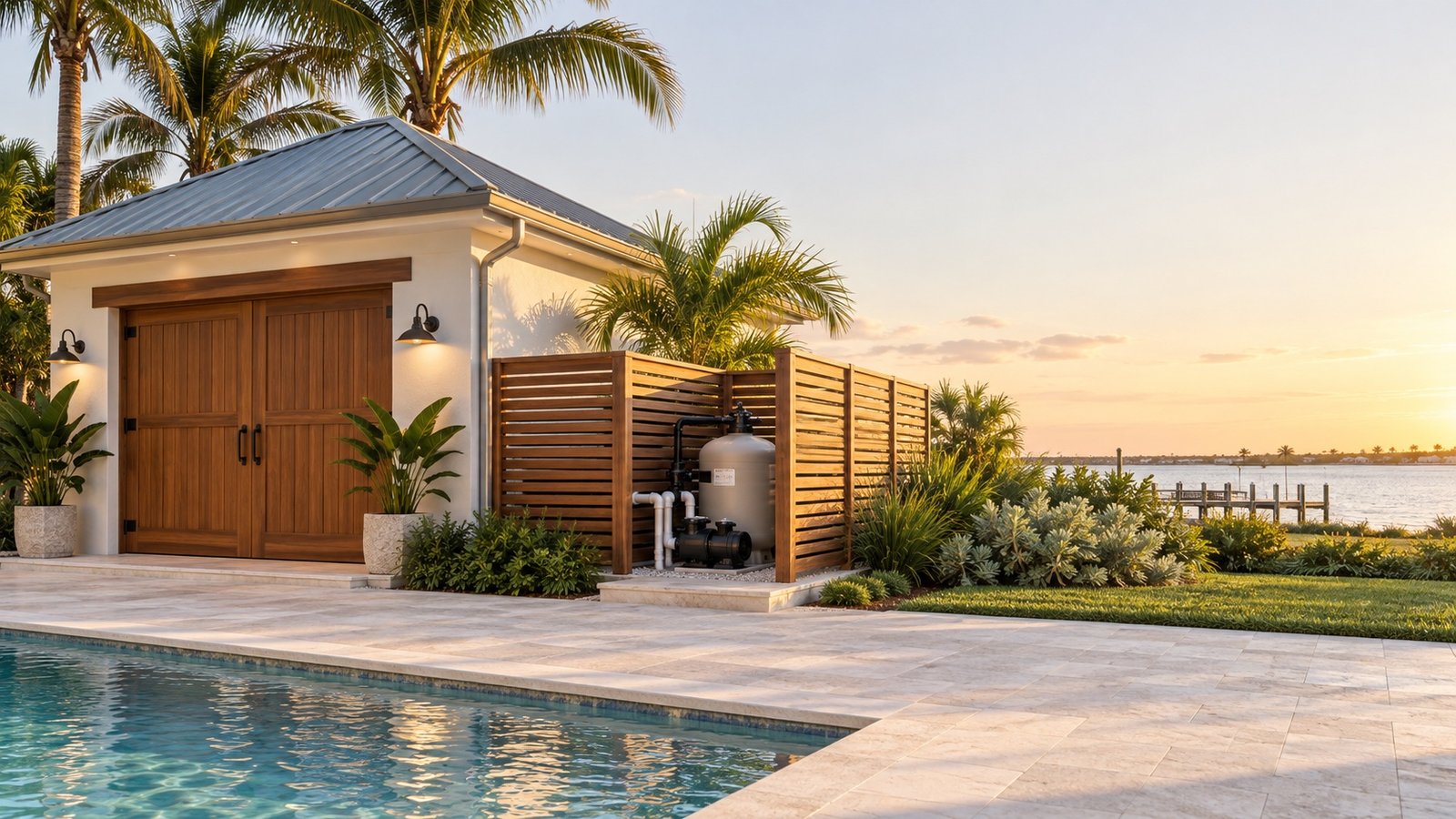
What Merritt Island Buyers Should Verify When Pool Equipment Shares a Circuit With a Detached Workshop
By Carrie Liotta, Space Coast REALTOR® with REAL Broker | Published October 16, 2026
A shared circuit between pool equipment and a detached workshop is not automatically a reason to walk away from a Merritt Island home. It is a reason to slow down, identify exactly what is connected, confirm the work and permits, and have the right licensed professional explain whether the setup is safe, serviceable, and appropriate for the equipment that is actually there.
When clients spot a panel label that seems to tie the pool pump to a workshop, I do not try to diagnose it from a listing photo or a seller’s memory. I treat it as a due-diligence question with a practical goal: can the buyer operate the pool and use the workshop without nuisance trips, confusing shutoffs, undocumented alterations, or a surprise electrical project right after closing?
First, find out what “shares a circuit” really means
That phrase can describe several very different situations. The detached workshop might have its own panel fed from the home, while a pool component is simply labeled nearby. A seller may mean that the pool pump and one workshop receptacle turn off at the same breaker. Or the pool equipment, workshop lights, outlets, heater, automation, and older additions may have been changed over time without the labels ever catching up.
Those facts matter more than the phrase itself. A breaker directory is useful, but it is not proof of the wiring path, capacity, grounding or bonding details, disconnects, or the condition behind a panel cover. I want the buyer’s general inspector to flag the visible concern, then I want a licensed electrical contractor to define the actual scope when the finding could affect safety, insurance, pool operation, or the offer terms.
This is especially important when a home’s appeal includes both a pool and a useful outbuilding. A workshop can be a real lifestyle advantage for boat gear, hobbies, storage, or a project space. A pool can be a major part of the Florida lifestyle. Neither feature is improved by treating an unclear electrical relationship as a small paperwork issue.
Ask for records before you decide it is a repair
Before assuming the setup is wrong, ask the seller for the pool-equipment installation records, invoices for workshop electrical work, panel schedules, prior inspection reports, and any written repair recommendations. If a seller says the system was upgraded, the useful follow-up is: who did the work, when was it done, what was installed, and is there a final inspection or permit record?
For an unincorporated Brevard County address, the Brevard County Building Permitting portal is a sensible starting point for building-record searches. A home inside a city may use that municipality’s records instead, so the property jurisdiction matters. Older records can be incomplete, and a missing online record is not conclusive proof that work was improper. It does mean the buyer should not convert an assumption into a promise.
Pool and workshop records also help separate an old label from a current problem. For example, an invoice may show that a pool pump was replaced, a subpanel was added, or a workshop was converted from storage to a more active work area. Those documents do not replace an inspection, but they give the electrician and buyer a much clearer starting point.
Why a pool-related electrical question deserves its own follow-up
Pool equipment is not just another garage appliance. The equipment pad can involve a pump, controls, lighting, a heater, a salt system, outlets, and disconnects. The workshop may have tools, lighting, a compressor, a refrigerator, or charging equipment. A shared path may be perfectly manageable in one home and inadequate in another; the answer depends on the installed equipment, how it is protected, and how it is used.
The practical concern is not to predict a code verdict from an online listing. It is to avoid a closing-day surprise. If normal pool operation can interrupt workshop use, or if workshop activity can trip equipment that keeps the pool circulating, the buyer needs to know before the inspection deadline. If a professional recommends changes, get the recommendation in writing with a scope, not just a verbal “it should be fine.”
Florida regulates electrical contracting. The state’s definition of electrical contracting is set out in Florida Statutes section 489.505. For a buyer, the takeaway is straightforward: when an evaluation or repair will drive a negotiation, rely on a qualified electrical professional rather than on a handyman opinion or a casual assurance from the seller.
What should the electrician be asked to answer?
I encourage buyers to give the electrician a focused assignment instead of asking for a vague “look at the pool.” The written scope should identify the panel or panels involved, the pool components served, the workshop components served, visible labels, disconnects, signs of overheating or corrosion, and any recommended correction. The report should also make clear whether the professional is describing an observed condition, recommending a safety improvement, or identifying work that needs further permit review.
Ask the contractor to state what cannot be confirmed without additional access or testing. A careful report may not be dramatic, but it is more valuable than a quick answer that hides uncertainty. If the buyer plans to add a heat pump, electric vehicle charging, a larger pool heater, or heavier shop equipment after closing, say so. Future plans can change what “adequate” means for the property.
Verify the contractor’s license status through the state’s Florida DBPR License Search before relying on the report. I would also retain the proposal, photos, and final paid invoice if work is completed. Those records can help at resale just as much as they help during the current transaction.
How this changes the offer conversation
The right request depends on what the inspection reveals. If the issue is a labeling problem or a modest, well-defined correction, a buyer may simply want it repaired by a licensed contractor before closing with documentation. If the scope is larger, the parties may negotiate a credit, a price adjustment, or time for more specialized evaluation. The weak approach is asking for a broad credit before anyone knows what the credit is meant to solve.
Think of the decision in terms of certainty. A buyer using most of their cash for closing may prefer a completed repair and a clear invoice. A buyer who wants to redesign the workshop after closing may prefer a price concession and control over the project. The lender, insurer, contract terms, and inspection period can all affect what is workable, so I help clients get those conversations moving early rather than waiting for the last day.
This same method applies to other property systems. My guide to Brevard County four-point inspections before an offer explains why electrical, roof, plumbing, and HVAC details can change the real cost of a home. The goal is not to turn every older home into a renovation project. It is to know which questions affect the buyer’s budget and ability to close.
Do not overlook the Merritt Island lifestyle details
On Merritt Island, a pool and detached workshop can be part of a home’s strongest everyday story. Buyers may be picturing a place for paddleboards, fishing equipment, a trailer, a hobby bench, or the tools that keep a waterfront-adjacent property running smoothly. That makes clarity more important, not less. A feature that supports the lifestyle should have a maintenance and electrical story a future buyer can understand.
If the house also includes a dock, lift, or separate exterior electrical service, keep those questions distinct. A pool/workshop circuit question does not answer a dock-power question. For waterfront buyers, my recent article on a separate electric meter serving a boat lift and dock pedestal is a useful companion because it shows why each exterior electrical setup needs its own records and inspection path.
My inspection-period checklist
- Ask the seller for pool, workshop, panel, and prior electrical-work records.
- Confirm the property’s permitting jurisdiction before searching records.
- Have the general inspector document visible concerns without treating a label as a final diagnosis.
- Use a licensed electrical contractor for any finding that could affect safety, use, cost, or negotiations.
- Get a written scope that identifies what is connected and what correction, if any, is recommended.
- Decide whether a repair, credit, price adjustment, or further specialist review best fits the actual finding.
- Keep final invoices and permits with the home file for future ownership and resale.
A shared circuit is not a verdict on a Merritt Island home. It is a prompt to verify the system before you make a decision that is hard to unwind. I help buyers look beyond the pool view and workshop potential to the records, inspections, insurance questions, and negotiation choices that make the home feel genuinely workable. Reach out for a no-pressure conversation about Merritt Island homes and Brevard County due diligence. Your next chapter starts here.
