

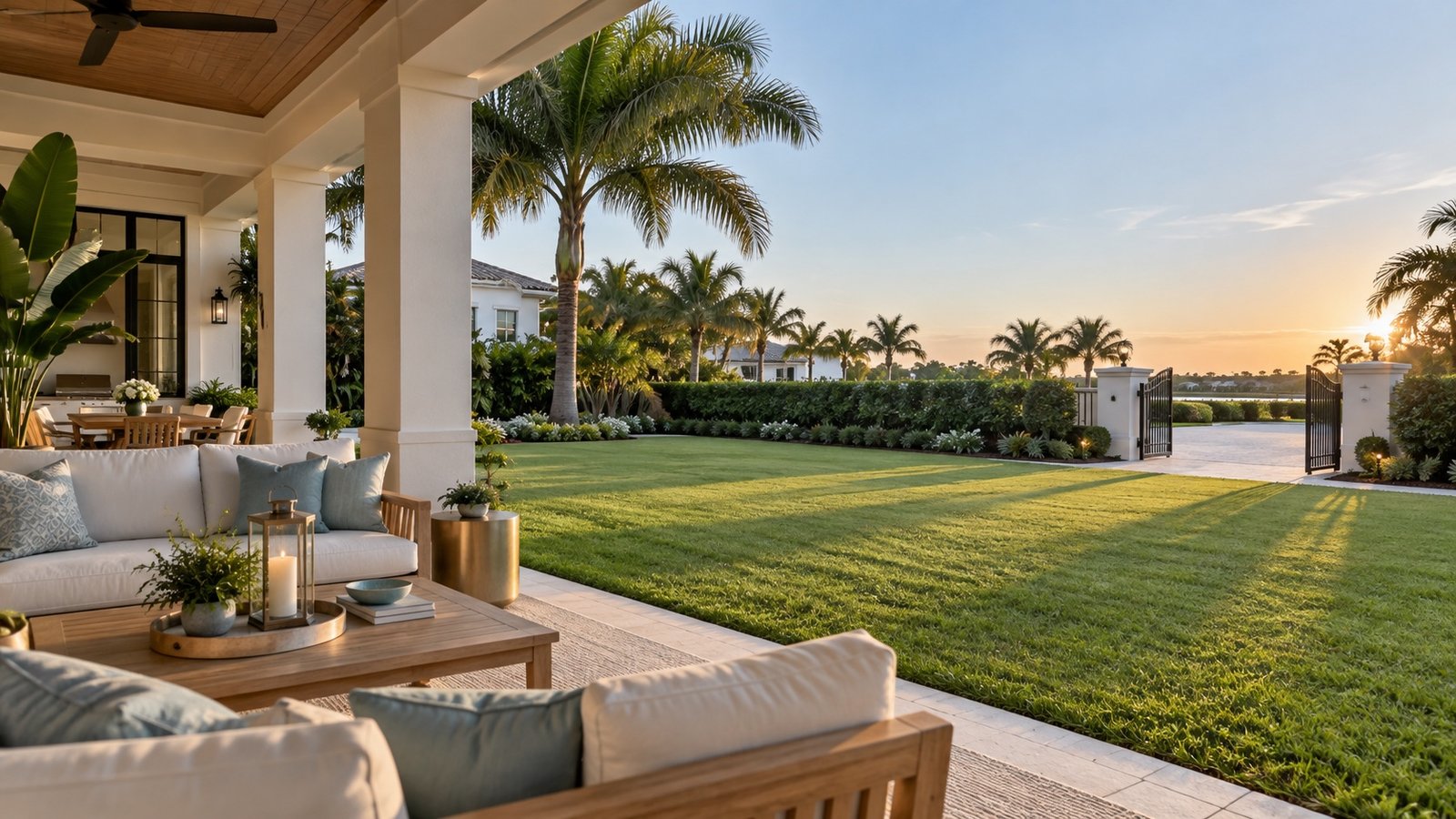
Viera Home Choice: Larger Backyard or More Driveway Parking for Frequent Family Visits?
By Carrie Liotta, Space Coast REALTOR® with REAL Broker
If family visits are a real part of your life, I would choose the Viera home that solves the harder problem on an ordinary weekend: parking or outdoor living. A larger backyard is usually worth more when people will gather outside often; more usable driveway parking is usually smarter when several cars, caregivers, or airport pickups are routine. The key word is usable. Do not decide from a listing photo.
Relocating buyers sometimes treat this as a small preference because both homes may have the same bedroom count, similar finishes, and a Viera address. It is not small once relatives arrive for a holiday, a long weekend, a launch, or a season of helping with children. One house may make the visit feel easy. The other may turn every arrival into a negotiation over where cars go, whether the lawn can handle a tent, or whether people are walking through the kitchen all afternoon.
Start with the kind of visit you actually expect
Before you choose between a larger backyard and more driveway capacity, write down the visit you are trying to support. “Family visits often” means very different things for different households. Maybe it is two adult children driving in separately twice a month. Maybe grandparents stay for a week and friends join for dinner. Maybe the pattern is a steady mix of airport pickups, a caregiver’s car, teenagers, and a neighbor dropping by after a game.
I ask buyers to picture a Saturday instead of a showing. How many vehicles are there at the same time? Does anyone need to leave early? Are guests comfortable parking on the street if the governing documents permit it? Does a delivery, trash pickup, or school-bus stop narrow the practical space? Is the backyard where the gathering will actually happen, or is it simply a view from the lanai?
That exercise keeps a family from paying for an impressive-looking feature that does not solve its real routine. A deep-looking driveway can have an awkward curve, a tight garage apron, or a street layout that makes backing out unpleasant. A generous lot can have a narrow usable area once the pool, screen enclosure, utility equipment, drainage swale, easements, and required setbacks are considered. I want to walk both spaces, not just admire them from the patio door.
When the larger backyard deserves the premium
A larger backyard usually wins when the visit is about being together outdoors. If your family cooks outside, children need room to play, dogs are part of the visit, or you want a table large enough for a relaxed dinner, the yard changes the way the home lives. In Viera, that can matter more than another stretch of driveway because so much daily life is already convenient: errands, parks, restaurants, and community activities are close enough that the home can become the place everyone returns to.
But I would not call a yard “larger” and stop there. Look for functional shape, shade, privacy, drainage patterns, fencing, and the distance between the lanai and the usable open area. A broad side strip is not the same as a place where people can sit, play, or add a table. If a future pool, screen enclosure, pavers, or outdoor kitchen is part of the dream, treat that as a separate due-diligence question. An attractive blank canvas does not prove that every improvement will be allowed or affordable.
Ask for the exact community rules before assuming an exterior change will be routine. Florida’s homeowners’ association statute makes association governing documents and official records central to how an association operates; I use the current Florida association-records framework as a reminder to get the actual documents for the property, not a verbal summary at an open house. Architectural review, lot use, fencing, landscaping, and parking provisions vary by community.
A backyard can also be the better long-term choice if the family expects guests to spend time at the home rather than simply sleep there. That is especially true for relocators building a new local routine. The value is not an abstract resale promise. It is the difference between hosting comfortably and always needing to move the gathering somewhere else.
When more driveway parking is the better answer
Driveway capacity takes priority when arrivals and departures are the stressful part of the visit. A home with a practical front-entry driveway, a wider apron, or space to stack vehicles without blocking the garage can be a relief for a household that regularly has separate cars. This is not about cramming vehicles onto every inch of concrete. It is about whether the setup works without someone having to move a car every time another person needs to leave.
Pay close attention to the garage, too. A three-car garage on paper does not always mean three cars can park there comfortably once there are bikes, sports equipment, beach gear, a workbench, or a freezer. If the garage will be storage-heavy, the driveway must carry more of the visitor load. My related guide on alley-loaded garages versus front-entry driveways in Viera is useful for thinking through the daily tradeoff, but I still want buyers to test the exact property.
More driveway parking can be particularly valuable when guests are older, when family members bring children and gear, or when an occasional service professional may be arriving during a visit. It can reduce the number of steps from car to door and make a quick stop feel less disruptive. That does not make it automatically better than a yard; it simply means the practical arrival experience may be the feature you feel every single week.
Verify the pavement, the rules, and the history
Here is where I slow the search down. Buyers should not assume that a driveway can be widened, that a yard can become pavers, or that an existing improvement was approved simply because it is visible. Ask the seller what was added and when. Look for invoices, architectural approvals, surveys, and permit history where it applies. The county’s building permit search is a useful starting point for unincorporated Brevard County; a property inside a municipality may require a check with that city instead.
That is not a promise that every patio, driveway alteration, screen enclosure, or drainage change will have the same record trail. It is the reason I prefer documentation over assumptions. Local approval and code questions are property-specific. The current 2023 Florida Residential Code planning chapter is a reference point, but the buyer still needs the applicable local authority, survey, contractor, and association to answer what is allowed for that lot.
For driveway parking, stand at the curb and ask the seller or listing agent for a normal-day explanation. Which vehicles typically park in the garage? Where do visitors park? Are there any recurring restrictions on overnight street parking, commercial vehicles, trailers, or use of the lawn? For the yard, identify drainage swales, utility boxes, easements, and the true boundaries before imagining a play set or an outdoor kitchen. A survey is much more valuable than a hopeful gesture toward a fence line.
Put the ongoing cost into the comparison
This decision can look like a lifestyle choice until you start planning changes. A larger yard may mean more mowing, irrigation, landscaping, fence maintenance, pool upkeep if one is added, or a larger outdoor project later. Extra driveway or hardscape may bring its own price, drainage considerations, association review, and maintenance. I would rather a buyer reserve money for a well-documented future project than spend to the ceiling and assume the lot will accommodate every idea.
Also compare current association costs and documents with the same care you give a mortgage estimate. Under Florida’s association assessment statute, assessments and related obligations can have real ownership consequences. I am not using that statute to predict a particular community’s costs; I am using it to reinforce the buyer habit of reading the exact association package, budget, and estoppel information for the home before making a decision on monthly affordability.
A useful comparison sheet has more than purchase price and square footage. I would include the present HOA payment, any confirmed recurring lot-maintenance costs, estimated changes you truly expect to make, and a contingency for the surprise that often appears after closing. Then I would place a value on the feature you cannot easily add. In some Viera communities, a flat, usable yard with privacy is harder to recreate than a different parking routine. In another home, the driveway layout is the rare advantage and the yard is already adequate. That is why this cannot be solved by a price-per-square-foot calculation.
Tour with a simple family-visit test
When I help a relocating buyer compare two homes, I like to run the same scenario through each one: two household cars are home, two family cars arrive, one person needs to leave early, children want to be outside, and groceries are coming in. Where does everyone go? Which door do they use? Who has to move a car? Is there room for a table, a stroller, a cooler, or a dog without the whole visit spilling into the kitchen?
That test may sound basic, but it turns a glossy showing into a real ownership conversation. If the home will also need a flexible interior space for visitors, read my separate guide to first-floor office and guest-room flexibility. It answers the interior-layout question; this one is about what happens outside and at the curb when those visitors arrive.
For buyers still deciding whether Viera itself fits their wider daily pattern, my Viera versus Suntree family comparison can help frame the location, commute, and lifestyle side of the move. The right house should make both the trip to Viera and the people coming to see you feel manageable.
My bottom line for Viera relocators
Choose the larger backyard when your family’s best visits happen outside and the lot gives you genuine, documented room to use and improve. Choose more driveway parking when multiple vehicles and independent arrivals are the recurring friction point. If both features matter, do not settle for a listing description. Walk the pavement, measure the usable yard, read the community documents, and price the changes you may need.
I help buyers make these tradeoffs before they are under contract, when there is still time to compare calmly instead of rationalizing a compromise. If you are relocating to Viera or another part of Brevard County, reach out for a no-pressure conversation about homes for sale with Carrie Liotta, Space Coast REALTOR® with REAL Broker. Your next chapter starts here.
