

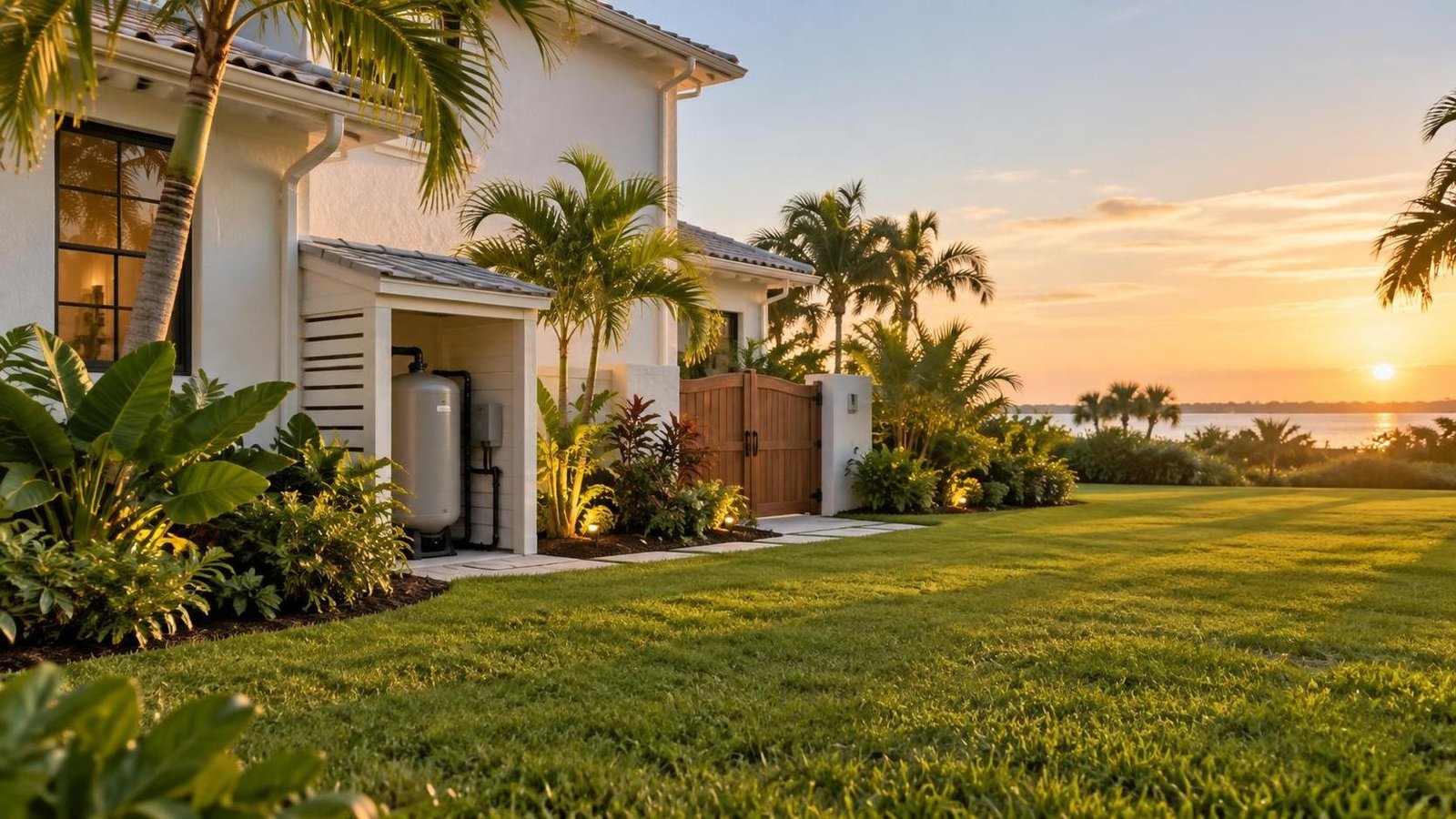
Newer Well Pump or Documented Drainfield Replacement: What Should Palm Bay Buyers Prioritize?
By Carrie Liotta, Space Coast REALTOR® with REAL Broker | Published October 7, 2026
If two Palm Bay homes both need water-treatment work, I would usually give more value to the home with a properly documented drainfield replacement than to the one with only a newer well pump. A pump is important, but a verified drainfield replacement may remove a larger, more disruptive unknown. The records and current inspections still decide the answer.
When I help a buyer make this choice, I do not award points for the newest date. I build two complete utility files and ask which home leaves fewer unresolved systems, fewer site constraints, and a more manageable reserve after closing.
Why the drainfield replacement often carries more weight
The drainfield is not a small appliance that can simply be carried through the garage and swapped. It is part of the onsite wastewater system and occupies a real section of the lot. Its condition can affect daily use, yard drainage, future construction, vehicle access, landscaping, and the buyer’s ability to add a pool, workshop, driveway extension, or guest space.
Florida’s Department of Environmental Protection onsite-sewage program says these systems serve about 30% of Florida’s population. DEP implements the statewide statutes and rules, while county health department offices continue handling permitting and inspection in Brevard County. That makes the property record—not a seller’s memory—the starting point for confirming what was replaced and approved.
A strong drainfield file should identify the permit, installation or repair scope, approved location, installer, final inspection, date, and any site work needed afterward. I also want the current septic professional to locate the tank and field, explain what was accessible, report visible concerns, and reconcile the current yard with the recorded plan.
If that package is complete, the replacement can remove uncertainty around a buried component that is difficult to judge during an ordinary showing. It can also give the buyer a clearer map of where not to drive, build, or direct stormwater. EPA’s current septic-care guidance recommends protecting the drainfield from vehicles, structures, tree roots, and concentrated drainage, and keeping maintenance records. Those are ownership obligations even when the replacement is recent.
What does a newer well pump actually prove?
A replacement pump proves very little until the invoice and inspection explain the work. Was the submersible or above-ground pump replaced? Were the pressure tank, pressure switch, wiring, control box, piping, sanitary seal, or well cap addressed? Why did the old pump fail? Did the contractor test production, pressure behavior, cycling, and water quality after the repair?
The U.S. Environmental Protection Agency advises private-well owners to test annually for total coliform bacteria, nitrates, total dissolved solids, and pH, and to test immediately after any well-system repair or replacement. EPA also recommends certified laboratories, accurate maintenance records, and periodic inspection of exposed casing, cap, and seals. Buyers can review that guidance on EPA’s private-well protection page.
Florida’s own guidance is useful for a purchase because it separates legal minimums from prudent due diligence. The Florida Department of Health private-well page says the state does not require private-home well sampling simply because a house is sold. It nevertheless recommends coliform, nitrate, and lead testing for a sale and directs Brevard residents to the county health department for local rules tied to new or repaired wells.
That is why I would never let “new pump” substitute for current laboratory results and a system review. The pump moves water. It does not tell us whether that water is suitable, what treatment it needs, or whether the rest of the well system is ready for the next owner.
Both homes need treatment work, so keep that cost separate
The phrase “needs water-treatment work” can describe very different conditions. One home may need routine media, filters, or a control-head repair. Another may need a redesigned treatment train after current testing identifies bacteria, nitrate, hardness, iron, sulfur odor, corrosive water, or another property-specific concern. A kitchen reverse-osmosis unit is not proof that the entire home’s water has been evaluated.
I would obtain comparable laboratory testing and treatment proposals for both properties. The proposals should state which test result each component is intended to address, which equipment can remain, what must be replaced, whether electrical or drainage work is included, and what ongoing filters, salt, media, service, or retesting will be required.
This is where buyers can accidentally double-count value. A seller may point to a new well pump as if it also solved water quality. It did not necessarily do that. If both homes still need similar treatment work, compare that expense in both columns and then evaluate the pump and drainfield as separate capital components.
My earlier guide to comparing Palm Bay water-treatment systems on well-and-septic homes explains the broader treatment questions. For this choice, the important discipline is to avoid paying twice for the same promise.
Build one page for each home before choosing
I would compare the homes in five rows rather than one headline feature.
- Well delivery: pump date and model, installer, reason for replacement, pressure-tank condition, controls, wiring, accessible well components, flow and pressure findings, and current water tests.
- Water treatment: laboratory results, treatment purpose, equipment ownership, service history, written correction scope, annual routine, and retesting plan.
- Septic: permit, approved plan, tank and drainfield location, replacement records, final inspection, pumping history, current evaluation, and any inaccessible or unknown component.
- Lot fit: swales, standing-water history, roof-drain discharge, trees, fences, drive paths, and whether a future pool, addition, workshop, or parking plan conflicts with the septic or well layout.
- Cash exposure: immediate work, likely follow-up, restoration, maintenance, and the reserve remaining after down payment and closing costs.
Do not use an online average to fill the last row. Well, treatment, septic, grading, electrical, and landscape restoration scopes can vary sharply by property. Written estimates should identify exclusions, permits, testing, and who restores disturbed soil, irrigation, fencing, or concrete.
How do you verify the drainfield paperwork?
Start with the parcel’s actual jurisdiction and the county health department’s septic records. Ask for the application, approved site plan, permit, installer invoice, final approval, pump-out or service reports, and any later repair documentation. Compare the address, owner, dates, system description, and location with the home you are buying.
Then make the records meet the ground. Ask the septic professional to identify the system location, visible access, signs of surfacing effluent or saturation, drainage interaction, and any discrepancy between the plan and current improvements. EPA’s general maintenance schedule says an average household system should be inspected at least every three years and tanks are typically pumped every three to five years, with frequency affected by household use and tank conditions. That guidance is useful context, not a warranty that a replaced field is trouble-free.
If you need help interpreting the report itself, read my article on comparing septic inspection results for Palm Bay non-HOA homes. A “pass” label is less useful than knowing what was opened, observed, tested, and left unknown.
When would I choose the home with the newer pump?
I would favor the newer-pump home when its septic system has a credible current evaluation, usable lot layout, and enough documentation to make the older field a measured risk rather than a mystery. It may also win when the replacement field at the competing home has weak records, unclear final approval, drainage problems, or a location that blocks the buyer’s definite plans.
The pump home can also be stronger if its well inspection and water results are excellent, its pressure system is complete and documented, its treatment correction is modest, and the house is otherwise better on roof, insurance, drainage, price, or location. Buyers purchase the whole property, not one underground component.
I would be especially careful if the so-called documented drainfield replacement is supported only by an invoice. An invoice proves someone billed for work. It may not prove what was permitted, where it was installed, whether the work received final approval, or whether later grading and improvements protected it. Until those facts are reconciled, I would not assign the replacement full value.
Turn the comparison into offer terms
Complete the specialized reviews early enough to use the inspection period. If a report says further evaluation is needed, do not turn that sentence into a guessed credit. Get the evaluation and written scope while the contract still gives you a decision path.
Depending on the findings, the practical answer may be a seller correction, a credit that fits lender limits, a price adjustment, more documentation, or walking away. If a seller proposes work before closing, define the contractor qualifications, permits, laboratory testing, final approvals, paid invoices, warranties, and buyer reinspection rights in writing with the appropriate professionals and contract guidance.
I also want the lender and insurance professional involved when water or wastewater findings could affect closing. A repair allowance is not useful if the transaction structure, property condition, or buyer’s remaining reserves cannot support the plan.
My Palm Bay comparison checklist
- Confirm whether each property has private well, septic, public water, or public sewer; never infer the arrangement from the street.
- Obtain current certified laboratory results for both wells and treatment scopes tied to those results.
- Review the pump invoice, model, installation scope, electrical work, pressure equipment, and reason for replacement.
- Pull the septic permit, approved site plan, replacement scope, final approval, and later service records.
- Have the appropriate well, treatment, and septic professionals inspect within their own scopes.
- Map the well, treatment equipment, tank, drainfield, drainage, structures, vehicle routes, and future improvements.
- Get written property-specific estimates instead of assigning a generic value to “newer” or “replaced.”
- Compare the cash reserve left after closing, not only the monthly payment.
My bottom line for Palm Bay buyers
If both homes need water-treatment work and all other factors are reasonably close, I would prioritize a permitted, finaled drainfield replacement over a newer well pump. But “documented” has to do real work: verify current function, location, drainage, and fit with your plans, then test the competing well and price treatment at both homes. Choose the remaining uncertainty that fits your budget and intended use.
If you are comparing Palm Bay homes with wells, septic systems, treatment equipment, or larger non-HOA lots, I can help you organize the records, inspections, and offer questions before the deadline. Reach out to Carrie Liotta, Space Coast REALTOR® with REAL Broker, for a no-pressure conversation about Brevard County homes for sale. Join my private Facebook group, Moving to Brevard County Florida. Your next chapter starts here.
