

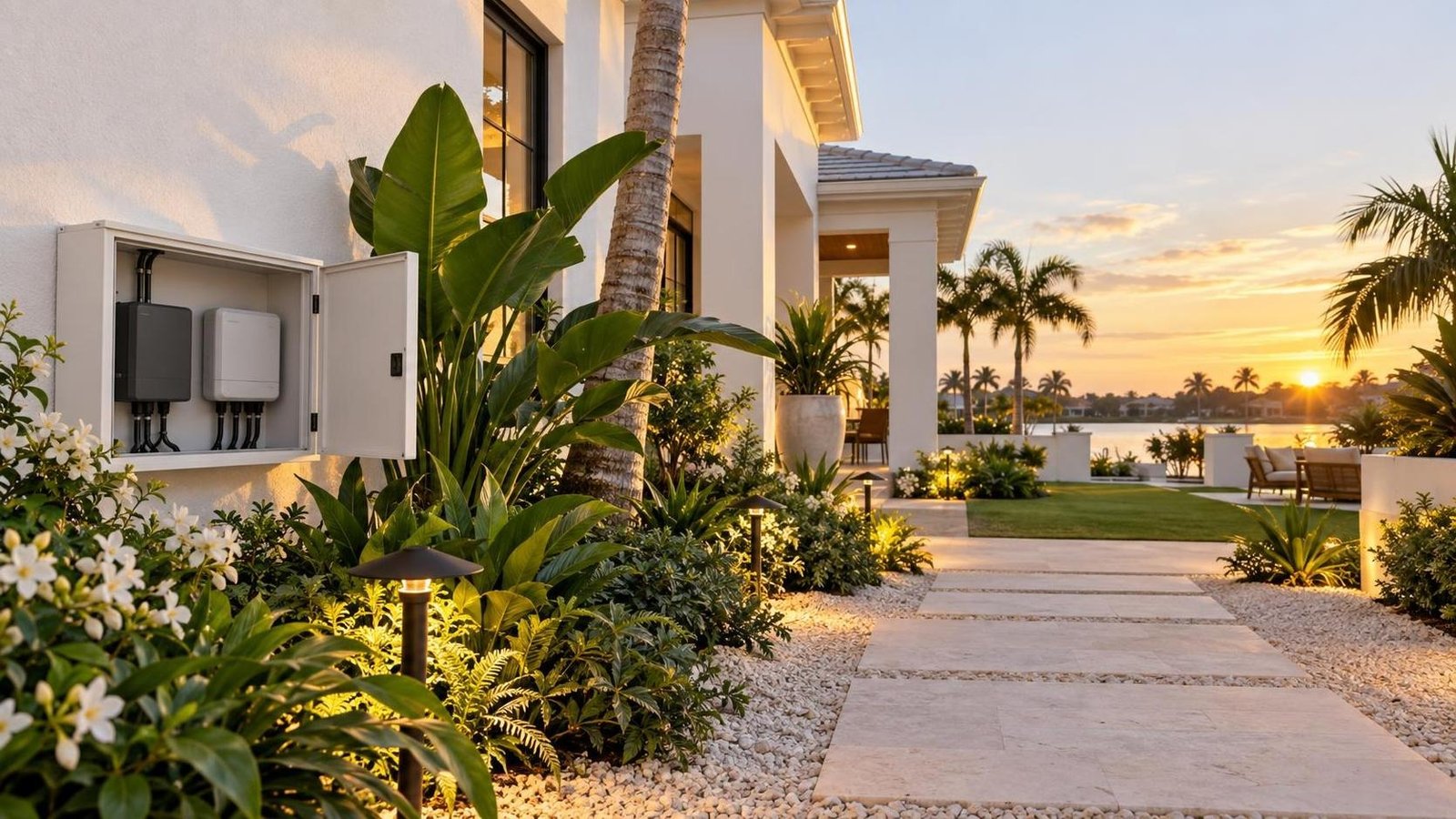
Selling a Viera Home With Landscape Lighting and Reclaimed-Water Controls in One Cabinet? Document the Setup
By Carrie Liotta, Space Coast REALTOR® with REAL Broker | Published October 4, 2026
Yes. Before listing, document the landscape-lighting transformer and reclaimed-water controller as two separate systems, even when they occupy one exterior cabinet. Identify each component, trace its power or water function, preserve service access, gather permits and invoices, and have the right professionals evaluate any questionable wiring, moisture, heat, corrosion, or undocumented modification.
A shared cabinet can look organized during a showing, but appearance does not answer the buyer’s important questions. The transformer serves the lights. The controller tells irrigation valves when to operate. One enclosure does not prove that the equipment was installed together, that both components can be serviced safely, or that the controller confirms which water source reaches the yard.
Start with two system stories, not one cabinet
I would build the seller file in two columns. The lighting column should identify the transformer manufacturer and model, input supply, lighting zones, timers or photocells, low-voltage cable routes where known, fixture types, installer, installation date, repairs, and operating instructions. The irrigation column should identify the controller, power source, number of zones, valve map, rain or soil sensor, actual water provider and source, service history, app or account requirements, and seasonal settings.
That separation matters because the controls do different jobs. A landscape-lighting transformer changes the supplied electrical power into the output intended for the connected lighting system. An irrigation controller sends scheduled signals to zone valves; it does not, by itself, prove whether the water behind those valves is reclaimed water, potable water, or another source. If the seller calls the whole enclosure “the irrigation box,” a buyer may never receive a clear explanation of the lighting equipment. If the seller calls it “the lighting cabinet,” the reclaimed-water handoff may be equally incomplete.
Photograph the closed cabinet in context, then create a dated photo key for the inside only after the equipment has been made safe and the professional says it can be opened. Record model plates without publishing serial numbers in the listing. Mark every shutoff, disconnect, transformer, controller, sensor lead, valve-zone reference, and conduit or cable entry in plain language. A buyer should be able to understand what each component is supposed to do without touching it.
Do not decide from appearance whether the setup is acceptable
Two devices mounted neatly inside one weather-resistant cabinet may be perfectly explainable. They may also have been added years apart, with the second installer using whatever space was available. The cabinet could be original, field-modified, replaced after landscaping work, or moved when a pool, screen enclosure, paver walk, or planting bed changed the service area.
I would not let listing copy say “professionally integrated,” “code compliant,” or “approved shared control center” unless current records and qualified evaluations support those exact words. I also would not tell a seller to replace the cabinet merely because the arrangement is unusual. The useful questions are more specific:
- Are both pieces of equipment listed for the location and installed according to their instructions?
- Can each component be reached, identified, isolated, and serviced without disturbing the other?
- Are the line-voltage supply, transformer output, controller wiring, and field cables routed and protected as the qualified electrical professional expects?
- Are cabinet openings, seals, mounting surfaces, drainage, ventilation, and weather exposure appropriate for the actual equipment?
- Do the permits, invoices, manuals, and visible installation tell the same story?
Those are field questions, not conclusions a seller or REALTOR should improvise. Florida law defines electrical contracting around electrical wiring, fixtures, apparatus, raceways, and conduit. The practical seller step is to use a properly licensed electrical professional for the supply, transformer, enclosure, and wiring questions, and to verify credentials through the Florida DBPR electrical-contractor resources.
Trace the lighting side from supply to fixtures
Ask the electrician or qualified lighting professional to document the transformer’s exact model, rating, supply, mounting method, environmental suitability, protective devices, timer or photocell arrangement, output circuits, and visible cable entries. Have the seller locate the original manual, installation invoice, warranty, service receipts, and any landscape plan showing fixture locations.
Then test the system by the manufacturer’s method. Confirm which fixtures turn on, whether zones or schedules match their labels, and whether a timer, photocell, smart hub, or wall control changes operation. Note any dead fixture, flicker, recurring trip, warm or discolored component, damaged cable, loose cabinet hardware, insect nesting, water entry, or corrosion for professional evaluation. Do not open energized compartments or spray water near the cabinet to “prove” that it is weatherproof.
Trace the irrigation side from controller to water source
For the controller, record the model, number of active zones, power arrangement, sensor connections, schedule, valve locations, and current zone names. Run each zone using the approved procedure and note heads that do not rise, valves that do not close, mixed labels, overspray, broken lines, or a zone that no longer serves visible landscaping.
The U.S. EPA explains that weather-based and soil-moisture-based irrigation controllers use different information to tailor watering, and that WaterSense-labeled models are independently certified to specific performance and efficiency criteria. That does not make every controller a WaterSense product or prove that its sensors are installed and programmed correctly. Save the exact manual and configuration rather than marketing the system with a generic “smart irrigation” label.
Next, confirm the actual irrigation source for this property. The Florida Department of Environmental Protection describes reclaimed water as highly treated domestic wastewater used for a beneficial new purpose. That water-source fact belongs in the irrigation file, but it should come from utility and property records, not from the controller’s location beside a transformer or from the color of one visible wire.
Pay special attention to the shared space
Once each system is understood separately, evaluate the cabinet as a shared service space. A buyer’s inspector may want to know whether one component blocks the other’s cover, whether wires were pushed aside to fit new equipment, whether an irrigation service visit could disturb lighting connections, and whether landscaping makes the door difficult to open. The answers should come from observation and professional documentation, not a broad promise that “everything works.”
Look for a clear mounting surface, legible identification, intact covers, usable access, sealed entries appropriate to the equipment, and enough room for each trade to perform its work as intended. Photograph the area before and after any correction. Trim vegetation only in a way that preserves the landscape and does not conceal damage. Do not caulk random openings, drill ventilation holes, bundle unknown conductors, repaint over labels, or move components simply to make the cabinet look cleaner for photography.
Reconcile permits and invoices before calling it original
Build a timeline for the home: original landscape package, lighting installation, controller replacement, yard redesign, pool or screen work, paver changes, drainage repairs, and any cabinet relocation. Match each invoice to the model now installed. If the transformer was replaced but the invoice lists a different capacity or location, ask why. If the controller is newer than the cabinet, determine who mounted it and whether that work changed electrical or irrigation connections.
The Brevard County permit search is a useful starting point for property records in county jurisdiction. A Viera address may require confirmation of the correct authority and record source, and an empty online search is not proof that work was never permitted. Ask the permitting office about the actual scope before promising that a repair is exempt or that an old permit closes the present question.
If an electrical alteration, damaged cabinet, or irrigation modification needs correction, get a written scope from the qualified trade. Florida DBPR construction-industry guidance reflects defined contractor scopes; an irrigation technician is not automatically the right person to certify transformer supply wiring.
Decide what to fix and what to document
I would separate the findings into three groups. The first is an active defect: damaged wiring, failed equipment, water intrusion, overheated components, a cabinet that cannot close, or another condition the qualified professional says needs correction. Repair that before listing when reasonably possible, then save the invoice, permit or inspection if required, photographs, and test result.
The second group is an incomplete record. If both systems operate and the professionals find no required repair, but the seller lacks manuals, labels, a zone map, or the installation invoice, improve the handoff rather than inventing history. Download the correct manufacturer documents, identify the current models, create the photo key, mark unknown routes honestly, and obtain a dated service report.
This is the same documentation-first approach I recommend for Viera and Suntree homes with older roofs or HVAC systems. Buyers handle age and complexity better when the dates, condition, maintenance, and next likely decisions are visible.
Prepare the buyer handoff before photography
Give the buyer one organized package with two clearly named sections. For lighting, include the transformer manual, fixture or zone map, control instructions, installer and service records, warranty, known cable-route notes, and professional findings. For irrigation, include the controller manual, zone map, water-source confirmation, sensor information, schedules, valve-service records, utility guidance, and account-transfer steps if an app is involved.
Add a cabinet section containing the dated photo key, permit or record search, work timeline, repair closeout, and written limitations. Keep passwords, private account numbers, Wi-Fi credentials, and security details out of the public listing file. If the controller must be reset or transferred through an app, follow the manufacturer’s process near closing rather than leaving the buyer tied to the seller’s personal login.
My broader guide to documenting Viera smart irrigation and control systems explains the digital handoff in more detail. If reclaimed service sits near pool plumbing or an autofill, the separate question becomes water-source protection; review my article on reclaimed irrigation, pool autofill, and backflow documentation. Neither issue should be collapsed into the phrase “shared cabinet.”
How I would describe the feature in a Viera listing
Keep the public language narrow and supportable: “Exterior cabinet contains a documented landscape-lighting transformer and a separately mapped reclaimed-irrigation controller; manuals and recent service records available.” Use that only if the file proves each point. Avoid “fully integrated,” “maintenance-free,” “all permitted,” “waterproof,” or “new” when the evidence does not support those claims.
The shared cabinet is not the lifestyle benefit. The warm path lighting, cared-for landscaping, understandable controls, and clean ownership handoff are the benefit. Good records let a buyer appreciate that presentation without wondering whether two systems were squeezed together as an afterthought.
Bottom line for Viera sellers
A landscape-lighting transformer and reclaimed-water controller in one exterior cabinet should be treated as two systems sharing one physical space. Document each function independently, trace the lighting power and irrigation source, confirm service access and present condition, use the right licensed professionals, and correct real defects instead of making assumptions from a tidy door.
If you are preparing a Viera home for sale, I can help you organize the property file, identify the questions buyers are likely to ask, and position unusual equipment accurately. Reach out for a no-pressure conversation about selling your Brevard County home with Carrie Liotta, Space Coast REALTOR® with REAL Broker. Join my private Facebook group, Moving to Brevard County Florida, for practical local guidance. Your next chapter starts here.
