

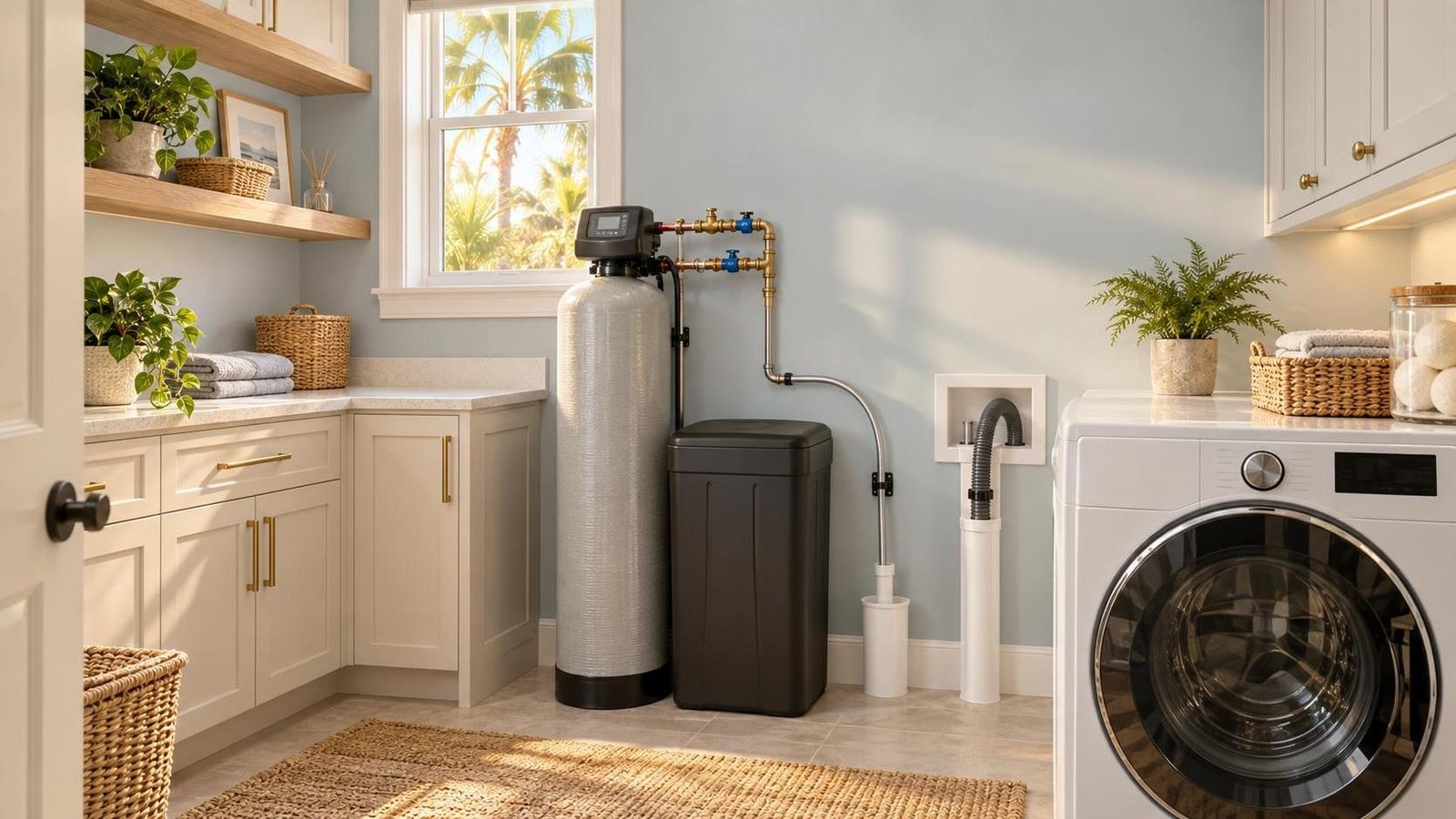
Water Softener and Laundry Sharing One Standpipe: What Should Viera Buyers Verify?
By Carrie Liotta, Space Coast REALTOR® with REAL Broker | Published October 2, 2026
If a Viera home’s water softener and washing machine discharge at the same standpipe, verify the air gap, hose placement, receptor capacity, trap, vent, downstream drain, and permit history before buying. Sharing a location is not automatically defective, but two improvised hoses in one pipe can create backup, overflow, siphoning, and water-damage risk.
I would not accept “it has always worked” as the inspection result. I want a licensed plumber to identify each hose, compare the softener installation with its manufacturer instructions, determine whether the plumbing is an approved indirect connection, and test the complete drain path under controlled conditions. The buyer needs to know not only where the water enters the standpipe, but where it goes next and what happens when both appliances need that route.
Start by identifying every pipe and hose
A utility-room photograph can be misleading. The larger flexible hose may be the washing-machine drain. A smaller tube may carry softener regeneration water, an overflow from the brine tank, condensate from nearby equipment, or something else entirely. An unlabeled line disappearing behind the appliance is a clue, not a verified route.
Ask the inspector or plumber to trace the softener’s service flow from the incoming water line through the control head, resin tank, brine tank, drain connection, and final discharge point. Record the model and serial number, then obtain the installation manual for that exact equipment. The manual matters because acceptable drain-hose size, maximum run, elevation, support, separation, and termination can vary by product.
Do the same for the laundry. Identify the washer hose, standpipe opening, visible standpipe height, trap location, vent arrangement, accessible cleanout, and downstream branch. If a third line shares the receptor, include it in the analysis. The goal is a simple diagram that a buyer, plumber, and seller can all understand.
Sharing a standpipe is not the same as sharing a direct connection
The most important distinction is whether the softener drain has a protected indirect discharge or has simply been inserted and sealed into the same pipe as the washer hose. An indirect arrangement preserves physical separation between the appliance discharge and the drainage receptor. That separation helps prevent contaminated drain water from being pulled back toward water-treatment equipment.
The official Florida Plumbing Code chapter on indirect and special waste is the starting point for air gaps, air breaks, indirect waste piping, and receptors. The plumbing-fixtures chapter addresses fixture connections, including clothes-washer provisions. Those references do not let a buyer diagnose a house from a listing photo. A licensed plumber and the permitting authority must apply the correct provisions, equipment instructions, and code edition to the actual work.
During inspection, I would ask the plumber to document:
- Whether the softener discharge has the required physical separation from the receptor.
- Whether either hose is pushed so far into the standpipe that it can siphon, obstruct, or defeat that separation.
- Whether the hoses are supported against movement without sealing the standpipe opening.
- Whether the receptor remains visible and accessible enough to spot splashing or overflow.
- Whether the brine-tank overflow line is mistakenly tied into the pressurized drain line or treated as the same function.
Test capacity, not merely appearance
A standpipe can look dry and orderly because neither appliance is draining during the showing. The real test is whether the receptor and downstream piping can accept the actual flow without the water level rising dangerously, gurgling, backing toward another fixture, or spilling onto the floor.
A washing machine may pump out in short, forceful bursts. A softener discharges during regeneration according to its valve program, equipment size, settings, and household schedule. The two events may usually occur at different times, but “usually” is not a drainage design. A manual regeneration, power interruption, changed timer, guest laundry, or replacement appliance can alter the overlap.
Do not trigger simultaneous operation casually during a home inspection. First check the route, equipment instructions, drain condition, and owner authorization. A licensed plumber can decide whether to observe the washer, initiate a controlled softener cycle, run the events separately, or test the receptor and branch another way. Protect nearby flooring and baseboards, and stop at the first sign of rising water or leakage.
Look beyond a dramatic overflow. Slow warning signs include mineral residue at the pipe rim, salt deposits, a stained wall, swollen trim, patched drywall, corroded fasteners, recurring odor, lint around the receptor, or a pan and water sensor added after an earlier event. Ask what happened, who corrected it, and whether the downstream pipe was cleaned or repaired.
Confirm the trap, vent, and downstream destination
The visible standpipe is only the beginning of the drainage path. The plumber should determine whether it enters a properly configured trap and vent, where the branch joins the building drain, and whether there is evidence of restriction. Gurgling at a nearby sink, slow laundry drainage, or repeated cleaning invoices can point to a larger issue than hose placement.
This is similar to evaluating kitchen-island plumbing over a Viera post-tension slab: the attractive finished surface does not answer the routing, permit, or repair-access question. Buyers should understand the concealed path before assuming a small visible detail will be a small correction.
Also verify the final wastewater destination. Do not assume every Viera address has the same utility arrangement merely because the neighborhood looks newer. Confirm the parcel, jurisdiction, utility account, and any onsite-system records. If the property uses an onsite sewage treatment and disposal system, the Florida Department of Environmental Protection’s Onsite Sewage Program explains that DEP administers the statewide program while county health offices continue local permitting and inspection in most counties. An address-specific professional should evaluate how the equipment discharge, household wastewater, and onsite system work together.
Match the visible route with utility or septic records, plans, permits, and field conditions. An exterior hose ending at a yard, storm inlet, or unknown buried line needs its own explanation.
Read the installation and permit history together
The Florida Building Commission states that the Florida Building Code, Eighth Edition (2023), took effect December 31, 2023. That does not mean every older Viera installation is judged as if it were installed yesterday. The applicable edition and permit requirements depend on the date and scope of the work, later alterations, local records, and the authority having jurisdiction.
Start with the Brevard County building permit search, then confirm whether the property is handled by the county or a municipality and whether older records are stored elsewhere. Search for the original home, plumbing alterations, water-treatment installation, utility-room relocation, washer-box work, repiping, and repairs after a leak. A permit search with no obvious result is not proof that no permit was required or that the installation is defective; it is a reason to ask the permitting office and plumber a more precise question.
Request these records from the seller:
- The softener invoice, model manual, warranty, service history, and current settings.
- Plumbing permits, final inspections, and invoices for the laundry box or drain reroute.
- Receipts for drain cleaning, water extraction, drywall repair, flooring replacement, or leak sensors.
- Any seller disclosure, insurance claim, or prior inspection mentioning the utility room.
- Well-water or treatment reports if the home has a private-water component, without assuming the softener’s current condition from an old test.
Verify the plumber or water-treatment contractor through the Florida DBPR license search when the work falls within a regulated trade. A branded sticker on the tank proves who may have serviced equipment; it does not establish that concealed plumbing was permitted, inspected, or left unchanged.
Separate a simple correction from a system problem
The cost question cannot be answered from the fact that two hoses meet at one standpipe. One home may need a correctly supported termination or approved air-gap fitting. Another may need a dedicated receptor, trap and vent correction, drain cleaning, wall access, finish restoration, or a reroute around other plumbing. If the downstream line is restricted or the softener itself is malfunctioning, changing the hose arrangement alone will not solve the cause.
Get a written scope before negotiating. It should identify what was observed, what remains concealed, the proposed correction, permit assumptions, drywall or cabinet access, finish restoration, testing, and exclusions. If the plumber recommends a dedicated receptor, ask where it will connect and how the route affects the slab or wall. In many Viera homes, the utility room is close to finished living space, so access and restoration can matter as much as the fitting.
I would compare that scope with the home’s other water risks. My guide to upstairs versus downstairs laundry and leak protection in Viera explains why shutoffs, pans, sensors, flooring, and the room below should be evaluated as one damage-control system. A sensor is useful, but it does not make an improper or overloaded drain acceptable.
If water treatment is new to you, my article on comparing whole-house water-treatment systems shows how equipment purpose, service history, testing, and ongoing ownership belong in the same decision. This Viera question is narrower: it is about whether the regeneration discharge is safely and clearly integrated with the laundry drain.
Build the offer around an answer, not a guess
When the inspection is otherwise strong, the best request may be documentation plus a licensed correction before closing. In another case, the buyer may prefer a credit and post-closing work by a contractor of their choice. That only works if the buyer understands the route, the correction is feasible, the credit fits the contract and lender limits, and there is no unresolved active leak or permitting obstacle.
I would not price a request from an online estimate or ask a handyman to improvise a second opening. Obtain at least one property-specific plumbing scope. If work is completed before closing, collect the permit when required, final approval, paid invoice, photographs before the wall is closed, and the updated softener installation information.
My Viera buyer checklist
- Label the washer drain, softener drain, brine overflow, and every other line at the receptor.
- Record the softener model and compare the installation with the correct manufacturer manual.
- Have a licensed plumber evaluate the air gap or air break, hose support, standpipe, trap, vent, and branch drain.
- Test discharge only under an authorized, controlled plan that protects the home.
- Inspect adjacent walls, baseboards, flooring, cabinets, and rooms for present or prior water evidence.
- Confirm sanitary-sewer or onsite-system service from parcel-specific records.
- Match permits, final inspections, invoices, service calls, and visible conditions.
- Get a written repair scope that includes access, restoration, testing, and permit assumptions.
Bottom line
A water softener and washer can occupy the same compact Viera utility area without making the home a bad purchase. The concern is an unidentified or improvised shared discharge that no one has tested, documented, or taken responsibility for. Verify separation, capacity, routing, records, and the downstream destination while the inspection period still gives you options.
If you are comparing Viera homes, reach out for a no-pressure conversation about Brevard County homes for sale. I can help you organize the plumber’s questions, permit research, seller records, and repair scope so a tidy utility room does not hide an avoidable water problem. Join my private Facebook group, Moving to Brevard County Florida, for practical relocation guidance. Your next chapter starts here.
