

Key Release, Package Lockers, and Elevator Outages: What Should Cape Canaveral Seasonal Owners Verify?
By Carrie Liotta, Space Coast REALTOR® with REAL Broker | Published September 28, 2026
Before buying, verify how you, guests, vendors, and emergency contacts enter the Cape Canaveral condo when power, internet, staffing, or elevator service is interrupted. Key release, package lockers, gates, and elevators often have different dependencies. Seasonal owners need written outage procedures, backup-power details, stair access, after-hours contacts, and a remote plan that works without sharing personal codes.
A building can feel effortless on a normal afternoon: the gate opens from an app, a staff member releases a key, the locker sends a text, and the elevator reaches your floor. One failed connection can break that chain. For an owner hundreds of miles away, the difference between a minor inconvenience and a costly problem is whether the building has clear, tested alternatives.
Map each system separately
Ask the association or manager to explain four systems without blending them together:
- Property entry: vehicle gate, pedestrian gate, lobby door, call box, fob, code, app, or staffed desk.
- Unit access: physical key, electronic lock, management key, lockbox policy, vendor authorization, and emergency-entry procedure.
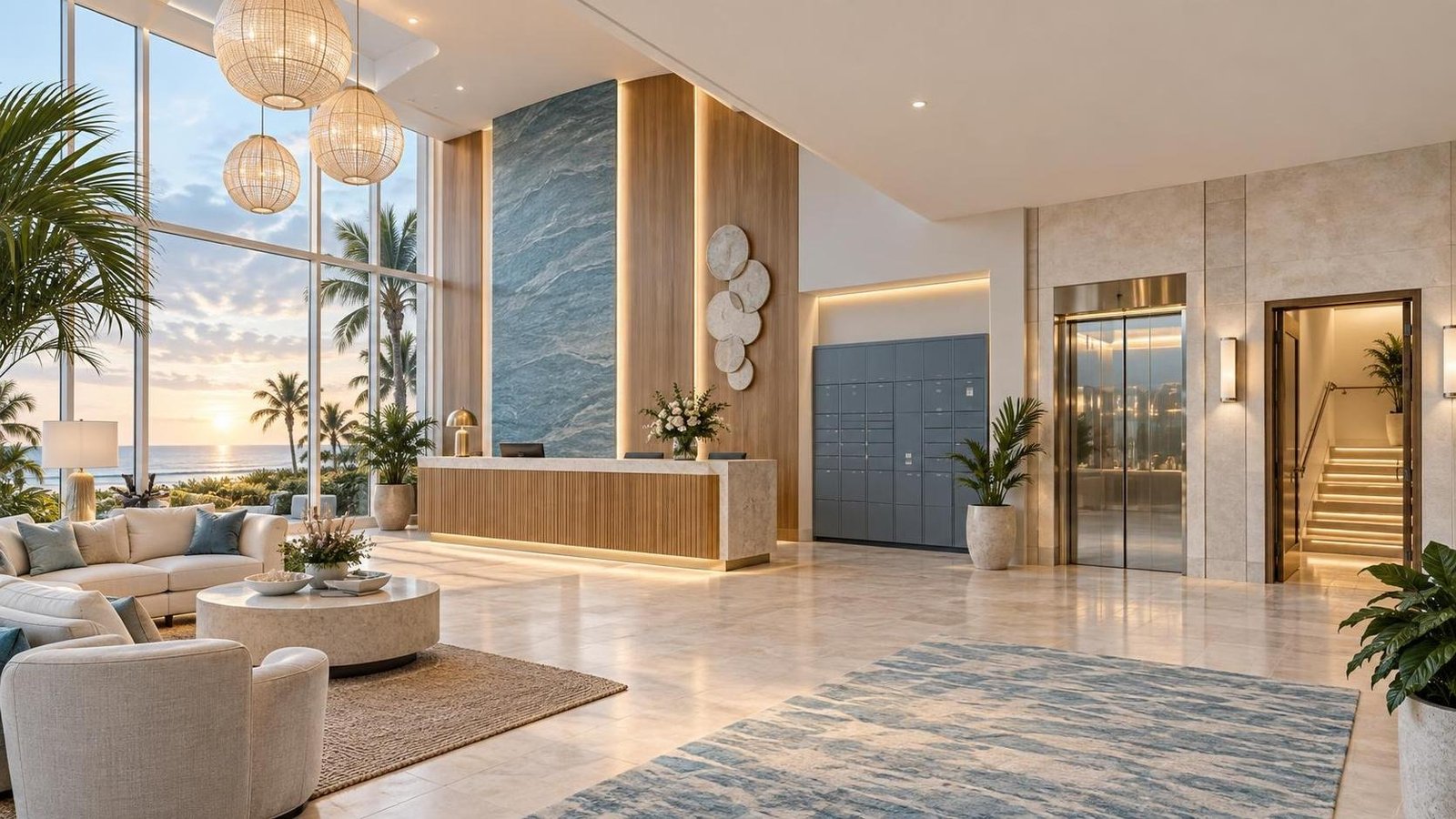
- Package handling: staffed desk, locker bank, package room, carrier access, notifications, overflow, and pickup deadlines.
- Vertical access: elevators, backup power, stair doors, accessible routes, service-elevator rules, and outage communications.
Then ask what each one requires: grid power, generator power, internet, cellular service, a cloud platform, a working phone, staff presence, a physical key, or manual intervention. Do not accept “the building has a generator” as the full answer. The generator may serve emergency lighting and one elevator while lockers, gates, air conditioning, and unit outlets remain off.
Test the owner’s arrival when the internet is down
Imagine arriving after a long drive when the gate app cannot connect. Is there a physical fob, staffed station, local keypad, call number, or manual process? Does the call box depend on the same internet or cellular provider as the app? Can an owner enter the stairwell and lobby without a cloud service?
Seasonal owners should keep an approved backup credential that does not expose a permanent code to guests. Ask how lost or expired credentials are replaced outside office hours and whether management can verify ownership remotely. If the building uses a phone-based credential, know what happens when the phone is dead, changed, or lost.
My comparison of storm-protected package rooms versus first-floor unit access explains why the easiest normal-day feature is not always the strongest disruption plan.
Staffed key release needs written boundaries
If front-desk or management staff can release a key, ask who qualifies, during which hours, after what identity check, and under whose authorization. Can staff admit a family member, cleaner, HVAC contractor, water-remediation company, or insurance adjuster while you are away? Must the owner submit a form in advance? Does authorization expire?
Clarify whether management keeps a unit key, an emergency key, or neither. Ask how keys are logged, stored, audited, replaced, and protected from unauthorized duplication. If electronic locks are permitted, find out whether a physical override is required and who may hold it.
Do not plan to text a door code to every vendor. Use the building’s approved process and temporary permissions where available. The safest remote plan gives a vendor only the access needed for one purpose and one time window.
Package lockers can fail differently from the lobby
A locker bank may have power but no internet, or internet but no working notification service. It may release doors locally during an outage, remain locked until the system returns, or require staff override. Ask for the actual procedure and records of recent interruptions.
Find out where packages go when lockers are full or offline, how refrigerated or oversized deliveries are handled, and how long items can remain. Seasonal owners should ask whether management will hold, redirect, return, or refuse deliveries during extended absences or storm preparation. Confirm whether another person may retrieve a package and what authorization is required.
Do not assume secure lockers are on emergency power because the lobby lights are. Ask whether the locker controller, network switch, access door, cameras, and notification system share the same backup source.
Elevator backup is about scope and duration
Ask how many elevators serve the building, which receive emergency power, whether that power supports continuous owner use or controlled service, and how the association communicates outages. Review recent maintenance records, modernization plans, inspection information, service contracts, and meeting minutes.
Stairs deserve equal attention. Walk the route from your prospective unit to ground level. Check lighting, door hardware, re-entry rules, signage, landings, and whether the route fits your household’s mobility. Never assume a locked stair door will behave the same in every condition; get the building’s written explanation.
If storage depends on the elevator, compare my guide to first-floor storage versus an upper-floor locker. Seasonal gear is only useful when you can reach it under the conditions that matter.
Read operations in the condo documents and minutes
Request the declaration, bylaws, rules, current budget, recent meeting minutes, emergency plan or owner handbook, elevator service information, generator testing records, package procedures, staffing schedule, access-control contracts, and notices from recent outages. The most useful evidence is consistency between written policy and what owners report actually happened.
Florida’s DBPR condominium division is the official state resource and oversight portal. The statewide framework in Florida Statutes Chapter 718 addresses association governance, official records, budgets, and emergency powers, but the building’s current documents and adopted procedures explain the day-to-day system you are buying into.
Look for repeated meeting-minute references to failed gates, locker complaints, elevator parts, generator testing, staffing cuts, cybersecurity changes, or owner lockouts. One outage is not automatically a red flag. A recurring issue with no funded plan is different from a well-documented repair or modernization.
Build a remote-owner response plan
A strong plan identifies at least two trusted local contacts and defines what each can do. One might check the unit after an association notice; another might meet a licensed contractor. Both should use approved temporary access rather than the owner’s permanent credentials.
Keep current contact information with management, including an alternate email and phone. Understand how the association sends urgent notices and whether alerts require app enrollment. Ask whether a unit’s water shutoff, electrical panel, HVAC controls, balcony items, and storm protection can be addressed without the owner present—and what prior authorization is needed.
Ready.gov’s power-outage guidance recommends inventorying electricity-dependent needs and planning for communication, medical devices, refrigeration, and other disruptions. For a seasonal condo owner, that inventory should include building access and the people who can respond locally when you cannot travel.
Distinguish an outage from an evacuation or restricted return
An owner should not treat a working gate code as permission to enter after an emergency. Ready.gov’s evacuation guidance tells residents to know local plans, destinations, routes, official information sources, and return instructions. Follow local officials and association notices rather than relying on app status or a camera feed.
Ask how the building handles pre-storm shutdown, elevator suspension, package refusal, staff departure, garage access, re-entry inspection, and owner communications. A seasonal owner may need to stop deliveries and secure the unit days before normal operations change. Build that timeline into travel plans.
Compare buildings with a scenario test
Instead of asking whether one building has “better security,” run five scenarios:
- Power out, internet working: Which gates, lockers, lights, and elevators operate?
- Internet out, power working: Can owners enter without the app? Can lockers release?
- Elevator down: Can your household use the stairs safely, and can staff help with essential access?
- Desk closed: How does an approved vendor enter after hours?
- Owner out of state: Who can check a leak, retrieve a package, or secure a balcony under written authorization?
Write down each answer and the supporting document. A building with fewer glossy systems but clear manual fallbacks may fit a remote owner better than a highly automated building with one shared point of failure.
Account for cost and future projects
Review whether access controls, lockers, elevators, generators, cameras, and network equipment are association-owned, leased, or subscription-based. Identify contracts nearing renewal and projects already discussed. Modernization can improve reliability while bringing assessment, downtime, or temporary-access questions.
Ask how emergency power is tested and funded, not just whether it exists. Find out whether staffing hours are budgeted or discretionary. A remote owner may gladly pay higher dues for dependable operations, but only when the services are documented and financially sustainable.
Daily traffic matters too. My comparison of quieter condo access versus faster SR 528 access can help you place these building systems within the larger Cape Canaveral arrival and departure routine.
Bottom line
The best Cape Canaveral condo for a seasonal owner is not necessarily the one with the most automated entry features. It is the building where normal access is convenient, backup access is written and tested, elevator limitations are understood, packages have an outage plan, and a trusted local person can respond without using the owner’s permanent credentials.
Verify the dependencies before you buy. If the gate, key desk, locker, and elevator all fail under the same condition, you do not have four conveniences—you have one fragile chain.
I help seasonal and relocating buyers compare Cape Canaveral buildings beyond the view and list price. Reach out for a no-pressure conversation about Brevard County condos for sale, or join my private Facebook group, Moving to Brevard County Florida. Your next chapter starts here.
