

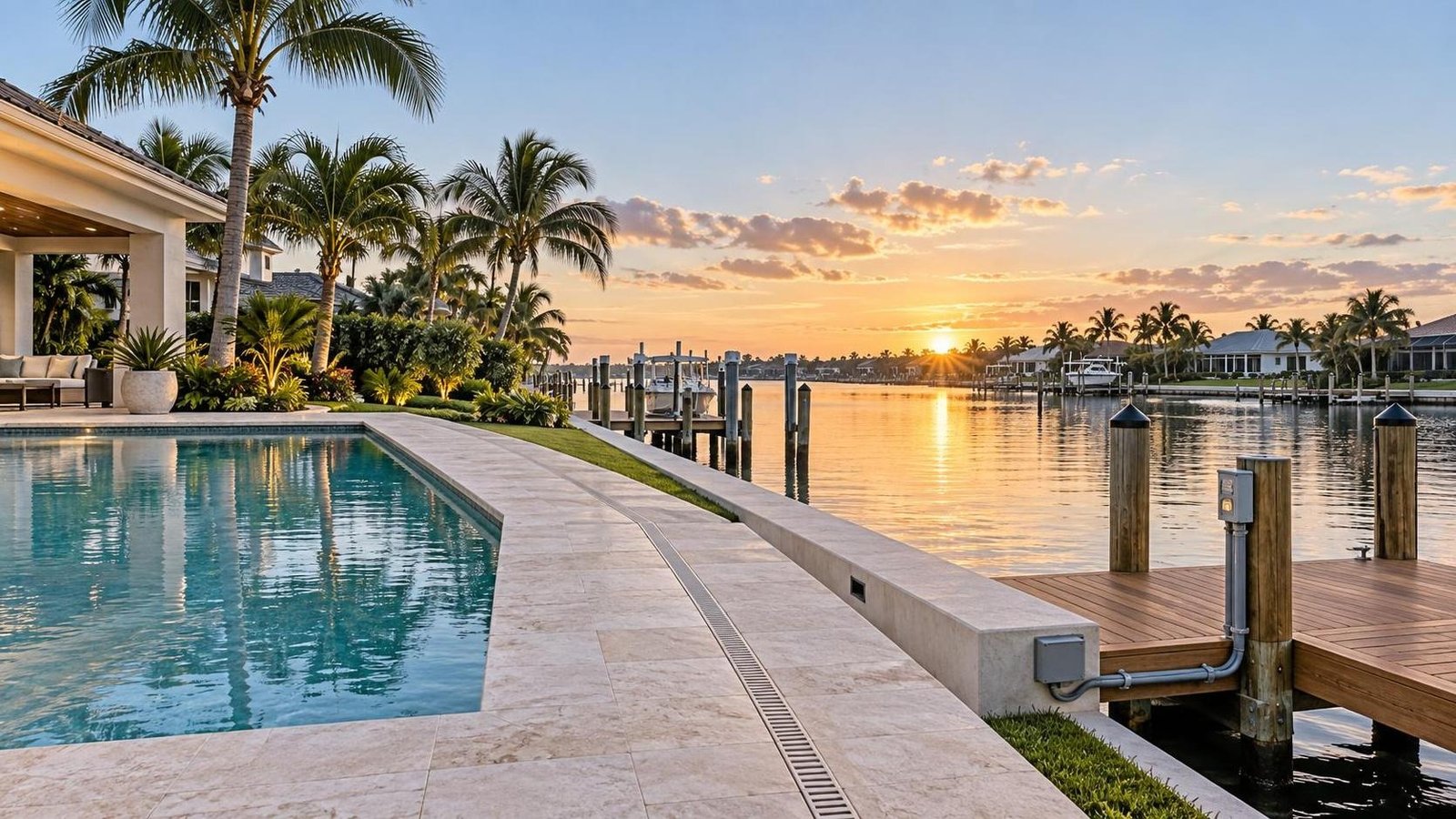
Selling a Merritt Island Canal Home? Document Pool Drainage, Seawall Weeps, and Dock Conduit Together
By Carrie Liotta, Space Coast REALTOR® with REAL Broker | Published September 25, 2026 on 321 Coastal Living
When a pool drain, seawall weep system, and dock conduit share one waterfront edge, a Merritt Island seller should create one coordinated property file before listing. Identify each visible component, match it to permits and contractor records, correct known safety or active drainage problems, and disclose what remains uncertain. Do not let three systems look like one unexplained backyard alteration.
This situation is common enough to deserve attention because waterfront improvements are often completed in different years. A pool or deck may be original. Drainage may have been modified after settlement or heavy rain. Seawall work may have added or changed openings. Dock power may have been routed later. By the time the home is sold, every piece appears at the same waterline even though different contractors, approvals, and maintenance histories may apply.
Buyers do not need a perfect waterfront. They need a truthful map of what they are seeing. When the records are organized, inspectors and contractors can evaluate the property efficiently. When nobody can explain which pipe drains the deck, which openings relieve soil pressure, and where electrical conduit runs, uncertainty turns into broad repair requests.
Start with a site walk, but do not label systems from memory
Walk from the pool equipment to the canal with the survey, permit history, invoices, and any construction plans you have. Photograph each drain, outlet, cleanout, junction box, conduit transition, seawall opening, dock pedestal, shutoff, and patched area. Number the photos and mark approximate locations on a simple copy of the survey.
The purpose is not to diagnose. A seller should not call a pipe a lawful pool discharge or identify a seawall opening’s function without support. Ask the appropriate pool contractor, drainage professional, marine contractor or engineer, and licensed electrical contractor to identify the components within their scope. If they cannot confirm a buried route, record that limitation instead of guessing.
Use the Brevard County building-permit search as a starting point for an unincorporated Merritt Island property. Compare what you find with paid invoices, final inspections, plans, warranties, and the physical improvements. Online records can be incomplete or difficult to interpret, so ask the building department and relevant professionals how to resolve gaps rather than assuming missing search results prove unauthorized work.
Separate the pool-drainage story from the seawall-drainage story
Buyers may see water near the pool and assume it all comes from the same system. Your records should distinguish deck drains, roof downspouts, yard drains, pool overflow or equipment discharge, and any other identified route. Show where each line begins and ends if a qualified professional can establish it.
Document recurring conditions too. Does the deck hold water after ordinary rain? Is there staining at one outlet? Has soil washed out behind the seawall? Have pavers settled? Does the pool equipment area flood? Were drains cleaned, relined, rerouted, or repaired? Include dates, contractor names, scope, and photographs from before and after completed work.
Seawall openings or a drainage system behind the wall may serve a different purpose from moving water off a deck. Ask a qualified marine professional to explain the visible wall, cap, joints, drainage features, erosion, settlement, and any prior repairs. Do not plug, redirect, or cosmetically conceal an opening because a buyer asks what it is. The right professional should determine whether it is functioning, damaged, obsolete, or unrelated to the issue.
Waterfront work may involve more than one authority depending on the scope. The St. Johns River Water Management District permitting page and Brevard County Natural Resources Management are official places to begin questions. A seller should not advertise a repair as permitted or exempt without the documentation that applies to that parcel and work.
Treat dock conduit as electrical infrastructure, not scenery
Conduit running along the waterfront edge may serve dock receptacles, lighting, a boat lift, pumps, controls, or more than one load. The seller file should identify what it serves, the panel and breaker associated with it, the disconnects or shutoffs, installation and repair dates, permits, final inspections, and contractor invoices where available.
The Florida Department of Business and Professional Regulation’s Electrical Contractors’ Licensing Board explains that the board licenses and regulates electrical contractors and describes electrical-contractor scope. Use an appropriately licensed professional to evaluate exposed, damaged, improvised, corroded, or unexplained dock electrical work. Do not open equipment or test waterfront wiring yourself.
If the conduit crosses drainage outlets, runs through the seawall work zone, or was moved during pool construction, ask the electrician and marine contractor to compare their findings. One trade may see a conflict that the other would not evaluate. This is especially important where future access could require moving a line or where water and soil movement have affected supports.
Decide what to repair before photography
I recommend correcting active safety hazards, leaks, failed drainage components, exposed conductors, unstable covers, severe trip hazards, and known defects that a qualified professional identifies as needing prompt work. Obtain the appropriate permits and final documentation for the repair. Photograph the completed work before furniture and landscaping hide it.
Cosmetic work should come after function. New mulch, fresh paver sand, and paint can improve presentation, but they should not cover erosion, staining, damaged conduit, or recurring settlement that still needs evaluation. A buyer who discovers freshly concealed evidence will question the rest of the file.
When a permit or contractor trail is missing, the answer is not always immediate replacement. Sometimes the correct path is a professional evaluation, permit-record research, an after-the-fact process if available, or a written estimate. The response depends on the component and jurisdiction. My recent article on unpermitted dock electrical work in Merritt Island explains why a licensed estimate can clarify negotiations but does not automatically cure a safety or permit issue.
Build one timeline instead of three folders
A coordinated timeline is the most useful document you can give the listing team and, when appropriate, the buyer. It might show:
- pool, deck, and enclosure installation or major renovation dates;
- drain cleaning, repair, or rerouting dates;
- seawall, cap, tieback, erosion, or drainage evaluations and repairs;
- dock, lift, lighting, receptacle, conduit, and panel work;
- storm, flood, or high-water events that led to inspections or repairs;
- permits, finals, invoices, warranties, and contractor contact information; and
- remaining unknowns stated plainly.
Do not overstate what a document proves. An invoice for deck-drain cleaning does not certify seawall condition. An electrical permit does not prove the pool drainage route. A marine inspection does not approve electrical work. Label each record by scope and date so the buyer can see where professional responsibility begins and ends.
This same organizational method helped in my guide to dock electrical, generator, and lift shutoff records. The goal is a coherent system map, not a stack of receipts that creates more questions.
Show access for future inspection and service
Trim enough vegetation for professionals to view the seawall edge and trace visible routes safely. Keep junction boxes, shutoffs, pool equipment, drain inlets, and dock controls accessible. Remove stored items that block the side yard. Confirm gates open and keys are available.
If a pool cage, hardscape, AC unit, landscaping, or utility line constrains waterfront access, do not hide that. Document the actual path and any prior method contractors used. A buyer may evaluate whether future work can occur from land or water, whether restoration would be needed, and whether an easement or neighbor permission is involved.
My article about Merritt Island side-yard waterfront access explains why gates, pool enclosures, and dock approaches can materially affect future service even when the backyard looks polished.
What should be disclosed?
Discuss known facts and defects with your real estate professional and complete the seller disclosure accurately. Include recurring drainage, prior washout, repaired settlement, seawall movement or recommendations, electrical problems, permit issues, storm damage, insurance claims, and work performed by unlicensed people when those facts are known and material. Do not guess at dates or causes.
If a professional gave an opinion that limited the scope or recommended further investigation, preserve that language. Do not turn “visible areas appeared serviceable” into “the seawall is perfect,” or “circuit energized at inspection” into “all dock electrical is code compliant.” Accurate limits protect the credibility of the larger file.
How documentation changes the buyer’s inspection period
A prepared seller does not eliminate inspections. Preparation makes them more focused. The buyer can hand the timeline to the home inspector, pool contractor, electrician, and marine professional. Each can verify the part within that person’s scope and identify contradictions quickly.
That can reduce three common problems: duplicate testing, delayed access to records, and broad requests based on uncertainty. It also helps the seller respond with facts if one inspector calls a component by the wrong name or assumes two systems connect when they do not.
Leave enough contract time for waterfront specialists. If the buyer cannot schedule a marine or electrical evaluation promptly, missing seller records can magnify the pressure. A listing package assembled before the first showing gives every party a cleaner path.
My pre-listing waterfront-edge checklist
- Pull available permits, plans, surveys, finals, invoices, and warranties.
- Create a photo key and approximate site map of drains, wall openings, conduit, shutoffs, and controls.
- Have the appropriate pool, drainage, marine, and electrical professionals identify conditions within their scopes.
- Correct known active hazards and failures; document every completed repair.
- Keep inspection and service access open.
- Prepare one dated timeline and label the limits of each report.
- Review known facts and disclosure language with the listing team.
- Price remaining uncertainty instead of burying it under cosmetic work.
Bottom line
When pool drainage, seawall drainage features, and dock conduit meet at one Merritt Island waterfront edge, buyers need a coordinated explanation. Organize the records, bring in the right licensed or qualified professionals, repair active problems, and state unknowns honestly. The cleanest sale comes from clarity, not from pretending interconnected systems are simple.
If you are preparing a Merritt Island canal home for sale, I can help you build a practical document list and presentation plan before photographers and inspectors arrive. Reach out for a no-pressure conversation with Carrie Liotta, Space Coast REALTOR® with REAL Broker. Your next chapter starts here.
