

What Should Satellite Beach Sellers Document When a Pool, Shower, and New Fence Changed Side-Yard Drainage?
By Carrie Liotta, Space Coast REALTOR® with REAL Broker | Published September 21, 2026
Gather the permits, surveys, contractor invoices, drainage plans, fence approval, pool records, and dated after-rain photos before listing. If water changed course after the work, have the side yard evaluated and correct active problems. Buyers do not need a promise that it never holds water; they need a clear, accurate history of what changed and how it performs.
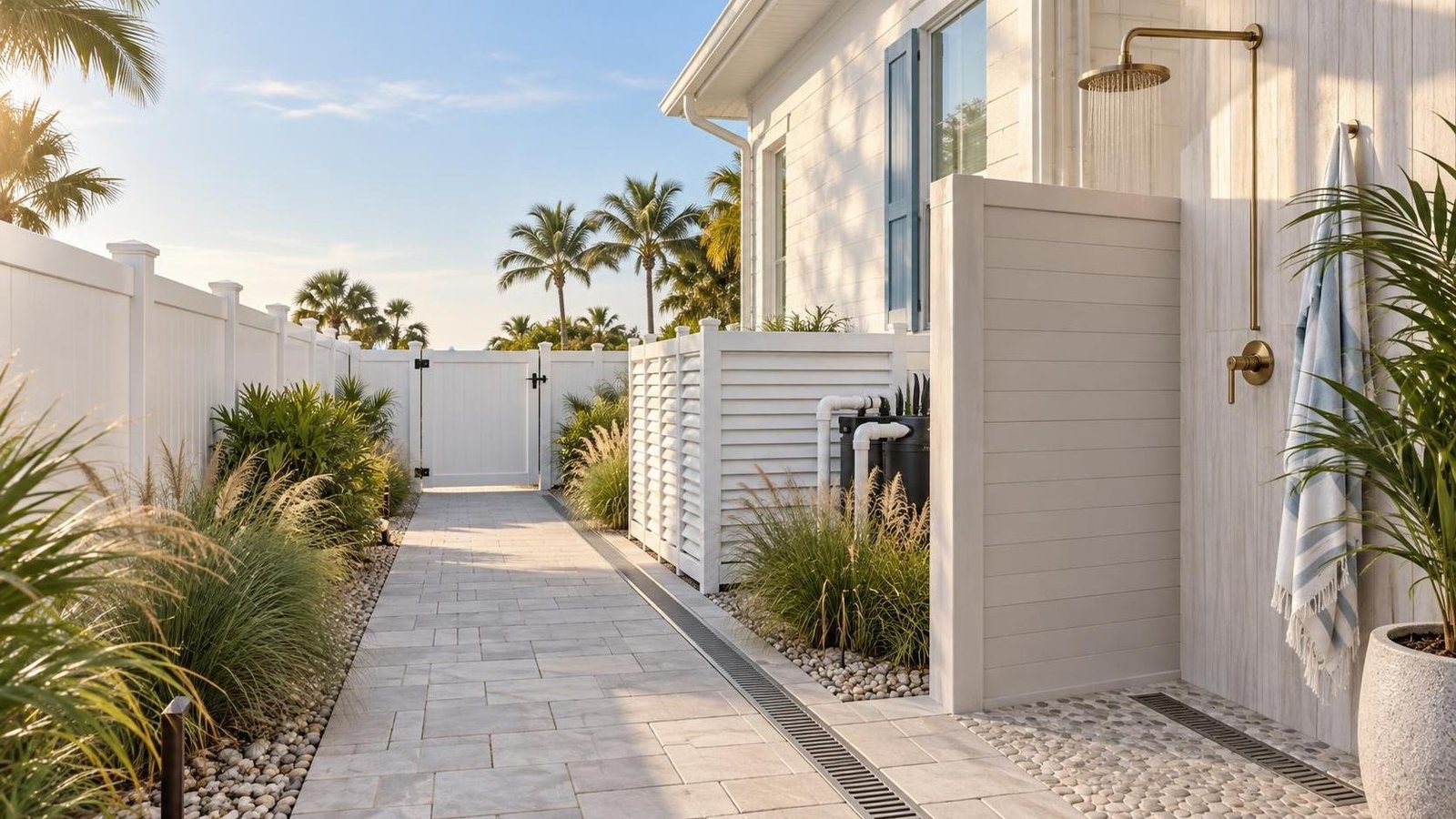
Side yards in Satellite Beach often carry more responsibility than their width suggests. The same strip may hold pool equipment, an outdoor shower, roof downspouts, air-conditioning lines, a gate, utility access, trash carts, and the route used to move beach gear. Add a newer fence or pavers, and a small change in grade or discharge direction can send water toward the house, pool deck, neighbor, or street.
For sellers, the goal is not to create a glossy “drainage package.” It is to replace uncertainty with useful evidence. A buyer who can see the permitted work, maintenance history, storm photos, and professional repair invoice can evaluate the property more calmly than a buyer who discovers fresh soil, a sealed fence gap, and unexplained staining during inspection.
Build a timeline of every change to the side yard
Start with dates. When was the pool installed or resurfaced? When did the outdoor shower appear? Was the fence replaced in the same project or later? Were gutters, downspouts, pavers, drains, a pool heater, or landscape beds added? Did any storm or heavy-rain event lead to a repair?
For each change, gather the contract, scope, permit, final inspection, warranty, product information, survey or site plan, and payment record. If the work did not require a permit, keep the written contractor explanation and invoice. If you are unsure, confirm the requirement with the current city office rather than guessing.
The City of Satellite Beach website currently directs residents to Community Development, Public Works, Online Permits, city forms, and public-records resources. Because websites and record systems change, use the city’s current navigation or contact information to locate the authoritative file for the property.
Map where every source of water goes
Draw a simple site sketch using the survey as a base. Mark the house wall, fence, gate, pool deck, equipment pad, outdoor shower, downspouts, drains, swales, cleanouts, utilities, and discharge points. Use arrows to show the intended flow. This is not an engineered drainage plan unless a qualified professional prepares it; it is an index that helps buyers and inspectors understand the file.
Separate normal rain runoff from other water. Roof runoff may enter a downspout or splash block. Pool equipment may discharge during maintenance. An outdoor shower may send water to a drain or approved surface route. Irrigation overspray may keep one corner wet. A condensate line may add a steady drip. When all of those meet in one narrow corridor, the seller should know which is which.
The U.S. EPA explains that stormwater runoff flows over roofs, streets, and other impervious surfaces rather than soaking into the ground, and that runoff can carry sediment, oils, chemicals, and other pollutants into coastal waters. That national program does not decide a Satellite Beach parcel question, but it explains why directing and maintaining runoff responsibly matters in a barrier-island community.
How a fence can change water movement
A fence should not be treated as only a privacy feature. The installation may disturb soil, add a continuous bottom edge, alter a gate threshold, damage a drain, or trap landscape debris. A masonry base or tightly fitted panels can affect movement differently from an open-bottom fence.
Pull the fence permit or approval, contractor plan, property survey, and HOA architectural decision if one applies. Compare the approved location with the installed line. Look for buried swale areas, drainage easements, utility access, and places where soil was added to close gaps. Do not remove soil or cut the fence as a guess; have the correct professional determine the repair when flow is not working.
Photograph both sides of the fence where lawful and practical, especially the gate, downspouts, drains, and low points. If a neighbor’s property is visible, avoid presenting assumptions about where their water comes from. Describe only what you know about your property and the work completed there.
Document the outdoor shower honestly
An outdoor shower is part of the beachside lifestyle, but a buyer will want to know whether it has hot and cold water, how it drains, who installed it, and whether plumbing and electrical work were permitted. Gather fixture information, shutoff location, winter or storm procedures if any, invoices, and repair history.
Show where the discharge goes. Soap, sand, and hair can create a different maintenance concern from a simple freshwater rinse. If the shower drains across pavers toward the neighbor or pools near the foundation, address that before photography rather than hiding the wet area with mulch.
My related guide to Satellite Beach side yards where showers, pool equipment, and drainage share one route explains how buyers will test this setup.
Pool drainage needs records from normal maintenance and heavy rain
Clarify whether “pool drainage” means deck runoff, an overflow line, equipment discharge, filter cleaning, or deliberate lowering of the pool. Identify the equipment, valves, drains, and service provider. Keep the pool contractor’s written instructions and service invoices with the listing file.
Buyers will look for staining on the house, fence, deck, and equipment pad; erosion under pavers; persistent algae; corroded fasteners; settled soil; and water paths around electrical equipment. Those signs do not prove a failure, but they are reasons to ask a qualified pool, drainage, electrical, or building professional for an opinion.
If the yard performs well, dated photos after ordinary rain and a heavier event can help demonstrate what was observed. Keep the original files with date information. Do not label one dry photo as proof that flooding is impossible.
Flood-zone information and yard drainage answer different questions
A seller may be tempted to say, “We are in this flood zone, so the side yard is fine,” or “The house is not in a high-risk zone, so drainage does not matter.” Those conclusions do not follow. FEMA mapping describes mapped flood hazards; it does not certify that a fence, downspout, pool deck, or neighboring grade will handle a particular rain event.
The FEMA Flood Map Service Center is the official public source for NFIP flood-hazard products. Include the current map panel or buyer-facing link when useful, along with any elevation certificate and flood-policy information the seller can lawfully share. Keep that material separate from the contractor report and side-yard photos.
This distinction makes the listing more credible. You are not using a broad map to answer a narrow physical question.
When should the seller call a professional before listing?
Call before listing when water reaches the home, stands for an extended period, flows toward a neighbor, undermines pavers or fence posts, crosses electrical equipment, repeatedly leaves sediment, or has caused prior intrusion. Also call when the installed work does not match the paperwork or the seller cannot identify where a drain leads.
The right professional depends on the problem. A licensed drainage or site contractor may evaluate grade and conveyance. A pool contractor may explain equipment discharge. A plumber may address the shower drain. An electrician should evaluate wet-area electrical concerns. An engineer may be appropriate for a complex site or structural question. Ask the city which permits or reviews apply before changing the system.
If there has been prior water intrusion or a repair, disclose it accurately and keep the inspection, drying, remediation, and reconstruction documents. My guide to documenting prior water intrusion and drainage repairs before listing gives sellers the broader file checklist.
Do not create a cosmetic fix that erases evidence
Fresh mulch can make the yard attractive, but it should not cover a drain, hide erosion, or raise soil against the wall. New gravel should not block a swale. Pressure washing may remove normal staining, but it should not be used to disguise an active pattern without correcting the source.
Before photography, clean debris from lawful drains and gutters, trim vegetation for access, secure loose fence components, label shutoffs, and organize hoses and equipment. Then photograph the actual route. Buyers appreciate a side yard that is understandable more than one that looks untouched.
What belongs in the listing-day drainage file?
- Current survey and any pool or improvement site plans.
- Pool, shower, fence, paver, gutter, drain, and electrical permits with finals.
- HOA approvals where applicable.
- Contracts, invoices, warranties, and service records.
- A dated timeline of changes, observed issues, and repairs.
- After-rain photos from more than one event, described accurately.
- Professional evaluations and paid repair invoices.
- Flood map and elevation material kept separate from site-drainage evidence.
- Written instructions for pool discharge, outdoor-shower shutoff, and drain maintenance.
Also review the earlier work through the buyer’s insurance lens. A newer fence or shower does not replace strong roof, opening-protection, and electrical documentation. My post on Satellite Beach drainage records after impact-door and gutter work shows how exterior upgrades can create one connected due-diligence story.
How to discuss the side yard with buyers
Use specific, limited language. Say what was installed, when, by whom, under which permit, what repair followed, and what you personally observed. Avoid “never floods,” “perfect drainage,” or “fully permitted” unless the records and qualified professionals truly support the statement.
If a question remains open, identify it. A buyer may still proceed when the uncertainty is visible and priced. Surprises during inspection are more damaging than an honest explanation at the start.
Turn a complicated side yard into a clear property file
When pool drainage, an outdoor shower, and a newer fence share a Satellite Beach side yard, the seller’s best preparation is a timeline, a map, permits, invoices, after-rain evidence, and professional correction of active problems. That does not guarantee every storm outcome. It shows responsible ownership and gives the buyer a fair basis for inspection.
If you are preparing a beachside home for sale, I can help you organize the questions before photography and decide which records or evaluations will make the listing stronger. I’m Carrie Liotta, Space Coast REALTOR® with REAL Broker, and I publish 321 Coastal Living for practical Brevard County guidance. Reach out for a no-pressure conversation about selling your Satellite Beach home. Your next chapter starts here.