

What Should Palm Bay Sellers Document When Solar, Septic, and a Workshop Share One Side Yard?
By Carrie Liotta, Space Coast REALTOR® with REAL Broker | Published September 15, 2026
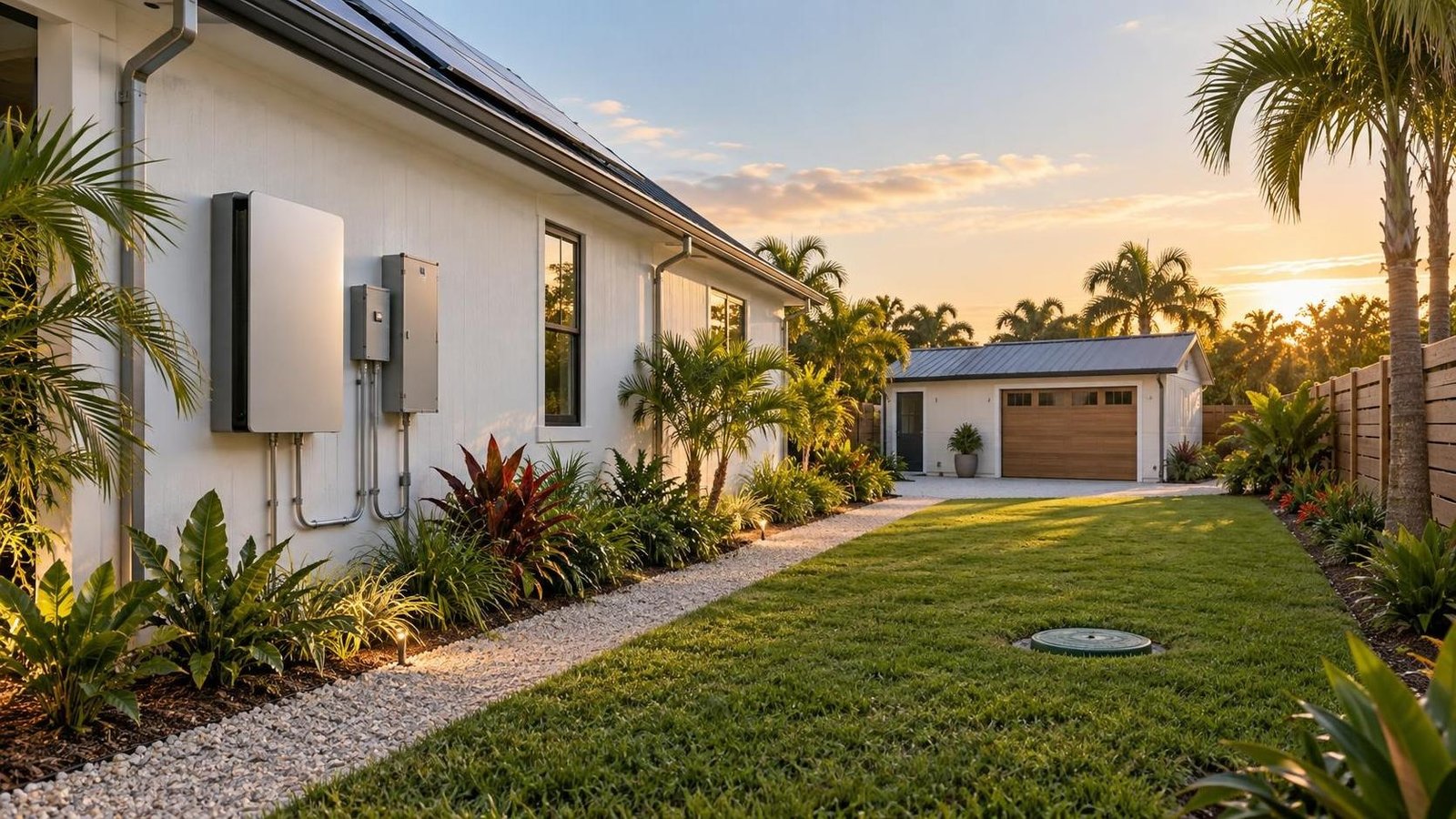
A Palm Bay seller should create one coordinated site file when a solar battery, septic drainfield, and detached workshop use the same side of the property. Buyers need more than three separate receipts. They need to understand where every component sits, whether it was permitted, who owns or finances it, how professionals can service it, and whether one improvement blocks access to another.
My recommendation is to begin with a current survey or accurate site plan, then layer the septic tank, drainfield, replacement area, battery equipment, disconnects, conduits, workshop footprint, utilities, easements, gates, and service route. Do not promise that a buyer can add a pool, driveway, room, or larger shop until the appropriate professionals review the actual parcel.
Why these three systems must be reviewed together
Solar equipment can affect title, lending, electrical capacity, roof work, and insurance. The battery adds equipment location, clearance, ventilation, protection, and emergency-shutoff questions. Septic requires tank and drainfield access plus room for repair or replacement. A workshop raises structure, electrical, use, setback, anchoring, and insurance questions.
When they cluster along one side yard, the interactions matter. A workshop slab may limit septic replacement space. A narrow gate may prevent a septic contractor from reaching the tank. Battery equipment may sit where a buyer imagines trailer access. Buried electrical conduit may cross a future excavation route.
The seller does not need to design the next owner’s projects. The seller should make the existing condition clear enough that the buyer can obtain informed professional advice before the contract deadlines.
Start with the solar ownership and payoff file
Gather the purchase or lease agreement, financing documents, current balance or paid-in-full evidence, installer information, equipment list, permits, final inspections, utility interconnection records, warranties, monitoring transfer process, production history, service invoices, and any roof work connected to the installation.
Fannie Mae’s guidance on properties with solar panels distinguishes owner-owned panels from leased equipment, separately financed systems, power-purchase agreements, and certain PACE obligations. That distinction matters because the buyer’s lender and title professionals must understand ownership and lien position.
If the system is financed, request payoff and transfer information early. Do not advertise the panels or battery as “free and clear” until the documents support it. Do not assume the buyer can or will assume an agreement. If the system is owned, document that clearly rather than relying on one line in an old sales contract.
The battery needs its own records
A battery is not just another appliance. Identify manufacturer, model, serial number, capacity, installation date, installer, permit, final inspection, warranty, service history, shutdown procedure, and whether it is included in the real-property sale. Note whether it serves the whole home or selected loads, but avoid making runtime promises that depend on demand, charge, age, weather, and configuration.
Have a qualified electrical or solar professional address condition and code questions. Confirm the disconnects and labels are intact and that the installation is not obstructed by storage. Keep the area accessible for an inspector and do not stage boxes, paint, fuel, or yard chemicals around the equipment.
Ask the seller’s insurance professional how the equipment is described on the current policy and what documentation a buyer may need for a new quote. The answer can vary by equipment and carrier. A clean permit does not guarantee every insurer will treat the system the same way.
Map the septic tank, drainfield, and future service route
Gather the original permit or available septic records, pump and inspection reports, repair history, contractor invoices, and any documents showing tank and drainfield location. The Florida Department of Health’s septic overview explains that onsite sewage systems are managed through permitting and inspection and directs owners outside specified DEP-managed counties to the local county health department for septic permitting.
Do not guess from greener grass. A qualified septic professional should verify the components and condition. Show how a pump truck and service crew can reach the tank without driving over the drainfield, battery conduit, workshop slab, or a fence opening that is too narrow.
The replacement area is especially important when future improvements are part of the buyer’s plan. A seller should not state that a pool, addition, or driveway “fits” merely because open grass remains. Soil, setbacks, system design, utilities, easements, and current rules all affect feasibility.
Build a complete workshop file
For the detached workshop, collect building, electrical, mechanical, plumbing, driveway, and other permits that apply; final approvals; plans; contractor invoices; warranties; anchoring information; and association approval if there is one. Identify how the space is used today without calling it living area, a bedroom, or an accessory dwelling unit unless the legal approvals support that description.
The City of Palm Bay’s official site provides current access to permits and inspections, planning, zoning, GIS, utilities, flood information, and other city services. Use the correct city department for the property and project. An older missing online record deserves follow-up; it is not automatic proof of unpermitted work.
Inspect the roof, slab, doors, windows, anchoring, termite evidence, water intrusion, ventilation, and electrical service. If large tools or business equipment are excluded from the sale, list those exclusions clearly. If the building has air conditioning, compressed air, plumbing, or a high-amperage circuit, include the supporting records.
Draw the service-access map
The most useful document may be a simple exhibit based on the survey. Mark the gate width, septic access, drainfield, replacement area identified in authoritative records or by a professional, workshop doors, battery clearances, electrical disconnects, conduits, well equipment if present, drainage swales, and utility or drainage easements.
Do not turn the exhibit into a new warranty. Label the source and date for each feature. If the septic location comes from a contractor’s field visit rather than a recorded plan, say so. If buried conduit depth or path is unknown, mark it unknown and arrange professional locating as appropriate.
Ask each specialist whether another component limits service. Can the septic company pump without moving the battery equipment? Can the solar technician reach the disconnect without entering the workshop? Can the workshop electrician isolate power without disturbing the septic area? This coordination is what buyers cannot learn from separate invoices.
Resolve conflicts before photography
Move ordinary storage away from the battery, electrical panels, workshop exits, tank access, and inspection points. Repair active leaks, exposed wiring, damaged conduit, broken gate hardware, standing-water problems, and obvious trip hazards through qualified professionals. Do not conceal access lids or equipment with landscaping.
If records reveal a possible encroachment, permit gap, failed inspection, or improvement over a septic component, address it before marketing. That may require city staff, the health department, a surveyor, engineer, contractor, septic professional, title professional, insurer, or attorney. The listing period is not the time to improvise a legal conclusion.
My seller guide to organizing solar, septic, and workshop documents covers the three separate files. This side-yard question is the next step: make sure the records also explain how those improvements coexist on the land.
Prepare for buyer financing and insurance
Send the solar agreement and payoff status to the appropriate transaction professionals early. Give the insurance agent accurate descriptions of the battery and detached structure. Provide septic records and workshop permits during the buyer’s due-diligence period, subject to the contract and professional guidance.
A lender may care about solar debt, lien priority, property condition, permitted improvements, or marketability. An insurer may care about electrical work, battery equipment, roof penetrations, detached-building use, and replacement cost. A septic inspector has a different job. One professional’s approval does not replace another’s.
Buyers can see the same transaction from the other side in my guide to verifying solar payoff, septic space, and a workshop before closing. A seller who anticipates those requests protects momentum and reduces last-minute surprises.
Market what is verified
The listing can describe an owned solar system, permitted battery, detached workshop, documented septic service, or useful side-yard access only to the extent the file supports those statements. Avoid guaranteed energy savings, battery runtime, septic life, workshop business use, insurability, or room for a future project.
Instead, tell a credible ownership story: records available, equipment accessible, improvements professionally serviced, and the site organized for inspection. Buyers value the feature more when they can see how it works without accepting a seller’s assumptions.
For buyers who need expansion space, link them to the parcel-specific limits rather than a promise. My article on preserving septic replacement area before adding a workshop or pool explains why open yard is not automatically buildable yard.
My pre-listing checklist
- Obtain a current survey or accurate site plan and mark all three systems.
- Verify solar and battery ownership, payoff, permits, final inspections, warranties, service, and transfer steps.
- Locate septic records, tank, drainfield, access lids, service route, and professionally identified replacement area.
- Collect workshop permits, final approvals, plans, electrical records, anchoring, use, and insurance information.
- Measure gates and confirm contractors can reach each system without crossing another vulnerable component.
- Mark easements, drainage features, buried utilities, and unknowns accurately.
- Clear inspection access and correct active safety or condition problems through qualified professionals.
- Coordinate early with title, lender, insurance, septic, electrical, solar, survey, and legal professionals as needed.
- Describe verified facts without promising energy savings, septic life, or future construction approval.
Bottom line
When solar storage, septic components, and a detached workshop share one Palm Bay side yard, the seller’s best preparation is a coordinated map backed by ownership, permit, condition, and service records. The buyer needs to know not only that each feature exists, but that each can be operated, inspected, repaired, and transferred without colliding with the others.
If you are preparing a Palm Bay property with several site improvements, I can help you organize the listing file and identify the questions buyers, lenders, insurers, and inspectors are likely to raise. Reach out for a no-pressure conversation about selling your Brevard County home with REAL Broker. Your next chapter starts here.
