
How Should Palm Bay Buyers Verify Solar, Septic, and a Workshop Before Closing?
By Carrie Liotta, Space Coast REALTOR® with REAL Broker | Published September 13, 2026
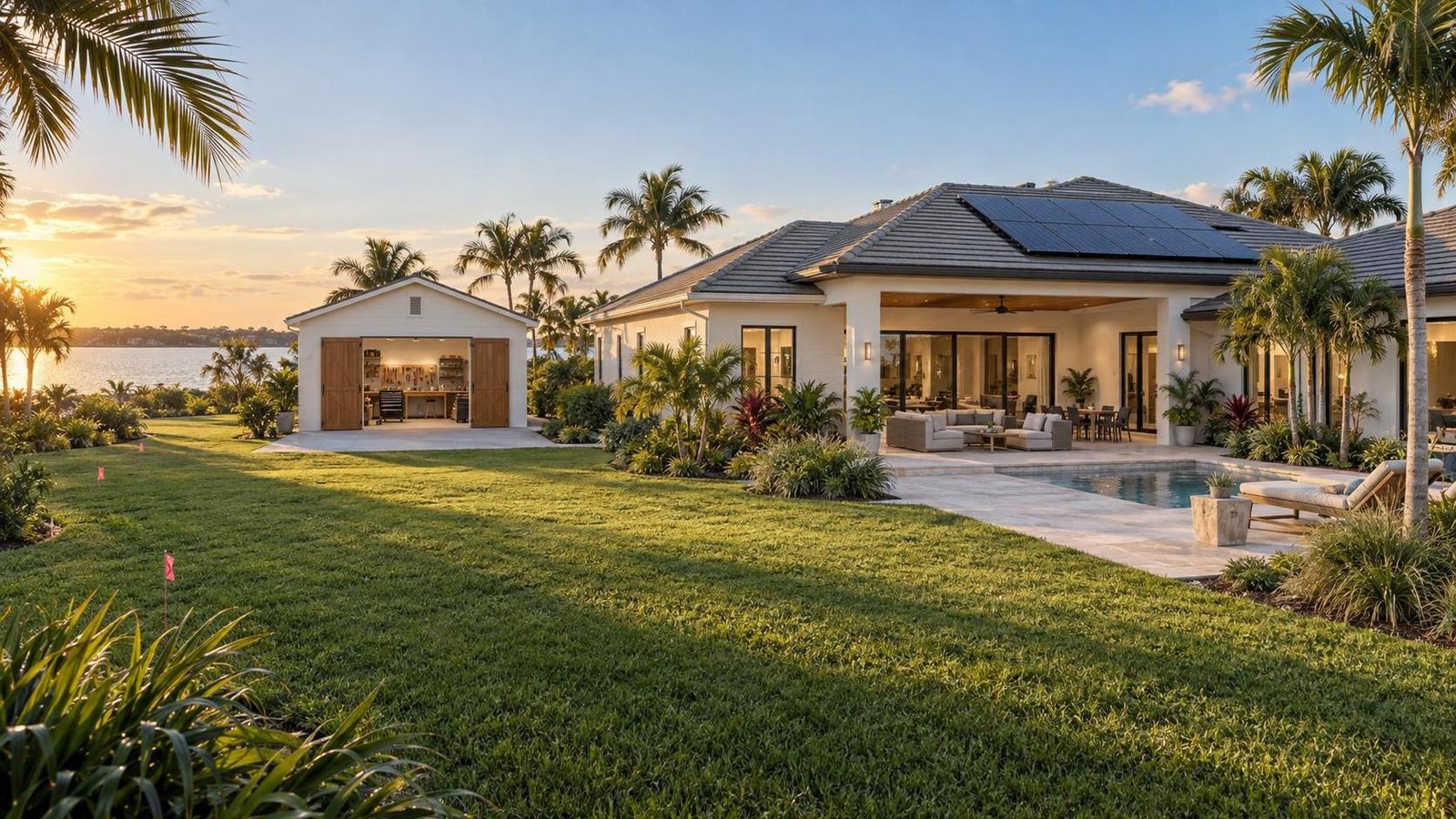
A Palm Bay buyer should treat solar payoff, septic replacement space, and workshop insurance as three separate due-diligence tracks, then connect them through the survey, title, lender, and insurance file. Before closing, obtain written solar ownership and payoff evidence, septic records plus a site-based inspection, and workshop permits, final inspections, electrical review, valuation, and explicit coverage confirmation. A seller’s assurance that everything “comes with the house” is not enough.
These properties can be excellent fits for buyers who want lower electric use, a larger non-HOA lot, and room for tools, projects, or storage. They also concentrate several issues that different professionals handle. My job is to keep those conversations moving early enough that the buyer can make a real decision before the inspection, financing, title, or insurance deadline.
Open three files on the first day under contract
Create folders for solar, septic, and workshop rather than mixing every document into one inspection email. Give each track an owner, a deadline, and a required closing result.
- Solar: title professional, lender, insurer, installer or servicer, utility, and seller.
- Septic: qualified septic contractor or inspector, local health department or applicable agency, surveyor, and seller.
- Workshop: city building department, general inspector, licensed electrician or other specialist, appraiser, lender, insurer, and surveyor.
Do not wait for the general inspection report to begin. Payoff statements, older permits, septic sketches, and insurance underwriting can take time. The buyer needs enough days to review an answer, request a correction, and decide what it means.
Solar: prove ownership, debt, and transfer
Ask for the original solar contract, financing or lease documents, most recent statement, payoff quote valid through the expected closing date, proof of any earlier payoff, warranties, installation permit and final, interconnection approval, utility bills, monitoring reports, and transfer instructions. Confirm whether a battery is included and documented separately.
The Fannie Mae Selling Guide’s solar section distinguishes owned panels, leases, separately financed panels, power-purchase agreements, and PACE financing. It says lenders are responsible for determining ownership and financing and must review title for related debt. It also explains that unclear ownership can prevent the appraiser from giving the panels value.
That means a zero-dollar-looking utility bill does not settle the financing question. The title company should identify any recorded lien or relevant filing, the lender should approve the structure, and the closing agent should confirm how any required payoff will occur. If the seller must pay the obligation at closing, get the amount and release process in writing.
Review system performance separately. The U.S. Department of Energy’s Homeowner’s Guide to Solar emphasizes that no single solar solution fits every household. Compare at least a year of production and utility use when available, understand the buyer’s likely consumption, verify monitoring access, and inspect roof condition and penetrations. Confirm who pays to remove and reinstall panels when future roof work is needed.
My guide to solar ownership, roof age, insurance, and seller disclosure on the Space Coast outlines the documents that keep an energy feature from becoming a title surprise.
Septic: locate every component and the future option
Ask for the original permit, site plan or sketch, tank and drainfield location, capacity, repair permits, pumping and service records, inspection reports, and any known failure or replacement history. Then have the system evaluated by an appropriate professional within the contract period. A home inspection does not automatically provide a complete septic assessment.
The Florida Department of Health septic-systems page explains that onsite sewage treatment and disposal systems are regulated through permitting and inspection and that, outside the counties where DEP directly manages permitting, the local county health department continues to handle septic permits and inspections. Brevard buyers should verify the current local process rather than relying on a generic statewide checklist.
Walk the site with the survey and available septic sketch. Locate the tank, drainfield, well if present, workshop, driveway, pool, sheds, easements, swales, trees, and proposed expansion areas. Ask a qualified professional where a repair or replacement system could legally and physically go if the current drainfield fails. Do not call an open patch of grass “replacement space” until setbacks, soil, elevation, access, and current rules have been considered.
A workshop, widened drive, pool plan, or solar battery enclosure may compete for the same usable yard. My article on reserving septic replacement space before adding a Palm Bay workshop or pool explains why the empty part of a large lot may already have a future job.
Workshop: verify legality before evaluating usefulness
Collect the building permit, approved plans, final inspection, electrical and mechanical permits, slab or foundation documents, roof information, contractor invoices, and any zoning approval. Compare the approved dimensions and use with the structure that exists. A permit for a storage shed does not automatically support a finished office, auto shop, dwelling, or commercial use.
The City of Palm Bay Building Department provides current permitting and inspection information and notes that electronic submission and document access run through its Digital Plan Room. Research the specific property with the city; do not use the county search for a city-issued permit and assume no record exists.
Have the general inspector evaluate visible structure and condition, then bring in licensed specialists for electrical, HVAC, plumbing, roof, lift, or other systems outside that scope. Workshop electrical deserves particular attention: panel capacity, feeders, grounding, receptacles, lighting, high-load equipment, extension-cord use, and unpermitted circuits can affect safety and insurance.
Measure doors, ceiling height, interior clearance, vehicle turning, trailer access, drainage, and the route from the street. Verify fence and driveway approvals, easements, setbacks, association restrictions if any, and whether the buyer’s intended hobby or business use is allowed. A beautiful detached building may add little value if the buyer cannot lawfully use it as planned.
Insurance must name the structure and intended use
Send the insurer photographs, measurements, permit information, replacement features, electrical details, distance from the house, construction type, roof age, and intended use. Ask in writing whether the workshop is covered as an “other structure,” whether limits are sufficient, and whether tools, equipment, business property, vehicles, or commercial activity require different coverage or are excluded.
Do the same for solar panels and any battery. Ask how the carrier treats roof attachments, replacement cost, wind or hail damage, and detached equipment. Never assume the seller’s policy transfers or that the buyer will receive the same terms. Obtain a property-specific quote and underwriting acceptance before the insurance deadline.
The appraisal is a separate question. A permitted workshop may have contributory market value, but the buyer should not assume construction cost equals appraisal value. The lender needs accurate information about the improvement and solar structure, and the appraiser needs appropriate market evidence.
Use one survey to connect the three tracks
The updated survey should show parcel boundaries, easements, the home, workshop, driveway, and other improvements. Compare it with the septic plan and solar equipment locations. Look for structures crossing setbacks, workshop access over an easement, battery equipment near restricted areas, or a drainfield under a parking expansion.
If the survey, permit file, and physical property disagree, do not choose the most convenient version. Ask the appropriate professional to reconcile the difference. An old survey is useful history, but it may not show a later workshop, driveway, fence, solar equipment, or utility change.
Define what “resolved before closing” means
Each issue needs evidence, not a promise:
- Solar resolved: lender and title accept the ownership structure; payoff and release steps are documented; transfer forms and monitoring access are ready.
- Septic resolved: current inspection findings are acceptable; records and location are understood; repair risk and replacement-space questions fit the buyer’s plan.
- Workshop resolved: permit and final records match the building; specialist concerns are addressed or priced; zoning and access support intended use; insurer and lender accept it.
If a repair or payoff will occur at closing, the contract and settlement statement should reflect the agreed treatment. If a permit must be closed, leave time for the responsible office and inspections. If an insurer will not cover the intended use, a seller credit does not solve that functional problem.
For the seller-side mirror of this process, see what Palm Bay sellers should gather for a property with solar panels, septic service, and a permitted workshop.
My final 72-hour review
Three business days before closing, I want the team to confirm the current solar payoff and release instructions, title requirements, lender approval, insurance binder, septic documents, workshop records, final walk-through plan, and every repair receipt. Test solar monitoring access, workshop power and doors where permitted, visible plumbing fixtures, and the property condition allowed by the contract.
Check that the seller has not removed equipment included in the sale or left hazardous materials behind. Confirm keys, remotes, gate controls, solar manuals, panel labels, septic location information, and workshop access. The final walk-through verifies agreed condition; it is not the time to begin research that should have started during inspection.
Bottom line
A Palm Bay home with solar, septic, and a workshop can deliver exceptional utility, but each feature must survive a different review. Prove solar ownership and payoff, preserve a credible septic future, verify the workshop’s permits and use, and obtain explicit lender and insurance acceptance before closing.
If you are comparing feature-rich Palm Bay properties, I can help coordinate the right questions and deadlines without pretending one inspection answers everything. Reach out for a no-pressure conversation about Brevard County homes with REAL Broker. Your next chapter starts here.