

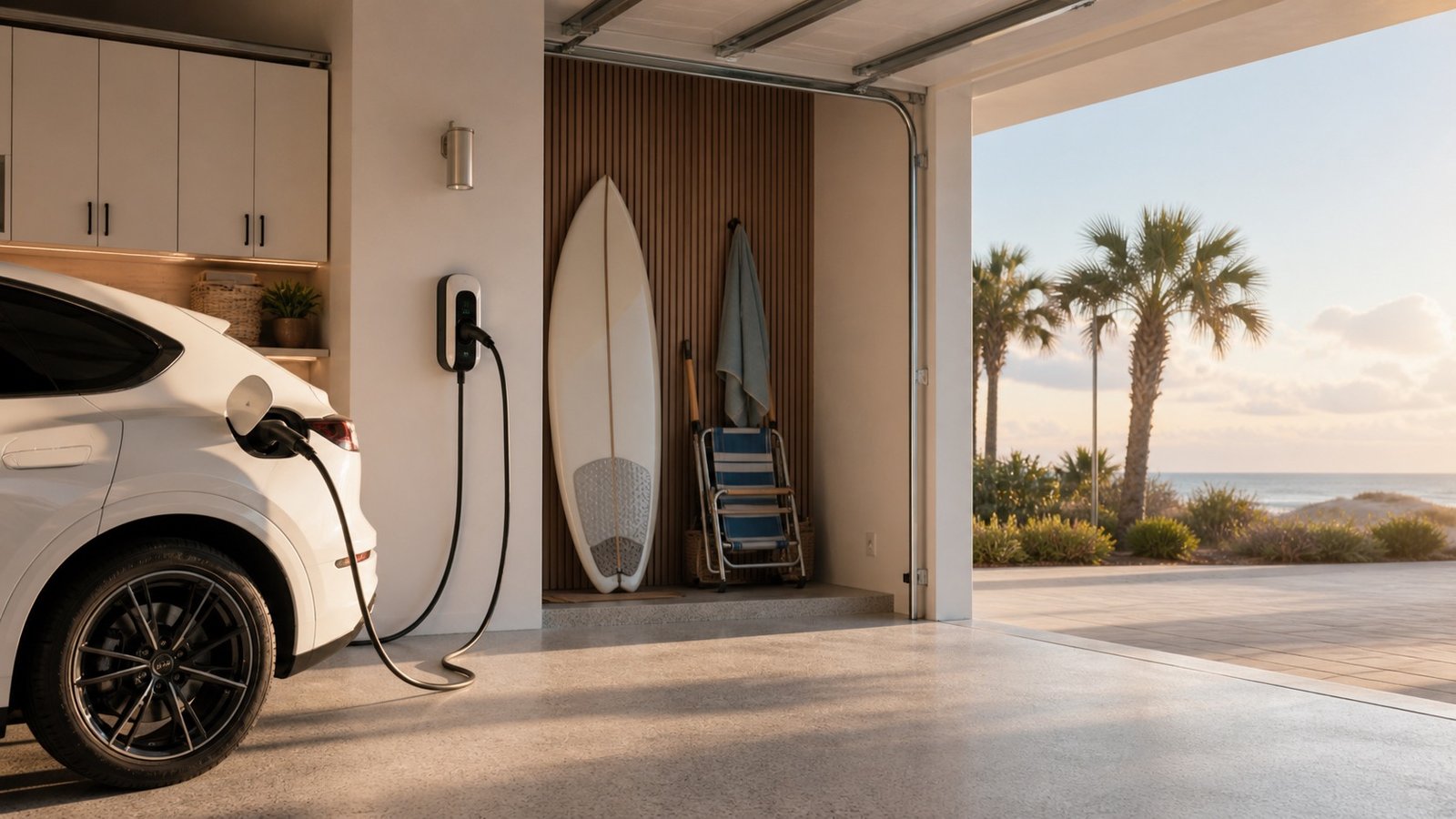
Which Brevard County Neighborhoods Work Best for Buyers Who Need EV Charging, Garage Storage, and Lower Insurance Risk?
By Carrie Liotta, Space Coast REALTOR® with REAL Broker | Published August 12, 2026
The best Brevard County neighborhoods for buyers who need EV charging, real garage storage, and lower insurance risk are usually not the flashiest searches. I would start with newer or well-documented homes in West Melbourne, Viera-adjacent Rockledge, selected Melbourne neighborhoods, parts of Palm Bay with public utilities and newer construction, and some established Merritt Island or Suntree homes where the garage and insurance file are stronger than the listing photos alone suggest.
The direct answer is this: do not shop for “EV-friendly” as a lifestyle label. Shop for electrical capacity, garage layout, roof age, wind mitigation, flood zone, driveway usability, HOA rules, and daily routes. A home that can charge your car safely but has a weak insurance file may not be the right fit. A home with a spotless insurance profile but no practical place for gear, bikes, beach chairs, and a charger may not live the way you hoped.
Why EV charging changes the home search
EV buyers often focus on commute distance first, especially if they work around L3Harris, Northrop Grumman, Health First, the airport, Kennedy Space Center, or Orlando. Commute still matters, but charging turns the garage and electrical panel into part of the decision. I want to know whether the home has a practical charging location, whether the panel has room, whether prior electrical work was permitted, and whether the garage can still function after the car is plugged in.
The U.S. Department of Energy explains that many EV owners do most charging at home and that charging levels vary by power source and equipment. Their home EV charging guidance is a useful starting point because it frames charging as a home-system decision, not just a vehicle feature. The Alternative Fuels Data Center also maintains information about electric vehicle charging stations, which helps buyers think about public backup charging along their normal routes.
For Brevard buyers, the home piece is usually more important than the public-charging map. If you can charge reliably at home, your daily life is simpler. If you cannot, every commute, beach day, airport run, and school pickup becomes more complicated.
Garage storage matters more than buyers expect
A lot of Space Coast life lands in the garage. Beach chairs, surfboards, fishing gear, tools, bikes, golf clubs, holiday bins, hurricane panels, water jugs, coolers, and lawn equipment all need somewhere to go. Add an EV charger and a vehicle, and the difference between a roomy two-car garage and a tight two-car garage becomes very real.
That is why I look at garage depth, side-wall clearance, ceiling storage options, driveway parking, and HOA rules before I assume a home works. Some newer homes have clean, finished garages but less practical depth. Some older homes have wider driveways or better side-yard access but need more inspection diligence. A three-car garage can be wonderful, but only if the extra bay is usable and the monthly payment still fits.
If storage is high on your list, also read my recent guide to Merritt Island inland storage space versus canal-front access. It is a different topic, but the buyer logic is similar: lifestyle features are only valuable when the carrying costs still feel comfortable.
Where I would start the neighborhood search
West Melbourne is a strong starting point for buyers who want airport access, employer access, shopping, and a practical suburban routine. Many homes have usable garages, and newer or recently updated properties may have cleaner roof and system documentation. The tradeoff is that not every garage is deep enough for both storage and charging, so I check measurements and layout early.
Rockledge and Viera-adjacent areas work well for buyers who want central Brevard access, medical services, shopping, and a polished daily routine without necessarily buying the highest-cost new construction. Some communities have stricter HOA rules, so buyers need to confirm exterior charger placement, driveway parking, and storage restrictions if those matter.
Melbourne gives the broadest range of choices, from established neighborhoods near Wickham Park and Lake Washington to more convenience-focused areas closer to downtown, Eau Gallie, or major employers. For EV buyers, the exact address matters: commute direction, panel condition, garage layout, and insurance documentation can vary widely.
Palm Bay can be the value play, especially for buyers who want a newer home, fenced yard, and more square footage. I prefer homes with public utilities and straightforward road access when resale and maintenance comfort matter. Some Palm Bay homes offer great garage and driveway flexibility; others need closer review for drainage, septic, road condition, and commute time.
Suntree and selected Merritt Island pockets can also work, especially when the home has a documented roof, mature neighborhood appeal, and enough garage function. The key is not assuming older automatically means harder. A well-maintained older home with records can beat a newer home with a cramped garage or unclear electrical work.
How insurance risk fits into an EV and garage search
Insurance risk is the piece buyers sometimes underweight because EV charging feels more exciting. In Florida, the less glamorous details often control the monthly payment. Roof age, wind mitigation, opening protection, electrical condition, plumbing, HVAC, flood zone, and visible maintenance all matter. The Florida Department of Financial Services keeps a consumer overview of Florida property insurance changes, including roof-related reforms and consumer protections. Those rules are helpful, but they do not erase underwriting concerns about condition.
For an EV buyer, I also want the electrical panel evaluated by the right professional if charging is part of the plan. A listing that says “EV charger ready” should be backed by permits, product information, or an electrician’s documentation. If the seller added a charger without records, that does not automatically kill the deal, but it does need inspection.
This connects closely with my June guide to Brevard County home features that matter for appraisal and insurance approval. Even for conventional buyers, the same systems can make or break the comfort of the purchase.
What should buyers verify before making an offer?
Before writing, I want EV-focused buyers to ask six specific questions. Is there a safe and practical charger location? Does the electrical panel appear updated and properly labeled? Is there enough garage depth and side clearance after the vehicle is parked? Will HOA rules allow the charging and parking setup you need? How does the insurance quote look with the actual roof, wind mitigation, and flood-zone details? And does the home still work if your next car, next job, or next life chapter changes?
The last question matters because resale is not only about today’s charger. Future buyers may value the same infrastructure, but they will still care about roof age, a clean four-point profile, storage, school routes, and the neighborhood. A charger is a plus. It is not a substitute for a strong house.
“Carrie is a true professional and an absolute powerhouse. From the start, her approach was impressive, and she kept us informed every step of the way while working hard to resolve issues with buyers.”
A recent seller client
EV charging, solar, and backup power
Some buyers also ask about solar panels, backup batteries, or whole-house generators. Those can be excellent features, but each one adds paperwork. If the home has solar, I want to know whether the panels are owned or leased, how they interact with the roof, whether the permits are complete, and what the insurance company says. If there is battery backup, I want installation records and clear disclosure.
Do not let the technology distract from the basics. A newer roof, clean electrical file, and strong wind mitigation report may matter more than a fancy energy feature with unclear ownership. If you are comparing storm upgrades at the same time, my guide to impact windows for Brevard County buyers explains how one upgrade should be evaluated inside the whole insurance picture.
My practical recommendation
Start with the places that make your daily drive and charging routine easy, then eliminate homes with weak documentation. I would rather see a buyer choose a slightly less exciting neighborhood with a clean roof, usable garage, panel capacity, public utilities, and stable payment than stretch into a home where the charger works but everything else feels tight.
EV charging is becoming more normal, but in Brevard County, the best EV-ready home is still a well-documented Florida home first. Look for the garage that lives well, the electrical file that makes sense, and the insurance profile you can live with. Your next chapter starts here. Join my private Facebook group, Moving to Brevard County Florida, or reach out for a no-pressure conversation about Brevard County homes for sale.