

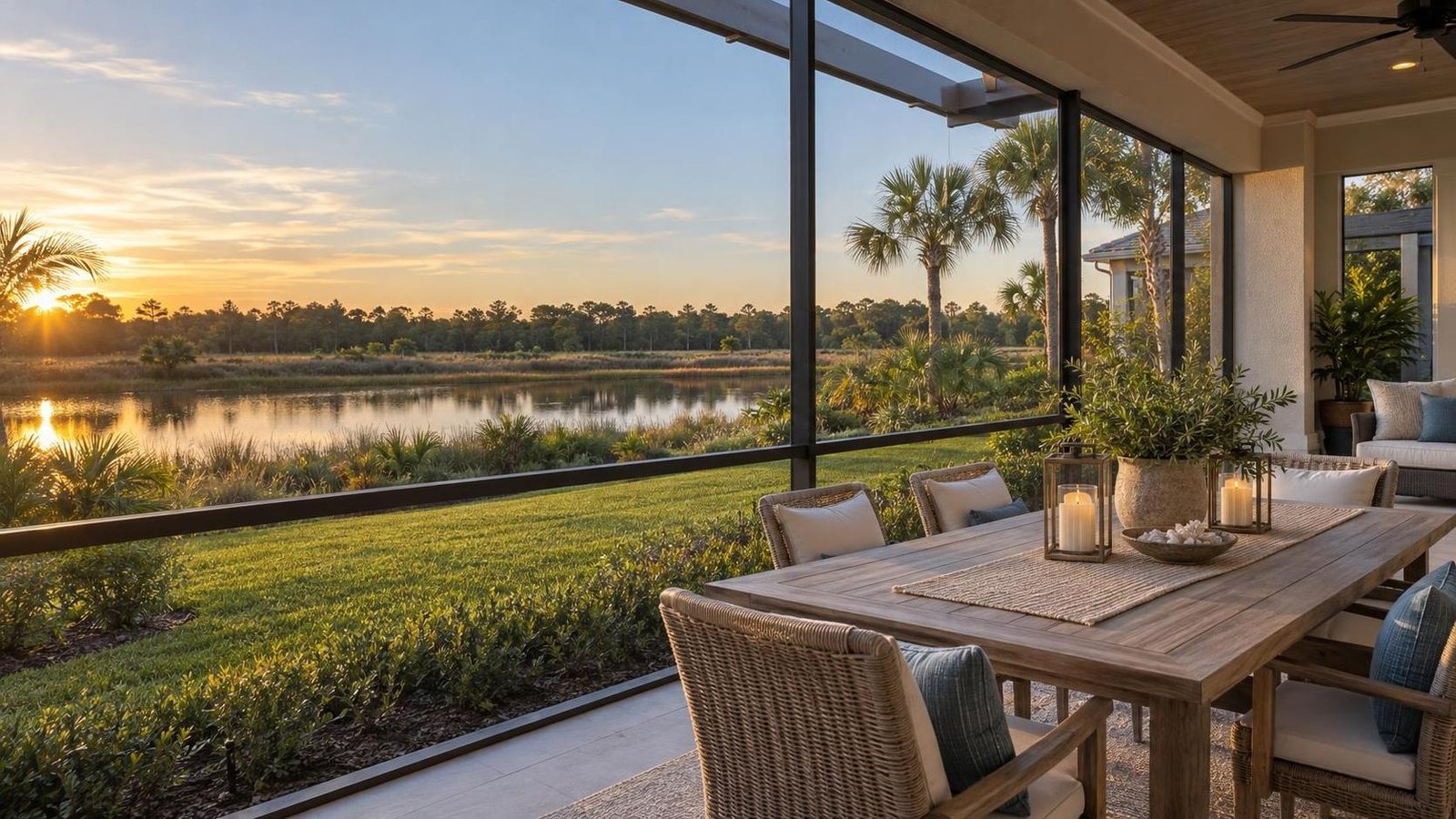
Afternoon Shade or a Wider Water View: Which Viera Preserve Lot Should You Choose?
By Carrie Liotta, Space Coast REALTOR® with REAL Broker | Published September 23, 2026 on 321 Coastal Living
If you expect to use the lanai most afternoons, I would usually choose the Viera preserve lot with better shade and cleaner drainage over the one with the widest water view. A beautiful view still matters, but usable outdoor hours, water movement, screen condition, and HOA limits usually affect daily life more than a dramatic first impression.
This is not a rule that every west-facing backyard is wrong or every shaded yard is automatically dry. It is a way to compare two lots without paying for scenery that may be uncomfortable at the exact time you want to enjoy it. When I walk these homes with buyers, I want to know where the sun lands at 4:30 p.m., what happened during the last hard rain, and whether the outdoor space can be modified legally if the current setup does not work.
Start with the life you plan to live outside
“Preserve lot” and “water view” are marketing descriptions, not complete explanations. One backyard may look across a broad stormwater pond but receive strong afternoon sun across the pool deck. Another may have a narrower view framed by mature landscaping, yet its lanai stays comfortable for homework, dinner, or remote-work calls. The better property depends on your schedule.
Write down when you will actually use the yard. A retired buyer who swims early may value morning light differently from a household that gets home after 5:00. A remote worker may care about screen glare and a shaded table. Parents may care about whether children can use the patio before dinner without every surface feeling overheated. If most of your outdoor life happens late in the day, shade is not a decorative bonus; it is part of the floor plan.
I also separate the view from the usable zone. Stand where the table, grill, lounge chairs, and pool steps really are. A wide view from the primary bedroom may not compensate for a lanai that is exposed, cramped, or difficult to furnish. Conversely, a smaller slice of water can feel excellent if it is framed from the main living area and the outdoor space works comfortably.
Orientation deserves an actual site visit
Listing photos flatten light and time. Before committing, visit a serious contender twice if possible: once near midday and once in the late afternoon. Use the compass on your phone, but trust what you observe. Note which walls, windows, and seating zones receive direct sun; whether neighboring homes create helpful shade; and whether trees provide shade without crowding the roof or screen enclosure.
Do not evaluate only the empty patio. Imagine your furniture, grill clearance, walking path, pets, and the point where you would take a video call. Look through the interior glass as well. Strong late-day light can be welcome, but it can also create glare and heat in a living room or office. My recent comparison of a shaded Viera office versus a brighter corner room explains why the same sunlight can be an asset in one room and a daily problem in another.
If the view lot wins your heart, price the solution before assuming it is easy. Exterior shades, landscaping, a screen modification, a pergola, or a pool enclosure change may need both association review and a building permit. Under Florida Statutes section 720.3035, an HOA’s architectural authority must be grounded in its declaration or authorized published standards. That does not mean your preferred shade structure will be approved. It means the actual governing documents and written review process matter more than a neighbor’s guess.
A pond or preserve edge is not a drainage guarantee
Viera’s planned water-management landscape is one reason its views feel distinctive. The Viera Stewardship District says its maintenance responsibilities include aquatic weed control for the drainage system and community canal, as well as wetland and habitat maintenance within its district. That community-level work is important, but it does not tell you whether one individual yard drains cleanly away from the slab.
At the property, look for the small evidence. Are downspouts connected and directed sensibly? Does mulch cover the lower edge of stucco? Are there pale water lines on the screen base, algae on one side of the enclosure, eroded soil below a downspout, or fresh sod in only one low corner? Do drains appear to have been added later? Is the pool deck pitched away from doors? These clues do not prove a defect, but they identify questions for the inspection period.
Ask the seller direct, factual questions: Where does water collect during prolonged rain? Has the yard, lanai, or pool overflow area ever been regraded? Were French drains, yard drains, gutters, or pumps installed? Who did the work, and are invoices, permits, surveys, or HOA approvals available? A written repair history is more useful than “we have never had a problem,” especially when the landscaping is new.
For any property, check the address at the FEMA Flood Map Service Center, the federal government’s official source for NFIP flood-hazard information. A map designation and backyard drainage are different questions: a lot can sit outside a high-risk mapped zone and still hold water after an intense storm, while a mapped property may have careful grading and mitigation. I never substitute one answer for the other.
Mosquito comfort is about the property, not just the view
Buyers sometimes assume the wider water view will automatically mean more mosquitoes. I would not make that claim from a listing photo. Mosquito activity varies with species, season, weather, nearby habitat, maintenance, wind, and small sources of standing water. A well-maintained pond edge can feel different from a shaded side yard full of water-holding containers. The useful question is whether this particular home gives you practical ways to manage exposure.
Inspect the pool cage and door sweeps. Look for torn mesh, gaps at the roofline, clogged gutters, decorative pots holding water, poorly draining planters, and equipment covers that create pockets. The CDC’s mosquito-prevention guidance recommends intact window and door screens and weekly emptying, scrubbing, covering, turning over, or discarding items that hold water. That advice is simple, but it is far more actionable than trying to judge a lot by the word “preserve.”
Visit near dusk if mosquito comfort is a major priority. Ask whether the screen enclosure has been rescreened, whether the door latches close tightly, and whether the yard has irrigation leaks. If you plan to add a screened extension, confirm the buildable area, setbacks, drainage path, permit history, and HOA process before treating that future improvement as part of the home’s value.
Compare the cost of adaptation, not just the purchase price
A premium view can be worth paying for when you love it and the home works without major correction. But the real comparison is not simply Home A versus Home B. It is Home A plus the cost, approval risk, and disruption of making the outdoor space usable versus Home B plus any landscaping or view compromise you can accept.
Create a reserve column for each property. For the sunnier view lot, that may include screen repair, exterior shades, approved landscaping, glass treatment, or a future enclosure modification. For the shaded lot, it may include tree maintenance, gutter cleaning, irrigation adjustment, mildew control, or selective landscaping to open the view. Obtain property-specific estimates; do not rely on a universal online allowance.
Then ask which work is optional and which work is necessary. Shade improvements may be lifestyle upgrades. Correcting negative grading or a drainage route that sends water toward the house is a different category. A buyer who spends the available reserve on the view premium may have less flexibility if inspection reveals a drainage correction, aging pool equipment, or a screen enclosure needing repair.
If a pool is part of your plan rather than already present, read my guide to Viera preserve-lot drainage, pool feasibility, and HOA approval risk. The attractive open area behind a home is not proof that a pool footprint, construction access route, fence, enclosure, and drainage plan will all work.
My offer-period test for two preserve lots
When two homes are otherwise close, I use a five-part test.
- Usable hours: At the times you expect to be outside, which lanai and pool deck are actually comfortable?
- Water evidence: Which seller can show a clearer drainage history, and which lot gives the inspector fewer unresolved clues?
- Modification certainty: Which home already has the shade, screens, and approvals you need? For proposed work, is there a realistic written path rather than an assumption?
- Reserve impact: After the down payment, closing costs, moving expenses, and known system needs, which property leaves room for outdoor corrections?
- Emotional value: Would you still pay the view premium after standing there during late-afternoon sun and again near dusk?
During the inspection period, consider a general home inspection plus the right specialists for what you find. A pool professional can evaluate equipment and the enclosure. A drainage or grading concern may require a qualified contractor or engineer. Your insurance professional can explain property-specific coverage questions. The survey, seller documents, permit history, HOA records, and flood information should tell a consistent story before you remove contingencies.
Do not overlook neighbors’ sight lines. A wide pond view may reduce visual privacy, while a narrower preserve view may place vegetation closer to the enclosure. Stand in the primary bedroom, pool, and main seating area before deciding.
When I would choose each lot
I would favor the shaded preserve lot for buyers who work from home near a rear window, dine outside after work, have young children or heat-sensitive pets, want lower-cost outdoor comfort from day one, or have limited cash for post-closing projects. I would also favor it when its seller has stronger records and the yard shows a clean, understandable drainage path.
I would favor the wider water view for buyers who genuinely use the yard in the morning, prize the visual connection from the interior, have verified that glare and heat are manageable, and can comfortably fund any approved shade solution. It can also be the right choice when the lot has excellent drainage evidence, a well-kept screen enclosure, and a premium that still fits the full ownership budget.
For another way to think about privacy and outdoor function, compare my discussion of a shaded interior courtyard versus a Viera corner lot. It shows why a less dramatic lot can sometimes support a better daily routine.
The decision I want you to make
Choose the lot whose view you can enjoy, not merely admire. In Viera, afternoon shade, a sound screen enclosure, documented drainage, and a realistic HOA-approved improvement path can make a smaller view much more valuable in daily life. A wider pond or preserve vista deserves the premium only when the home remains comfortable and the due-diligence file supports it.
I am Carrie Liotta, Space Coast REALTOR® with REAL Broker. If you are comparing two Viera homes, I can help you evaluate the orientation, outdoor-use pattern, records, and carrying-cost tradeoffs without turning one pretty feature into the whole decision. Reach out for a no-pressure conversation about Brevard County homes for sale. Your next chapter starts here.
