

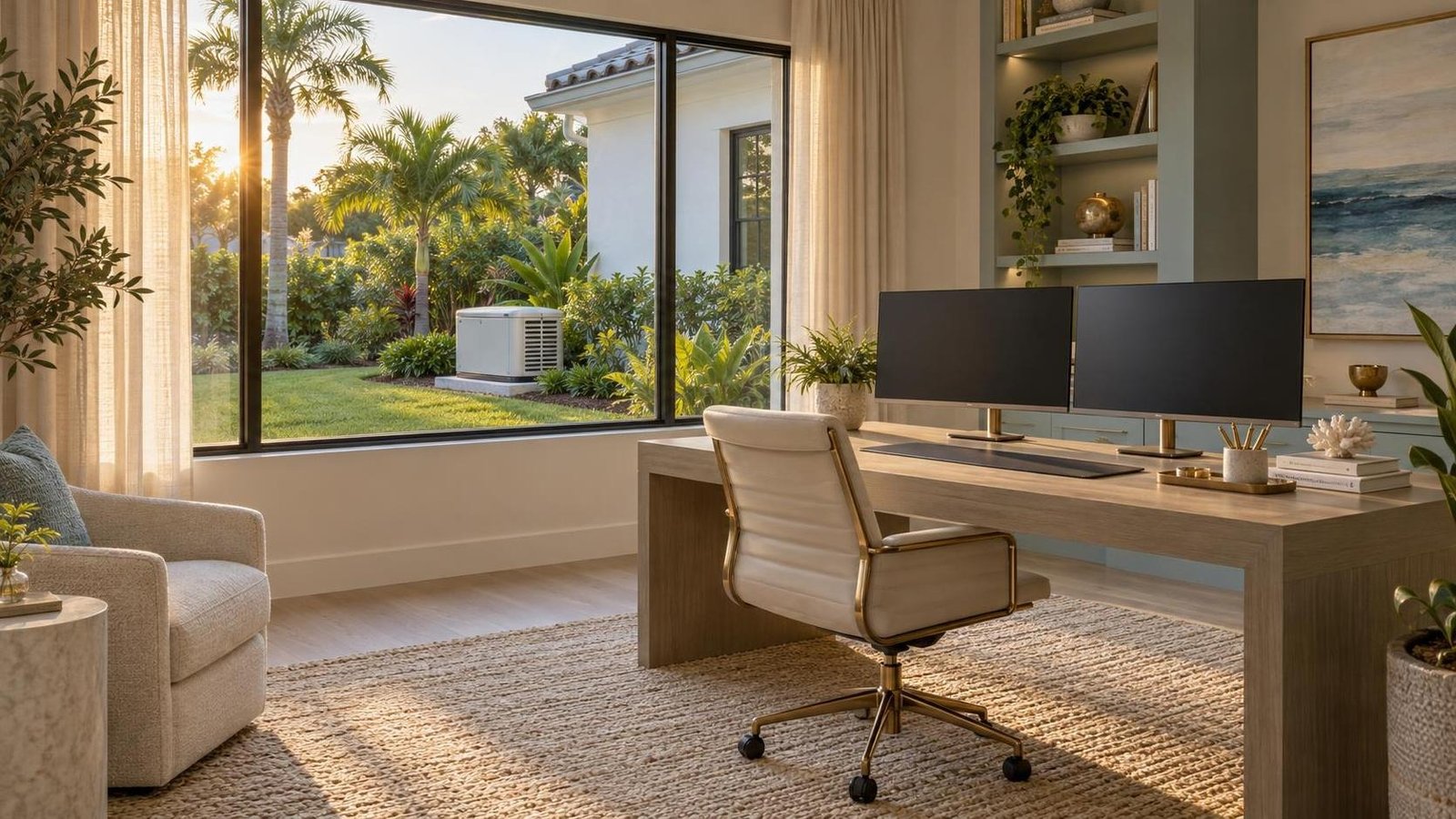
Whole-Home Generator or Lower Assessments: What Should Viera Remote-Work Buyers Choose?
By Carrie Liotta, Space Coast REALTOR® with REAL Broker | Published September 19, 2026
Pay more for the documented standby system when outages would threaten income, medical needs, or an empty-home plan and the equipment truly serves your critical loads. Choose the lower-assessment resale when portable backup can safely cover a simpler plan. The label “whole-home” matters less than verified capacity, circuits, maintenance, fuel, and annual ownership cost.
Remote-work buyers often compare these Viera homes as if one offers resilience and the other offers savings. The real decision is more detailed. A standby generator can be convenient but still shed major loads. A portable setup can be adequate but still require someone to be present, move equipment, manage fuel, and connect it safely. A lower district assessment may improve annual carrying cost, yet the home may need electrical work before the buyer has a usable backup plan.
I would not choose from the listing remarks. I would build two outage plans, two five-year budgets, and two inspection lists.
Define what must keep working
Start with the household rather than the equipment. For many remote workers, the true critical loads are the modem, router, computer, monitors, refrigerator, a few lights, garage access, device charging, and enough cooling to work and sleep safely. Another household may need medical equipment, a well pump, a second office, a server, a security system, or refrigeration for medication.
Write the list in priority order. Then ask a licensed electrician or generator professional whether the system can support those loads together. A large generator does not guarantee unlimited simultaneous use. Air conditioning, electric water heating, cooking equipment, pool pumps, EV charging, and other heavy loads may be sequenced or excluded through load-management controls.
That is why “whole-home generator” should begin a conversation, not end it. Ask for the generator model, rated capacity, transfer equipment, load-management design, served circuits, fuel source, installation permit, final inspection, maintenance history, warranty, and most recent test report.
A remote-work plan needs internet redundancy too
Backup electricity cannot restore an outside network interruption. Before paying a premium for generator capacity, confirm the internet providers available at the exact address, service type, equipment location, and whether the neighborhood connection depends on powered infrastructure beyond the house. Ask your employer what hotspot, cellular, office, or leave options apply when service is unavailable.
My guide to Viera remote-work homes, internet, office space, and airport access explains why a beautiful office is only one part of a workable setup. Test cellular reception where the desk will sit, not just in the driveway. Keep local copies of essential contacts and authentication recovery methods.
Ready.gov’s power-outage guidance recommends planning for communications, charging, food safety, and safe generator use. A home purchase adds another step: verify that the property’s electrical system and the household’s work requirements actually fit the plan.
What a standby system buys you
The strongest argument for a permanently installed standby generator is automation. Properly configured equipment can detect an outage, transfer selected loads, and operate without someone rolling a machine outside. That can matter when both adults work through scheduled calls, one person travels, the household leaves seasonally, or a medical need makes manual setup unrealistic.
Standby equipment also creates ongoing responsibility. It needs documented service, safe clearances, a reliable fuel arrangement, accessible shutoffs, healthy starting components, and periodic testing. The transfer equipment and load controls matter as much as the generator enclosure. Landscaping, fences, pool additions, and storage should not block service or ventilation.
Before buying, I would review permits through the Brevard County building-permit resources and confirm the exact jurisdiction, scope, and final inspection for the address. Then I would have qualified professionals inspect operation rather than accepting a brief startup demonstration as proof of capacity.
When portable backup is the better answer
A portable setup can make sense when the buyer needs a smaller number of loads, is comfortable with manual operation, has safe outdoor placement, understands fuel handling, and purchases a home with an appropriate documented connection. It may also preserve flexibility if the buyer expects needs or technology to change.
The weak portable plan is a generator in the garage, extension cords through openings, uncertain backfeed risk, old fuel, and no written sequence. Never operate a generator indoors, inside a garage, or near doors, windows, or vents. The offer-stage question is whether the home has a safe, permitted, professionally evaluated way to receive portable power—not whether a machine happens to be included in the sale.
Ask whether the portable unit conveys, what condition it is in, where it can operate, how it connects, which circuits are available, where fuel may be stored, and who in the household can perform the setup. If the plan fails when the strongest or most experienced household member is away, it is not a complete plan.
Compare annual assessments correctly
A lower-assessment Viera resale may create meaningful long-term room in the budget, but buyers need the current tax bill rather than a verbal estimate. The Florida Department of Revenue’s property-taxpayer resources explain that non-ad valorem assessments can appear on the tax bill alongside property taxes. Review every line for each property and ask how the current owner’s exemptions or assessed value may differ from your future bill.
Do not multiply one current number by five and call the comparison finished. Ask whether an assessment has a remaining term, whether amounts can change, what services the HOA covers separately, and whether either property has known capital work. Your lender, tax professional, association documents, and closing team can help build the address-specific picture.
I use the same approach when buyers compare electrical readiness with annual obligations. This article on Viera EV charging and panel capacity versus a lower district assessment shows why one useful upgrade should not hide the rest of the ownership stack.
Create a five-year resilience budget
For the standby-generator home, include the purchase-price difference, annual assessments, professional service, likely wear items, fuel arrangements, warranty limits, battery replacement planning, and any electrical or landscaping corrections. For the portable-backup home, include the generator, inlet or transfer equipment, licensed installation, weather-safe operating setup, storage, fuel management, maintenance, and the value of manual effort.
Then add the systems both homes share: roof, HVAC, electrical panel, insurance, storm protection, internet, and association fees. A generator should not distract from an older roof or single aging HVAC system. My comparison of a two-zone Viera guest suite and a lower-priced one-HVAC resale is a useful reminder that resilience depends on the whole house, not one badge.
Test the real workday before making an offer
During a second showing, set up mentally where each person will work. Note the panel, modem, office outlets, HVAC zones, exterior generator location, fuel access, and route from a portable operating point to the connection. Listen for generator proximity to bedrooms, offices, patios, and neighbors. Review HOA restrictions and architectural approvals rather than assuming permanent equipment placement can be changed later.
Ask the seller to provide service records before the inspection deadline. A test should be coordinated by qualified professionals and performed under safe conditions. I want to know whether transfer occurs properly, which loads remain unavailable, whether error codes exist, and whether load shedding behaves as represented. Do not ask an unqualified person to improvise a high-load demonstration during a showing.
Think about resale beyond remote work
A documented standby system may appeal to remote workers, frequent travelers, multigenerational households, and buyers with medical or refrigeration priorities. But future value depends on condition and clarity. An old generator with missing service history can look like deferred maintenance rather than an upgrade.
A lower-assessment home with a clean, permitted portable-power connection can also have a strong resale story. It gives the next owner flexibility while preserving a lower annual obligation. The marketable feature is not “cheap backup.” It is a clear, safe, professionally documented resilience plan.
My Viera buyer checklist
- List critical work, medical, cooling, food, access, and communications loads.
- Verify generator model, capacity, fuel, transfer equipment, load controls, permits, finals, and service records.
- Confirm what “whole-home” means for that exact installation.
- Check internet service and a separate communications backup.
- Review current tax bills, non-ad valorem assessments, HOA costs, and known changes.
- Price professional inspections and any correction work before the offer period expires.
- Confirm safe generator location and access after fences, pools, landscaping, and vehicles are considered.
- Compare five years of reserves and obligations, not just purchase prices.
Bottom line
For a Viera remote-work household, a well-documented standby generator is worth paying for when automatic continuity solves a real and expensive problem. If your critical loads are modest and your household can safely operate a portable plan, the lower-assessment resale may be the more disciplined buy. Either way, verify the electrical design and annual cost instead of buying the marketing label.
I am Carrie Liotta, a Space Coast REALTOR® with REAL Broker, and I publish 321 Coastal Living to help relocation buyers compare the complete ownership decision. If you are weighing Viera homes with very different resilience and assessment profiles, reach out for a no-pressure conversation about the documents, inspections, and daily routine. Your next chapter starts here.