

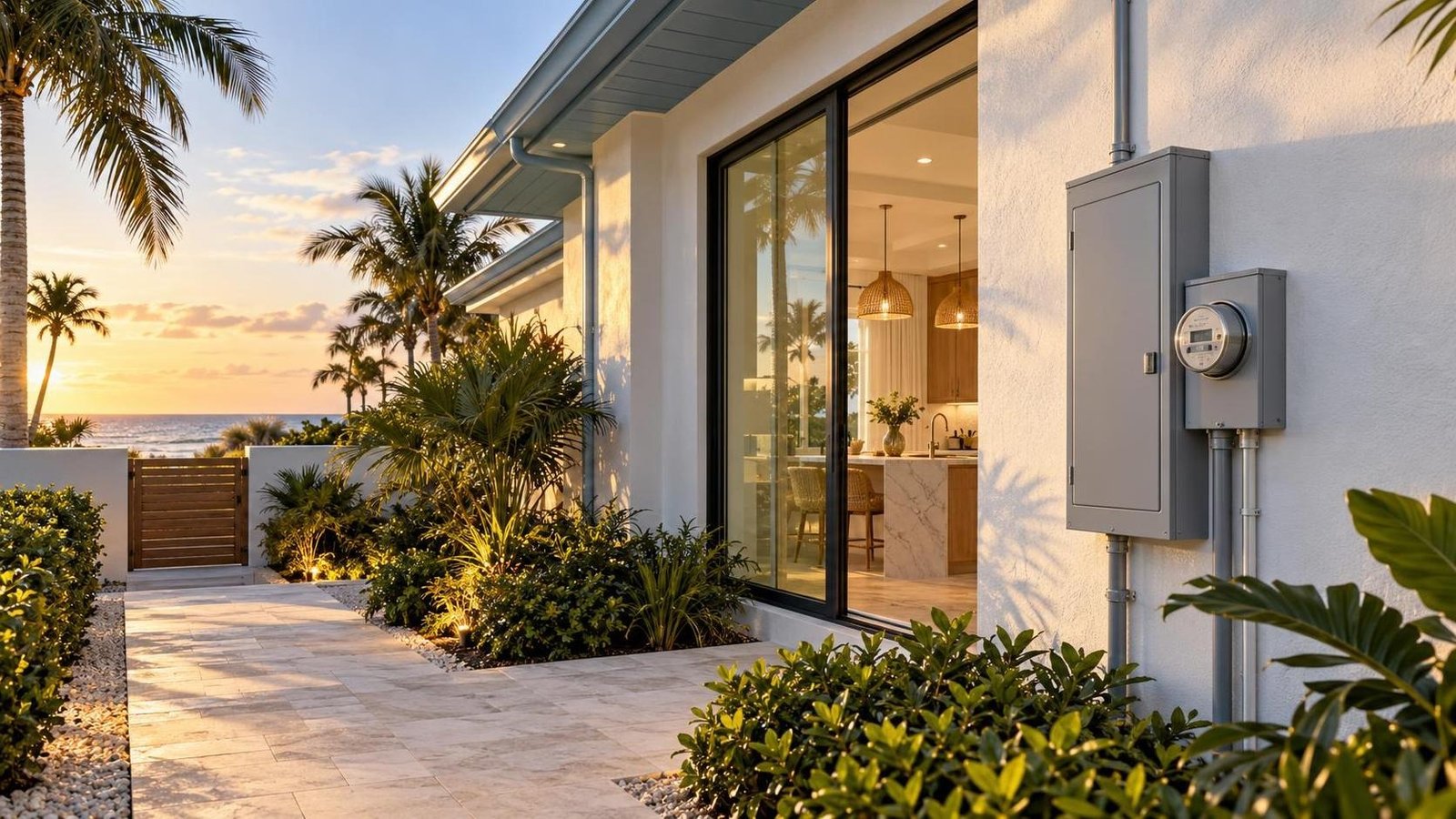
Documented Exterior Electrical Panel or Renovated Kitchen: What Should Satellite Beach Buyers Prioritize?
By Carrie Liotta, Space Coast REALTOR® with REAL Broker | Published September 30, 2026
Prioritize the documented exterior electrical-panel replacement when the alternative home has older, uncertain, or visibly deteriorated service equipment. A renovated kitchen improves daily life, but cabinets and counters do not resolve electrical safety, insurance, permit, or closing questions. Choose the kitchen only after the less glamorous home systems have passed qualified review and the total costs still work.
I understand why this comparison feels unfair. One house photographs beautifully; the other gives you a permit number, contractor invoice, final inspection, and a plain kitchen. In Satellite Beach, however, exterior electrical equipment sits in a coastal environment where water, weather, and corrosion deserve serious attention. The paperwork is not exciting, but it can tell you whether the expensive work was completed through the proper process.
First, confirm what “new electrical panel” actually means
Listing language is often imprecise. “New panel” may mean a full service-equipment replacement, a new interior load center, selected breakers, a replaced enclosure, or simply a newer-looking cover. It may or may not include the meter equipment, service conductors, grounding and bonding work, surge protection, feeder changes, repaired wall penetrations, or circuits added during an earlier remodel.
Ask for the proposal, paid invoice, permit record, inspection history, final approval, panel schedule, product information, and photographs taken before the cover was closed. Match the address and scope across those records. Then have a qualified home inspector and, when appropriate, a licensed electrical contractor evaluate what is present today. A closed permit is valuable evidence of a reviewed project; it is not a lifetime warranty or a substitute for a current inspection.
The City of Satellite Beach’s current permit information specifically lists electrical work and service changes among the projects that generally require permits. The city also says permitted work must be inspected and directs owners and buyers to its BS&A portal for permit records and inspection information. That makes the city file a sensible starting point, not an optional extra.
Inspect the location, enclosure, and service path—not just the replacement date
An exterior panel should be evaluated as installed equipment, not as a year on a disclosure. Without opening energized equipment yourself, look for visible rust, bubbling paint, staining below the enclosure, gaps, damaged seals, loose conduit, missing blanks, cracked fittings, deteriorated wall penetrations, improvised labels, nearby irrigation spray, or storage blocking access. Note whether additions such as a pool, generator inlet, EV charger, outdoor kitchen, HVAC replacement, or solar system appear in the permit and circuit history.
Salt air does not create the same condition at every address or on every wall. Distance from the ocean is only one variable. Wind direction, exposure, roof runoff, sprinkler placement, shade, prior coating, installation details, and routine maintenance all matter. That is why I avoid making a blanket statement that every exterior panel near A1A must be replaced. The buyer needs the actual enclosure, connections, service capacity, and documentation evaluated by the right professionals.
Also preserve clear, safe access. Landscaping, pool equipment, stored beach gear, hose reels, and trash carts can slowly crowd the service area after an installation passes inspection. If a contractor cannot safely reach the equipment or fully operate its door, the location has an ownership problem even if the kitchen has perfect quartz counters.
Why the electrical file can affect insurance and timing
A buyer should not assume that a newer panel guarantees a policy or a lower premium. Each insurer applies its own underwriting rules, and the entire property matters. Still, electrical condition is one of the systems that may be reviewed during a four-point inspection. Citizens Property Insurance currently says it requires a four-point inspection for property-owner, dwelling, and mobile-home applications when the property is more than 20 years old. Its inspection guidance says the licensed inspector reports the age, type, and condition of the electrical, plumbing, HVAC, and roof systems and identifies serious hazards or deficiencies.
That Citizens rule is not a promise about every carrier or every Satellite Beach home. It shows why buyers should involve an insurance professional early and provide the actual address, current inspection, and permit documents. Do not rely on the seller’s premium, a neighbor’s experience, or the phrase “updated electrical.” Get a property-specific quote while the contract still gives you time to respond to the answer.
My broader guide to four-point inspections for Brevard County buyers explains how electrical, roof, plumbing, and HVAC findings can interact. The practical lesson here is that a kitchen renovation and an electrical update should never be credited as though they solve the same problem.
Compare two different kinds of value
A renovated kitchen gives visible, immediate value: storage, work surfaces, appliances, lighting, traffic flow, and a room you may use several times a day. A documented panel replacement gives less visible value: reduced uncertainty about a major system, a clearer permit history, possible capacity for the home’s current loads, and a cleaner file for inspections, insurance review, future projects, and resale.
Neither automatically wins. A cheap or poorly planned kitchen can still need rework. A recently replaced panel can be undersized for your future plans, paired with questionable branch wiring, or surrounded by unpermitted additions. The right comparison is not “pretty versus safe.” It is the verified condition and remaining work in each house.
Build a five-year ownership comparison
Start with written estimates rather than generic online averages. For the house with the older exterior panel, ask a licensed electrical contractor to define the recommended scope and identify related work that may be triggered by the project. For the plain-kitchen house, price the kitchen you would actually build—not a television makeover—and include design, demolition, cabinets, counters, appliances, plumbing, electrical, permits where required, finish repair, and a contingency.
The licensing piece matters. Florida DBPR says its Electrical Contractors’ Licensing Board licenses and regulates electrical contractors. Its current electrical-contractor guidance distinguishes certified contractors, whose licenses are statewide, from registered contractors, whose contracting authority is limited to the jurisdictions for which they are registered. Verify the person and business performing the work instead of accepting a handwritten claim that “an electrician friend changed it.”
Then compare:
- purchase price and financing difference;
- immediate electrical work, kitchen work, or corrective permitting;
- homeowners, wind, and flood quotes for the exact addresses;
- inspection findings across roof, HVAC, plumbing, wiring, and openings;
- cash reserves remaining after closing;
- projects you expect to add, such as an EV charger, pool equipment, generator connection, or induction range; and
- the resale clarity of each property file.
I would not spend every available dollar to obtain the renovated kitchen and then have no reserve for an electrical correction, roof issue, or HVAC failure. I also would not reject a structurally sensible house solely because its kitchen is dated. A kitchen can often be improved in stages. Service-equipment questions can become urgent on an insurer’s, electrician’s, or closing schedule rather than your decorating schedule.
Read the kitchen permit history too
The comparison should be fair. A polished kitchen may have involved more than cabinets and counters. Look for relocated outlets, new lighting, appliance circuits, an induction or electric range, altered plumbing, removed walls, a larger refrigerator circuit, or a hood that changed ventilation. Ask whether permits were required and finalized for that scope.
Satellite Beach’s permit page says cosmetic work such as paint, flooring, and cabinets without moved plumbing or electrical may not require a permit, while electrical and many remodeling projects generally do. The dividing line depends on the actual work, so compare the invoice, seller disclosure, permit history, and visible installation. A beautiful kitchen with undocumented electrical alterations does not deserve an automatic premium over the home with a dated but honest room and a clean service record.
Pay attention to the relationship between the kitchen load and the panel. The buyer’s electrician can determine whether the circuits, breakers, conductor sizes, protection, labeling, and available capacity are appropriate for the installed equipment and planned changes. That is technical work, not something to infer from breaker colors or a listing photo.
My due-diligence sequence for these two homes
Before choosing, I would request both sellers’ permits, invoices, disclosures, current insurance information if they are willing to share it, and any recent four-point or full inspection. I would search the city record, confirm that the panel project reached final inspection, and compare its description with the equipment on site. I would make a list of every kitchen alteration that might have affected wiring or plumbing.
During the contract period, schedule the home inspection early. If the inspector flags the exterior equipment, service capacity, corrosion, moisture entry, wiring, or an undocumented modification, bring in the appropriate licensed electrical contractor. Send the relevant reports to the insurance agent before deadlines. If the buyer intends to add major loads, say so during the evaluation; a panel that serves today’s house may not automatically fit tomorrow’s plans.
My earlier article about Brevard homes with older electrical panels covers the countywide offer strategy. For Satellite Beach, I add special attention to the enclosure’s exterior condition, weather exposure, wall penetrations, and the maintenance history around it.
When I would choose each house
I would usually choose the documented-panel home when its records match the installed work, current inspections are reassuring, the rest of the systems are comparable, and the dated kitchen is functional enough to improve later. That choice protects flexibility. You can live with older cabinet doors while planning a renovation around your own taste and budget.
I would choose the renovated-kitchen home when the existing exterior electrical equipment has been professionally evaluated, presents no unresolved insurance or safety obstacle, replacement cost and timing are understood, and the kitchen work itself is documented and well executed. I may also choose it when its lot, flood context, roof, openings, layout, and long-term location are materially better. One component should not erase the whole property.
If both files are weak, I would not force a winner. The right response may be a lower offer, a seller-completed repair with permits, a carefully structured credit that works with the lender, more investigation, or another house. This is similar to deciding whether impact windows deserve a premium when a Satellite Beach roof is already newer: verified systems and the complete insurance picture matter more than one attractive feature.
Bottom line for Satellite Beach buyers
When the choice is a documented exterior electrical-panel replacement or a renovated kitchen, I place the service equipment first until qualified review proves the older panel is a manageable risk. The winning home is the one whose permit history, current condition, insurance path, future capacity, and five-year costs make sense together—not the one with the most dramatic listing photos.
I help Satellite Beach buyers compare coastal lifestyle with the systems and records that support it. Reach out for a no-pressure conversation about Brevard County homes for sale with Carrie Liotta, Space Coast REALTOR® with REAL Broker. You can also join my private Facebook group, Moving to Brevard County Florida. Your next chapter starts here.
