

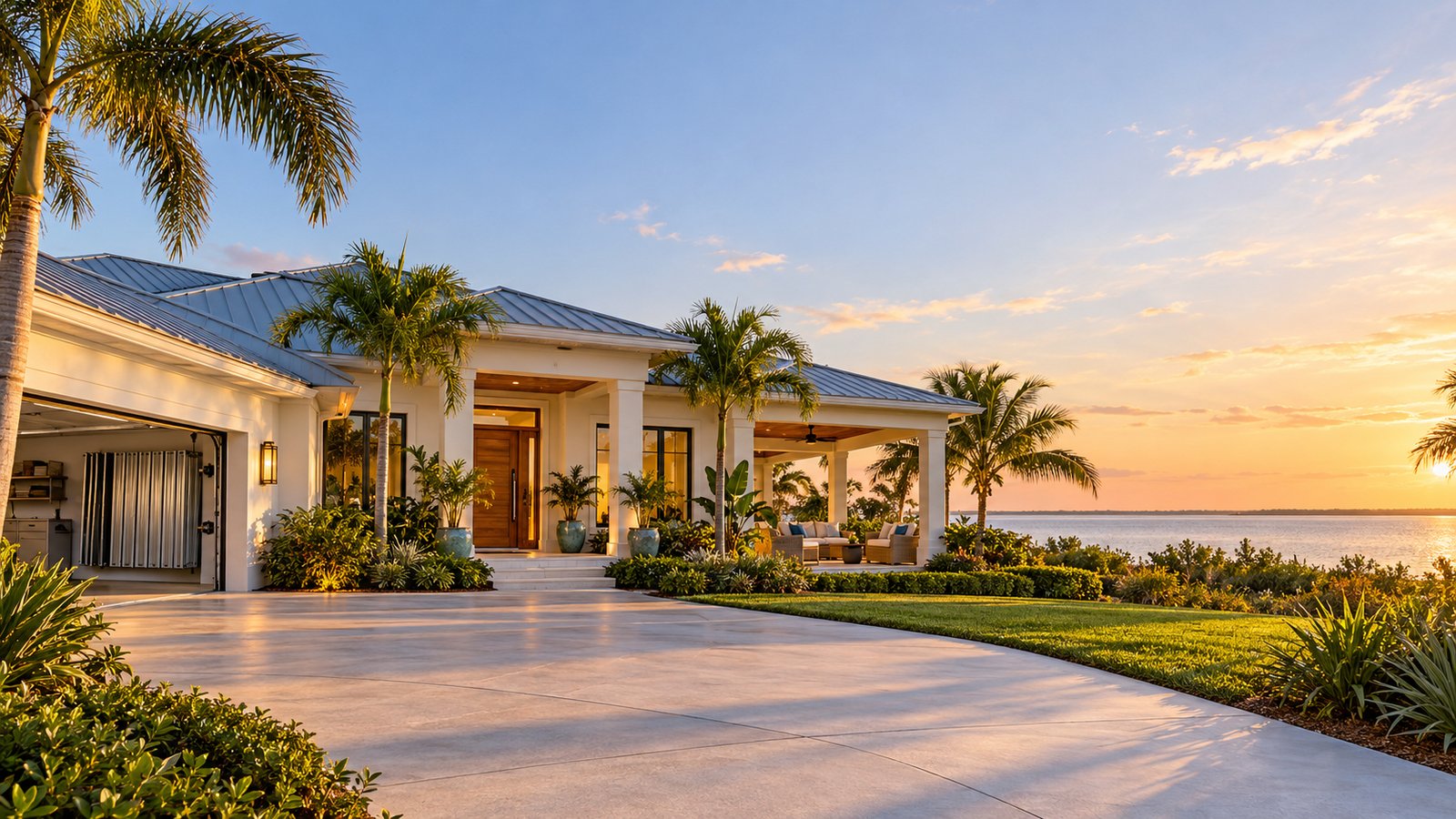
Retiring on Merritt Island Without a Boat: Which Home Features Matter Most?
By Carrie Liotta, Space Coast REALTOR® with REAL Broker | Published October 27, 2026
If you are retiring on Merritt Island without a boat, prioritize a comfortable one-level daily route, storm-ready major systems, manageable exterior maintenance, flexible guest or caregiver space, and practical access to the places you use every week. A dock should not outrank a home that is easier to insure, maintain, and live in over time.
I would begin with the life you want at home, not a list of features that sounds impressive online. Merritt Island offers river views, established neighborhoods, acreage, canals, condos, and ordinary inland streets. The right retirement home may be near the water without making you responsible for shoreline infrastructure you will not use.
Start by removing boating features from the must-have list
When boating is not part of the plan, a private dock, lift, deep-water route, or direct canal frontage can become an expensive answer to a question you are not asking. Those features may still bring a beautiful view or outdoor setting, but they also deserve separate review for condition, permits, insurance, maintenance, and resale.
I ask buyers to distinguish among three preferences: wanting to see water, wanting to spend time near water, and wanting to own waterfront infrastructure. They are not the same. An interior home near a public riverfront park may deliver the atmosphere you want. A condo or community with shared shoreline may shift maintenance into association dues and reserves. Direct waterfront puts more control, and more responsibility, with the owner.
My guide to enjoying Merritt Island river breezes without owning a seawall explains those ownership models in more detail. For a non-boating retiree, I would pay first for daily usability and a supportable property file, then decide how much a view is worth.
A one-level daily route matters more than the “single-story” label
A one-story house is often a strong starting point, but it is not automatically easy to live in. Walk the route from the driveway or garage to the kitchen, primary bedroom, full bathroom, laundry, main living area, and outdoor exit. Look for steps, narrow turns, raised sliding-door tracks, deep shower curbs, dim hallways, and doors that compete for the same floor space.
The National Institute on Aging recommends planning for aging in place before substantial help is needed, evaluating the home room by room, and correcting hazards such as poor lighting and loose railings. That does not mean every buyer needs a fully modified house today. It means the layout should allow sensible changes later.
I look for at least one low-friction entrance, a primary suite with comfortable circulation, a shower that could be adapted without rebuilding the entire bathroom, reachable shutoffs, and space for better lighting or grab-bar backing if needed. Also test the lanai and yard route. A beautiful screened porch loses value if the only access requires a difficult step that cannot be improved easily.
Give storm resilience and insurability equal weight with finishes
For retirement buyers, predictable ownership can matter more than a newly renovated kitchen. Before valuing cosmetic work, identify the roof age and permit, HVAC age and service history, electrical and plumbing condition, water-heater location, opening protection, and any wind-mitigation documentation. Then obtain property-specific insurance guidance while the contract still gives you time to act on it.
Citizens Property Insurance describes how four-point and wind-mitigation inspections examine major systems and documented protective features. Another carrier may have different underwriting rules, so a report or a neighbor’s premium is not a quote for the home you are buying. The useful question is whether this house, in its current condition, can be insured on terms that fit your budget and risk tolerance.
I also look at how storm panels are stored and installed. Numbered panels in an accessible garage bay tell a different story from heavy, unlabeled pieces stacked behind attic storage. If a portable generator is part of the plan, review safe outdoor operation, fuel storage, transfer equipment, and what the home can realistically power with qualified professionals. A generator should not be treated as a decorative selling feature.
Review flood risk by parcel, even away from a canal
“Not waterfront” does not mean “no flood concern.” Merritt Island properties can differ in mapped flood zone, elevation, drainage, finished-floor relationship, and insurance response even when they are close together. Use the exact address rather than a neighborhood nickname.
FEMA explains that its flood maps show relative risk and that no location has zero flood risk. FEMA defines areas with at least a one-percent annual chance of flooding as high risk and identifies its Flood Map Service Center as the official source for National Flood Insurance Program mapping products. Brevard County also maintains local flood-zone information and floodplain resources.
Pair the map with any available elevation certificate, survey, seller records, inspection findings, and current insurance quotes. Walk the site after rain if timing allows. Notice the driveway slope, low spots, yard drains, neighboring grades, and where air-conditioning, electrical, or other equipment sits. A map is essential context, but it does not replace an on-site property review.
Choose a maintenance load you will still want in ten years
Retirement buyers sometimes focus on bedroom count and overlook the hours required to care for the property. A large yard, mature canopy, pool, long driveway, extensive irrigation, or complicated roofline may be enjoyable now and tiring later. None of those features is automatically wrong. They simply need to earn their place in your routine and budget.
Ask who will handle mowing, tree work, pool service, storm preparation, pest control, gutter or roof cleaning, and seasonal maintenance if you travel. If an association covers some work, read what is actually included; do not assume “maintenance-free” means the association handles the house. Review dues, budgets, reserves, recent minutes, and owner responsibilities before treating a monthly fee as a complete solution.
Inside, favor durable surfaces, useful storage, easy filter and shutoff access, and mechanical equipment that technicians can service without moving half the household. A smaller home with a coherent maintenance plan can be more luxurious in retirement than extra rooms that create recurring work.
Test the location against an ordinary Tuesday
Merritt Island stretches far enough north and south that two homes can create very different daily routines. Rather than choosing “north,” “central,” or “south” in the abstract, map your actual weekly destinations: groceries, pharmacy, medical appointments, exercise, friends, volunteer work, worship, beaches, and family routes. Drive the important trips at the times you expect to use them.
Central convenience may be more valuable if you want several errands close together. A quieter setting farther north or south may be worth the added driving if privacy is the priority. Causeway access can matter even when you are retired because specialists, airports, family, and many mainland destinations may still shape the week.
Transportation belongs in the long-range plan too. The National Institute on Aging includes transportation and community support among the practical services to consider when aging at home. A house can be perfectly designed inside and still become isolating if every appointment or social activity requires a route you no longer want to drive.
Flexible space is more useful than maximum square footage
I would rather see one flexible second bedroom with a nearby full bath than several rooms that do not support a real future need. That space might serve visiting family, a hobby, an office, short-term recovery after surgery, or a caregiver. Privacy and bathroom access matter more than calling a room a “bonus suite.”
Storage should match the lifestyle you actually have. Non-boaters may still need room for bicycles, beach chairs, storm panels, tools, holiday items, or a small workshop. Measure the garage after accounting for the water heater, air handler, electrical panel, steps, door tracks, and service clearances. An oversized garage in a listing can feel ordinary once every fixed obstruction is counted.
Outdoor space should be equally intentional. A shaded lanai with an easy transition may support daily use better than a large pool deck. A small fenced area may be ideal for a dog without creating a demanding yard. The best feature is the one that improves an ordinary week, not the one that photographs most dramatically.
Use a five-part scorecard before deciding
When two Merritt Island homes both feel appealing, score each one from one to five in these categories:
- Daily accessibility: entrances, essential rooms, bathroom, laundry, lighting, and adaptation potential.
- Property resilience: roof, openings, drainage, flood information, major systems, and insurance response.
- Maintenance fit: yard, pool, trees, association obligations, service access, and repair reserve.
- Location fit: weekly destinations, causeways, support network, and willingness to drive the routes.
- Future flexibility: guest or caregiver space, storage, privacy, and resale appeal beyond one narrow lifestyle.
Then compare the complete monthly and near-term ownership picture. My Merritt Island homeowner budget guide can help you organize taxes, insurance, maintenance, and property-specific reserves. If you are still deciding between an age-qualified community and a conventional neighborhood, read my Brevard retirement housing comparison before narrowing the property search.
The best retirement home supports the life beyond the view
For a retiree without a boat, the strongest Merritt Island home is usually not the one with the longest feature list. It is the one that makes daily movement easy, keeps storm and insurance questions understandable, limits unwanted maintenance, and places the people and services you value within a routine you are comfortable keeping.
I can help you compare homes room by room and parcel by parcel, without assuming waterfront or a 55+ label is automatically the answer. Join my private Facebook group, Moving to Brevard County Florida, or reach out for a no-pressure conversation about Brevard County homes for sale. Your next chapter starts here.
