
Which Palm Bay Homes Work Best for Buyers Who Want a Fenced Yard, City Sewer, and Low Storm-Prep Hassle?
By Carrie Liotta, Space Coast REALTOR® with REAL Broker | Published August 20, 2026
If you want a Palm Bay home with a fenced yard, city sewer, and less storm-prep hassle, the best fit is usually a well-documented resale or newer home in an established pocket with public utilities, a clean drainage story, a permitted fence, storm panels or impact-rated openings, and a roof/insurance file that does not create last-minute stress. It may not be the biggest lot or the absolute lowest price. It is the home that makes daily life easier and storm season more predictable.
That is the distinction I want Palm Bay buyers to understand early. A fenced yard is not just a lifestyle feature. City sewer is not just a line item. Storm prep is not just something you think about the week a cone appears on the weather map. Together, these details affect maintenance, insurance conversations, resale, and whether the house works for the way your family actually lives.
Palm Bay gives buyers a wide range of choices: older non-HOA streets, scattered-lot new construction, newer subdivisions, established city-water-and-sewer pockets, homes with septic, homes with wells, larger lots, smaller lots, paved roads, and different drainage conditions. That variety is a strength, but it also means buyers need to compare more than bedroom count and kitchen finishes.
Why this combination matters in Palm Bay
For many buyers, the dream is simple: a yard for dogs or kids, public utilities instead of septic questions, and a home that does not require a complicated storm routine every summer. In Palm Bay, that combination is very possible, but it narrows the search.
A fenced yard adds daily value if it is permitted where required, installed well, and appropriate for the lot. City sewer can reduce some of the uncertainty buyers feel around septic age, drainfield condition, setbacks, and future replacement. Storm-prep simplicity usually comes from a newer roof, documented shutters or impact openings, clear garage storage, manageable trees, and a yard that drains properly after heavy rain.
If you are already deciding between public utilities and a larger non-HOA lot, my earlier guide to Palm Bay city water and sewer versus a larger non-HOA lot is a helpful companion. This article goes one layer deeper for buyers who specifically want yard function and storm-season ease.
Should city sewer be a priority?
For buyers who want lower ownership friction, yes, city sewer is often worth prioritizing when the rest of the home also works. Public sewer does not make a home perfect, and septic does not make a home bad. But city sewer removes one major system from the buyer’s worry list.
With septic, I want buyers to understand the system age, tank location, drainfield location, inspection results, maintenance history, and whether future plans such as a pool, detached garage, driveway expansion, or addition could be limited by setbacks. With city sewer, buyers still need to verify utility status, connection, fees, and service details, but the due diligence is usually more straightforward.
The City of Palm Bay’s Utilities Department is the place buyers should use for city utility information rather than relying only on listing remarks. I want utility confirmation in writing when the distinction matters to the offer, because “city water” and “city sewer” are not the same thing.
What should buyers check about the fence?
A fenced yard is valuable when it is useful, legal, and easy to maintain. It is less valuable when it creates unanswered questions. Before making an offer, buyers should ask when the fence was installed, whether a permit or HOA approval was required, whether any sections are damaged, whether gates latch properly, and whether the fence sits where it should relative to property lines and easements.
This is especially important in Palm Bay because yard size and lot configuration vary so much. Some lots have generous side yards. Some have drainage swales, utility easements, corner-lot visibility issues, or fence placement limits. A buyer who wants room for a dog, playset, garden, boat storage, or future pool should not assume that every fenced yard can support those uses.
I also want buyers to look at the fence after rain if possible. Does the back corner hold water? Are posts leaning? Is there standing water along the side yard? Does the gate swing cleanly? A fence can hide drainage and grading problems during a quick showing, so slow down and walk the perimeter.
For a broader version of this decision, read my post on whether Brevard County buyers should prioritize a fenced yard or lower homeowners insurance risk. The answer is often not either/or. The best home gives you both lifestyle function and a clean risk profile.
What makes storm prep low-hassle?
Low-hassle storm prep is not the same as “nothing to do.” This is Florida. Every homeowner still needs a plan. But some homes make that plan much easier.
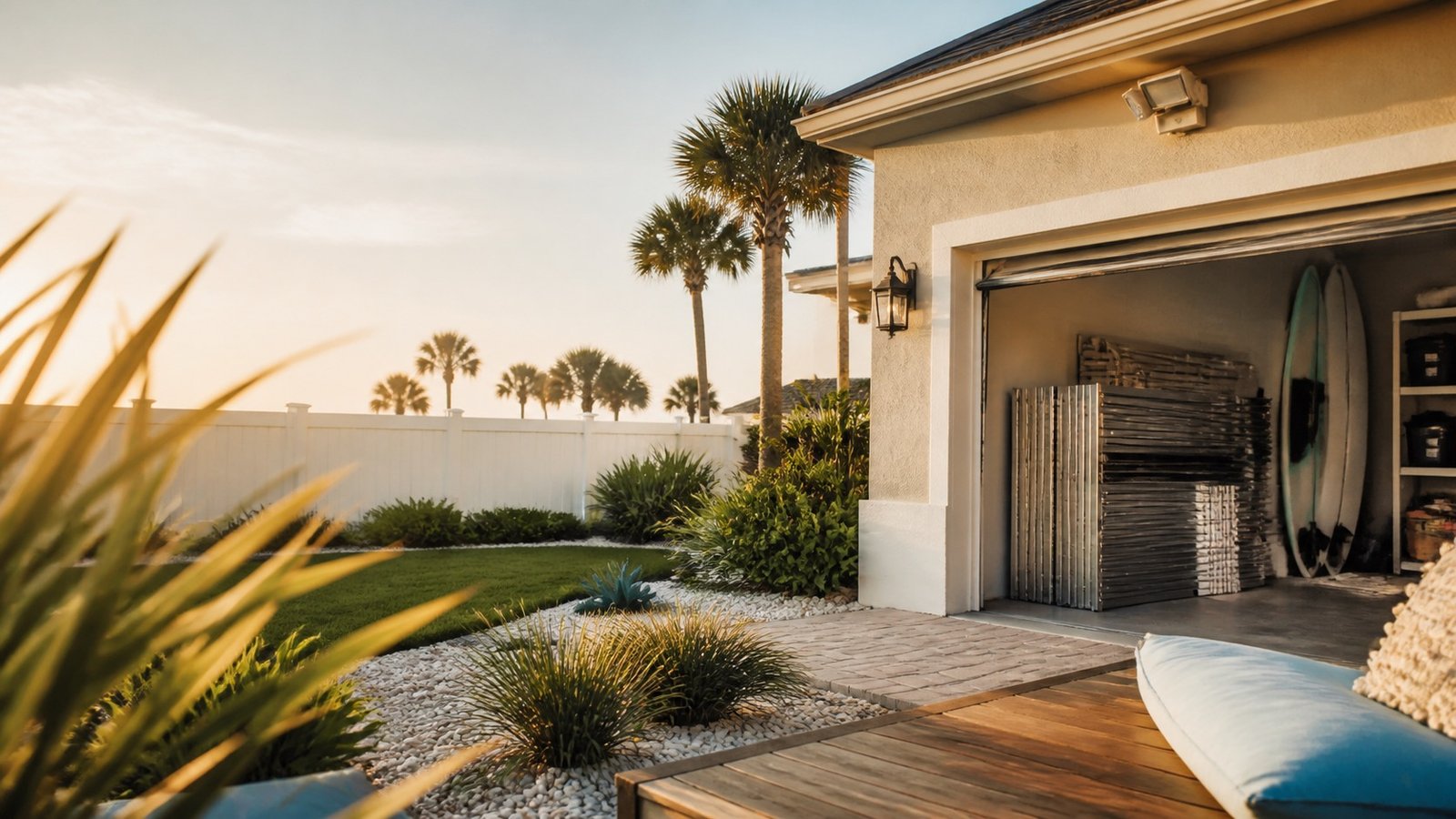
I look for documented storm panels or impact-rated openings, labeled panel storage, a garage that actually has room for supplies, manageable trees, clear gutters, a roof with strong documentation, exterior doors that seal properly, and a yard that does not become a drainage headache. I also look at whether the buyer can realistically install panels without needing three neighbors, a ladder they do not own, and a full day off work.
The Florida Division of Emergency Management maintains a practical hurricane supply checklist, and I like buyers to think about where those supplies will live before closing. If the garage is already packed, the laundry room is tiny, and there is no storage plan for panels, the home may feel less easy to own during storm season than it looked online.
How drainage and flood-zone checks fit into the decision
City sewer and a fenced yard are not enough if the lot has a weak drainage story. Palm Bay buyers should check the FEMA flood zone, look for drainage swales, walk the side yards, review seller disclosures, and ask what happens after heavy rain. FEMA’s Flood Map Service Center is the starting point for flood-map information, but it is not the only question. A home can be outside a high-risk flood zone and still have annoying yard drainage.
I want buyers to pay attention to driveway slope, garage threshold, side-yard grade, fence-line pooling, roof runoff, and whether neighboring lots drain toward the property. In my guide to Palm Bay paved roads, drainage, and insurance documentation, I explain why these details can matter as much as the finish level inside the house.
The City of Palm Bay’s Growth Management Department is also useful context because local development, code compliance, and planning shape how Palm Bay continues to grow. Buyers should not treat every Palm Bay lot as interchangeable.
Which Palm Bay pockets usually deserve attention?
Instead of giving buyers a rigid neighborhood list, I usually sort Palm Bay by lifestyle and utility profile. Homes closer to established Palm Bay Road and Minton Road conveniences can be appealing for buyers who want shorter errands and Melbourne access. Malabar Road and nearby established pockets may offer a mix of older resales and utility access, depending on the exact address. West and southwest Palm Bay can offer value and newer options, but buyers need to verify utilities, drainage, road access, and commute.
The right pocket depends on your work location, school or childcare route, budget, and tolerance for future maintenance. A buyer commuting to Melbourne may value a smaller, well-documented home with public utilities more than a larger house farther out with septic and more yard to manage. A buyer who works from home and wants space may accept a longer errand route if the home has a stronger storm-prep setup and a better fence.
My buyer checklist before making an offer
Before writing on a Palm Bay home with this wish list, I would confirm:
- Whether the home has city sewer, city water, both, or neither.
- Whether any utility assessments, connection details, or special conditions apply.
- Fence age, permit or HOA approval status, gate condition, and property-line/easement concerns.
- Roof age, wind mitigation, storm panels, impact openings, and storage for hurricane supplies.
- FEMA flood-zone status and practical drainage after heavy rain.
- Garage and storage function for panels, tools, beach gear, and daily life.
- Commute and errand routes at the time you will actually use them.
That may sound like a lot, but it is much easier to check these items before you are emotionally attached. A pretty backyard photo does not tell you whether the fence is sound, whether sewer is connected, or whether storm panels are labeled and complete.
“We are first time home buyers and she advocated for our needs and explained things to us. We couldn’t recommend Carrie more!”
A first-time buyer client
When is a septic home still the better buy?
A septic home can still be the better buy if the system is well documented, recently inspected, appropriately located, and the property gives you something meaningful in return: a stronger location, larger lot, lower price, better roof, or lower HOA pressure. I do not tell buyers to reject septic automatically. I tell them to understand it.
The danger is paying city-sewer pricing for a home with septic uncertainty, drainage questions, an aging roof, and a fence that needs work. At that point, the lower list price may not be the lower-risk purchase.
Bottom line for Palm Bay buyers
If you want a fenced yard, city sewer, and lower storm-prep hassle in Palm Bay, shop for documentation, not just features. The best home will have public utilities clearly verified, a usable fenced yard, manageable drainage, practical storm storage, and roof/opening records that support insurance confidence.
That combination may cost more than a larger home with more unknowns, but it can also make ownership feel much calmer. If you are comparing Palm Bay homes and want help seeing beyond the listing photos, reach out for a no-pressure conversation about Brevard County homes for sale with REAL Broker. Join my private Facebook group, Moving to Brevard County Florida, for more local relocation guidance. Your next chapter starts here.