

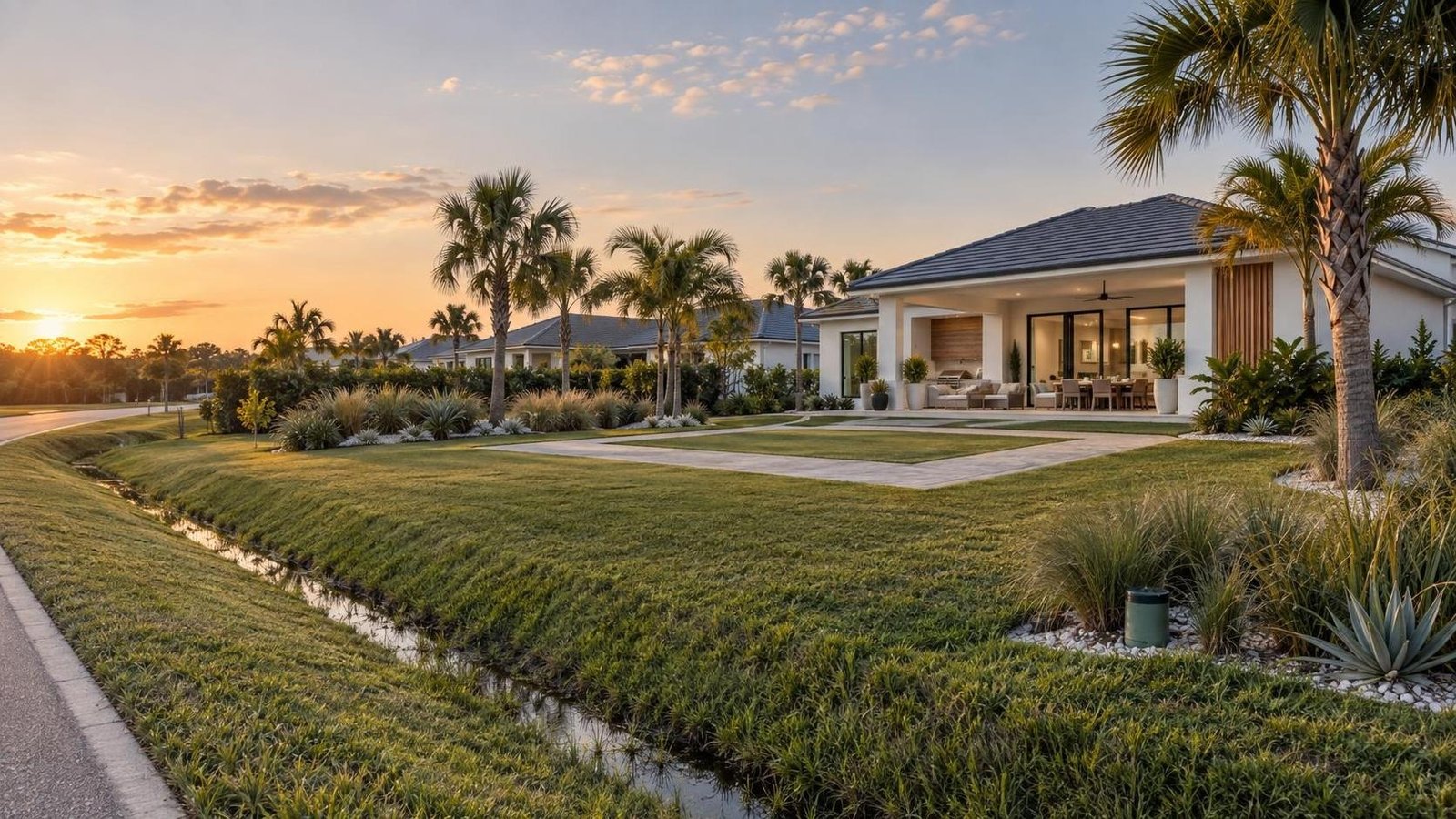
Corner-Lot Pool Potential or Cleaner Sewer Record: Which Palm Bay Home Is the Better Buy?
By Carrie Liotta, Space Coast REALTOR® with REAL Broker | Published September 20, 2026
Choose the corner lot only after a survey, utility locate, drainage review, and pool professional show a workable permitted envelope with construction access. Choose the interior lot when its clean sewer-lateral record removes a major unknown and you can accept a smaller or different outdoor plan. Extra grass does not equal buildable pool space.
Palm Bay buyers often see a corner lot and immediately imagine a pool, screen enclosure, side gate, and trailer access. The second home may look less exciting but has documented city sewer, a known lateral route, no abandoned septic mystery, and a simpler yard. The decision is not “big lot versus boring lot.” It is future project feasibility versus infrastructure certainty.
I would not pay for pool potential until qualified professionals draw it on the actual property.
Why corner lots can be deceptive
A corner lot may have more visible lawn while also having two street frontages, drainage features, sight-distance concerns, utility corridors, setbacks, easements, and a larger public-facing edge. The side that looks perfect for a pool may be the side needed for a swale, sewer connection, power route, fence setback, or construction access.
Start with a current boundary and improvement survey. Mark the house, garage, driveway, setbacks, easements, swales, culverts, wells, septic components, sewer lateral, water line, power, cable, trees, existing slabs, and neighboring drainage. Then ask a licensed pool contractor or design professional to create a preliminary layout based on current requirements and field conditions.
Do not rely on a listing sketch, aerial image, neighbor’s pool, or a seller’s statement that “there is plenty of room.” Two similar Palm Bay lots can have different utility routes and drainage constraints.
What a clean sewer-lateral record means
A strong record should help confirm whether city sewer serves the property, where the private lateral runs, when it was installed or replaced, which permits and finals exist, whether cleanouts are visible, and whether repairs or backups are documented. It does not guarantee the pipe will never fail, but it gives inspectors and contractors a much better starting point.
Request utility availability and account information through the City of Palm Bay Utilities, then verify the private-side condition through appropriate inspection. A camera scope may help identify material, alignment, roots, damage, or obstructions when recommended by the plumbing professional.
Map the lateral against the proposed pool, deck, enclosure, equipment pad, and construction path. Even a healthy line can constrain design if it crosses the only practical envelope. Relocation may be possible, but it should be priced and reviewed rather than assumed.
Find out whether an old septic system remains
Some properties connected to sewer may still have an abandoned tank, drainfield components, or incomplete records. Ask for the sewer-conversion permit, septic abandonment documentation, inspection, plumbing invoice, and site sketch. Look for depressions, patches, old lids, unusual vegetation, or seller recollections that need professional follow-up.
The Florida Department of Environmental Protection’s onsite sewage program explains that septic systems are regulated through state rules and that county health departments continue permitting and inspection work for property-specific systems in most counties. In Brevard, buyers should confirm the correct local record source rather than assuming the city sewer file contains every septic document.
An old tank location can affect excavation and project planning. Do not build the pool budget around an “empty yard” until the records and site investigation support that conclusion. My guide to Palm Bay sewer conversion, abandoned septic, and future pool sites explains the seller side of that file.
Pool feasibility involves more than the shell
A credible pool plan includes the pool, required setbacks, deck, screen enclosure if desired, fence and gate, alarms or barriers, equipment pad, electrical service, bonding, drainage, roof runoff, hose access, outdoor shower if planned, landscaping, and route for excavation equipment. It also needs a place to store spoil and materials during construction without blocking emergency or neighbor access.
Ask whether heavy equipment can reach the yard without crossing a septic area, damaging the swale, removing a protected or valued tree, dismantling a major fence, or passing under low power lines. A corner lot may improve access, but only if the side-street edge can legally and physically be used.
Review the City of Palm Bay permits and inspections resources and speak with the city and qualified contractors about the exact scope. HOA approval, if applicable, is a separate layer.
Drainage should decide the layout
Palm Bay yards often rely on swales, culverts, lot grading, and overland flow. A pool and deck add hard surface and can change how water moves. A corner lot may have a long street-side swale or multiple drainage directions. The lowest spot may be the most tempting open space and the worst place to interrupt flow.
Visit after rain when possible. Look for standing water, erosion, sediment, soggy fence lines, downspout discharge, culvert condition, driveway overtopping, and neighbor runoff. Ask for drainage repairs, surveys, grading plans, and permits. A professional should determine whether the proposed design preserves required drainage and protects the house and adjacent lots.
Do not solve visible water with fill or a raised deck before understanding where that water will go. My comparison of a larger Palm Bay lot with swale maintenance versus a smaller HOA home shows why yard size and water management belong in the same decision.
Build two budgets
For the corner lot, include survey updates, preliminary design, permits, utility locating, tree work, fence changes, drainage engineering if needed, pool and enclosure, electrical upgrades, equipment pad, landscaping restoration, and contingency for underground discoveries. If the seller has a quote, verify its scope and date rather than treating it as a fixed future price.
For the interior lot, include any smaller pool, plunge pool, spa, screened patio, or off-site recreation plan that actually fits. Add sewer inspection and near-term lateral maintenance supported by findings. The home may leave more cash available because fewer unknowns sit beneath the yard.
Then compare the rest of the house: roof, HVAC, electrical panel capacity, insurance, flood information, HOA, commute, and resale. A possible pool should not distract from systems that need immediate money.
When the corner lot is worth choosing
The corner lot makes sense when the buyer truly intends to build, the preliminary plan fits without major utility or drainage conflicts, construction access is realistic, and the project budget remains comfortable after closing. It may also be the better lifestyle fit for buyers who want a wider side gate, garden, detached storage where allowed, or separation from one neighbor.
I would want the survey, utility information, sewer and septic history, contractor concept, city or HOA questions, and written estimates developed during due diligence. No one should guarantee permit approval before the formal process, but a disciplined feasibility review can eliminate obvious conflicts.
For buyers considering multiple future uses, my article on reserving Palm Bay land for septic replacement, a workshop, and a pool is a useful reminder that one open area cannot serve every future project.
When the interior lot is the smarter purchase
Choose the interior lot when the sewer record is clean, the current yard already meets your needs, and the corner lot’s pool story depends on too many assumptions. Infrastructure clarity can protect reserves, shorten due diligence, and make future resale easier to explain.
The interior lot may also offer less public frontage, fewer sidewalk or street-side interactions, a more private-feeling rear yard, and simpler fencing. If a community pool, nearby recreation, or occasional beach use satisfies the household, paying for uncertain private-pool potential may not be disciplined.
Structure the offer around evidence
If pool feasibility materially affects value, preserve enough inspection and feasibility time for the survey, utility information, plumbing review, contractor visit, and drainage questions. Make sure access is authorized. Do not excavate, probe, or disturb the property without written permission and qualified professionals.
When a conflict appears, negotiate from documented scope. A price reduction or credit may help with cost but cannot create buildable space or alter a utility easement. If the intended pool cannot fit, decide whether the house still works without it.
My Palm Bay site checklist
- Current survey with improvements, easements, setbacks, swales, and utilities.
- Verified city water and sewer availability plus private lateral records.
- Septic permit, abandonment, and location records where applicable.
- Professional sewer inspection when recommended.
- Preliminary pool, deck, enclosure, equipment, and access layout.
- Drainage review after rain and documentation of prior work.
- City permit and HOA approval questions answered in writing where possible.
- Full project budget with contingency and broader home reserves.
Bottom line
The Palm Bay corner lot is the better buy only when its pool potential survives a real site review. Otherwise, the interior lot with a cleaner sewer-lateral record may offer the stronger ownership plan and fewer buried surprises. Buy verified feasibility, not extra-looking lawn.
I am Carrie Liotta, a Space Coast REALTOR® with REAL Broker, and I publish 321 Coastal Living to help buyers connect future plans to the property underneath them. Reach out for a no-pressure conversation about Palm Bay surveys, utilities, drainage, inspections, and resale. Your next chapter starts here.
