

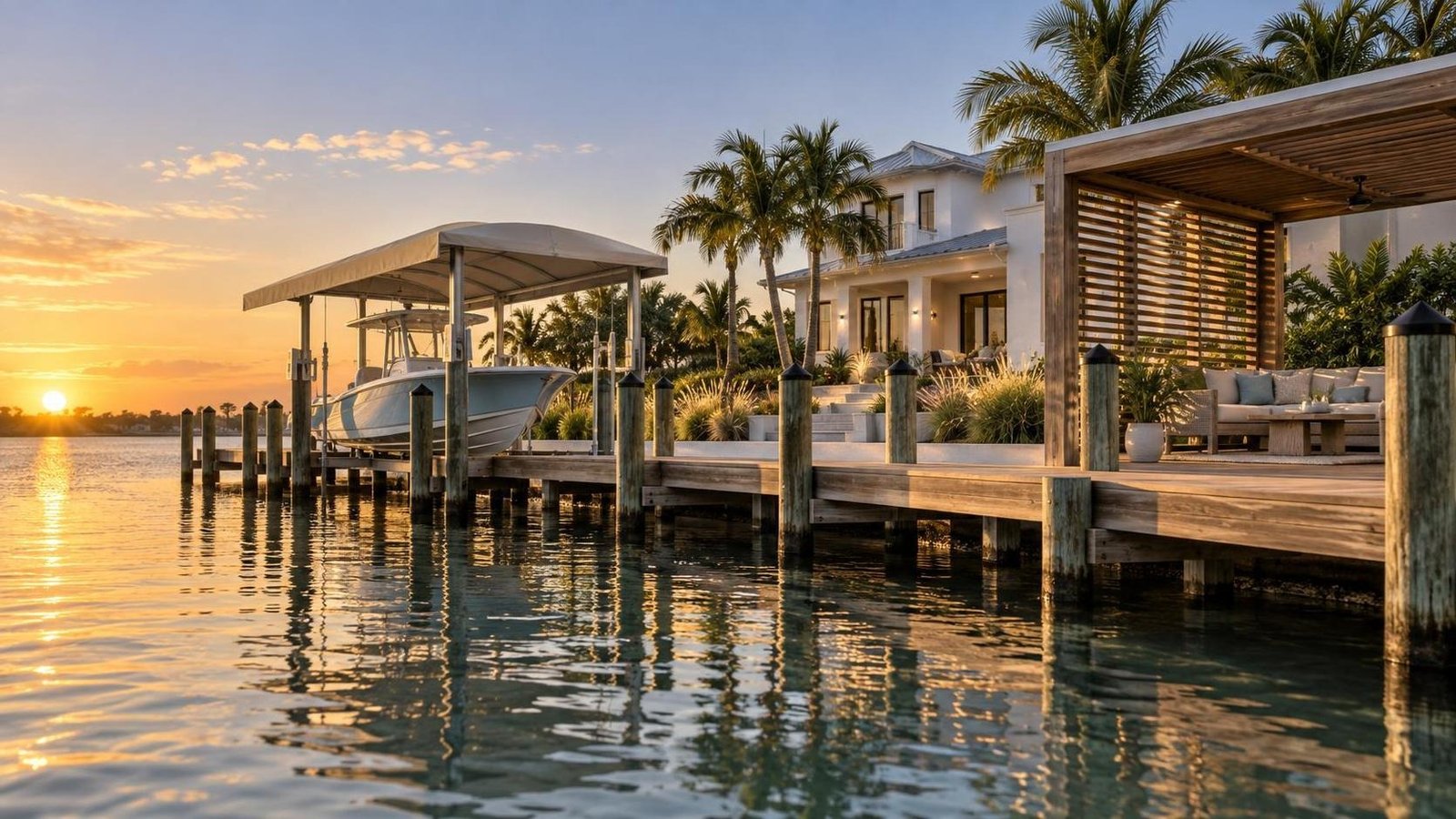
West-Facing or East-Facing Canal Home: What Should Merritt Island Buyers Compare?
By Carrie Liotta, Space Coast REALTOR® with REAL Broker | Published October 4, 2026
Neither canal orientation is automatically better. Choose an east-facing rear waterfront for morning light and a more shaded late-day dock. Choose a west-facing rear waterfront for sunset views and bright after-work hours. In either case, visit when you will use the dock and price the shade, cooling, and boat protection you need.
When two Merritt Island canal homes have similar water access, buyers often treat orientation as a tie-breaker. I think it deserves a more practical test. The question is not simply whether you like sunrise or sunset. It is where the sun lands on the dock, rear glass, boat, seating, pool, and seawall edge when you expect to be outside.
First, confirm what “east-facing” and “west-facing” mean
For this comparison, I am talking about the direction the rear waterfront faces, not the front door. A home with a west-facing street may have an east-facing canal yard. Listing descriptions can also simplify a diagonal lot into one compass label even though the dock points southeast or southwest.
Verify the rear exposure with a parcel map and a compass, then study the whole site. The NOAA Solar Calculator can estimate sunrise, sunset, solar noon, and the sun’s azimuth and elevation for a location and date. NOAA also cautions that actual observations can differ. That is exactly why I use a calculator as a planning aid, not as a substitute for standing on the property.
Roof overhangs, neighboring homes, mature palms, dock roofs, screen enclosures, and the canal’s true bearing can change the experience. So can the season. A photo taken at 5 p.m. in October does not prove what the same dock will feel like on a longer summer afternoon.
Who is likely to prefer an east-facing rear canal?
An east-facing rear waterfront generally gives the dock and back of the home their strongest direct light earlier in the day. That can be a good fit if your ideal routine is coffee by the canal, an early paddle, morning fishing preparation, or cleaning the boat before the afternoon heat builds.
Later in the day, the house itself may begin shading parts of the rear yard and dock. Buyers who expect to sit outside after work, supervise children near the water, host an early dinner, or perform routine boat cleanup may value that shade more than a sunset view. A shaded late-day rear exposure can also reduce direct glare through large sliders, although the actual indoor result depends on glass, coverings, roof depth, insulation, and HVAC condition.
The tradeoff is that sunrise light may reach bedrooms or rear living areas earlier than you want. Morning glare can also affect a dock work area. Depending on adjacent structures and vegetation, a boat or pool may move into shade sooner in the afternoon. If you want warm, bright water late in the day, do not assume an east-facing yard will deliver it.
Who is likely to prefer a west-facing rear canal?
A west-facing rear canal often appeals to buyers who come home later and want the waterfront to feel active then. Low evening light across the canal can be beautiful. The dock, pool, and rear rooms may remain bright after an east-facing yard has become shaded. For a household that actually uses the boat or outdoor space from late afternoon through sunset, that exposure can be the feature that makes the home feel right.
But the sunset view has an ownership side. Low western sun can create glare under a shallow roof, heat an uncovered seating area, and reach deep through rear glass. A dark dock surface, metal railing, uncovered lift, or unshaded fish-cleaning station may feel very different at 4:30 p.m. than it did during a 10 a.m. showing.
This does not make a west-facing canal home a bad choice. It means I want to see the mitigation plan. A deep covered porch, useful dock roof, slatted shade, exterior-rated screens, appropriate window treatments, healthy HVAC, and thoughtfully placed landscaping can make a west-facing property far more comfortable than its compass label suggests. The important word is “useful.” Decorative shade that misses the seating area when the sun is low does not solve the buyer’s problem.
Run a two-visit dock-comfort test
If orientation matters to your decision, try to visit once in the morning and once in the late afternoon. Do not remain on the back porch. Walk to the places where daily life will happen and observe them for several minutes.
- Dock seating: Is the chair area shaded, or is the only comfortable place blocking a gate or service path?
- Boat access: Can you reach cleats, controls, the lift, and storage without working in concentrated glare?
- Rear glass: Which rooms receive direct light, and do existing coverings manage it without making the interior permanently dark?
- Deck and seawall edge: Notice surface temperature, reflected light from the water, and whether shade reaches the area where people actually stand.
- Air movement: Observe it, but do not credit the compass with a guaranteed breeze. Weather, buildings, vegetation, and canal geometry all matter.
The EPA’s UV Index guidance recommends shade during late morning through mid-afternoon at moderate-to-high UV levels. The National Weather Service heat-safety guidance also explains that heat can cause illness and worsen existing health conditions. I am not using those sources to declare one orientation “healthy.” I am using them to make a simpler point: comfortable, usable shade is a real feature, not a cosmetic bonus.
Look at the boat and dock as systems, not scenery
Orientation can change how often covers are used and how pleasant routine work feels, but it does not tell you whether the waterfront functions. Confirm canal width, turning room, route, bridge clearance, typical depth, lift capacity, dock condition, and seawall condition first. My comparison of canal width, turning room, and seawall age explains why those harder-to-change features usually outrank cosmetics.
Then inspect the orientation-specific details. Ask whether the boat canopy provides useful coverage through the brightest hours and whether it can be operated as intended without colliding with the lift or roof. Look at upholstery, clear vinyl, canvas, electronics covers, dock-box lids, and caulked joints for a consistent maintenance story. Sun exposure is not proof of damage, and shade is not proof of protection. Salt, moisture, wind, installation quality, material choice, and maintenance remain part of the picture.
Check that a shade roof or screen does not make the lift, electrical disconnect, ladder, tie-off points, or seawall edge difficult to reach. If you plan to add a dock roof, screen, pergola, or other improvement, verify feasibility, permits, HOA rules if applicable, and the correct authority before treating the future project as solved. Permit history can begin with the Brevard County permit search for county jurisdiction, but a municipality or another reviewing agency may also be involved.
Compare indoor comfort and carrying cost without guessing
Late-day sun at the rear of the property can matter inside when the canal side has large sliders or windows. During the afternoon visit, stand in the family room, kitchen, primary bedroom, and any home office along that wall. Note glare, uneven temperatures, closed blinds, faded finishes, and whether the HVAC appears to maintain the thermostat setting.
Do not blame orientation for every warm room. Duct leakage, insufficient returns, dirty equipment, worn seals, poor insulation, failing glass, or an undersized or struggling system can produce similar symptoms. Conversely, do not assume a newer air conditioner makes a heavily exposed room comfortable. Have the home, HVAC, windows, and shading evaluated on their own merits.
Request electric bills if the seller is willing to share them, but use them as history rather than your forecast. Thermostat habits, occupancy, pool equipment, EV charging, travel, window coverings, and boat-lift use can change consumption. If one house needs exterior shades, new window coverings, a dock canopy, or landscape changes to fit your routine, obtain proposals and add those numbers to the comparison. My Viera article on a west-facing pool versus an east-facing lanai applies the same schedule-first principle in a non-canal setting.
Do not let orientation hide the bigger waterfront risks
A shaded dock is not automatically the better purchase if the seawall is moving, the lift does not fit your boat, or the route does not fit the boating you plan to do. A dramatic sunset does not compensate for uncertain flood cost, unverified improvements, or an inspection report you cannot comfortably fund.
Use the FEMA Flood Map Service Center to begin the address-specific flood review, then obtain insurance quotes for the actual property. Orientation does not establish flood zone, elevation, premium, drainage performance, or storm exposure. Review the survey, elevation information if available, seller records, permits, dock and lift documents, seawall history, and specialist findings before the inspection period closes.
For a buyer with a particular boat, go beyond the backyard and verify the route. My guide to Merritt Island canal homes for bridge clearance and deeper-water needs shows why a property can have the right exposure and still be the wrong boating fit.
Use a routine-based scorecard
I would compare the homes with four separate scores rather than one emotional “view” score:
- Daily comfort: Does the dock work at your usual hour without requiring everyone to retreat inside?
- Waterfront utility: Does the canal, route, dock, lift, and seawall support the boat and activities you actually want?
- Mitigation cost: What will it take to manage glare, shade, cooling, boat protection, and maintenance?
- Resale clarity: Can a future buyer understand the exposure and see that the home is comfortable, functional, and documented?
An east-facing rear canal often wins for a buyer who wants breakfast outside, earlier boat preparation, and shade after work. A west-facing rear canal often wins for a buyer who wants late-day light, sunset entertaining, and bright evening water. A diagonal exposure may provide a useful compromise. None of those outcomes deserves an automatic price premium without comparing the entire property.
My bottom line for Merritt Island canal buyers
Choose the orientation that matches the hours you will live outside, then confirm that the house and waterfront can support it without an uncomfortable or unaffordable workaround. I would rather see a buyer choose a modest view with a dock they will use every week than pay extra for a sunset they avoid because the space is too exposed.
I am Carrie Liotta, a Space Coast REALTOR® with REAL Broker, and I publish 321 Coastal Living to help buyers compare how Brevard County homes actually live beyond the listing photos. Reach out for a no-pressure conversation about Merritt Island canal homes, boating access, inspections, and total ownership cost. Your next chapter starts here.
