

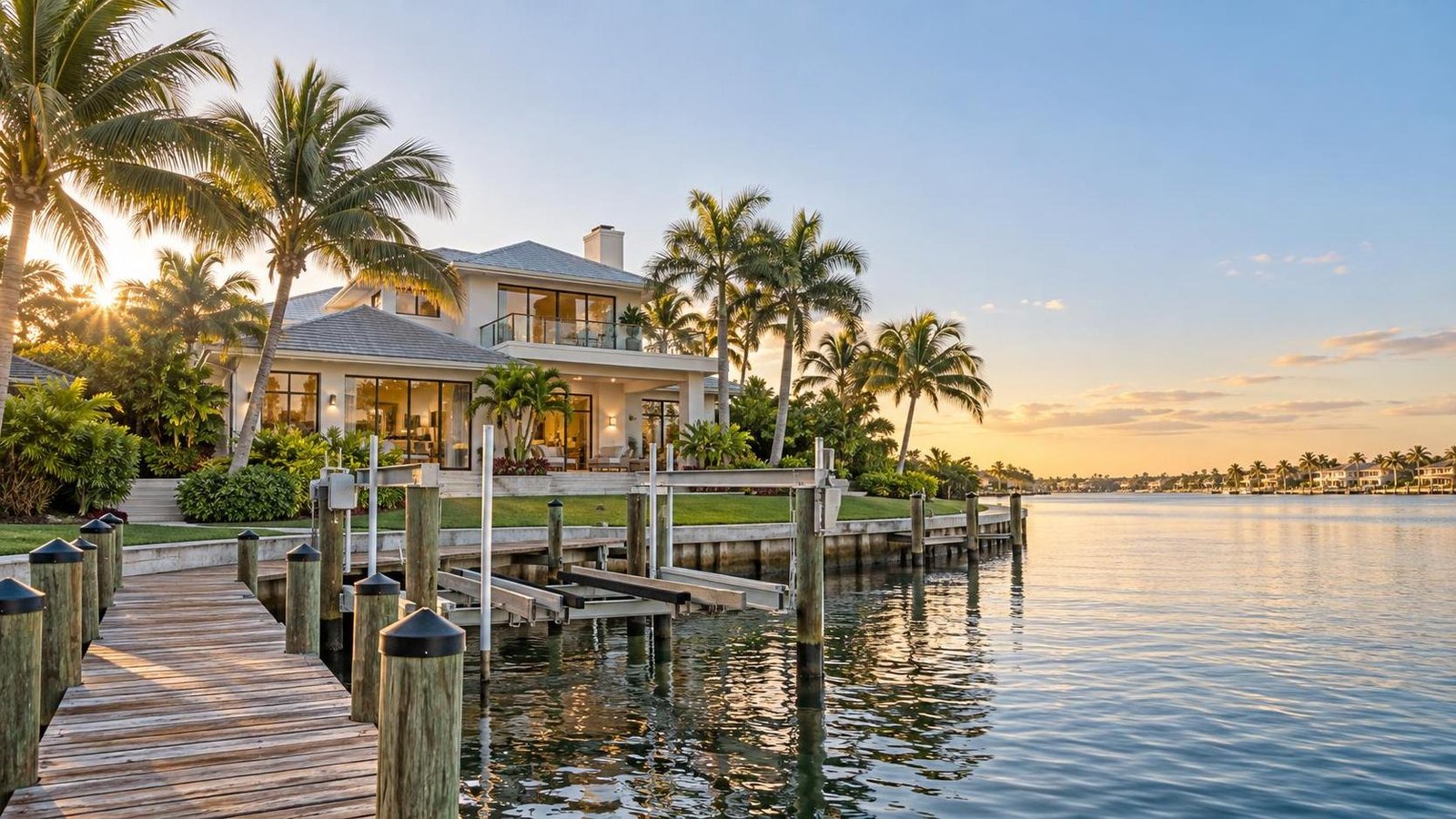
What Should a Merritt Island Buyer Verify About a Canal Home’s Dock, Lift, and Seawall Before Making an Offer?
By Carrie Liotta, Space Coast REALTOR® with REAL Broker | Published November 1, 2026
Before making an offer on a Merritt Island canal home, verify what is actually on the property, how the dock, lift, and seawall have been maintained, and whether the water access fits the boat and lifestyle you have in mind. A water view alone does not answer the questions that affect ownership, use, repair planning, insurance conversations, or a future resale.
I tell buyers to slow down at the waterline. A canal home can be a wonderful Space Coast lifestyle choice, but the dock and seawall are not decorative add-ons. They are working improvements exposed to water, sun, salt, hardware wear, tides, and the practical limits of the route from that canal to open water. The strongest offer is built on documents and inspections, not assumptions from a showing.
Begin with the property boundary and improvement records
Ask the seller for the survey, seller disclosure, dock and lift invoices, seawall repair or replacement records, permit information, contractor contact details, and photos of major work. Then identify the relevant jurisdiction before concluding that a missing online record means a project was never permitted. The Brevard County permit search is a useful public starting point, while some work may involve another authority or older records that require a more direct request.
A survey helps frame a basic but important question: where does the upland parcel end, and what is the relationship between the improvement, the shoreline, and the water? Do not rely on a fence line, a neighbor’s dock, or an aerial image to answer that. Your title company, surveyor, and appropriate waterfront professionals can help with property-specific questions. A real estate listing should not make a legal conclusion about riparian rights or boundaries.
Ask whether the dock is fixed or floating, whether the lift is included, and what accessories are staying. A lift cradle, remote, cover, power connection, davits, kayak rack, fish-cleaning station, or dock box may matter to your decision and should not be treated as automatically included because it is visible on a tour.
Inspect the seawall as a major component
The seawall deserves its own evaluation. Look for written records of installation, cap repairs, tie-back work, drainage changes, coping repairs, or prior engineering opinions. During a showing, I notice obvious signs such as cracking, uneven areas, soil loss, leaning sections, water movement behind the wall, or a dock that appears out of level. I do not diagnose the cause from the sidewalk. Those observations are a reason to bring in a qualified seawall or marine professional during due diligence.
Age alone is not a reliable verdict. A newer wall with unclear workmanship can be a concern, and an older wall with documented monitoring and professional repairs may have a clearer story. The point is to understand the current condition, expected maintenance, and any evidence of prior movement before you set your budget. Do not let a seller’s “it has always been fine” replace an inspection that is appropriate for the property.
If you are comparing a lower-priced house with an older wall against a higher-priced home with a newer wall, put the whole ownership picture on paper. The difference is not just the offer price; it is the reserve you may need for docks, pilings, hardware, roof, insurance, and the other components that come with waterfront living. My guide to why a waterfront seawall inspection can matter before pricing offers a seller-side view of the same planning issue.
A boat lift is equipment, not a promise
A lift can be a meaningful convenience, but verify the manufacturer, rated capacity, installation date, service history, controls, cables, bunks, power source, and whether it has been used recently. The “rated capacity” on equipment is not permission to load every boat of a particular advertised weight. Boat weight changes with fuel, gear, water, engines, and accessories. A qualified lift company should tell you whether a particular boat and configuration are appropriate.
Ask the seller to demonstrate the lift only if it is safe and they are comfortable doing so; never make a showing the moment to operate unfamiliar waterfront equipment. If the lift has not been used, has visible corrosion, or lacks records, assume you need a specialist’s assessment rather than a casual assurance. A buyer should also plan for ongoing cable, motor, cradle, electrical, and hardware service.
Water access requires route-specific research
“Deep water,” “no bridges,” and “ocean access” are phrases that can conceal more than they explain. The practical route may involve bridges, tidal conditions, shoaling, turns, channel markers, and a distance that is perfectly reasonable for one owner and inconvenient for another. What a kayak, pontoon boat, center console, sailboat, or fishing boat needs is not the same.
Before you rely on an access claim, use current official navigation information and conduct your own route review. The U.S. Coast Guard Navigation Center links to navigation resources, and the NOAA nautical-chart program is an authoritative starting point for chart information. Current local conditions, depth, clearances, and navigability should be confirmed by the buyer with the appropriate marine professional or local authority. I do not promise depths or bridge clearances from a property listing.
A useful showing question is simple: where do the current owners actually go by water? It may reveal whether the lifestyle is morning paddling, lagoon fishing, a quick run to a waterfront restaurant, or a longer route that the buyer needs to experience for themselves. It is a lifestyle conversation, not proof of what your particular vessel can do.
Review power, drainage, and maintenance around the dock
Dock improvements often connect to exterior electrical systems, irrigation, drainage, and landscaping. Ask about GFCI protection, electrical work, lighting, water service, and any changes made after a storm or repair. If there is a fish-cleaning station, pump, or shore-power equipment, include it in the inspection conversation. Do not assume an exterior outlet or fixture is current, safe, or part of the sale merely because it is present.
Also look at how water moves across the yard toward the seawall. Pavers, drains, downspouts, pool decks, and landscaping can matter to erosion and maintenance. A pretty backyard at low tide is not a complete inspection. Visit at more than one time if possible, review flood and insurance questions with your insurer, and allow qualified inspectors to look beyond the staged furniture.
Write an offer that gives you time to verify
The right inspection period depends on the contract and your circumstances, but waterfront buyers should plan the appointments early. A home inspector may identify visible issues; a seawall, dock, lift, electrical, pool, roof, or marine specialist may be needed for a fuller answer. Get estimates and opinions in writing. If a significant question arises, discuss the available contract options with your real estate professional and attorney as appropriate.
Keep the decision anchored to the home, not to fear of losing it. A canal property may be worth pursuing after careful inspection. It may also be the wrong fit if its access, repairs, or future obligations do not match your budget. Clear information is a win either way.
My Merritt Island canal-home checklist
- Survey, seller disclosure, permits, repair invoices, and contractor records.
- Qualified inspection of the seawall, dock structure, lift, and related electrical systems.
- Written confirmation of included lift equipment, controls, racks, and accessories.
- Route-specific boat research rather than reliance on “ocean access” language.
- Flood, insurance, drainage, title, and boundary questions addressed by the right professionals.
- A realistic reserve for waterfront maintenance beyond the ordinary home inspection items.
Bring your intended boating routine into every inspection conversation, including storage, boarding, guest use, and the seasonal care you are prepared to manage.
Bottom line
A Merritt Island canal home should be evaluated as a house plus a waterfront system. Verify the dock, lift, seawall, permits, boundaries, route, and maintenance history before you make the property part of your plan. That is how you protect the pleasure of the water without overlooking the responsibilities beside it.
If you are considering a Merritt Island waterfront purchase, I can help you organize the property questions and coordinate a practical due-diligence plan. Carrie Liotta is a Space Coast REALTOR® with REAL Broker, and I would be glad to help you plan the next step.
