

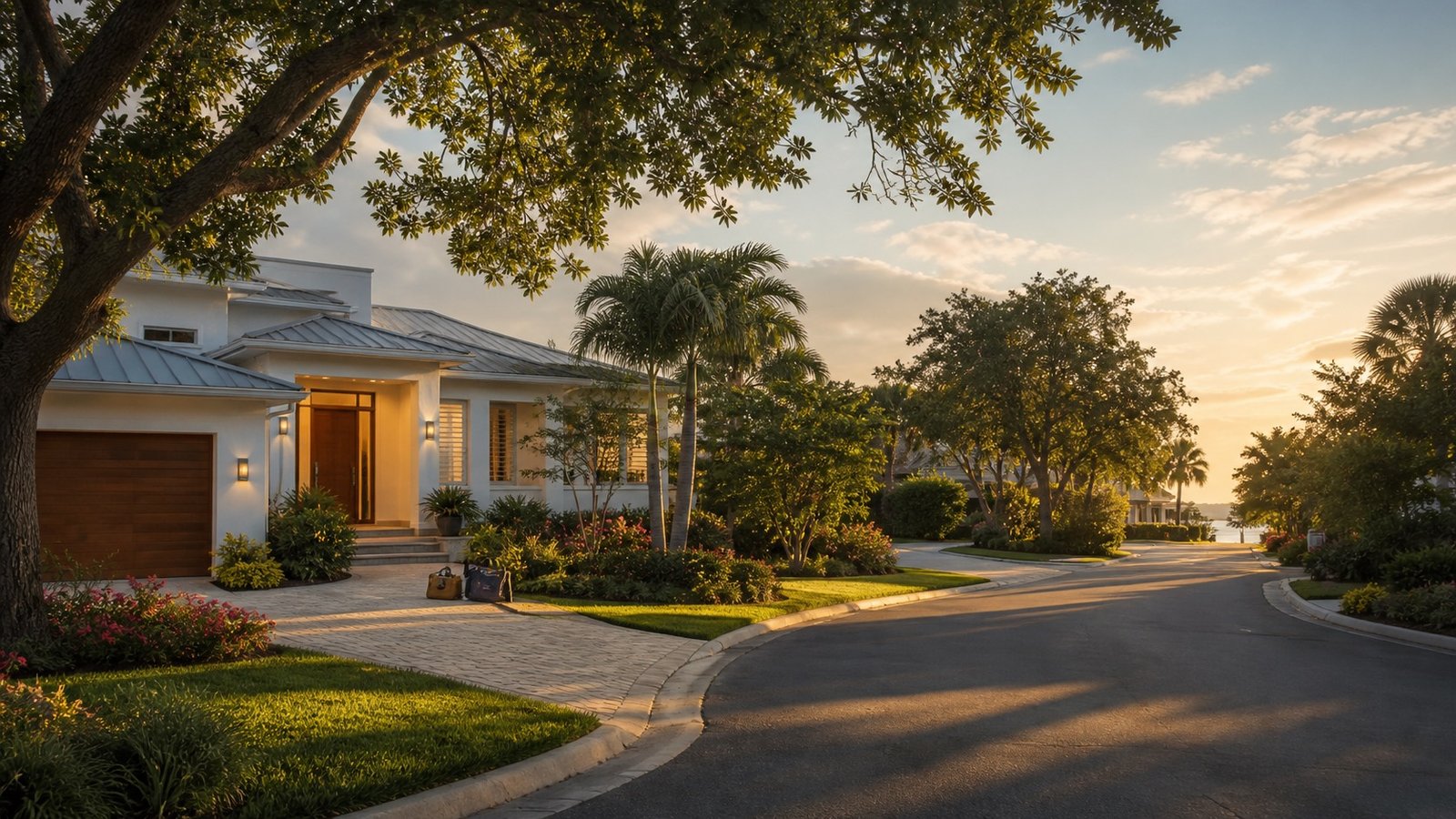
Should Melbourne Buyers Choose a Quieter Cul-de-Sac or a Faster Route to Wickham Road and I-95?
By Carrie Liotta, Space Coast REALTOR® with REAL Broker | Published August 7, 2026
If you are buying in Melbourne and choosing between a quieter cul-de-sac and a faster route to Wickham Road or I-95, the better choice depends on how you live Monday through Friday. A quiet cul-de-sac can be worth paying for when privacy, kids, pets, and home-office peace matter most. A faster route can be the smarter buy when your commute, school pickup, medical appointments, airport access, or cross-county schedule drives the week.
My practical rule is this: choose the cul-de-sac if you will use the quiet every day. Choose the faster route if you will use the access every day. Do not pay a premium for a quiet street if you are rarely home during the day, and do not sacrifice peace if the route only saves three minutes on paper.
Melbourne is full of these close calls. One home may sit at the end of a calm street near Wickham Park or Lake Washington, while another may be closer to Wickham Road, Eau Gallie Boulevard, Sarno Road, Palm Bay Road, or the I-95 access pattern you use constantly. Both can be good homes. The question is which one makes your actual week easier.
Why this choice matters in Melbourne
Melbourne is not one uniform market. A buyer comparing Downtown Melbourne, Eau Gallie, Lake Washington, Wickham Park, West Melbourne, Suntree-adjacent pockets, or neighborhoods near major employers is really comparing daily rhythm. Some buyers need quiet and shade. Some need a clean route to L3Harris, Northrop Grumman, Health First, Melbourne Orlando International Airport, I-95, or a beach causeway. Some need both and have to decide which one deserves the premium.
The Florida Department of Transportation’s District Five covers Brevard County and the broader central Florida transportation region, while the Space Coast Transportation Planning Organization is a useful source for regional transportation planning context. I like those public sources for the big picture, but the final decision still has to be tested from the driveway.
Drive the route at the time you will actually use it. A house that looks convenient on a map may still require a difficult left turn, school-zone slowdown, rail crossing, backup at a signal, or awkward cut-through that gets old quickly.
When the quieter cul-de-sac wins
The quieter cul-de-sac usually wins when the home is your base, not just where you sleep. If you work from home, have young kids, care for aging parents, have pets, host visiting family, or value outdoor space, the difference between a calm street and a busier access route can be worth real money.
A cul-de-sac can reduce through traffic, make bike riding and sidewalk play feel calmer, and give the home a more tucked-away feel. It can also help resale when the buyer pool includes families, remote workers, retirees, and people who want less road noise. In established Melbourne neighborhoods, that feeling can be hard to recreate once buyers experience it.
The caution is that not every cul-de-sac is automatically better. Some have tight parking, awkward turnarounds, drainage at the low point, less walkability, or slower access back to main roads. If everyone parks in the circle, or delivery trucks struggle, the quiet may come with friction. I would also look carefully at drainage after heavy rain, especially on lower lots or streets near stormwater ponds, canals, or older infrastructure.
When the faster route wins
The faster route wins when access truly improves your life. If you commute often, split your week between schools and employers, drive to medical appointments, need airport access, or cross the county several times a week, shaving friction from the route can be more valuable than a quieter street.
Being closer to Wickham Road or a clean I-95 pattern can make sense for buyers who need movement. Wickham Road connects many everyday Melbourne routines: shopping, restaurants, medical offices, Wickham Park, Eau Gallie access, Lake Washington-area neighborhoods, and routes toward Suntree and Viera. I wrote a focused guide on what buyers should know before buying near Wickham Road in Melbourne because the convenience is real, but the street-by-street noise and traffic differences matter.
For I-95 access, the right answer depends on whether you drive north toward Viera, Rockledge, Cocoa, or Kennedy Space Center, south toward Palm Bay, or west toward Orlando. A home that saves ten minutes each way can give you back hours each month. That can matter more than a prettier cul-de-sac if your schedule is already stretched.
Resale is not one-sided
Both choices can support resale, but they appeal to different future buyers. A quiet cul-de-sac is easy to market to families, remote workers, and people who want privacy. A faster route is easy to market to commuters, healthcare workers, aerospace households, frequent travelers, and buyers who prioritize errands and access.
The problem comes when a home has neither a strong quiet story nor a strong access story. For example, a house that is not especially quiet, not especially convenient, and not priced accordingly may struggle to stand out. A buyer may overlook that during a fast showing, but future buyers will compare more carefully.
If you are weighing commute access against other lifestyle tradeoffs, my broader post on whether Brevard buyers should choose closer I-95 access or closer beach access may help you frame the same decision at the county level.
How noise changes the answer
Noise is not always obvious during a showing. A home may feel calm at 11 a.m. and very different at 5:15 p.m. I want buyers to visit twice when possible: once during the workday and once during the evening. Stand in the driveway. Sit on the back porch. Open the bedroom windows. Listen for road hum, aircraft, school traffic, sirens, dogs, deliveries, and neighbor patterns.
The City of Melbourne’s official website at melbourneflorida.org is a starting point for city services, departments, and local information, but noise and route feel are things you need to experience. I also wrote about Melbourne airport noise, commute convenience, and resale because buyers often underestimate how much sound and access shape satisfaction after closing.
Do not overreact to one car or one loud moment. Look for patterns. The question is whether the location works for your tolerance, not whether it is perfectly silent.
What about families, pets, and home offices?
For families, a cul-de-sac may be worth more if children will play outside, friends will visit, or school pickup already adds stress to the day. For pet owners, less through traffic can make walks and driveway routines calmer. For remote workers, a quieter street can protect concentration and make outdoor breaks more enjoyable.
But a faster route can still win for those same households if the home is otherwise quieter inside, has better windows, a stronger layout, or a more practical school/work loop. I do not want buyers to reduce the whole decision to the shape of the street. Floor plan, insulation, window placement, yard orientation, garage location, and daily route all work together.
How I would compare two homes side by side
If you are stuck between two Melbourne homes, I would score them on the things that affect your week most:
- Morning route: actual drive to work, school, childcare, or appointments at your real departure time.
- Evening route: return drive, dinner errands, sports, activities, and beach or park access.
- Quiet: road noise, backyard feel, bedroom location, home-office location, and neighbor activity.
- Safety feel: traffic speed, sidewalks, visibility, lighting, driveway access, and walkability.
- Condition: roof age, insurance documentation, drainage, windows, HVAC, and inspection profile.
- Resale story: whether the next buyer will immediately understand the value of the location.
I would also compare the payment. Sometimes buyers use a cul-de-sac premium as if it is always resale-proof. It is not. If the premium pushes you into a payment that feels tight, the quieter street may not be worth it. On the other hand, if the faster-route home saves only a few minutes but puts you near noise you dislike, the savings may not feel worth it either.
“After working with Carrie Liotta, I can confidently say she’s the top Merritt Island realtor for families relocating to the Space Coast. She helped us relocate from out of state by answering every question.”
A relocating Space Coast client
My practical recommendation
If your household works from home, has young kids, values a calm backyard, or spends a lot of time at the house, I would give the cul-de-sac serious weight. If your household commutes, works shifts, travels often, or uses Wickham Road and I-95 constantly, I would give the faster route serious weight.
The tie-breaker is usually resentment. Which inconvenience will bother you more after six months: an extra eight minutes in the car twice a day, or the feeling that your street never quite gets quiet? Be honest about that answer. The right home should make ordinary days easier, not just look good during a showing.
Bottom line
A quieter cul-de-sac and a faster Wickham/I-95 route are both valid Melbourne buyer priorities. The best choice is the one you will benefit from most often. Quiet is valuable when you use it. Access is valuable when it gives time and energy back to your week.
If you are comparing Melbourne homes and cannot decide whether peace or access matters more, I can help you test the route, listen to the street, compare resale, and look at the full inspection and insurance picture before you offer. Reach out for a no-pressure conversation about Brevard County homes for sale with REAL Broker. Your next chapter starts here.