

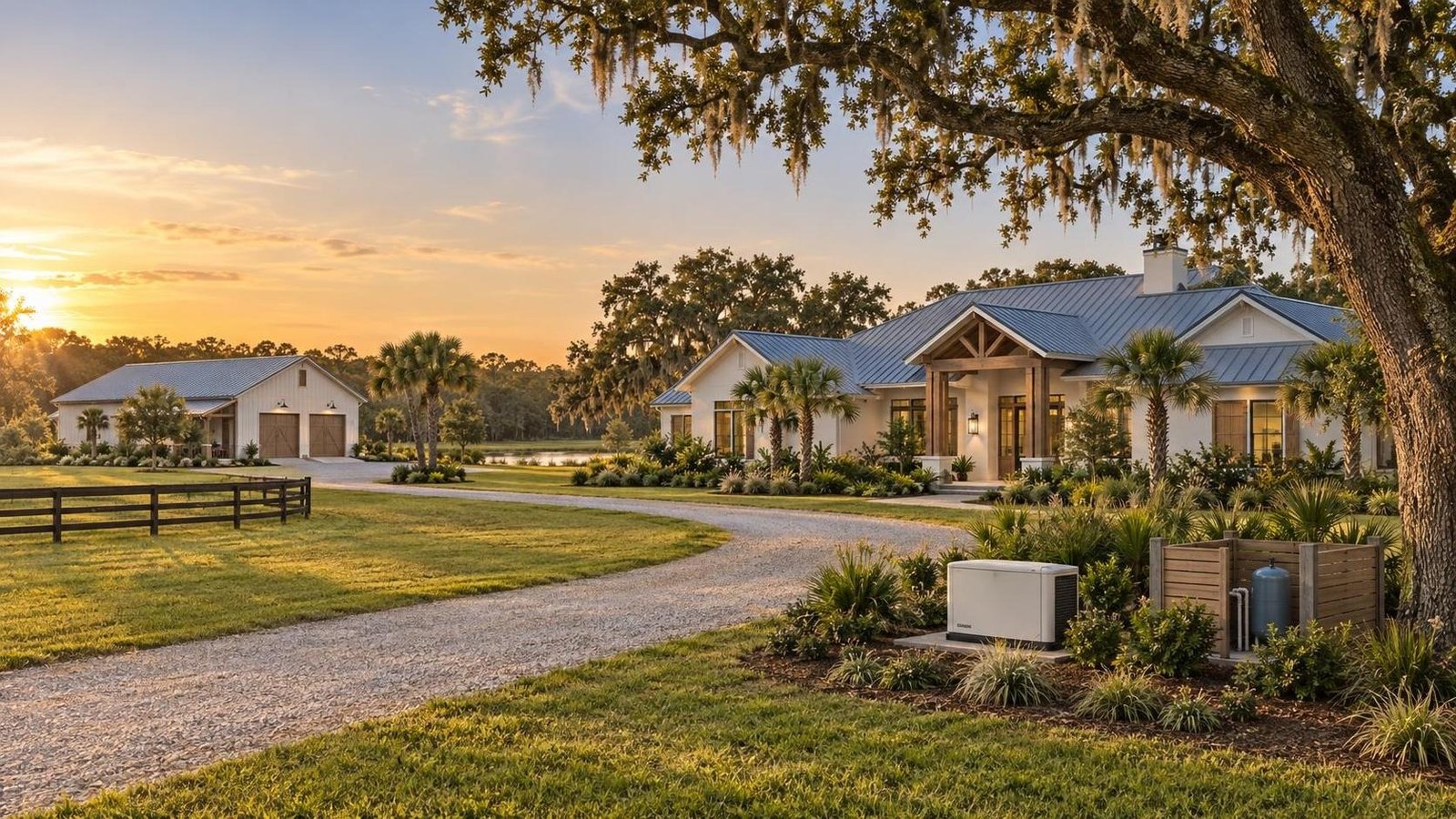
Generator-Backed Well or a Newer Detached Workshop: What Should a Grant-Valkaria Acreage Buyer Prioritize?
By Carrie Liotta, Space Coast REALTOR® with REAL Broker | Published September 25, 2026 on 321 Coastal Living
I would prioritize a documented generator-backed well system when household water, animals, irrigation, or essential acreage operations cannot tolerate an extended outage. I would prioritize the newer detached workshop when the water system is already reliable, tested, and affordable to back up later, and the workshop’s permitted structure, power, access, and insurance directly support the buyer’s work or serious hobby.
Acreage buyers often compare the features they can see with the systems they only notice when something fails. The workshop is exciting: space for tools, vehicles, equipment, art, storage, or a home business. The well-and-generator combination is less glamorous, but it may control toilets, sinks, livestock water, refrigeration plans, gates, and the ability to remain functional during an outage.
The phrase “generator-backed well” does not prove performance. The phrase “newer workshop” does not prove permits, power capacity, safe access, or insurability. Before assigning value, verify what each system can actually do.
Begin with the household’s essential-load plan
List what must operate during a power outage and for how long. Start with the well pump and pressure system, then consider refrigeration, medical equipment, communications, selected lighting, gates, septic components if powered, and any animal or agricultural needs. Separate essential loads from comfort loads such as whole-house cooling, workshop tools, pool equipment, and every appliance at once.
Ask a licensed electrical contractor and the appropriate well professional to identify the pump, controls, starting requirements, pressure equipment, protective devices, transfer equipment, generator specifications, fuel system, and circuits served. A generator may have enough running capacity on paper yet struggle with motor starting or simultaneous loads. I do not make that engineering judgment from a label; I want a professional load evaluation and documented test procedure.
The Florida DBPR Electrical Contractors’ Licensing Board licenses and regulates electrical contractors and describes the electrical work within contractor scopes. Use an appropriately licensed professional to evaluate wiring, transfer equipment, panels, grounding, circuits, and the connection serving the well and workshop.
A generator is valuable only when the whole system is ready
Request the generator installation permit and final, model and serial information, installation invoice, maintenance history, warranty, load plan, transfer-equipment records, fuel details, operating instructions, and logs from professional testing. Identify whether the generator starts automatically or requires a manual process, and who services it.
Do not run unfamiliar equipment during a showing. Ask the seller to arrange a qualified demonstration within the inspection process. Confirm which loads are actually supported and whether the test included the well pump under realistic conditions. Note alarms, leaks, corrosion, weather exposure, noise, and clearance issues for professional evaluation.
Ready.gov’s power-outage guidance warns that outages can disrupt water and communications and gives clear generator-safety precautions, including outdoor placement away from openings, carbon-monoxide protection, keeping equipment dry, and following manufacturer instructions. Those general rules do not certify a property’s setup, but they show why fuel, placement, ventilation, transfer method, and maintenance belong in due diligence.
The well needs its own investigation
Backup power does not tell you whether the well produces adequate water, has acceptable quality, or has serviceable components. Ask for the well permit and completion information if available, depth and construction records, pump and tank age, service history, treatment equipment, test results, repair invoices, and any history of low pressure, sediment, odor, staining, or outages.
The U.S. Environmental Protection Agency’s private-well guidance states that private well owners are responsible for delivering safe drinking water to their households and explains that private wells are not regulated under the federal Safe Drinking Water Act in the same way as public systems. Arrange the appropriate property-specific water testing and well evaluation rather than relying on appearance or the seller’s taste test.
Consider the entire water routine. How quickly does pressure recover? Does irrigation share the source? Are animals watered automatically? Does treatment equipment require electricity? Is there storage? What happens if the pump fails but the generator runs? A resilient system needs water source, pump, pressure, treatment, power, fuel, and service access to work together.
Now test whether the detached workshop is truly useful
A newer workshop can be a major value when it is properly permitted, accessible, dry, well ventilated, and powered for the buyer’s intended use. Ask for plans, permits, final inspections, contractor invoices, electrical records, roof and slab information, insulation details, door specifications, warranties, and insurance treatment.
Use the Brevard County building-permit search as a starting point for unincorporated property records, then compare the search with the physical structure and seller file. Missing online history does not answer every question; follow up with the building department and qualified professionals.
Measure the route from the house and road. Can vehicles turn, trailers clear gates, deliveries reach the door, and emergency responders access the area? Does the driveway cross drainage, septic components, a culvert, soft ground, or an easement? The workshop’s distance from the house may improve noise and separation, but it may also create a long trench, voltage-drop concerns for professional review, security issues, and a wet walk during storms.
Workshop power deserves a separate file
Identify whether the structure has a subpanel, feeder, disconnect, grounding system, generator connection, low-voltage wiring, solar equipment, battery storage, air compressor, welder receptacle, vehicle lift, HVAC, or plumbing. Ask the licensed electrician to compare installed capacity with the buyer’s planned tools and equipment. A bright panel with many breakers does not prove adequate design.
Look for extension-cord dependence, open junctions, improvised wiring, damaged receptacles, corrosion, overloaded storage around equipment, and circuits that cannot be identified. Do not operate unfamiliar machinery. Confirm which tools and fixtures convey and which belong to the seller.
If the generator serves the workshop too, find out whether that load competes with the well and household essentials. The buyer may value keeping a freezer or small workbench active, but essential water should not be an accidental casualty of an unplanned shop load.
Who should choose the generator-backed well?
I favor the stronger utility system for buyers who keep horses or livestock, work from home, have medical or caregiving needs, use electric gates, depend on treatment equipment, or want the property to function through ordinary extended outages. It is also the safer priority when adding backup later would require uncertain panel, transfer, fuel, or well work.
The generator-backed property becomes less persuasive when records are incomplete, the equipment is poorly placed, the well has quality or yield concerns, or the system has not been tested under the necessary loads. A generator beside a weak well is not resilience.
Buyers new to acreage should read my broader guide to Grant-Valkaria well, septic, drainage, and insurance due diligence. The utility decision has to fit the full site.
Who should choose the workshop?
The newer workshop can be the better value for a tradesperson, serious maker, collector, vehicle hobbyist, or small-business owner when the intended use is allowed, the structure and utilities are documented, and replacing the space later would be expensive or constrained by setbacks, drainage, access, or approvals.
I would still require a workable outage plan. Perhaps the existing well can be backed up with a documented future project at a cost the buyer can absorb, or perhaps the household has water storage and modest essential needs. Get written evaluations and estimates before relying on that assumption.
Do not count the workshop as living area or promise business use without verifying zoning, permits, insurance, and other applicable rules. A wonderful hobby building may have a narrower legal and insurance purpose than the buyer imagines.
Compare the five-year ownership stack
List likely costs and unknowns separately for each property.
For the generator-and-well home, include generator service, battery or consumables, fuel planning, well pump and pressure equipment, water testing and treatment, transfer equipment, and any weather or access protection. For the workshop home, include roof and exterior maintenance, electrical upgrades, security, HVAC or ventilation, driveway and drainage work, insurance for the structure and contents, and a separate well-backup plan.
Do not use generic internet prices. Obtain property-specific opinions because distance, trenching, fuel type, electrical service, pump characteristics, access, soil, structure size, and intended equipment change the project. Preserve enough cash after closing to address the first essential failure, not merely the first cosmetic improvement.
My comparison of generator-backed Grant-Valkaria acreage with a smaller public-utility home offers another way to think about how much self-managed infrastructure fits your relocation.
Inspect the land connecting the two features
On acreage, the space between systems matters. Locate septic tank and drainfield areas, reserve space if documented, well equipment, buried power, drainage paths, culverts, easements, fences, gates, large trees, and vehicle routes. Confirm these with surveys, permits, utility locating, and qualified professionals rather than relying only on a visual walk.
If trailers or animals are part of the plan, my Grant-Valkaria horse-property guide explains why fence boundaries, road access, well capacity, and trailer movement belong in the same purchase analysis.
My inspection-period checklist
- General home, roof, systems, drainage, and insurance-related inspections.
- Well construction, pump, pressure, treatment, service, and appropriate water tests.
- Generator, fuel, transfer equipment, load plan, permits, service, and qualified demonstration.
- Workshop structure, roof, slab, doors, moisture, ventilation, and pest review.
- Workshop and well electrical evaluation by an appropriately licensed contractor.
- Permit, survey, zoning, easement, driveway, culvert, and access review.
- Septic location and service records so future work does not conflict with the site.
- Written insurance quotes covering the home, generator, workshop, and intended contents or use.
Bottom line
Prioritize the generator-backed well when water is essential to the household or acreage operation and the system is professionally documented and tested. Prioritize the newer workshop when it is permitted, insurable, properly powered, and central to your work or lifestyle, while well backup remains a verified and affordable project. The better feature is the one that supports your actual use without hiding the next expensive dependency.
If you are relocating to Grant-Valkaria, I can help you compare acreage homes by utilities, structures, access, insurance, and the reserve you will need after closing. Reach out for a no-pressure conversation with Carrie Liotta, Space Coast REALTOR® with REAL Broker. Your next chapter starts here.
