

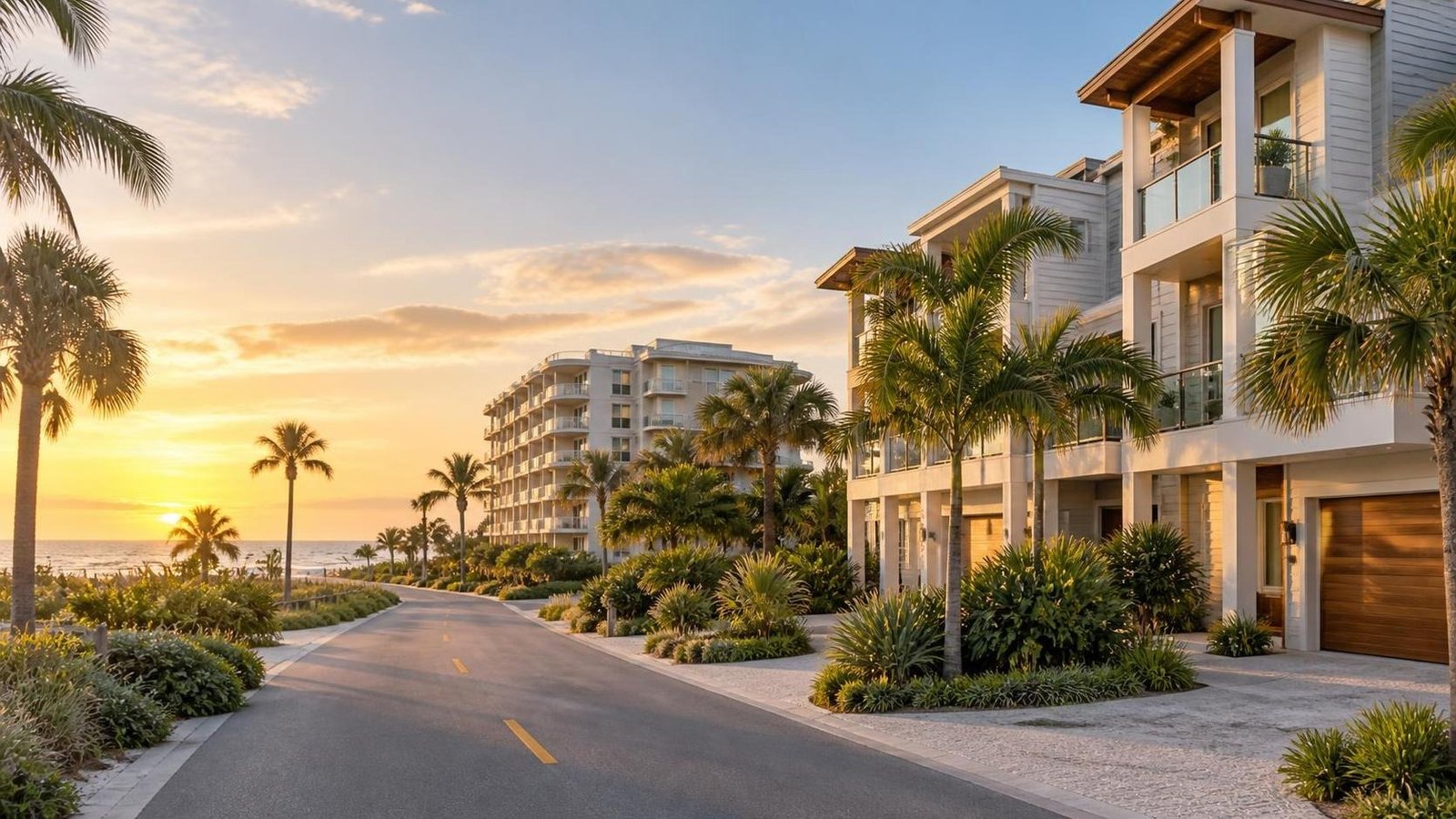
Should Cocoa Beach Relocation Buyers Choose an Older Condo or a Newer Townhome?
By Carrie Liotta, Space Coast REALTOR® with REAL Broker | Published September 12, 2026
A well-funded older Cocoa Beach condo can be the smarter relocation purchase when beach access and low exterior maintenance are central to your life. A newer townhome farther from the surf can be the better choice when you want younger systems, more control, easier parking, and fewer shared-building decisions. The construction date does not decide this comparison. The documents, total monthly cost, and way you plan to live do.
When clients ask me to choose between these two paths, I do not begin with the prettier kitchen. I start with a normal Tuesday: the drive to work, where the cars and beach gear go, who handles storm preparation, and whether the buyer is comfortable depending on an association for elevators, concrete, roofs, insurance, and reserves.
The older condo wins only if the building story is strong
“Older” is not the same as “risky,” and “newer” is not the same as “simple.” A coastal condo that has funded reserves, completed necessary structural work, maintained its roof and waterproofing, and communicated clearly can be a more responsible purchase than a younger property with low dues and deferred obligations.
For the condo, ask for the declaration, bylaws, rules, current budget, year-end financials, reserve information, recent meeting minutes, insurance summary, pending assessment notices, milestone inspection materials when applicable, and records of major projects. The Florida DBPR Division of Condominiums provides official links to statutes, rules, forms, education, and condominium resources. These are not background reading; they help you understand the legal and financial system you are buying into.
My local guide to Space Coast condo documents to review before an offer walks through the packet in more detail. A relocation buyer should treat that packet as part of the property, just like the unit, parking space, and balcony.
The newer townhome question is really about control
A townhome may give you a private garage, direct front-door access, younger mechanical systems, and fewer common-building dependencies. That can feel reassuring when you are moving from another state and already have enough logistics to manage. But you still need to know what the association maintains, what you insure, whether the roof is common or individual, how exterior repairs are approved, and whether reserves are appropriate for the association’s responsibilities.
Do not assume “newer” means there will be no assessments. Review the HOA budget, governing documents, warranties, turnover status if the community is relatively new, pending claims, and maintenance responsibilities. If the property is a condominium in legal form even though it looks like a townhome, Chapter 718 rules and condo financing questions may still apply. The architecture does not tell you the ownership structure.
The townhome usually wins on control when the buyer values a garage, wants to enter without an elevator or common corridor, needs easier pet routines, or expects to manage storm preparations personally. It may lose when the drive to the beach becomes a friction point and the buyer’s main reason for moving was to make the ocean part of everyday life.
Compare the complete monthly cost, not dues against dues
Put both homes on the same worksheet. For the condo, include principal and interest, property taxes, association dues, unit-owner insurance, potential flood coverage, parking or storage charges, and a personal reserve for interior maintenance and deductible exposure. For the townhome, include the same categories plus the items that shift to the owner: roof or exterior responsibility, landscaping, pest control, utilities, driveway or garage maintenance, and larger systems.
A condo fee of $900 is not automatically worse than a townhome fee of $250. The condo fee may include a master insurance policy, water, cable, exterior maintenance, elevators, pool care, reserves, and staffing. The townhome owner may pay some of those costs separately. Conversely, a high condo fee is not proof of strong reserves. You need the budget and reserve evidence.
I also examine deductible exposure. A well-funded association can still carry a master policy with significant deductibles. My recent explanation of master-policy deductibles versus a better Cocoa Beach ocean view shows why insurance structure belongs in the purchase decision, not in a file you open after closing.
Reserves matter, but ask what they are designed to cover
Florida condominium law has made reserve planning and association governance much more visible to buyers. Florida Statute 718.112 addresses condominium bylaws, meetings, notices, reserves, and other operating requirements. Your attorney, lender, and association-document reviewer can explain how current law applies to a specific building.
For a practical review, match the reserve schedule to the physical property. Are the roof, elevator, waterproofing, concrete, painting, pool, plumbing, and pavement being funded? Have recent projects been paid for, or are loans and assessments still outstanding? What do the engineer’s recommendations say, and does the association’s plan respond to them?
A strong reserve balance without context is not enough. A building may have cash but also face a large project. Another may show a smaller balance because it just completed and paid for major work. Read dates, scopes, contracts, and minutes together.
Your commute should be tested from the actual address
Cocoa Beach is not one uniform commute. A property’s route to the causeways, Patrick Space Force Base, Cape Canaveral, KSC, or a Melbourne employer can change the daily experience. Drive the route at the hour you will use it. If one spouse works beachside and the other crosses to the mainland, test both schedules.
The older condo may offer a walk-to-surf lifestyle but create elevator, parking, and causeway dependencies. The farther-inland townhome may provide a garage and easier mainland errands but turn beach time into a planned trip. Neither is objectively better. The mistake is paying for beach proximity while living a routine that rarely uses it, or moving inland and discovering that the surfside mornings you pictured no longer happen.
Remote workers should test noise, internet options, work-space separation, guest parking, and whether association rules allow the equipment or renovations they need. My comparison of Cocoa Beach homes for remote workers who want surf access and protected parking adds that daily-use lens.
Flood risk must be checked address by address
Do not use “beachside” or “mainland” as a substitute for parcel research. The FEMA Flood Map Service Center is the official public source for flood hazard information supporting the National Flood Insurance Program. Look up each address, review elevation information if available, and obtain property-specific insurance guidance.
For the condo, ask how the master policy and association planning address the common structure, and what the unit owner must insure. For the townhome, confirm whether your policy covers the building or whether an association policy covers part of it. The lender and insurance professional should review the legal form, association coverage, deductibles, flood requirements, and your intended use.
Think through storm preparation and absence
Relocation buyers often travel back to visit family or leave for work. In a condo, the association may coordinate common-area shutters, elevators, access controls, and post-storm inspections, while unit owners remain responsible for their openings and interiors according to the documents. A townhome may give you direct control, but it also gives you more tasks.
Ask who protects windows and doors, whether shutters are stored with the unit, how balcony items are handled, what happens to elevators during outages, and how owners receive updates. For a townhome, ask about roof responsibility, drainage, tree maintenance, generator rules, and exterior modification approvals. Convenience should be demonstrated by a written plan, not assumed from property type.
Which property is likely to resell more easily?
The condo’s resale depends heavily on the building. Future buyers and lenders may scrutinize insurance, reserves, inspections, assessments, litigation, rental rules, parking, and structural work. A well-run older building can have a durable resale story because the beach cannot be moved and major work is documented.
The townhome may appeal to buyers who want a garage, pets, direct access, or fewer high-rise dependencies. Its resale can suffer if the location feels disconnected from the lifestyle, the HOA is underfunded, or the ownership responsibilities are unclear. I compare recent competing sales, financing patterns, days on market, and concessions rather than assuming one property type always appreciates better.
My decision test for relocating buyers
- Choose the older condo when the building records are strong, reserves and projects make sense, the insurance structure is understandable, and you will genuinely use the beach location.
- Choose the newer townhome when private parking, younger systems, direct access, pets, storage, and control matter more than walking to the surf.
- Pause on either one when the legal form, repair responsibility, insurance coverage, assessment outlook, or total payment cannot be explained before your contract deadlines.
Before deciding, spend one morning and one evening at each location. Carry the groceries from the assigned parking space. Find the beach access. Time the commute. Open the storage. Read the pet and guest rules. The right answer often becomes clear when you stop comparing listings and start comparing routines.
Bottom line
A well-funded older Cocoa Beach condo is not automatically a compromise, and a newer townhome is not automatically safer. Buy the combination of building evidence, personal control, monthly cost, and location that supports the life you are actually moving here to live.
If you are relocating to Cocoa Beach or comparing coastal and mainland options, I can help you review the documents, test the logistics, and keep the total ownership picture in view. Join my private Facebook group, Moving to Brevard County Florida, or reach out for a no-pressure conversation about Brevard County homes for sale. Your next chapter starts here.
