

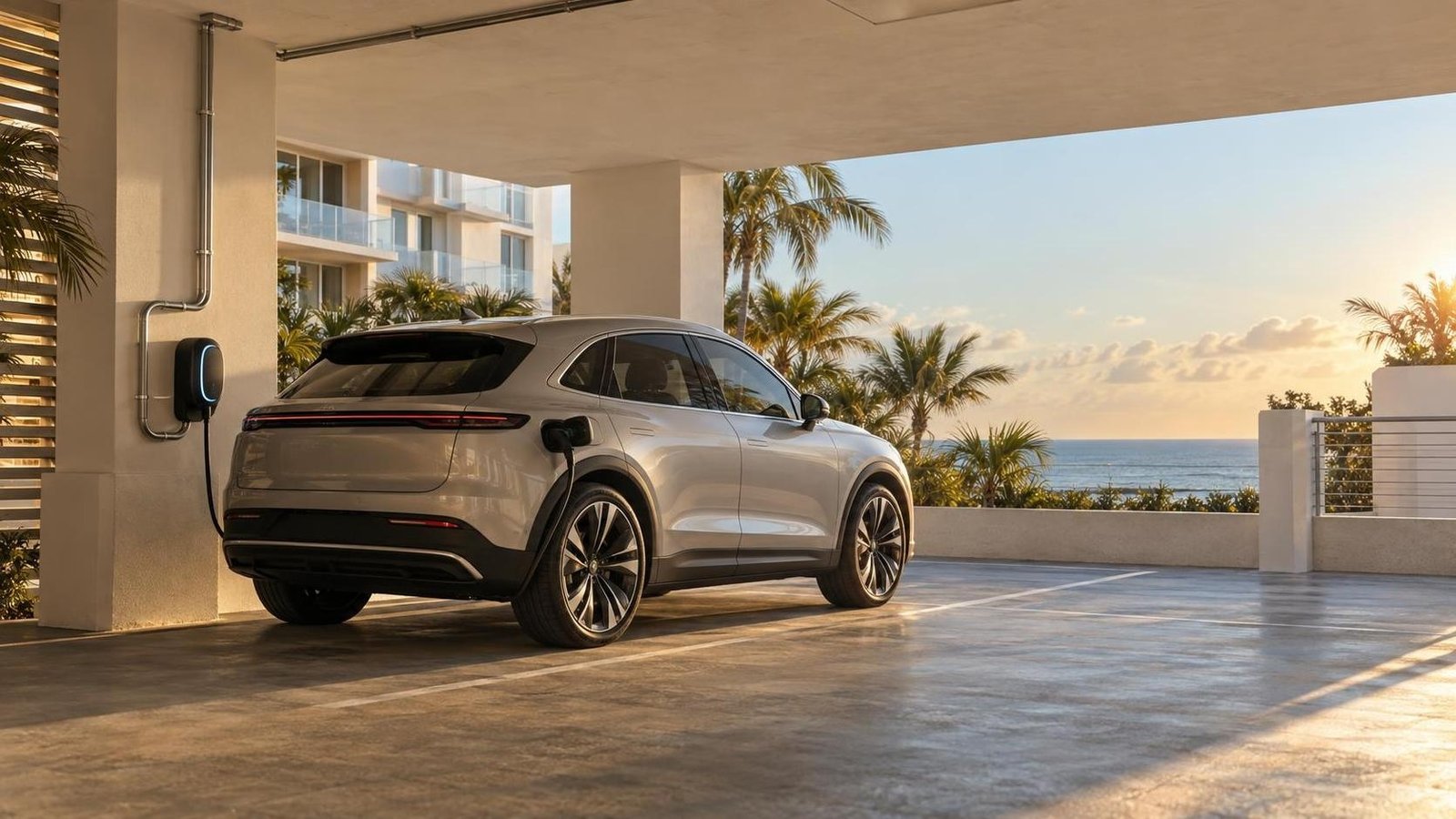
Selling a Cocoa Beach Condo With an EV Charger in Assigned Parking? Document the Rights and Approvals
By Carrie Liotta, Space Coast REALTOR® with REAL Broker | Published September 29, 2026
If your Cocoa Beach condo has an EV charger at an assigned parking space, document the parking right, board approval, electrical permit and final, metering, insurance, and transfer obligations before listing. The charger may be a real convenience, but buyers need proof that both the space and the installation can legally follow the unit.
I would not market this as simply “EV charging included” until the paperwork answers three different questions: Does this unit have the exclusive right to use that exact space? Was the charger installed through the required association and local process? Who pays for power, maintenance, insurance, repair, and eventual removal after the sale?
Start with the legal status of the parking space
“Assigned” is not a complete ownership description. In one condominium, a parking space may be a limited common element assigned to a particular unit in the declaration or a recorded exhibit. In another, the association may control common-element spaces and allocate them by rule, sticker, board action, or an old parking schedule. Some spaces are deeded with a unit; others are not.
That distinction matters because Florida’s EV-charging protections are written around a unit owner’s limited common element or exclusively designated parking area. Florida Statute 718.113(8) says a condominium declaration, restrictive covenant, or board may not prohibit an owner from installing an EV charging station within those boundaries, subject to the rest of the subsection. It does not turn a shared, guest, first-come, or informally used space into an exclusive space.
Before photography, collect the recorded declaration and amendments, the survey or parking exhibit, the current rules, and any association document that connects the space number to the unit. Compare those records with the number painted on the pavement and the physical charger location. This is part of the same disciplined handoff I recommend when Cocoa Beach sellers document assigned parking, storage, and building work. If the documents conflict, do not ask the listing description to resolve a title or association question. Ask the title company, association counsel, or another appropriate professional to clarify it.
Build a complete approval file, not a loose email chain
A buyer should be able to follow the installation from request through completion. Start with the owner’s written application, drawings or route plan, electrical specifications, board or architectural approval, contractor proposal, invoices, and final sign-off. Add the electrical permit and inspection record if required by the authority having jurisdiction. Include any agreement the owner signed about common-element access, repairs, insurance, removal, or reimbursement.
Meeting minutes can help show that the board considered the request, but minutes alone may not identify the approved equipment, wire route, capacity, meter, contractor, or conditions. A short approval email may be useful evidence, yet it should not replace the formal application package when one exists. I also want the charger model and serial number, warranty information, commissioning record, and any service history in the file.
Florida law permits an association to require bona fide safety requirements consistent with applicable codes or recognized safety standards, reasonable architectural standards, and use of a licensed and registered firm familiar with the installation. That is why the buyer needs more than proof that the charger works today. The records should show that the conduit, panel connection, protective equipment, cable placement, and mounting method were approved for this building and location.
Show exactly how electricity is measured and billed
The power arrangement is one of the first practical questions an EV-driving buyer will ask. Under section 718.113(8)(c), electricity for an owner-installed charging station must be separately metered or measured by an embedded meter and paid by the installing owner or that owner’s successor. Your file should identify the meter, account, billing method, reading process, rate or reimbursement formula, and any administrative fee.
If the charger is connected to the unit’s electrical service, document the panel and circuit. If it uses association power with submetering, save the agreement and recent statements showing how reimbursement works. If a network provider collects fees, explain whether the equipment account and subscription transfer to the buyer or must be opened again. A screenshot of an app balance is not a substitute for the governing agreement.
Do not promise a charging speed from the connector shape alone. The actual result depends on the charger, circuit, vehicle, settings, shared-load controls, and building electrical conditions. State what the records establish: equipment make and model, rated circuit, and any approved load-management arrangement. Let the buyer’s electrician evaluate suitability for the buyer’s vehicle and routine.
Separate the charger from the right to use it
The wall box may be personal property, a fixture, association property, or equipment governed by a separate installation agreement. The conduit may cross common elements even when the parking space is exclusive. Florida’s statute provides an implied easement across common elements for installation and furnishing electrical power, subject to the subsection’s requirements, but a seller should still provide the approved route and any building-specific conditions.
Write down what conveys. Will the charger remain? Are adapters, pedestal hardware, bollards, cable supports, access cards, and network accounts included? Does the association require a new owner acknowledgment, certificate of insurance, registration, or account setup? If the charger is leased or financed, resolve that before marketing it as included.
This is also where a seller should identify repair responsibility. The statute places installation, operation, maintenance, repair, insurance, and removal costs on the installing owner or successor. It also allows an association to request a certificate of insurance naming the association as an additional insured for related claims and reimbursement of an attributable premium increase. Include the current certificate, association request, and any paid invoice rather than assuming the old arrangement automatically continues unchanged.
Inspect the physical installation before buyers do
Walk the route from the electrical source to the space with the documents in hand. Look for a secure mount, protected conduit, intact covers, a cable that does not cross a walkway or neighboring space, readable equipment information, and no visible impact damage. In an open Cocoa Beach garage or parking level, ask the electrician whether the equipment and connections remain appropriate for moisture, salt air, wind-driven rain, vehicle contact, and the building’s actual exposure.
Also test the parking routine. Can the owner connect the vehicle while staying within the space boundaries? Does the cable interfere with a column, accessible route, neighboring door swing, cart path, or fire equipment? Has the association changed striping, gate access, or parking assignments since approval? A technically functioning charger can still create a buyer objection if the physical use does not match the approved plan.
If anything appears inconsistent, pause the marketing claim and get a licensed electrician and the association involved. Do not conceal a condition behind a parked vehicle, and do not represent a new inspection or code conclusion unless the qualified professional has actually provided it.
Prepare the condo resale package early
EV documentation belongs beside the broader condominium package, not in a separate last-minute folder. Buyers are evaluating the whole ownership routine, including the practical tradeoffs around covered parking, elevator access, and beach-gear storage in Cocoa Beach condos. Florida Statute 718.503(2) requires a nondeveloper seller to provide the prospective purchaser, at the seller’s expense, current condominium documents and other listed materials. Those include the declaration, articles, bylaws and rules, annual financial statement and budget, and applicable inspection and reserve-study materials.
The EV file should be cross-checked against those current documents. An old approval based on a prior rule does not tell a buyer whether insurance forms, contractor requirements, network policies, or transfer steps have changed. Ask management for the current EV policy and confirm whether there are open violations, unpaid reimbursements, pending electrical projects, or a planned garage repair that may require temporary removal.
If the association is considering building-wide charging, load management, panel replacement, or garage restoration, disclose what is documented without predicting the vote, timing, or cost. An individual charger may remain useful, but the buyer should understand any known project that could affect access or equipment.
Use precise listing language
Good marketing is specific and supportable. Instead of saying “deeded EV space” because the owner has parked there for years, use the ownership language confirmed by the recorded documents. Instead of saying “free charging,” explain the documented metering and payment arrangement. Instead of promising that the association can never require changes, state that the installation is subject to the recorded documents, written approval, applicable law, and any transferable owner obligations.
A useful private document index can list the parking exhibit, board approval, permit and final, licensed contractor invoice, electrical specifications, metering agreement, insurance certificate, maintenance records, warranty, and transfer instructions. Buyers can then review the package during due diligence with their attorney, inspector, electrician, insurer, lender, and association contacts.
The best sale is the one with no charging mystery
An EV charger can make a Cocoa Beach condo easier for the right buyer to live in, especially when daily charging would otherwise require a detour. Its value is strongest when the seller can prove the parking right, approved electrical path, safe installation, clear billing, current insurance, and a practical transfer process.
I am Carrie Liotta, a Space Coast REALTOR® with REAL Broker and the voice behind 321 Coastal Living. When I prepare a condo for market, I want this file assembled before the listing goes live. Clear records let us describe the feature confidently, give buyers useful questions to ask, and keep an attractive convenience from becoming a contract-period surprise.
