

Domestic-Water Booster Pump With No Recent Service Log: What Should Cape Canaveral Condo Buyers Ask?
By Carrie Liotta, Space Coast REALTOR® with REAL Broker | Published October 11, 2026
A missing booster-pump service log is not proof that a Cape Canaveral condo building has a failing water system. It is a due-diligence gap. Before you buy, identify the equipment, test pressure under realistic demand, reconstruct its history from association records, and get written answers about condition, responsibility, and funding.
I would not try to solve this question by turning on one bathroom faucet during a quiet showing. A domestic-water booster system may serve several floors, multiple plumbing zones, or the whole building. The unit can have acceptable pressure at 2 p.m. and behave differently when owners are showering, washers are filling, and irrigation or other building demand is active. The real question is whether the building can show that the system has been operated, maintained, and funded responsibly.
First, confirm what the equipment actually serves
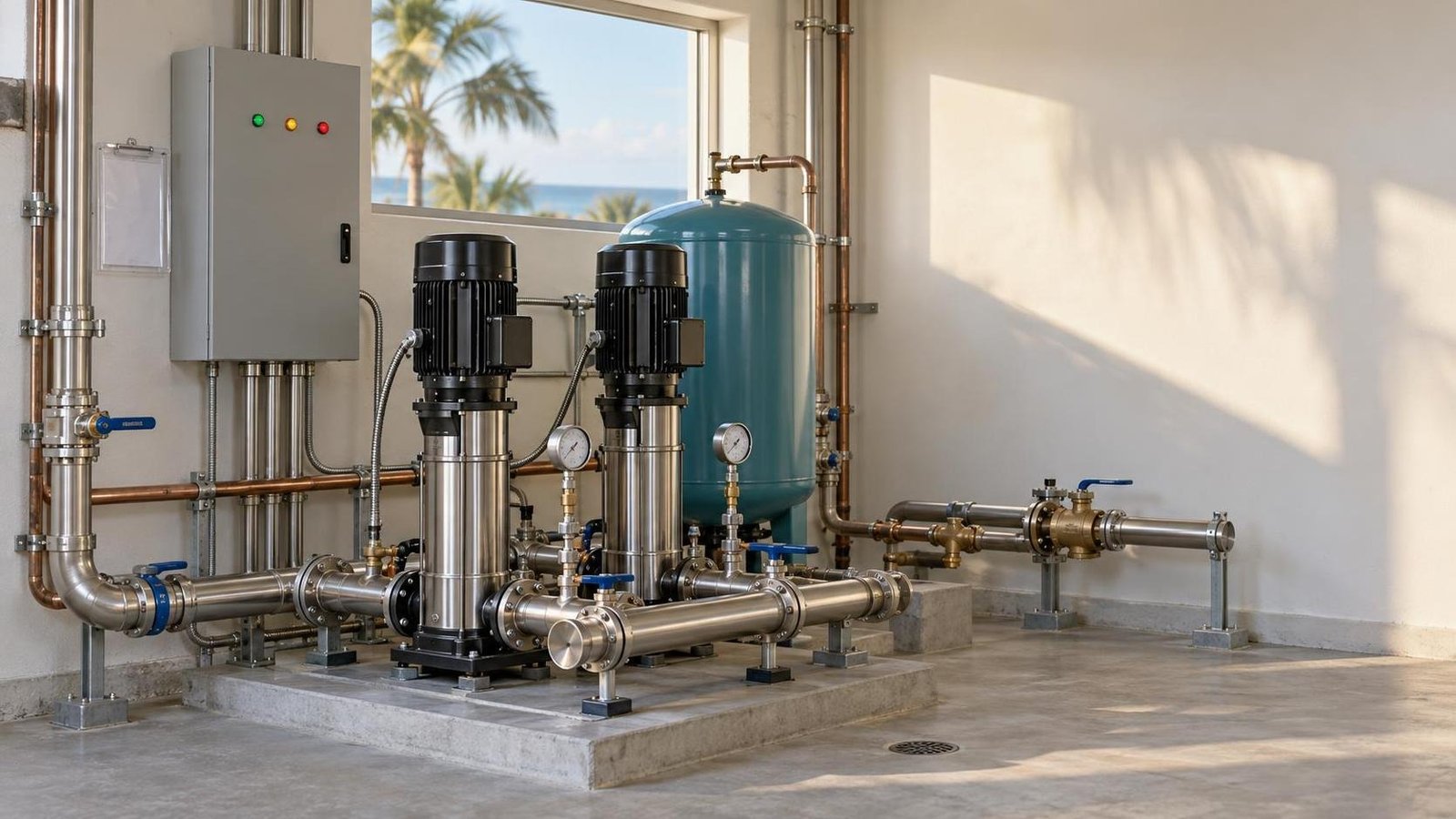
“Booster pump” is a useful description, but it is not a complete equipment inventory. Ask the association or manager for the manufacturer, model, installation date, number of pumps, controller information, pressure-tank details, design drawings, and a plain-English explanation of which floors or stacks it serves. A duplex package with two alternating pumps is a different ownership conversation from one older pump with no redundancy.
Also separate domestic-water equipment from fire-protection equipment. A pump supplying sinks and showers is not the same system as a fire pump, even if both are behind nearby mechanical-room doors. Buyers should not infer one system’s condition, inspections, or backup capacity from records belonging to the other.
The condominium declaration matters because it defines the unit and common elements and allocates maintenance duties. Florida law gives associations broad authority to maintain and operate condominium property and specifically recognizes common mechanical and plumbing elements in association matters. That does not let a buyer guess who owns this particular pump. Read the recorded documents and any amendments, then obtain a written answer from the association about responsibility. The relevant starting point is Florida Statutes section 718.111.
No log does not mean no history
Sometimes a service log never existed. Sometimes a binder changed hands when the management company changed. Sometimes the technician’s records are in invoices, work orders, email attachments, or accounting software rather than a sheet beside the equipment. I treat the missing log as a reason to reconstruct the timeline, not as permission to assume either neglect or good maintenance.
Ask for the records that can answer the same questions:
- Installation invoice, permit, approved plan, final inspection, and warranty.
- Preventive-maintenance contract and the current vendor’s scope of work.
- Service calls, invoices, proposals, replaced-parts receipts, and controller fault reports.
- Board and committee minutes mentioning low pressure, pump cycling, leaks, noise, shutdowns, or replacement.
- Resident notices about water interruptions or planned plumbing work.
- Current budget line items, reserve schedules, special assessments, and any pending proposal for the system.
- Available plans showing risers, isolation valves, pressure zones, and which units depend on the equipment.
This request is not fishing for drama. Section 718.111 identifies many association official records, including detailed accounting records and supporting invoices, contracts, bids, building permits, and other written records related to association operations. A buyer may receive important disclosure documents from the seller, while a current owner has statutory record-inspection rights. Work with the seller, association, property manager, and your attorney on the correct request route rather than assuming every operational file automatically arrives in the standard resale packet.
If you are new to this process, my broader guide to the Space Coast condo documents buyers should read explains why budgets, minutes, rules, insurance, and repair records must be read together.
Test the unit, then investigate the building
A home inspector can document what happens inside the unit, but a standard unit inspection usually cannot certify the condition or remaining life of an association-owned pump package. I still want practical testing. Run a shower and sink together. Flush a toilet while another fixture is open. Check both hot and cold flow. If the unit has a washer, refrigerator dispenser, or other water-using appliance, ask what can be operated lawfully during the inspection.
Record whether pressure feels steady, drops noticeably, surges, or takes time to recover. Compare fixtures because a clogged aerator, aging shutoff, unit water filter, pressure-reducing valve, or interior piping issue can mimic a building problem. Conversely, good flow at one fixture does not prove the booster system is healthy.
Then ask management whether pressure complaints cluster by floor, stack, time of day, or recent repair. A building-wide pattern points the investigation in a different direction than one weak shower valve. If uncertainty remains, request evaluation by a licensed plumber or engineer who can inspect the accessible system, review the design and controls, observe operating pressures, and define any additional testing without disrupting residents.
What should a qualified professional look at?
I am not looking for a buyer to diagnose a pump from a photograph. I am looking for enough information that the right professional can ask precise questions. The 2023 Florida Building Code, Plumbing, Chapter 6 is the current code-family reference for water supply and distribution, but the applicable requirements depend on the building, installation, approved plans, and work history.
A useful review may include the incoming supply pressure, intended discharge pressure, pump sequencing, pressure tank, controller, sensors, isolation and check valves, alarms, leaks, corrosion, ventilation, electrical supply, drainage, access, and whether replacement components remain available. The professional should also compare the installed equipment with its manufacturer instructions and the permitted design rather than applying a generic checklist to every building.
Ask about redundancy and failure behavior. If one pump is taken offline, can the remaining equipment meet ordinary demand? Does the controller alternate pumps so one does not carry all routine hours? What alerts management when pressure drops or a fault occurs? Is there a written response plan for an after-hours failure? Those answers matter more than a freshly painted mechanical room.
Condition should be observed rather than assumed from age or appearance. Surface corrosion is not automatically system failure, while a clean exterior does not reveal motor, control, or pressure-tank condition. A dated professional report or recent service invoice is more useful than an informal assurance that “it has always worked.”
Reconcile permits with what is installed today
If the system was installed or materially altered, request the permit and final inspection associated with that work. The City of Cape Canaveral says its Building Division reviews plans, issues permits, conducts inspections, and enforces Florida Building Code requirements. Its Building + Permits page is the local starting point.
A permit search is evidence, not a complete condition opinion. It may confirm a project date and approved scope, but it does not tell you whether later repairs were documented, whether the current controls match the approved design, or whether the equipment has been maintained since final inspection. Match the permit, plans, invoices, equipment labels, and association explanation. If they do not line up, ask for the discrepancy to be resolved in writing.
Follow the money before you evaluate the view
A working pump can still create a financial question. Ask how the association classifies and pays for routine service, a major repair, and eventual replacement. Do not assume the system must appear as a separately named line in every reserve study.
I would compare five numbers: current cash available for the relevant work, the vendor’s estimated repair or replacement scope, the amount budgeted, any insurance contribution that is genuinely available, and the number of owners sharing the cost under the declaration. A vague statement that “reserves will cover it” is not enough unless the records show which funds, what amount, and what authority supports the use.
Read recent minutes for deferred votes, repeat service calls, temporary fixes, or discussion of a special assessment. Review the annual budget and financial statement for plumbing or mechanical expenses that jumped from prior years. The absence of a dedicated pump line does not prove nothing was spent; costs may sit under plumbing, utilities, maintenance, repairs, or a larger capital project.
This is the same discipline I recommend when comparing Cape Canaveral condo fees, reserves, and insurance: look beyond the monthly association fee and determine what the building is maintaining, what it has postponed, and what could become an owner obligation.
Use the contract deadlines deliberately
Florida’s condo disclosure statute gives resale buyers specified document rights. The 2026 version of section 718.503 lists current governing documents, the annual financial statement and budget, applicable milestone and reserve-study material, and the statutory questions-and-answers document among the resale disclosures. Its contract language describes a seven-day period, excluding Saturdays, Sundays, and legal holidays, tied to execution and receipt of listed documents.
Your actual contract, delivery facts, and legal advice control your deadline. Ask for booster-system records early, coordinate the unit inspection with document review, and preserve time for the appropriate technical, financial, insurance, or legal adviser.
If records arrive late or answers conflict, do not let the calendar turn uncertainty into acceptance by default. Discuss your contractual options with the appropriate adviser while your rights are still open.
When is the missing log manageable?
I would be more comfortable moving forward when the association can reconstruct a coherent history, the equipment identity and responsibility are clear, unit pressure behaves normally under useful testing, recent invoices or professional evaluation support current operation, and the budget shows a credible path for future work. A missing sheet on the wall is then a recordkeeping weakness that can be corrected.
I would slow down when no one can identify the system, upper-floor owners report recurring pressure loss, repair discussions repeat without action, equipment and permit records conflict, the board has an unfunded proposal, or access to qualified evaluation is refused. None of those facts automatically means you must walk away. Together, they change the risk and the price of certainty.
The strongest request is specific: “Please provide the booster-system equipment schedule, permits, final inspection, service contract, invoices, fault or outage history, recent proposals, related meeting minutes, and the budget or funding source for expected work.” That is more likely to produce useful records than asking whether the pump is “good.”
My bottom line for Cape Canaveral condo buyers
Do not judge a multi-floor domestic-water system from one faucet or one missing log. Confirm what the booster equipment serves, establish who maintains it, reconstruct the history, test the unit under demand, and connect condition to the association’s funding plan. The goal is not a perfect building file. It is a decision you can explain and budget for.
If you are comparing Cape Canaveral condos, I can help you organize the document requests, coordinate the right questions, and keep the building system in context with the unit, association finances, and coastal lifestyle. Reach out for a no-pressure conversation about Brevard County homes for sale with Carrie Liotta, Space Coast REALTOR® with REAL Broker. Your next chapter starts here.
Join my private Facebook group, Moving to Brevard County Florida, for practical Space Coast relocation guidance and local buyer discussions.