

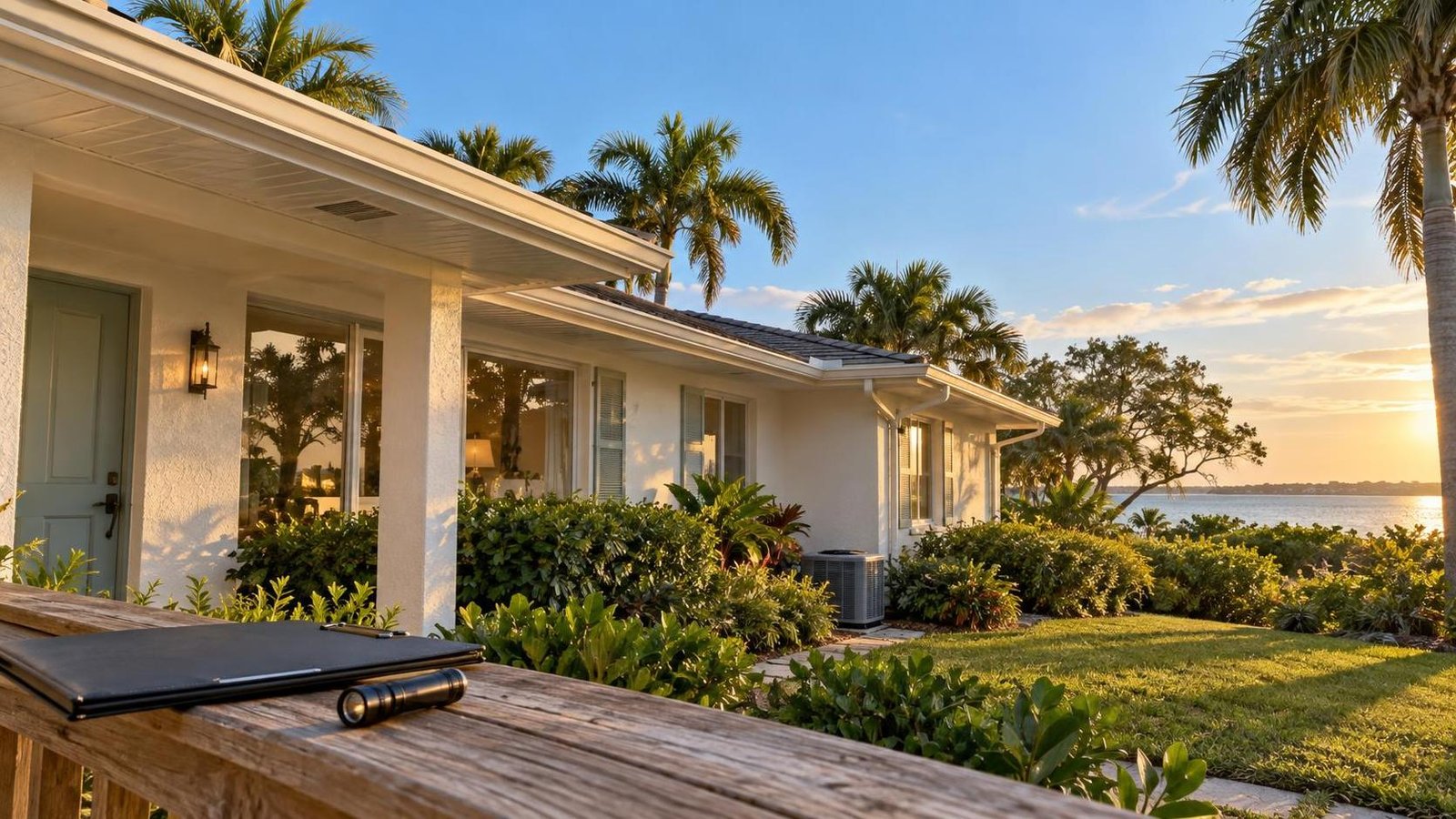
Buying an Older Merritt Island Home: What Should You Inspect Before Making an Offer?
By Carrie Liotta, Space Coast REALTOR® with REAL Broker | Published October 26, 2026
Before offering on an older Merritt Island home, inspect more than the visible finishes. I want buyers to investigate the roof, electrical, plumbing, HVAC, moisture, drainage, structure, permits, insurance documents, and any waterfront components as one connected risk picture. The goal is not to avoid an older house. It is to know what you are buying before the contract clock starts.
An updated kitchen can sit beneath an aging roof. New flooring can cover signs of an old leak. A newer air conditioner does not tell you whether the ductwork, electrical service, drain lines, or permit history are equally current. When I walk an older home with a buyer, I separate what looks good from what is documented, insurable, and likely to need money during the first few years of ownership.
Start with the property’s age, location, and renovation story
“Older home” is not a condition report. Two Merritt Island houses built in the same decade can have completely different risk profiles. One may have a permitted roof, updated supply plumbing, a modern electrical panel, and organized service records. The other may have attractive cosmetic work but no clear paper trail for the systems behind it.
Location changes the inspection plan too. A central Merritt Island home near Sykes Creek may raise different drainage, salt exposure, or waterfront questions than an inland house. A North Merritt Island property with more land may require closer attention to well, septic, outbuildings, access, or drainage. The questions must follow the actual property rather than a generic checklist.
Before writing, ask for the seller disclosure, roof and HVAC dates, known insurance inspections, repair invoices, warranties, and permits. Then compare those records with what is visible. A renovation described as “fully updated” should still be broken into dates and components: What changed, who performed the work, was a permit required, and was it closed?
Order the right inspection, not only the minimum inspection
A thorough general home inspection is the starting point, not necessarily the finish line. Florida’s Department of Business and Professional Regulation licenses and regulates home inspectors. I want a buyer to choose a qualified inspector whose scope is clear and who is comfortable evaluating older Florida housing.
If the general inspection identifies a concern, bring in the appropriate specialist while the inspection period is still open. That may mean a licensed electrician, plumber, roofer, HVAC contractor, structural engineer, septic professional, pool contractor, or marine contractor. A general inspector can identify visible symptoms and recommend further evaluation; a specialist can define the cause, repair path, and realistic cost more precisely.
Do not let a short contingency window force every question into one appointment. Before making the offer, confirm which inspectors can get to the property, how quickly reports will arrive, and whether your insurance agent needs separate forms. Good scheduling is part of due diligence.
Inspect the four major insurance systems together
Roof, electrical, plumbing, and HVAC deserve an early, connected review because they affect both ownership cost and the insurance conversation. Citizens Property Insurance explains on its current inspection requirements page that its four-point inspection examines those four systems. Citizens currently requires that inspection for its applications on properties more than 20 years old. That is a Citizens rule, not a promise about every carrier, so ask your insurance agent what the specific home and policy require.
For the roof, verify the installation date through a permit, final inspection, invoice, or other reliable record. Ask about leaks, repairs, decking work, material, ventilation, and remaining condition. Look beyond the center of the roof: flashing, valleys, penetrations, soffits, fascia, gutters, and additions often reveal where water has found a path.
For electrical, note the service size, panel manufacturer and condition, visible wiring, grounding, GFCI protection, double taps, amateur additions, and whether major remodels appear to have electrical permits. Do not rely on a photo of the panel label alone; let the inspector or electrician assess the installation.
For plumbing, identify supply and drain materials, water heater age, shutoff condition, visible corrosion, active leaks, slow drains, sewer or septic arrangement, and signs of prior repairs. My guide to older plumbing materials in Brevard County homes goes deeper into why the material, condition, and documentation need to be evaluated together.
For HVAC, check operation, age, permit history, service records, condensate drainage, duct condition, temperature performance, and whether the equipment sizes and components make sense as a system. A recently replaced outdoor unit does not automatically mean the entire installation is new.
Look for the cause of moisture, not just the stain
On Merritt Island, I take moisture and drainage questions seriously whether a home is waterfront or inland. Staining around a window may come from failed sealant, flashing, wind-driven rain, roof drainage, or an older leak that was repaired. A musty cabinet may point to a plumbing leak, condensation, or trapped humidity. The visible mark is the beginning of the investigation.
Walk the exterior after rain when possible. Look at grading, low areas, downspout discharge, swales, driveway edges, pool-deck drainage, irrigation overspray, and where neighboring runoff moves. Inside, the inspector may use moisture readings or thermal imaging as part of the company’s service, but those tools still need professional interpretation. Ask what is wet now, what appears historical, and what must be opened or evaluated further to reach a conclusion.
Flood-zone research belongs beside the physical inspection. FEMA’s National Flood Hazard Layer provides current effective flood-hazard data and address-search tools. A map designation does not tell you whether a particular house has had drainage problems, and a dry-looking yard does not replace a map and insurance review. Check both the mapped information and the property-specific evidence.
Match permits to the house you can actually see
Permit research can clarify the age and scope of major work, but it is not a substitute for inspection. Start with the Brevard County permit search for properties in the county’s jurisdiction. Depending on the address and work history, records may sit with another authority, and older records may be incomplete. Confirm the correct jurisdiction rather than assuming one database tells the whole story.
Compare the record with the property. Does an enclosed porch appear in the permit history? Was the roof permit finalized? Are the pool, electrical service, water heater, HVAC replacement, windows, generator, or addition documented when permits were required? A missing online record does not prove work was illegal, but it is a reason to ask better questions before relying on the improvement.
I also want invoices and warranties when available. A permit may show that work passed a required inspection; an invoice may explain the contractor, model, material, and actual scope. Together, those documents help the buyer understand what was done and what still belongs on the future-maintenance list.
Give pre-1978 homes an age-appropriate hazard review
If the home was built before 1978, review the lead-based paint disclosures and decide whether a lead inspection or risk assessment is appropriate for your household and renovation plans. The U.S. Environmental Protection Agency explains that residential lead-based paint was banned in 1978 and that the federal Lead-Based Paint Disclosure Rule generally applies to most pre-1978 housing. The EPA also explains the buyer’s inspection opportunity and the seller’s duty to provide known information and available records.
Lead is not the only age-related question. Depending on the house and planned renovations, ask qualified professionals about suspect asbestos-containing materials, older insulation, deteriorated coatings, abandoned fuel equipment, or other conditions outside a standard visual inspection. Do not assume a material from its appearance, and do not disturb it simply to find out.
Waterfront and outdoor improvements need separate attention
If the older home is on a canal, creek, or river, add the shoreline and boating infrastructure to the scope. Inspect the seawall or shoreline system, dock, pilings, lift, decking, electrical service, plumbing, drainage, and permits with the right specialists. The home inspection does not automatically answer whether the marine structures are sound or whether the water route fits your boat.
For a broader overview, read my Merritt Island waterfront home buying guide. For this older-home decision, the important point is that house systems and waterfront systems can create two separate capital plans. A newer roof does not offset a failing seawall, and an attractive dock does not make old house wiring disappear.
Pool equipment, screen enclosures, sheds, workshops, generators, solar equipment, and converted garages also deserve their own permit and condition review. These features add value when they are safe, functional, documented, and useful to you. They add uncertainty when no one can explain how or when they were installed.
Turn the inspection into an ownership budget
The inspection report should help you make a decision, not become a long list of equally urgent defects. I sort findings into four groups: safety or active damage; insurance or financing obstacles; near-term capital items; and ordinary maintenance. Then I obtain specialist opinions and estimates for the items that could change the offer.
This is where buyers often see the real tradeoff. An older home can be worth pursuing when its location, lot, layout, and character justify the work and the price leaves room for it. It becomes harder when several major systems reach the same replacement window, the documentation is weak, and the buyer would have little cash left after closing.
Get the insurance quote during due diligence, not after every repair negotiation is finished. Ask whether a four-point or wind-mitigation report is needed, which conditions affect eligibility, and what documentation must be corrected before binding. If you already have a report, my guide to wind-mitigation inspection timing for Brevard buyers can help you understand why an older document may still need an update.
My practical pre-offer plan
- Confirm the home’s age, jurisdiction, utilities, flood information, and waterfront status.
- Request seller disclosures, permits, invoices, warranties, insurance reports, and repair history.
- Choose a Florida-licensed home inspector and confirm the inspection scope.
- Reserve enough time for roof, electrical, plumbing, HVAC, structural, septic, pool, or marine specialists if needed.
- Get insurance guidance early and identify any required four-point or wind-mitigation documentation.
- Price safety issues, active damage, insurance obstacles, and near-term replacements separately from routine maintenance.
- Negotiate from evidence rather than fear: condition, documentation, estimates, and your cash reserve.
Bottom line
An older Merritt Island home can be a wonderful purchase when the house has been evaluated as a complete system and the buyer understands the next expenses. I would not reject it because of the year built, and I would not buy it because the renovations look fresh. The best offer is based on inspection scope, specialist findings, permits, insurance feedback, and a realistic ownership budget.
If you are comparing older homes on Merritt Island, I can help you identify the right questions before you write and organize the due-diligence timeline once you are under contract. Reach out for a no-pressure conversation about Brevard County homes for sale with Carrie Liotta, Space Coast REALTOR® with REAL Broker, and join my private Facebook group, Moving to Brevard County Florida. Your next chapter starts here.
