

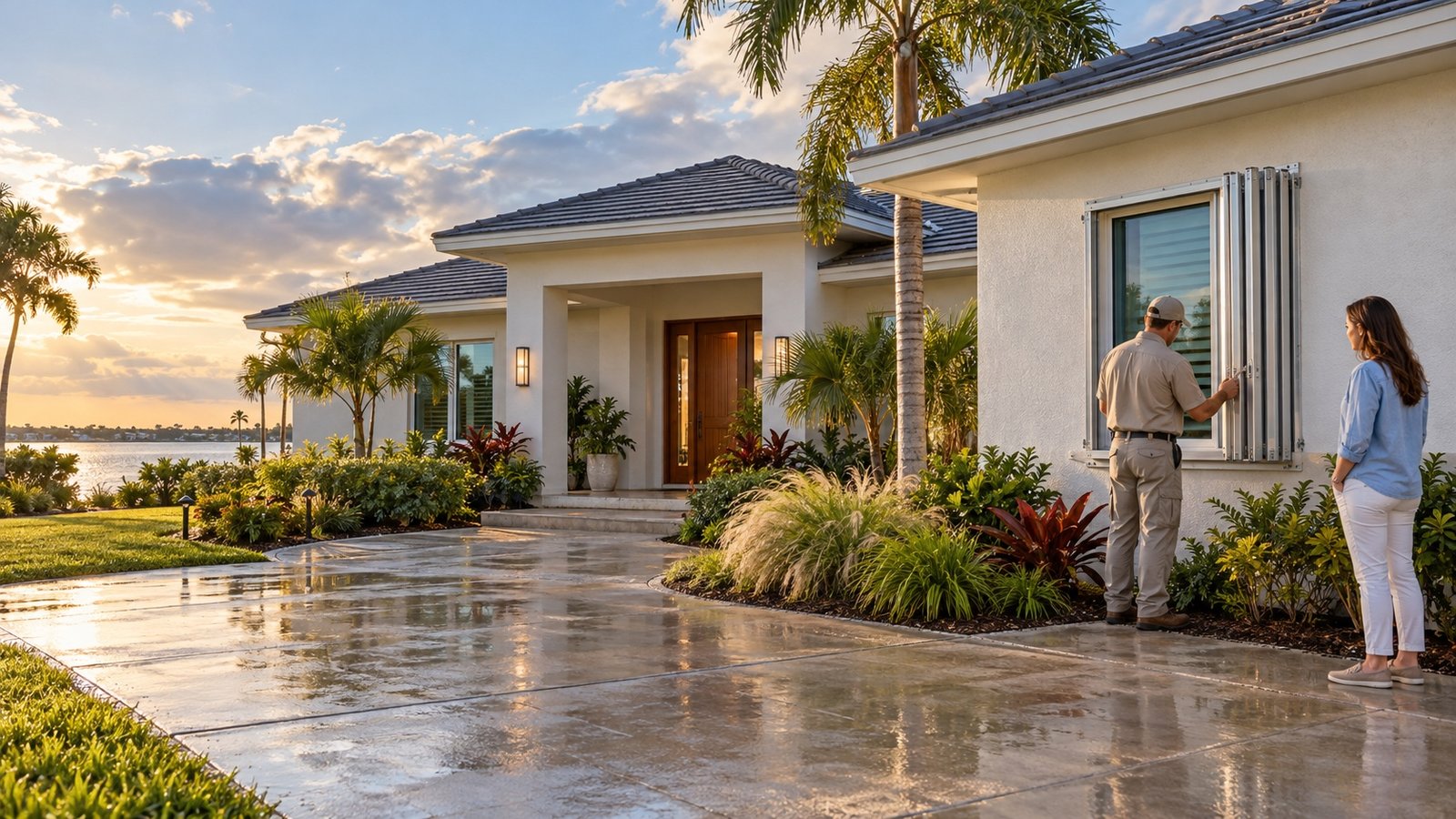
How Long Is a Wind-Mitigation Inspection Good For When You’re Buying in Brevard County?
A Florida wind-mitigation inspection is usually usable for up to five years, but a Brevard County buyer should never assume an older report will automatically work for a new policy. Ask the insurance carrier to review the actual report, confirm that the home has not materially changed, and leave enough time to order a new inspection before closing if needed.
I see buyers treat the date on a wind-mitigation report like the expiration date on a driver’s license: five years must mean five years, no questions asked. Insurance underwriting is more nuanced. The report documents specific construction features at a specific point in time. Its age matters, but so do the inspector’s qualifications, the quality of the photographs, the current form, renovations completed since the inspection, and the rules of the carrier quoting the home.
The short answer: plan around five years, then verify
Citizens Property Insurance Corporation says wind-mitigation inspection forms usually are valid for up to five years from the date of the form. Citizens also explains that a new form may be needed sooner when the home changes, including a roof replacement, a structural addition, or the installation of new mitigation features for which the owner wants credit.
The phrase usually valid matters. It is better to think of five years as the normal outer window, not as a promise that every carrier must accept every report until the last day. Before relying on a seller’s report, send the complete document to the insurance agent handling your quote. Ask whether that specific carrier will accept it for the policy you are considering and whether any missing documentation will prevent a credit.
If a report is four years and eleven months old when you make an offer, it may technically fit within that window but still be a poor foundation for budgeting. It could expire around closing or at the first renewal. In that situation, a fresh inspection can remove uncertainty and establish a cleaner baseline for your ownership.
What a wind-mitigation inspection actually does
A wind-mitigation inspection is not a general prediction that the house will survive a hurricane, and it is not a substitute for a full home inspection. It documents construction details that an insurer may use when calculating wind-related credits. Citizens identifies features such as roofing materials, roof-to-wall attachments, roof and building shape, and opening protection among the items that can affect mitigation discounts.
That makes the report useful for two related but different buyer decisions. First, it helps the insurance agent seek the credits supported by the home’s documented features. Second, it gives you a more disciplined way to compare what two homes actually have rather than relying on vague listing language such as “hurricane ready.” If you want that broader comparison framework, I have a separate guide on using wind-mitigation reports when choosing between similar Brevard homes.
Five reasons an existing report may need to be replaced early
1. The roof was replaced after the inspection
A roof replacement can change several entries on the form, including the roof covering, installation date, permit evidence, and sometimes the documentation available for roof-deck attachment or secondary water resistance. Even when the new roof is an improvement, the old report cannot document work that had not happened yet. Ask for the final permit record, roofing contract, and any product or installation documents, then let the insurer or inspector determine what should be reflected on a new form.
2. New windows, shutters, or doors were installed
Buyers often hear that a home “has impact windows,” but the wind-mitigation form looks for documented opening protection in a much more exact way. One unprotected glazed opening or an undocumented garage door can affect how the protection category is recorded. If upgrades occurred after the report, a new inspection may help establish additional credits, but only if the inspector can verify the products and installation.
3. The house was altered
An addition, enclosed porch, converted garage, or other structural change can make an older report incomplete. Citizens specifically lists structural changes, such as adding a room, as a reason a form may need to be redone before five years. This is also a prompt to compare the physical home with permits and listing representations. A new inspection does not legalize unpermitted work, but it can reveal that the old insurance documentation no longer matches the structure being insured.
4. The original report lacks usable evidence
A report may be recent and still be weak. Missing attic photographs, illegible permit references, incomplete pages, or boxes checked without supporting images can lead to underwriting questions. Citizens notes that attic access is needed to verify certain roof-deck and roof-to-wall features and that its underwriters review mitigation forms and supporting documents. A date inside the five-year window cannot cure missing proof.
5. The signer or form is not acceptable to the carrier
Florida Statute 627.711 identifies the professionals whose signed uniform forms insurers must accept as valid, including properly qualified licensed home inspectors, certain contractors, building code inspectors, professional engineers, and architects. The statute also allows insurers to recognize other qualified persons, but it does not make every inspection document automatically acceptable. Verify that the report is complete, signed, and supported by an active, appropriate license.
How I would handle the report during a Brevard purchase
The cleanest approach is to make insurance review part of due diligence, not a task for the last few days before closing. As soon as you are seriously evaluating a home, request the entire wind-mitigation report from the seller if one exists. “Entire” means every page, photograph, signature, license detail, and attachment—not a screenshot of the summary or a premium declaration showing that the seller once received a credit.
Next, compare the inspection date with the likely closing date and the expected policy effective date. Then compare the report with what you can learn about the house. Has the roof been replaced? Were windows or doors installed later? Does the listing advertise shutters that do not appear in the report? Was a patio enclosed? Any mismatch is a reason to ask more questions rather than assume the newer feature will carry through to your quote.
Send the report to the insurance agent along with the property address, roof information, and the other documentation the agent requests. Ask for a quote based on the report as submitted and ask what would change if a new inspection found different features. This keeps the discussion tied to the carrier’s underwriting response instead of an informal estimate.
Finally, build enough time into the contract period to order a replacement inspection if necessary. Wind-mitigation inspections are often coordinated with a general home inspection and, for older homes, a four-point inspection, but they answer different questions. Do not assume that ordering one automatically includes the others. Confirm the scope and deliverables with the inspector before the appointment.
Should you order a new report even when the old one is still usable?
Sometimes yes. If the existing form is near five years old, predates a roof or window project, has weak photographs, or is already raising underwriting questions, a new inspection is usually the simpler path. You are buying the home and arranging a new policy; current documentation can be worth more than trying to stretch the last months out of an older form.
There are also times when reusing the report is reasonable. A report completed recently by an authorized inspector, using complete documentation, may still accurately reflect a house with no subsequent changes. If the proposed carrier reviews and accepts it, ordering another inspection solely because ownership is changing may not add useful information.
The important point is that the decision should follow carrier review. The seller’s insurer, policy, credits, and underwriting file do not automatically transfer to the buyer. Even when both parties use the same insurance company, the new application is its own underwriting event.
What if the insurer disputes or verifies the report?
Florida law gives insurers the ability, at their expense, to seek independent verification of a uniform mitigation form. The same statute creates a narrower protection for certain Citizens forms that were signed by an authorized inspector and passed through a Citizens-approved quality-assurance program before submission, absent material changes during the form’s stated term. For a buyer, the takeaway is straightforward: a form can be reviewed, and strong supporting evidence matters.
If underwriting questions an item, do not turn it into a debate based on listing remarks. Ask exactly what is missing. The solution may be a clearer permit record, product documentation, additional photographs, an inspector correction, or a new inspection. Your insurance agent and the person who performed the inspection should handle insurance and inspection questions within their respective roles.
Also remember that a mitigation credit is not the same thing as insurability. A home might qualify for some wind credits and still face other underwriting concerns. Conversely, the absence of a particular credit does not by itself mean the house is defective. The report documents eligible features; the carrier combines that information with its underwriting rules and the rest of the property file.
A practical checklist for buyers
- Request the complete signed report, including every photograph and attachment.
- Confirm the inspection date and calculate its age at closing—not only on the day you receive it.
- Check whether the roof, windows, exterior doors, garage door, shutters, or structure changed after that date.
- Verify that the inspector’s name, license information, and signature are present.
- Give the document to the agent obtaining your insurance quotes and ask whether the proposed carrier accepts it.
- Ask whether a new inspection could document upgrades or cure missing evidence.
- Do not use the seller’s current premium as your buyer budget.
- If time is tight or the report is questionable, schedule a fresh inspection rather than waiting for underwriting to reject the old one.
The bottom line for Space Coast buyers
A wind-mitigation inspection in Florida is commonly valid for up to five years, but its practical value depends on whether it still describes the home and whether your insurer accepts the documentation. A recent roof, new opening protection, structural work, incomplete photographs, or an approaching five-year date can all justify a new report sooner.
When I help a buyer evaluate a Brevard County home, I want the insurance conversation started while there is still room to investigate—not after the loan, moving plans, and closing date are all pressing at once. The report is one piece of due diligence, but it can sharpen both your insurance budget and your understanding of the house.
If you are comparing homes in Viera, Merritt Island, Melbourne, Palm Bay, Titusville, or anywhere else on the Space Coast, Carrie Liotta, Space Coast REALTOR® with REAL Broker, can help you organize the property questions that need answers before you commit. 321 Coastal Living is built to make those decisions clearer, one practical step at a time.
