

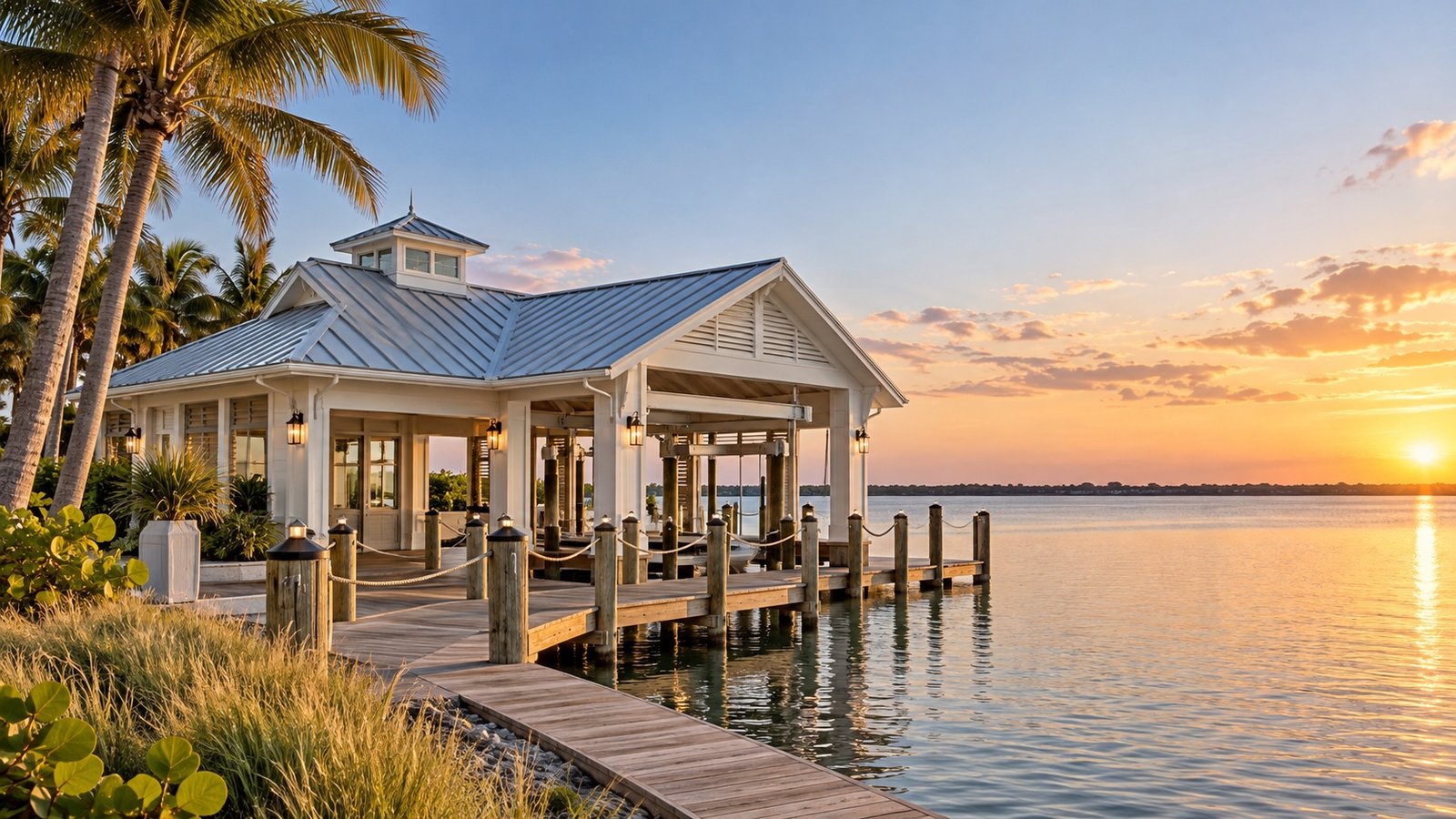
Boathouse Roof Replacement and Older Dock Permits: What Merritt Island Sellers Should Document
By Carrie Liotta, Space Coast REALTOR® with REAL Broker | Published October 21, 2026
If you replaced a boathouse roof at your Merritt Island home but the dock paperwork is older than what appears online, do not try to explain it away at the kitchen table. Build a clean, factual file before the listing goes live. The goal is not to prove that every historic record is perfect; it is to show buyers what was done, when it was done, who did it, and which questions still need a parcel-specific answer.
Waterfront buyers tend to look at a house, dock, lift, seawall, roofline, and permit trail as one ownership package. When one piece feels uncertain, they often start imagining the cost and delay behind it. A seller who brings organized records to the conversation gives a buyer, inspector, lender, and insurance professional something much more useful than a verbal assurance: a starting point for due diligence.
Why an older online record is not the same thing as a missing history
Online permit portals are useful, but they are not a complete substitute for the property file. A roof replacement may be documented by a contract, paid invoice, final inspection, warranty, photographs, and contractor information even when an older dock authorization is not easy to locate in a modern online search. Conversely, a line item in a portal is not enough by itself to explain what was approved, what was built, or whether later work changed the structure.
That distinction matters on Merritt Island because a waterfront improvement can involve different records held by different offices. The house and boathouse roof may lead you to local building records. A dock or structure extending toward the water can raise separate state-land or environmental questions. Florida law says a person may not begin an activity using sovereign or other state lands without the required lease, license, easement, or other consent; it also recognizes that additional authorizations can be part of the same review. Read the current language in Florida Statute 253.77 before treating a waterfront document as a simple building-permit issue.
I tell sellers not to make a legal conclusion from an empty search screen. Ask the appropriate agency or a qualified waterfront professional what applies to the specific parcel and structure. The Florida Administrative Code includes a category for exempt activities in environmental resource permitting, but whether a particular dock, repair, or roof-related project fits an exemption is not something a listing description should promise.
Start with the roof replacement file
For the boathouse roof itself, collect the basic evidence in one folder before photography and showings begin:
- the signed contract, invoice, proof of payment, and contractor name;
- the date of the work, materials used, warranty, and transferable-warranty instructions if any;
- the applicable permit number and final inspection, if issued;
- before-and-after photographs, especially if they show the roofline and the relationship to the dock;
- any later repair receipts, wind-damage claim documents, or service records; and
- a short written timeline in plain language, with facts you can support.
Do not fill gaps by guessing. If a seller believes the roof was replaced in a certain year but cannot support that date, say that the date needs confirmation rather than presenting it as fact. A buyer may still be comfortable with a well-maintained boathouse roof; what creates anxiety is a confident statement that falls apart when the inspection or title process begins.
The Brevard County permit search is a sensible place to begin for unincorporated-property building records. It is only a beginning. Verify which jurisdiction holds the record for the parcel, save copies of the results you receive, and ask a licensed contractor or the building department to help interpret a record that is unclear. If the house is inside a municipality, the records may be elsewhere.
Then separate the dock question from the roof question
The buyer’s concern is often not, “Was the roof installed neatly?” It is, “What exactly is this boathouse and dock, and what can I rely on after closing?” That is why I recommend a separate dock-and-waterfront file rather than burying everything in the roof invoice.
Include older permits, applications, site sketches, surveys, agency correspondence, recorded easements or licenses, dock contractor invoices, lift records, and photographs that show the structure over time. If you inherited the home and received only a partial folder, label it honestly as partial. A chronological index can be more valuable than a thick stack of unmarked papers because it helps the buyer’s team see what you know, what you do not know, and where to continue the search.
A roof replacement does not automatically prove the underlying dock or boathouse was authorized, and an older dock approval does not automatically prove every later repair or alteration needed no additional review. Florida’s environmental-resource-permit statute gives the Department or a water management district authority to require permits and conditions for covered construction or alteration, with the application information tied to the location, owner, plans, and proposed work. The practical takeaway from Florida Statute 373.413 is not that every waterfront repair follows one rule. It is that the parcel, the work, and the documentation matter.
How I would present the file to a buyer
I would not upload every historical paper to the public listing. Some records contain signatures, personal information, or details that should be shared carefully. Instead, I would create a simple availability statement for the listing and make a reviewed document packet available to serious buyers and their agents at the appropriate point in the process.
For example: “Seller has roof-replacement contract, paid invoice, warranty information, and available historical dock records; buyers should independently verify permits, approvals, and intended use with the applicable authorities.” That is factual, useful, and appropriately limited. It avoids the two statements that create trouble: “everything is permitted” when the seller cannot prove it, and “no permits were needed” when no qualified authority has confirmed that conclusion.
This approach can also make the inspection period calmer. The buyer can review a known packet early, then direct their waterfront inspector, contractor, surveyor, or attorney toward the right follow-up questions. It does not eliminate due diligence, but it prevents an avoidable scramble after the contract is signed.
For related buyer-side questions, I would also read my guides to a removed boat lift and an incomplete piling-permit file and a recorded dock license versus deeded ownership when the shoreline survey is incomplete. They are different situations, but they illustrate why waterfront paperwork deserves more attention than a standard backyard feature.
When should a seller get help before listing?
Bring in the right professional before the home is marketed if the roof work changed more than roofing materials; if the dock, boathouse, pilings, lift, or shoreline work does not match the records you have; if a prior owner mentioned an agency issue; or if an old permit appears incomplete. A licensed contractor can address the building-work record. A surveyor, waterfront contractor, engineer, environmental consultant, title professional, or attorney may be appropriate depending on the question. Your listing agent can coordinate the process, but should not substitute for technical or legal advice.
There is a practical pricing reason to do this early. A buyer who sees a clear, limited issue with an organized path to verification may remain engaged. A buyer who sees an unexplained boathouse roof and a vague answer about older dock permits may assume the worst and either walk away or write an offer with a much larger uncertainty discount.
What not to do
Do not remove documents because they are inconvenient. Do not alter an old drawing to make it look current. Do not call a repair “maintenance” merely because that sounds easier. And do not promise a buyer that an old record is irrelevant. Those choices can turn a manageable documentation question into a credibility issue.
Also, do not let the paperwork conversation obscure the condition conversation. A beautiful file does not replace a current visual review of the roof, connections, decking, fasteners, electrical components, or shoreline conditions. The strongest seller story has both: organized history and an honest present-day condition report.
A seller’s pre-listing checklist
- Create separate roof and dock/waterfront folders.
- Pull local records and preserve the search results with the date searched.
- Gather contracts, invoices, warranties, final inspections, photographs, surveys, and prior correspondence.
- Write a dated timeline using only facts you can document.
- Ask the appropriate authority or qualified professional to clarify material gaps before marketing.
- Prepare a factual disclosure and a controlled document packet for qualified buyers.
- Price and negotiate with the actual condition and verification work in mind.
A boathouse roof replacement and older dock records do not automatically make a Merritt Island waterfront home hard to sell. They do mean the listing needs a disciplined paper trail. I help sellers turn that trail into a clear, credible story so buyers can focus on the lifestyle and the property rather than inventing their own version of the risk. If you are preparing a Merritt Island waterfront home for market, reach out for a no-pressure conversation about selling with REAL Broker. Your next chapter starts here.
